
What Does the 1 Bam Tile Look Like in Mahjong?
Last updated: Nov 23, 2026
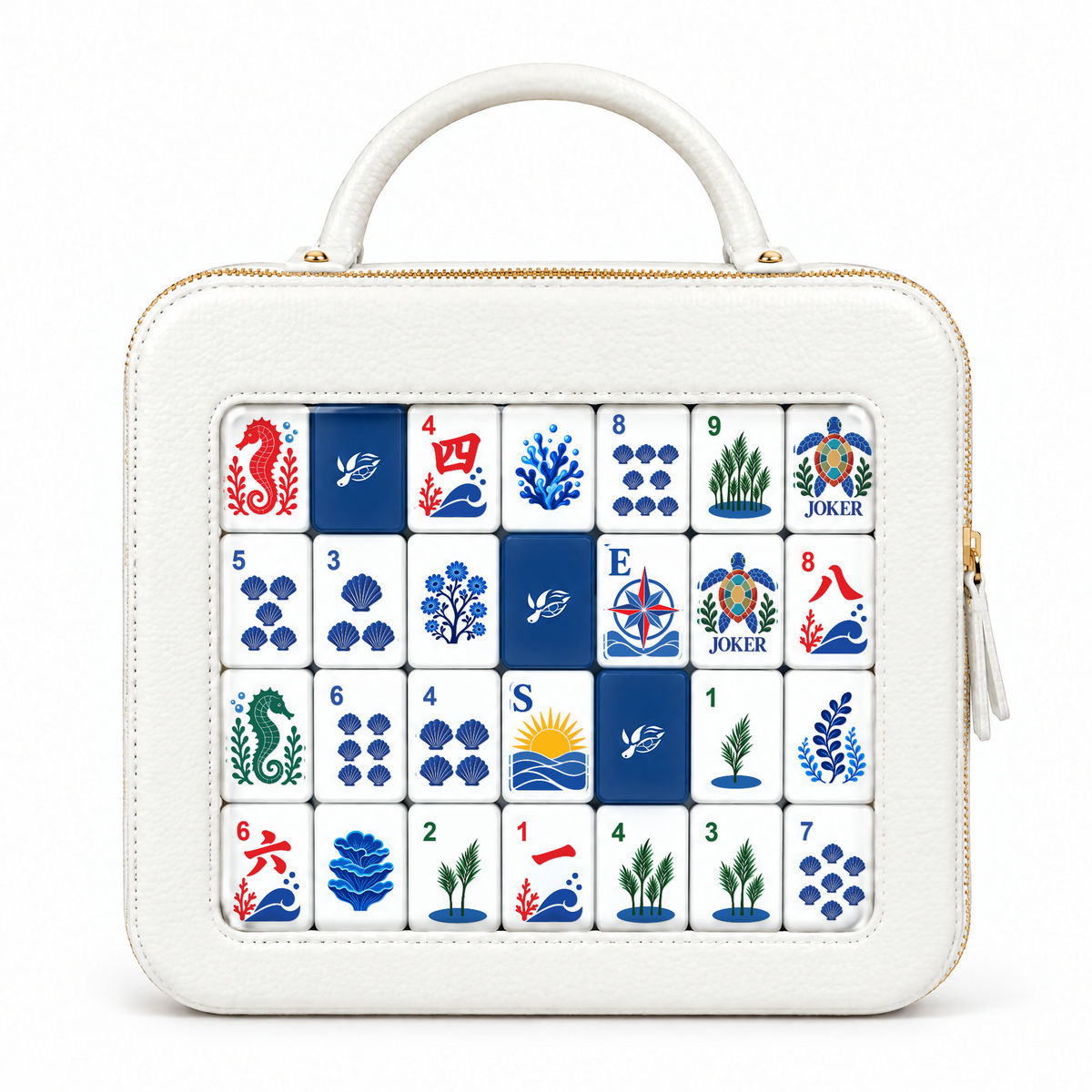
The 1 Bam tile displays a bird illustration—usually a pheasant, crane, or similar fowl—rather than the single dot you'd expect. This is the sole tile in American mahjong that breaks the numerical pattern across all three suits (Bams, Craks, Dots). The bird appears centered on the tile face, rendered in the same color and style as the suit. Because of this unique image, players instantly recognize it without counting symbols. The 1 Bam belongs to the Bam suit (also called Bamboo), which traditionally carried plant imagery in Chinese mahjong; the bird became the convention for the 1 in Western sets. When you buy a best-selling American mahjong set, the 1 Bam is printed or engraved the same way as every other tile—no special material or handling required.
The 1 Bam's bird image serves a practical purpose: speed. During a fast-paced weekly game, spotting a bird instantly signals "1 Bam" without the mental pause of counting individual symbols. For newcomers, however, this one pictorial tile often triggers confusion the first time they see it. Understanding what it is, why it exists, and how to handle it during play removes that moment of hesitation and keeps your game flowing.
Why Does the 1 Bam Show a Bird Instead of a Single Dot?
The bird on the 1 Bam is a convention inherited from traditional Chinese mahjong design, adapted for Western play. In old Chinese sets, the 1 Bam (bamboo suit) carried plant or nature imagery to align with the "bamboo" theme; the bird became the standard symbol adopted by American mahjong rulebooks and manufacturers. American mahjong's tile inventory is fixed—152 playing tiles, no variation—and the 1 Bam's bird is part of that standard. This heritage remains consistent across modern acrylic, bone, and plastic sets sold in the US, making it a reliable visual cue you'll see at every table.

How Do You Recognize a 1 Bam During Play?
Scan for the image first, color second. The 1 Bam's bird is centered on the tile face, rendered in the same color as the Bam suit (typically green or a warm tan in acrylic sets). Unlike the 2–9 Bams, which show horizontal lines (bamboo stalks), the 1 stands alone with its pictorial symbol. In low light or when tiles are stacked, the bird outline is wider and more distinctive than the thin lines of higher Bams, so it catches your eye faster. Once you've held a 1 Bam once or twice, your hand-memory locks it in: the shape feels different, and the image registers instantly. On your rack during the Charleston (the opening tile pass), sorting 1 Bams into your hand happens by image recognition alone—no counting required.
What Mistakes Do Beginners Make With the 1 Bam?
New players often confuse the 1 Bam with other single tiles that lack repeated symbols—mainly the 1 Crak (which shows a single design, not a bird) and the honor tiles like winds and dragons. The fastest correction is to handle the tile once and name it aloud: "1 Bam" sticks. A second mistake is assuming the bird tile is rare or special; it's not. You'll draw a 1 Bam just as often as any other number in its suit because a complete American mahjong set contains exactly four copies of every tile, including four 1 Bams. The third error is misnaming it: some learners call it "Bam bird" or "bird tile," which is fine at the table but confuses scoring discussions—always say "1 Bam" to stay aligned with the NMJL card and standard rules.

How Does the 1 Bam Fit Into Hand Patterns on the Card?
The 1 Bam appears in hand patterns just like any other number tile. On the current year's NMJL card, patterns may call for a single 1 Bam, a pung (three 1 Bams), a kong (four 1 Bams), or 1 Bams mixed with other numbers in a hand. The bird image doesn't change its role: a pung of 1 Bams is still three identical tiles (three birds), and a kong is four. When reading the card, the 1 is marked numerically; the bird symbol on your physical tile simply makes it fast to spot. Some hands call for "1 of suit" without specifying Bam, Crak, or Dot—in those cases, you'll need a 1 from each suit, and the 1 Bam (bird) is one of the three.
Does Tile Quality Affect How the 1 Bam Looks?
Yes, production method changes how clearly you see the bird. Engraved tiles (where the design is cut into the surface) show the 1 Bam's bird in sharp relief, especially under table light—the image stands out and is easiest to read at speed. Printed tiles (where color is applied to the surface) display the bird clearly but can blur slightly if the set has been used heavily over many seasons; resealing or storing them face-down in a protective mat reduces fading. Acrylic tiles with molded designs show the bird in the plastic itself, resisting wear better than paint. When buying a new set, check sample photos or ask about the production method: our best-selling collection uses acrylic with engraved or printed designs, both of which show the 1 Bam clearly from across the table.
Set Type | 1 Bam Clarity | Durability | Ideal For |
Acrylic engraved | Sharp, relief | Excellent | Weekly play, years of use |
Acrylic printed | Crisp, flat | Very good | Casual groups, occasional travel |
Bone or horn | Fine engraved | Good, ages well | Collectors, heirloom games |
Plastic travel | Clear molded | Fair | Beginners, short trips |
🀄 Shop best-selling mahjong sets →
What to Check Before You Buy
Inspect a sample tile or photo showing the 1 Bam before purchasing a set. Confirm the bird is centered and distinct from the tile background—poor contrast makes it harder to recognize mid-game. If you play weekly under average room lighting, prioritize acrylic or bone sets with engraved surfaces; they hold detail longest. Ask whether the set comes with a protective mat that keeps tiles face-down during storage, reducing color fade. Consider whether you'll transport the set: travel-friendly bags and cases protect tiles from flexing and scuffing that blur printed details over time. Finally, check that the set includes all 152 tiles plus spares—the 1 Bam should be present four times in the main set, untouched.
🎁 See our most-loved mahjong sets & accessories →
The 1 Bam bird is one of mahjong's small visual shortcuts—once you've seen it, you'll never confuse it again. Knowing what it represents and why it exists removes the newcomer's stumble and lets you focus on strategy. When you're ready to invest in a set that keeps the 1 Bam (and every other tile) crisp and recognizable for years of play, browse our collection and pick a design that suits your table.
✨ Find your Mahstead set — free US shipping →

FAQ
Can I use a 1 Bam in a pair or single tile?
No. Jokers and pairs cannot contain a single tile of any kind. A 1 Bam can only be played in a pung (three), kong (four), quint (five), sextet (six), or as part of a multi-tile combo like a pair of 1 Bams plus other tiles in a pattern.
Is the bird tile rare or worth more in scoring?
Not at all. The 1 Bam is a standard numbered tile in the Bam suit. It has no special scoring value—it scores the same as any 1 Bam would in a hand, based on the pattern on the current year's NMJL card.
What if my 1 Bam tile's bird fades or becomes unclear?
Acrylic engraved tiles rarely fade; printed tiles may fade with heavy use. If a tile becomes unreadable, most serious players retire that set and buy a replacement set with better durability or protective storage (a mat or bag keeps tiles in better condition).
Does the 1 Bam look different in Chinese or Hong Kong mahjong?
Yes. Chinese and Hong Kong mahjong use different symbols and suit names entirely. American mahjong uses the 1 Bam (bird) as its standard; other variants may show different imagery or even numeric symbols. Always confirm you're using an American set if you play with the NMJL card.
How do I explain the 1 Bam to a new player?
Show them the tile, name it ("1 Bam"), point to the bird, and say: "This is the only tile with a picture instead of dots. It's just a 1—treat it like any other numbered tile." One or two hands of play, and they'll recognize it instantly.
Why didn't they make all tiles consistent—give the 1 Bam a dot instead of a bird?
Tradition and speed. The bird is a legacy from Chinese mahjong's original design; it was adopted by American sets for consistency with international history. More importantly, the distinct image makes it faster to spot during play than a single dot would be.


View More
View More
View More
