
What Does Mahjong Mean: History, Rules & Getting Started
Last updated: Nov 23, 2026
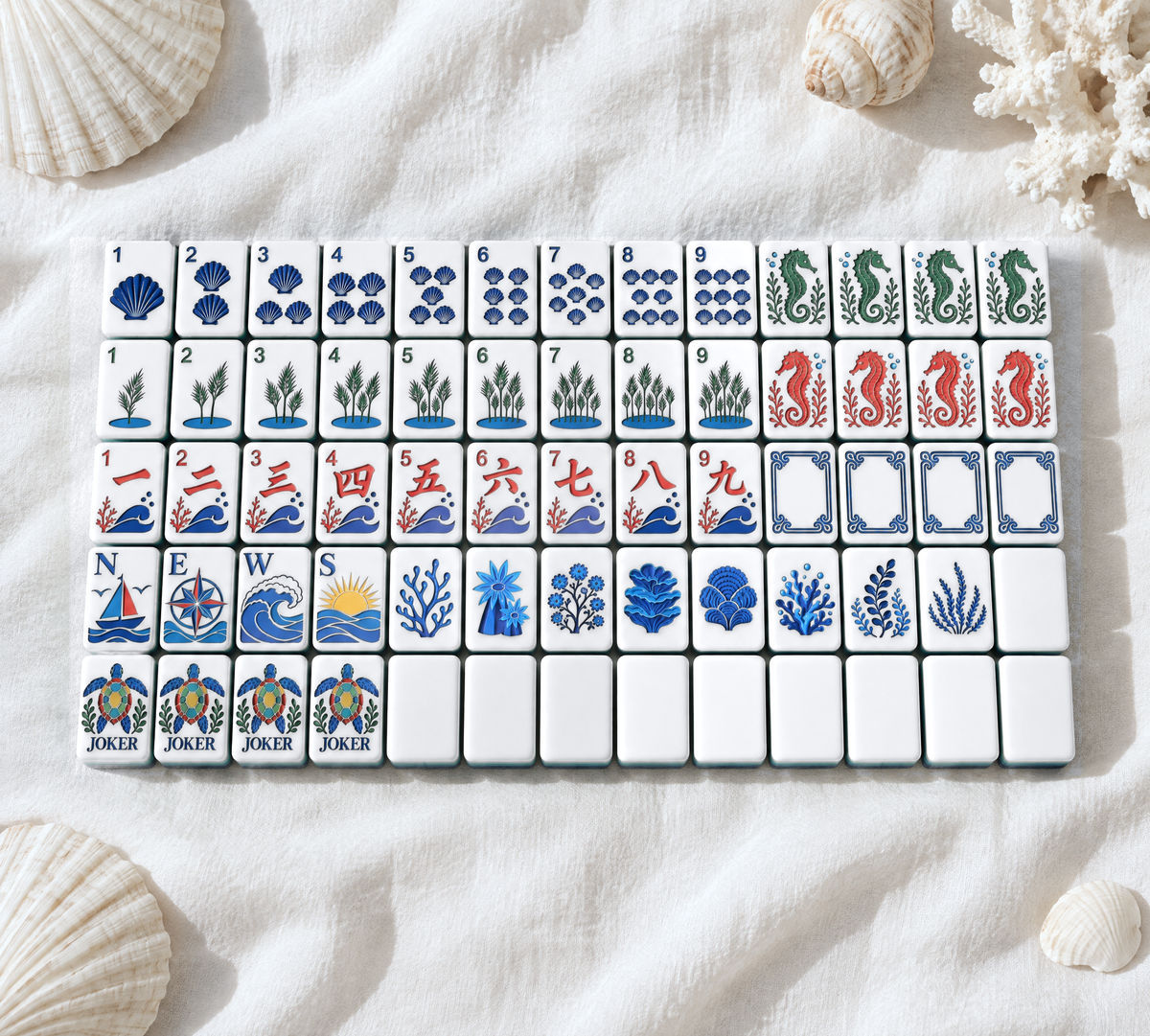
The word "mahjong" (麻將) literally translates to "sparrow" in Chinese, though its true origin remains debated by historians. The game itself emerged in Shanghai during the 1800s, blending elements of earlier card games and domino play. A standard American mahjong game uses 152 tiles divided among four players, with the goal of forming winning hand patterns from the current year's official card. Rounds typically last 10–30 minutes. You'll need a set (including tiles, racks, and mat), a familiarity with hand patterns, and access to that year's National Mah Jongg League card to play legally—Mahstead offers complete American mahjong sets ready for your first game.
Why is it called "sparrow"?
The etymology of "mahjong" (麻將) translates directly to "sparrow." Some historians suggest the name references the game's quick, lively play—sparrows flit and move unpredictably. Others point to the clickety-clack sound tiles make shuffling on the table, mimicking bird chatter. The exact reason has been lost to time, but the name stuck when the game traveled west in the 1920s. Today, whether you call it mah-jong, mahjongg, or mahjong, all spellings refer to the same beloved tile game.

How does American mahjong differ from Chinese or Hong Kong versions?
American mahjong uses a published card system that changes yearly; players consult the National Mah Jongg League card to validate hands—you cannot invent new hand patterns. Chinese and Hong Kong mahjong rely on memorized hand structures and allow sequences (chows) you can call and lay down openly; American mahjong does not permit chows at all. How to play American mahjong focuses on pungs (three identical tiles), kongs (four identical), and special paid hands, scoring points rather than money per hand. Hong Kong play emphasizes speed and fewer melds exposed. Riichi mahjong (Japanese variant) introduces a "ready" declaration and scoring hand multipliers. American players often find the card system more accessible for beginners because it removes guesswork about valid hands.
🀄 Shop best-selling mahjong sets →
What does a typical mahjong game involve?
A mahjong game begins with the Charleston—a three-phase tile exchange where players pass unwanted tiles to neighbors. After tiles settle, each player draws and discards in turn, trying to complete hand patterns shown on the current year's card. When you finish a legal hand, you declare "mahjong" and the round ends; other players pay you points based on the hand's rank. You then rotate positions (East to South to West to North) and play continues. Most weekly games last two to four hours, covering 16 rounds (one full rotation). The pace depends on player skill and comfort with the card; new players take longer to read patterns, experienced ones move briskly.

What tiles and equipment do you actually need?
A complete American mahjong set contains 152 playing tiles—36 Bams, 36 Craks, 36 Dots, 16 winds, 12 dragons, 8 flowers, and 8 jokers—plus spare jokers and blanks to reach 160 total. You also need four racks (one per player), a mat to protect the table, a pushers set to move tiles, the current year's National Mah Jongg League card, and ideally a carrying bag if you host or travel with your set. What's in an American mahjong set breaks down each component. Many players underestimate mat quality; a well-padded mat with a smooth playing surface prevents tiles from sliding and reduces wear on acrylic tiles. Mahjong racks with pushers and travel bags protect your investment over years of weekly games.
🎁 See our most-loved mahjong sets & accessories →
How do different cultures view mahjong today?
In China, Taiwan, and Hong Kong, mahjong remains a cornerstone of social life—played casually over tea, competitively in tournaments, and as a cultural link across generations. Japanese riichi mahjong has spawned professional leagues and anime; players compete for rankings and prize money. In North America, American mahjong thrives within retirement communities, country clubs, synagogues, libraries, and living rooms, often played by women in multigenerational groups. The game bridges age gaps: grandmothers teach grandchildren the card system, while casual weeknight groups gather purely for the social ritual. Internet forums and Meetup boards now connect new players to existing groups nationwide. Mahjong clubs in community centers and senior programs have waiting lists, proving the game's enduring appeal worldwide.
Variant | Geography | Key Feature | Tile Count | Sequence Play? |
American | US, Canada | Card-based hands, yearly update | 152 | No |
Chinese | Mainland China | Open hand play, speed-focused | 144 | Yes |
Hong Kong | HK, overseas HK diaspora | Rapid play, bonus melds | 152 | Yes |
Riichi (Japanese) | Japan, online | Ranking system, multipliers | 136 | Yes |
Taiwanese | Taiwan | Draws and robberies, complex scoring | 144 | Yes |
What should you check before buying your first set?
Choose a set designed for American play (152 tiles, National Mah Jongg League compatible). Check that tiles are acrylic and durable—they'll survive thousands of shuffles and discards. Verify the set includes a mat and racks; loose tiles scattered on a bare table frustrate beginners and damage tiles. Confirm the bag fits your set if you plan to host rotating games. Engraved sets with custom titles make excellent gifts and lasting keepsakes if you're buying for a group or club. A set purchased from a reputable retailer comes with full tile counts verified, spares clearly marked, and care guidance. Mahjong for beginners covers additional setup tips and common first-game mistakes to avoid.
✨ Find your Mahstead set — free US shipping →
What to check before you buy:
Confirm the set is designed for American mahjong (152 playing tiles).
Verify acrylic or quality material for long-term durability.
Check that mat, racks, and carrying bag are included or listed separately.
Ensure the retailer includes the current year's National Mah Jongg League card or guidance on where to purchase it.
Look for clear spare tile markings so you don't accidentally mix them into active play.

FAQ
Is mahjong only played in Asia?
No. American mahjong is hugely popular in North America, especially among women in retirement communities and clubs. Players in Europe, Australia, and Latin America also enjoy the game. Online platforms have connected global communities.
Do I need to memorize the mahjong card?
No. American mahjong players consult the current year's card during play—it's designed for reference, not memorization. Most players recognize patterns over time, but the card always remains available.
How long does a typical game take?
One round lasts 10–30 minutes depending on player skill. A full game (16 rounds, one rotation) typically takes 2–4 hours, including breaks and casual chat.
Can I play mahjong with just two or three people?
Yes, but rules differ. 2 and 3 player mahjong rules explain the adaptations. Most casual play involves four players for balance.
What's the difference between jokers and blanks in a mahjong set?
Jokers (wildcard tiles) substitute for any tile in a meld and can never be used alone or as a pair. Blanks (spare tiles) are extras shipped with the set but never used during active play; they replace lost or damaged tiles.
Do I need to buy a mat, or can I play on any table?
A proper mat protects tiles and the table surface. Unpadded surfaces accelerate tile wear and make shuffling noisier and less smooth. How to choose a mahjong mat explains options for different table sizes and budgets.


View More
View More
View More
