
Blank Mahjong Tile Meaning in American Sets
Last updated: Nov 23, 2026
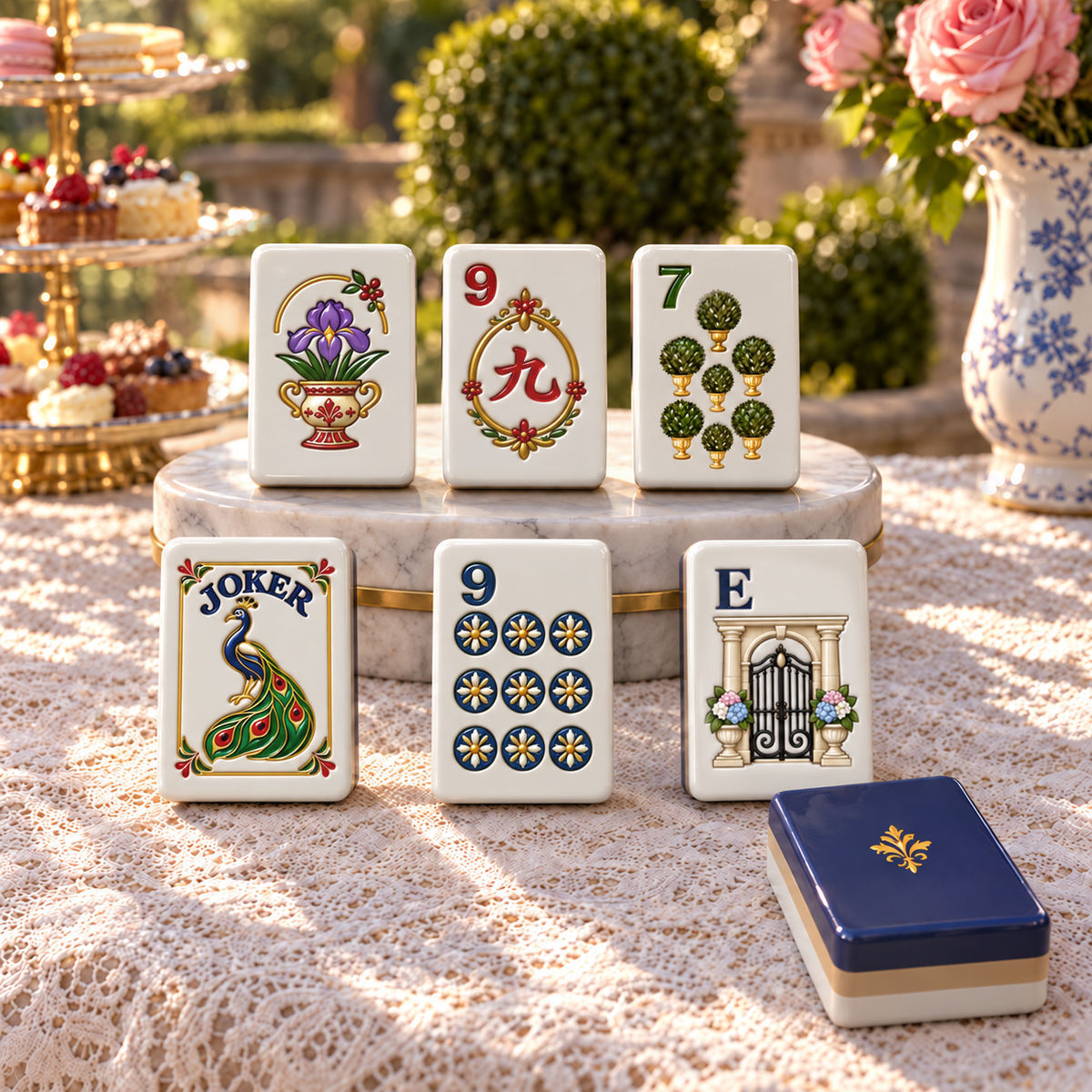
Blank mahjong tiles are spare tiles included in sets beyond the standard 152 playing tiles—they have no suit, number, or symbol printed on them. In a 160-tile set, blanks (along with extra jokers) fill out the spares; they never enter active play. American mahjong uses exactly 152 tiles per game—108 suited tiles, 16 winds, 12 dragons, and 8 flowers—plus 8 jokers. Blanks exist only as replacements if a printed tile cracks, fades, or becomes unreadable during weeks of play. Casual players rarely touch them; tournament or heavy-use players keep them as insurance. Our best-selling sets ship with spares already included, so you never need to buy extras.
Why do mahjong sets include blank tiles at all?
Blank tiles serve one purpose: damage replacement. A tile's surface can wear, print can fade under harsh light, or a corner can chip from repeated shuffling. Rather than replace an entire set, manufacturers include blank spares. If a tile becomes unplayable, you swap it out and write the tile name on the blank with a marker or label. Most casual home games never need them; sets sit in bags between weekly games and survive years without incident.

How many blank tiles come in a standard set?
A 160-tile American mahjong set contains 152 tiles for play plus 8 spare tiles. We don't advertise the exact split between extra jokers and blanks because suppliers adjust it based on manufacturing batches—some sets ship with more blanks, others with more jokers. The key fact: you always get exactly enough spares to replace any tile that fails. Never add blanks or extra jokers to the playing pile; doing so breaks the game math and makes hands unscorable.
When should you actually use a blank tile in play?
Never. Blanks never go into the active 152-tile draw or onto the table during a game. If a tile becomes illegible mid-game, stop, replace it with a blank, label the blank, and resume. This happens rarely in casual play. Heavy-use sets—played daily at clubs or tournaments—are more likely to need replacements after months or years. Even then, you're substituting a damaged tile, not adding a new one to the pool.
How do blanks differ from jokers in American mahjong?
Jokers are active game tiles; blanks are passive spares. The standard American set includes 8 jokers that enter play as wildcards in exposed melds—they can stand in for any tile except a pair or a single tile. Blanks have no function during play. Jokers can be marked with symbols to remind you which tile they represent; blanks sit unused unless damage occurs. If you're building a set and find jokers already present, don't assume blanks are missing—suppliers may have skewed the spare allocation toward jokers.
What happens if you don't have blank tiles and one breaks?
You have three options. First, play with 151 tiles if the damage is minor and doesn't block the print (rare). Second, hand-write the tile name on any unmarked tile from the spare pool using a permanent marker, then use it. Third, pause the game and source a replacement elsewhere—buy a second inexpensive set as a parts donor, or ask another player to lend a tile. For weekly home games, this almost never happens; acrylic tiles resist damage far better than bamboo or bone. If you play multiple times per week or in a club setting, keep your spares in a labeled ziplock bag inside your mahjong case or bag.
🀄 Shop best-selling mahjong sets →
Do you need to buy extra blank tiles separately?
No. Every 160-tile set includes the spares you need. Buying extras is wasteful—even heavy players rarely burn through more than one or two spares per year. If you own multiple sets, consolidate your spares into one labeled container and rotate them as backups. Some players keep a spare joker taped to the inside of their mahjong mat for quick access; others store blanks in a drawer near the table.

Comparison: When blanks matter vs. when they don't
Scenario | How often blanks help | What to do |
Weekly home game, 4 players, one set | Almost never | Ignore them; they'll sit unused for years |
Daily club play, same set | Occasionally | Check spares every 3 months; replace faded tiles early |
Multiple sets, casual rotation | Rarely | Pool all spares across sets; label with tile names as needed |
Tournament or competition play | Sometimes | Carry labeled spares in a separate pouch; inspect tiles before play |
Gift or display set, infrequent use | Never | Blanks add no value; focus on beautiful acrylic design instead |
🎁 See our most-loved mahjong sets & accessories →
How to check if your spare tiles include blanks or extra jokers
Open your set and sort the spares into a small pile. Blank tiles will have no print at all—completely empty faces. Extra jokers will show the joker symbol (usually a laughing face or wildcard mark). Count them. You don't need to know the exact ratio; just confirm that spares are present. If your set arrived without visibly separate spares, they may be packed loosely at the bottom of the tile pile. Shake the bag gently or inspect the case lining.
Why some players debate blank tiles
A few older players argue that blanks shouldn't come in sets at all—they view them as padding that inflates the tile count from 152 to 160. Modern manufacturers include them for consumer protection and durability confidence. If you prefer a pure 152-tile set with no spares, you won't find that option; all retail American sets today include extras. This is a feature, not a flaw—it means your set lasts longer and you're never stuck mid-game without a replacement tile.
The real role of blanks in a weekly game
For most of us, blanks are invisible. We buy a set, play it for years, and never open the spare pouch. They're insurance we don't need most of the time but are grateful to have if a tile fails. Think of them like a spare tire in your car—you hope you never use it, but it's comforting to know it's there. Store your spares safely in a labeled bag or inside your case so you can find them quickly if a tile ever does crack or fade.
✨ Find your Mahstead set — free US shipping →
What to check before you buy
Spare tiles included? Confirm the set includes 160 tiles (152 play + 8 spares), not just 152. All modern sets do; older secondhand sets may not.
Clear storage? Ensure spares come in a separate pouch or are clearly marked so you don't accidentally use them in play.
Tile material durability. Acrylic tiles resist fading and chipping better than wood or paper; blanks are most useful insurance if you play heavily or outdoors.
Long-term use? If you play once weekly indoors, blanks will likely never be needed. If you play daily or in a club, they're genuine peace of mind.
Set design preference.Engraved sets with custom titles or holiday themes are equally durable; spares serve the same backup function.
The bigger picture: what's in an American mahjong set
Blanks are just one small piece of a full set. Understanding the 152-tile breakdown, the role of jokers, dragons, winds, and flowers will help you spot missing or damaged tiles faster and appreciate why spare tiles matter. Most casual players never think about spares until something breaks—and by then, it's too late if you don't have them on hand.

FAQ
Can I use a blank tile during play if I run short?
No. American mahjong is always played with exactly 152 tiles. Adding a blank or any spare breaks the game math and makes hands impossible to verify against the current year's card. If a tile breaks mid-game, swap it quietly with a spare and resume.
What do I write on a blank tile if I need to use it?
Use a permanent marker or a label to write the tile name clearly—for example, "5 Dot" or "East Wind." Use capital letters and keep it legible so other players can read it from across the table. Erase or peel off the label before storing the set.
Do all mahjong sets come with blanks?
All modern American mahjong sets include spare tiles (152 play + 8 spares = 160 total). The spares may be blanks, extra jokers, or a mix. Older or secondhand sets sometimes contain only 144 or 152 tiles with no spares, so ask when buying used.
How long before a tile needs replacement?
Acrylic tiles last years of heavy play before fading noticeably. Bamboo and bone tiles fade faster, especially under direct sunlight. Casual indoor players may never need a spare; tournament or outdoor players might need one within a year or two.
Should I label blanks before storing them?
Not necessary. Only label a blank after you've swapped it in for a damaged tile during or before a game. Store unlabeled blanks in a ziplock pouch so you remember they're spares, not game tiles.
Can I buy extra blanks separately?
You can, but it's rarely worth the cost. Every set includes spares; most casual players never exhaust them. If you own five sets, you have 40 spare tiles total—more than enough for years of play.


View More
View More
View More
