
What Do the Colors on the Mahjong Card Mean?
Last updated: Nov 23, 2026
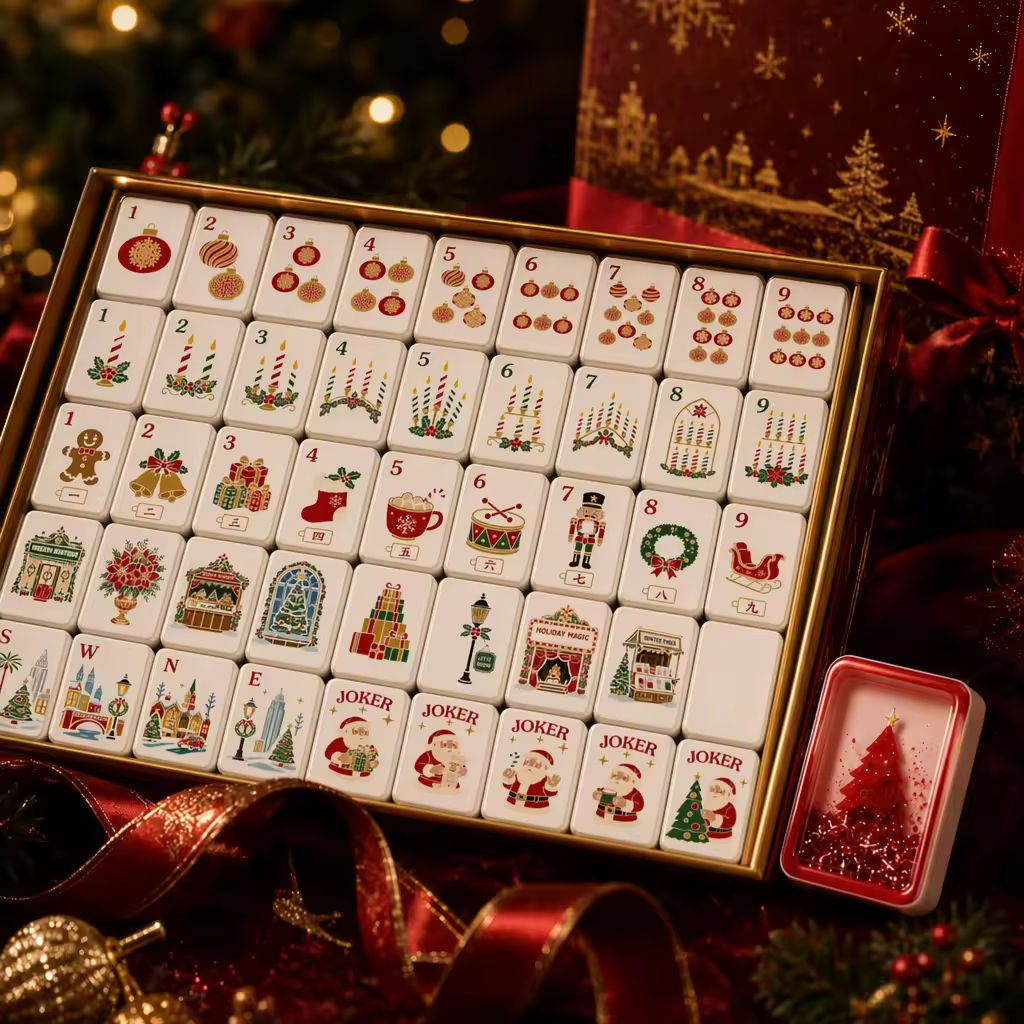
The National Mah Jongg League card is the rulebook and the winning map all at once. Without it, you're not playing American mahjong—you're playing something else. The card shows every legal winning hand for that year, organized by color-coded sections. Understanding what those colors mean isn't just trivia; it's the difference between finding your hand in three seconds or thirty.
Why Does the Card Use Color at All?
The card is a dense reference tool: typically 81 hands printed on one or two pages, each hand showing exact tile requirements. Color-coding lets you scan visually instead of reading every word. When you're holding tiles and racing the clock, your eye catches the color block before your brain reads the details. Green sections stand out from red; red stands out from yellow. This visual sorting cuts search time by half. Without color, you'd be squinting at tiny print while your opponents tap their fingers on the table waiting.

What Does Each Color Represent?
Color groupings divide hands by their structural logic. The card typically opens with green blocks for hands built around pungs (three identical tiles)—clean, grouped sets. Red blocks typically show hands with a pair plus patterns that flow more like sequences (though remember: American mahjong has no actual called chows; everything must be exposed or concealed). Yellow, blue, and black blocks separate hands by scoring weight and tile complexity. A hand marked in green might be worth a lower score; one in black might require rare tile combinations and pay more. The exact color order varies slightly year to year (the League redesigns the card annually), but the principle stays constant: color = hand structure = scoring tier. You don't need to memorize every color's meaning; you just need to match your tiles to the hand block, confirm the color label matches your layout, and you're done.
How Do You Actually Use Color to Find Your Hand?
Step-by-step: First, count your tiles and note what you're holding—for example, three 5 Dots, two 7 Bams, four 2 Craks, and so on. Second, identify your hand type: Do you have mostly pungs (three-tile sets)? A pair plus groupings? Lots of a single suit? Third, scan the card and let your eye land on the color block that matches your structure—if you've got mostly grouped tiles, start in the green sections. Fourth, read the specific hand rows within that color block to find an exact match. Fifth, double-check: Does the number of jokers, the suits, and the pair position all match your hand? If yes, you call mahjong. If no, move to the next color block. This process—done by thousands of players at the same table simultaneously—is why color coding exists. Without it, the card would feel like a phone book.
What Mistakes Do New Players Make with Color?
New players often assume color affects their hand's value—it doesn't directly, but it can indicate tier. A beginner might think a green hand is always easier to win than a black hand, or vice versa; in truth, the color just tells you how the hand is constructed, not whether it's lucky or hard. Another common mistake: confusing the card's color coding with tile colors. The tiles themselves are red, white, and green (representing suits and dragons), but the card's color blocks are organizational only. You can win a hand with zero red tiles even if the hand block on the card is printed in red. A third error: assuming last year's card still applies. The card changes every spring. Using an old card costs you games because the legal hands shift yearly. Always carry the current year's official card—or ask a seasoned player to confirm you're looking at the live version. Learn how to read the mahjong card in depth for more precision tactics.

Why Does the Card Change Every Year?
The National Mah Jongg League redesigns the card annually to keep the game fresh and prevent hands from becoming rote. New hands are added, old ones retired, color blocks are rearranged. This means in 2026, a hand you memorized in 2025 might be gone, or its color block might have moved. It also means tournament players stay sharp—you can't just play from muscle memory; you have to read the card actively every season. New players often panic at this yearly reset, but it's a feature, not a bug. It keeps the game alive and stops any single hand from dominating play. When you buy a best-selling mahjong set, the card is your most important accessory, and it's already included. Guard it. Laminate it. Keep a backup in your bag.
What You Need to Know | Why It Matters | Action |
Card colors organize hands by structure | Lets you find your hand in seconds | Scan by color first, then read rows |
Card changes every spring | Winning hands shift annually | Always use the current year's card |
Color ≠ tile color | Tiles are red/white/green; card blocks are organizational | Don't confuse them during play |
Every color block has multiple hands | You might match one row, not the whole block | Read the specific row carefully |
🀄 Shop best-selling mahjong sets →
What to Check Before You Buy a New Set
When you invest in a new mahjong set, make sure the card included is the current year's version. Older stock sometimes ships with outdated cards. Ask the seller when the card was printed or request 2026's card explicitly. Inspect the card's clarity—it should be crisp and readable under table light, not faded or tiny. If you're buying a custom engraved American mahjong set, verify the card comes with your order. Damaged cards cost you games; damp cards warp and curl. Consider ordering a laminated card backup or a second set's card to keep at home as reference. The tiles themselves are irrelevant if your card is wrong.
🎁 See our most-loved mahjong sets & accessories →
Bringing It All Together
The card's colors are a visual language that speeds up play and reduces errors. Green blocks, red blocks, yellow blocks—each one groups hands by their tile structure and score weight, making it possible to scan dozens of hands and land on yours in seconds. New players should treat the card with reverence: it's not optional, it's not a suggestion, and it's not interchangeable year to year. The moment you understand what the colors mean—not as magical designations, but as organizational shortcuts—you stop feeling lost and start feeling in control. Keep a current card in your bag, one at the table, and one laminated at home. Your next game depends on it.
✨ Find your Mahstead set — free US shipping →

FAQ
Can I play with last year's mahjong card?
No. The National Mah Jongg League card changes every spring, and hands shift each year. Using an old card means you'll call mahjong on an invalid hand and lose points—or miss valid hands you don't recognize. Always use the current year's official card.
Does the color of the card block affect my score?
The color itself doesn't change your score, but it often indicates the hand's structural tier. Some color blocks tend to group lower-scoring hands, others group higher-scoring ones, but it's the hand itself—not the color label—that determines points. Check the American mahjong scoring rules for exact values.
What if my tiles don't match any colored block on the card?
Your hand isn't valid for that year. This happens when you're holding a hand pattern that was retired from the current card or when you've miscounted your tiles. Re-sort your hand, count again, and scan the entire card. If still no match, you cannot call mahjong—continue drawing.
Why does the card get redesigned every year?
The League redesigns annually to keep gameplay fresh, prevent memorization fatigue, and let tournament and casual players stay engaged. It also prevents any single hand from dominating the table year after year. Yearly changes are standard in competitive American mahjong.
If I'm colorblind, how do I use the card?
Ask your group to help you identify which color block you're looking at, or request a digital or large-print version from the League. Some players mark color blocks with symbols (dots, lines) instead of relying on hue. Modern card printings often include numbered sections alongside colors for accessibility.
Can I use a picture of the card on my phone instead of the physical card?
Officially, the physical card is the reference. Many casual games permit a phone photo, but tournaments require the printed card. Bring both—a physical copy and a photo backup—to avoid any disputes.


View More
View More
View More
