
How to Play Riichi Mahjong: Rules, Scoring & Setup
Last updated: Nov 23, 2026
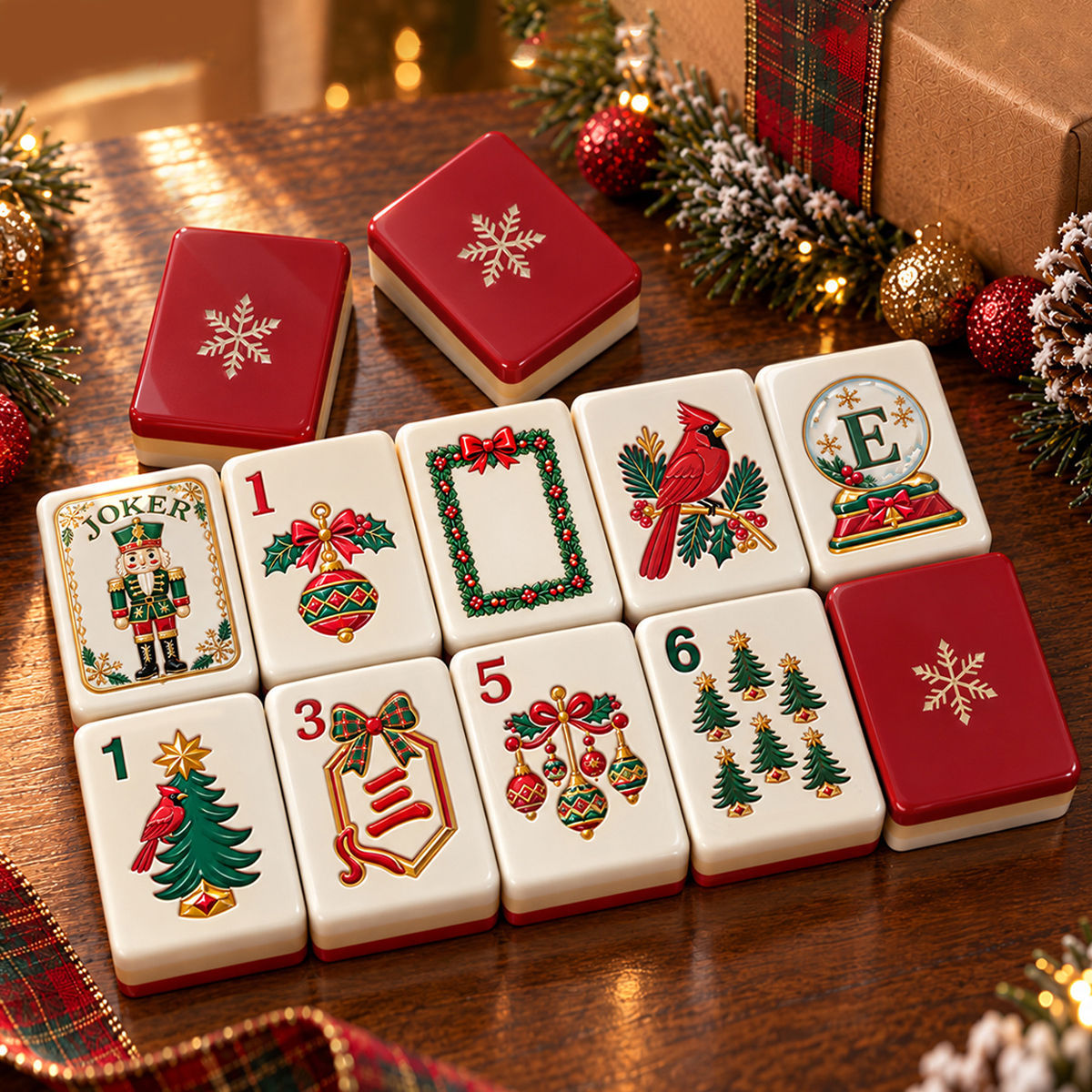
Riichi mahjong is the Japanese variant using 136 tiles (Craks, Bams, Dots, 1–9 in each; Winds; Dragons; Flowers; Seasons). Players build four melds (sets of three or four identical tiles, or runs 1–2–3) and a pair—13 tiles before the draw, 14 on the winning turn. Melds can be exposed (called from other players' discards) or concealed (drawn from the wall). Winning hands earn points based on yaku (hand patterns like "all Bams" or "all runs") multiplied by fan (complexity levels) and adjusted for wind positions. A typical game lasts 1–2 hours. Unlike American mahjong, which requires the current year's hand card, riichi follows a fixed pattern ruleset. You'll need a 136-tile set (not American 152-tile); best-selling mahjong sets typically stock both variants, though riichi sets are rarer in US retail. No jokers exist in riichi play.
Riichi mahjong is the competitive Japanese standard—the version you'll find in clubs across Japan, Europe, and online. It differs sharply from American mahjong: no jokers, no hand card, no Charleston, and melds can be called from other players' discards. If you've played American mahjong and want to expand your skill set, riichi offers deeper strategy and faster rounds. Here's how to master it from the ground up.
What tiles do you need, and how are they laid out?
Riichi uses 136 tiles divided into five groups: three number suits (Craks, Bams, Dots—each 1 through 9, four copies each); four honor tiles (Winds: North, East, South, West—four of each); three dragon tiles (Red, Green, White—four of each); and two bonus tiles (Flowers and Seasons—one each of four designs). No jokers, blanks, or spares. The wall is built as a linear stack of two-high tile pairs arranged in rows around the table—a living wall that stays mostly intact until the endgame. Before play begins, one stack of 14 tiles is set aside as the dead wall (used for replacement draws after declaring melds or kans). Each player draws 13 tiles; East draws 14 on the first turn. Unlike American mahjong's shuffled rack display, riichi racks hold tiles upright in a single line, making counting and reading your hand essential.
🀄 Shop best-selling mahjong sets →

How do you build and call melds—and why does exposure matter?
In riichi, melds fall into three types: pung (three identical tiles), kong (four identical), and chow (a run like 2–3–4 Dots). Pungs and kongs can be concealed (drawn from the wall by you alone) or exposed (called from another player's discard). Chows must be called only from the player to your right, and cannot stay hidden. When you call an exposed meld, you announce it, place it face-up in front of you, and the other players see it instantly—this locks your hand into a strategic pattern. Concealed melds score more fan (complexity points) than exposed ones; exposing too many melds early may reduce your hand's final value. The trade-off: calling a discard speeds up your hand and blocks your opponent from advancing. A critical error is calling a chow from the wrong player or declaring a meld you can't complete—these fouls forfeit your hand or incur a penalty. Always verify tile counts before and after exposure.
What's a yaku, and which patterns win?
A yaku is a specific hand pattern worth points. Common ones include tanyao (all tiles 2–8, no terminals or honors), pinfu (all chows with a non-honor pair, 30 points minimum), toitoi (all pungs), honortsu (pung of one honor suit), yakuhai (pung of wind-of-the-round or dragon), and chinitsu (all one suit). Complex yaku include sanshoku doujun (sequences 1–2–3 in all three suits) or kokushi (one of each terminal and honor, plus one pair—the rarest hand). Hands with no yaku cannot win; you must have at least one declared yaku to claim victory. Each yaku can stack—a hand with two yaku earns 2 fan. Scoring then multiplies base points by 2^(fan), adjusted for position (East vs. non-East) and payment source (all players, or only the discarder). This system rewards hand complexity far more than American mahjong's point-per-tile counting.
How do you declare riichi, and what does it mean?
Riichi (the declaration) is a bet that you are one tile away from victory—your hand is "closed" (all concealed melds and no called tiles) and waiting for exactly one draw. You announce "riichi," place 1000 points in front of you as a deposit, and cannot change or expose any tiles for the rest of that hand. If you win, you collect the riichi stick and bonus points; if someone else wins or the game draws, you lose your deposit. Declaring riichi is high-risk, high-reward: it signals commitment and doubles your hand's value—but it also locks you in place, giving observant opponents hints about which tiles you're not holding. Many players never declare riichi when their hand is already designed to win without it. Riichi differs from American mahjong's "ready" call because it is mandatory for maximum scoring on a one-tile-away hand and is bound by strict rules about concealment.

What's the winning condition, and how do you count points?
You win by drawing a tile (or calling a discard) that completes your four melds and a pair—a state called tenpai. The moment you reach 14 tiles with one yaku and all melds complete, you declare victory and reveal your hand. Opponents pay you in points. The payout depends on: your fan (yaku count), your dora (bonus tiles—specific tiles worth +1 fan, determined at the start of play), whether you declared riichi, and your seat position (East scores more). A simple hand worth 1 fan and 30 base points might pay 1000 points per opponent if you are East; a complex hand worth 5 fan could pay 6000 or more. A maximum hand—called yakuman—is worth roughly 32,000 points and cannot be beaten by adding more yaku. Unlike American mahjong, where one winner takes a fixed pool, riichi uses a sliding scale tied to hand value, making strategy about timing and hand investment. The game ends after four rounds (East, South, West, North), or continues if certain conditions are met.
Aspect | Riichi Mahjong | American Mahjong |
Tiles | 136 (no jokers) | 152 (with 8 jokers) |
Hand source | Fixed ruleset | Current year's card only |
Melds callable | Pungs, kongs, chows from right | Pungs, kongs, quints, sextets only |
Jokers | None | Used as wildcards |
Scoring | Yaku + fan + dora multiplier | Points per tile + hand pattern |
Setup ritual | Wall only; no Charleston | Wall + three-pass Charleston |
Speed | Fast rounds (30–60 min) | Standard rounds (45–90 min) |
Exposure penalty | Exposed melds reduce fan | Limited exposure allowed |
🎁 See our most-loved mahjong sets & accessories →
Common mistakes that cost you the hand—and how to avoid them
Calling a tile out of turn. In riichi, you can call a discard from any player, but chows must come from your right neighbor only. Calling a chow from another player invalidates your meld. Solution: Verify the discarder's position every time before announcing a call.
Forgetting to count your tiles before play. Riichi hands must total exactly 13 (or 14 for East). Starting with 12 or 15 is a dead hand—automatic loss. Solution: Count aloud before the first draw; recount after each meld.
Exposing tiles when you should stay concealed. Declaring melds early reduces your hand's fan count and telegraphs your strategy. Solution: Keep your hand closed until you are certain you can win faster by calling, or until winning points make the fan loss worthwhile.
Misreading the yaku list. Hands with no valid yaku cannot win, even if all tiles are matched. Solution: Before calling victory, verify your hand has at least one yaku using the official hand list for your ruleset (e.g., EMA or JMA rules differ slightly).
Declaring riichi too early. If your hand later fills with unwanted tiles, you're locked in and cannot pivot. Solution: Declare riichi only when you are within one tile of victory and can afford to lose the 1000-point deposit if someone else wins.
What you'll need: A riichi-format 136-tile set (Asian imports; harder to find than American sets in the US). Standard riichi sets use minimal artwork—simple character markings on ivory or bamboo tiles. New mahjong arrivals sometimes stock imported riichi sets, though Mahstead's focus is American 152-tile formats. If you plan to play both variants, keep sets separate to avoid tile mix-ups.
Where can you learn and play riichi in real time?
Join a riichi club in your city—check community centers, libraries, and meetup boards for mahjong groups. Many US clubs play American mahjong by default but welcome riichi players on certain nights. Online platforms (Mahjong Soul, Tenhou) let you play riichi 24/7 with players worldwide; many US players learn online before finding a local group. Study resources like the Riichi Book or EMA (European Mahjong Association) rules guide to lock in terminology and hand patterns. A typical learning curve is 4–8 weeks of regular play to reach solid intermediate skill.
✨ Find your Mahstead set — free US shipping →
Before you buy a riichi set: what to check
Tile size: Standard riichi tiles are slightly smaller than American (about 0.65 inches wide vs. 0.75). Verify dimensions before ordering.
Suit markings: Riichi uses character symbols, not Western pip-and-stick art. Confirm your set includes readable markings for Craks, Bams, and Dots.
Dead wall compatibility: Your set should allow easy extraction of 14 tiles for the dead wall—some compact sets make this awkward.
Rack design: Riichi racks are typically simple wooden or bamboo stands. American-style pushers don't fit riichi tile dimensions.
Shipping from abroad: If ordering riichi sets from Asia, allow extra time and confirm import duty or customs holds.

FAQ
Can I play riichi with an American mahjong set?
No. American sets have 152 tiles with jokers and bonus designs; riichi requires exactly 136 tiles with no jokers. The tile counts and tile types differ fatally—mixing them will create imbalanced hands.
Do I need to memorize all yaku patterns before I start playing?
No. Start with 5–10 common yaku (tanyao, pinfu, toitoi, yakuhai, sanshoku). Most riichi clubs provide a yaku sheet during play; memorization builds naturally over weeks.
How long does one riichi game take compared to American mahjong?
Riichi rounds are typically 30–60 minutes; American rounds are 45–90 minutes. Riichi moves faster because there's no hand-reading delay—you win when you have four melds and a pair, period.
What's the biggest rule difference between riichi and American mahjong?
Riichi allows exposed chows (runs), which American mahjong forbids entirely. Riichi also uses yaku-based scoring rather than a fixed point card. The tile count (136 vs. 152) is also fundamental.
Can I play riichi online to learn before buying a set?
Yes. Platforms like Mahjong Soul and Tenhou let you practice for free in a browser. Many US players learn online, then buy a physical set for in-person play at clubs.
How is dora different from jokers in American mahjong?
Dora is a bonus—specific tiles announced at the start of play that add +1 fan to your score if your hand contains them. They're not wildcards; they must appear naturally in your hand. Jokers in American mahjong are wildcards that substitute for any tile.


View More
View More
View More
