
What Are Winds and Dragons in American Mahjong?
Last updated: Nov 23, 2026
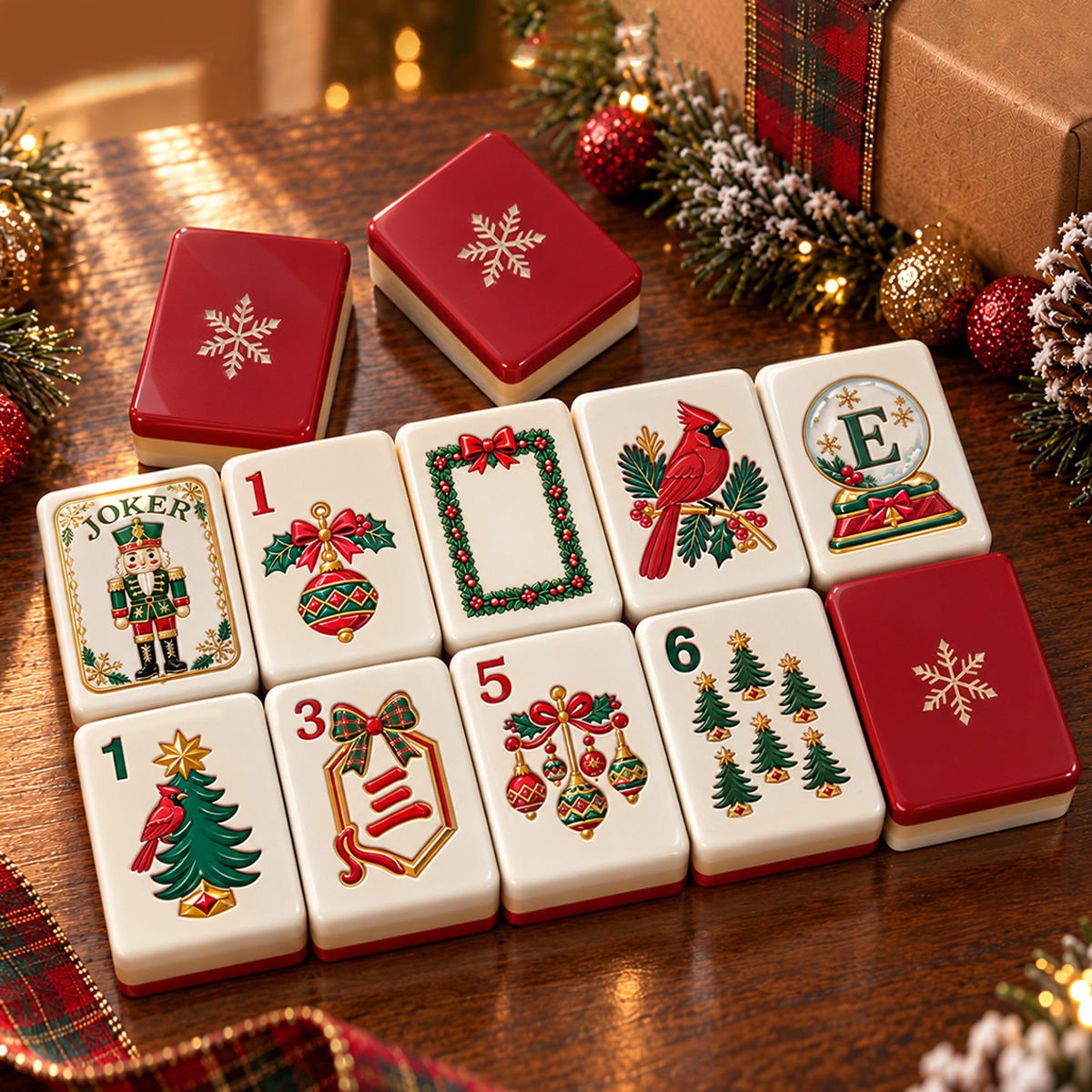
Winds and Dragons are honor tiles (not number tiles) in American mahjong. There are 16 wind tiles total—four each of North, East, South, and West—and 12 dragon tiles: four each of Red (goes with Craks), Green (goes with Bams), and White (goes with Dots and also acts as zero in number sequences). Unlike Bams, Craks, and Dots, winds and dragons cannot form sequences; they can only appear in exposed groups (pungs of three identical tiles, kongs of four, or quints/sextets of five or six) or in pairs. Every American mahjong hand on the current year's card includes at least one wind or dragon element—usually as a pung, kong, or the pair that completes the winning hand.
How do winds and dragons fit into the standard 152-tile set?
American mahjong uses exactly 152 tiles in play: 108 number tiles (Bams, Craks, Dots), 16 winds, 12 dragons, 8 flowers, and 8 jokers. Winds and dragons together make up 28 of those 152 tiles. You'll hold some in your hand, some will be drawn during play, and some will stay in the wall or be discarded by other players. Because there are only four copies of each wind and dragon, running out of a specific tile (say, four East winds) can block a hand that needs an East pung—so keeping track of what's been played matters as the game progresses.

What does it mean to have a pung or kong of winds or dragons?
A pung is three identical tiles; a kong is four identical tiles. A "pung of East winds" means you have three East tiles. A "kong of Red dragons" means you have all four Red dragon tiles. In American mahjong, you can expose these groups on the table once you have them—you don't have to wait until the end of the hand—and other players see them. This is different from keeping them hidden in your rack. Many hands on the card require a specific dragon or wind pung/kong as one of the groups that make up your winning combination. Jokers can substitute for any missing wind or dragon in an exposed group, which is why joker placement matters: if you use a joker to complete a Red dragon pung, that joker can't be used elsewhere.
🀄 Shop best-selling mahjong sets →
Why do winds and dragons pair with number suits?
In American mahjong, winds and dragons don't have an independent scoring hierarchy; instead, they belong to the number suits. Red dragons go with Craks (the character suit), Green dragons with Bams (the bamboo suit), and White dragons with Dots (the dot suit). This rule affects how you read the hand card: if a hand shows "Red dragon pung + Craks" it means you need a Red pung and some Craks somewhere else in your hand. The pairing also prevents confusion—you know which joker or substitute fits where. White dragons are special because they act as zero in some hand patterns, replacing a 1 in a Dots sequence (though sequences themselves are never exposed in American mahjong; only pungs, kongs, quints, and sextets are exposed). Understanding the suit pairing helps you quickly spot which hands are possible when you look at your tiles.
Can you give a real example of a hand using winds and dragons?
Imagine you're holding two East winds, one Red dragon, three 5 Craks, four 2 Dots, and three flowers. You draw an East wind (now you have three East—a pung), then you call it and expose it on the table. Later, you draw another Red dragon (now two Red), draw again, get a joker, and use the joker as a third Red dragon to complete a pung. Finally, you need one more group and a pair. If the card shows a hand pattern that matches "East pung + Red pung + [one more exposed group] + pair," you check what that third group is. If it's a Kong of Bams or a pung of winds, you keep drawing until you have it. Once you complete the pattern exactly as shown on the card, you call Mahjong and win the hand. The hand card is always your blueprint—without it, you're just guessing which tiles to keep.
🎁 See our most-loved mahjong sets & accessories →

How are winds and dragons different from winds and dragons in other mahjong variants?
In American mahjong, winds and dragons are mostly static—they appear in fixed hand patterns on the yearly card and don't shift in value or rank as the wind of the round changes. In Chinese mahjong (and Hong Kong variants), wind tiles do have a round-based value: the prevailing wind changes each hand, and your wind (your seat's wind) matters for scoring. In Riichi (Japanese) mahjong, the wind mechanism is similar—Dragon Pung is worth extra points if it's the prevalent wind. In American mahjong, none of that applies. A White dragon pung counts the same whether it's the first hand of the night or the last, and whether you're sitting East or North. This makes American mahjong simpler to learn but requires strict adherence to the card: you can't improvise a hand; it must match the card exactly. If you play across variants, that switch can trip you up, so always clarify which version you're playing before the Charleston begins.
What common mistakes do new players make with winds and dragons?
Common mistake 1: Assuming all winds and dragons can substitute for each other. They can't. An East wind pung is not the same as a South pung, and a Red dragon is not interchangeable with a Green dragon—even if jokers are in play.
Common mistake 2: Forgetting that White dragons act as zero in Dots sequences (in patterns, not exposed). If you're reading a hand that says "0-1-2 Dots," you need a White dragon in place of the zero, then real 1 and 2 Dots. Many players discard White dragons too early, not realizing they're needed for that pattern.
Common mistake 3: Trying to expose a sequence of winds or dragons. You can't. Winds and dragons have no suit rank, so 1-2-3 North doesn't exist and isn't allowed. Only pungs, kongs, quints, and sextets of the same wind or dragon tile are legal.
Common mistake 4: Mixing up which dragon goes with which suit. If you're holding Red dragons and Bams, that's correct. If you're holding Red dragons and Craks, that's also correct (Red with Craks). But the card for that hand will specify, so read it carefully—don't assume a Red pung works in every hand.
Aspect | Winds | Dragons | Why it matters |
Count | 16 total (4 each: N, E, S, W) | 12 total (4 each: Red, Green, White) | Limited supply; blocks hands if all are played |
Allowed groups | Pung (3), Kong (4), Quint (5), Sextet (6) only | Pung (3), Kong (4), Quint (5), Sextet (6) only | No sequences; honor tiles only |
Suit pairing | None (independent) | Red→Craks, Green→Bams, White→Dots | Affects which hands they fit into |
Joker use | Yes, jokers substitute in exposed groups | Yes, jokers substitute in exposed groups | Jokers are precious; plan which you use |
Special rules | None | White = zero in Dots (in hidden patterns) | Easy to forget; practice reading it |
What should you check before you buy a set with winds and dragons?
Tile clarity: Make sure the wind characters (North, East, South, West) and dragon symbols (Red, Green, White) are clearly marked and easy to tell apart at arm's length across your table. Acrylic tiles with engraved characters are easiest to read during fast play.
Color consistency: If your set uses colored dragons (Red, Green, White), verify that the color doesn't fade or chip over time. Test one set at home before committing to a full seasonal rotation.
Joker count: A standard 160-tile set includes spare tiles beyond the 152 used in play. Make sure your set has enough jokers—you'll use them frequently in winds and dragon groups.
Tile weight and feel: Heavier tiles (acrylic over plastic) feel better in hand and resist sliding on the mat, making it easier to manage a pung or kong of honor tiles without them scattering.
Our best-selling acrylic sets come with clear, durable winds and dragons marked in both English and traditional characters—a practical choice for mixed-skill tables where newer players benefit from English labels.
✨ Find your Mahstead set — free US shipping →

FAQ
Can I use a joker in a pair of winds or dragons?
No. Jokers can only be used in exposed groups of three or more identical tiles (pung, kong, quint, sextet). A pair must always be two real tiles of the same type.
If I'm holding two Red dragons and I draw a joker, do I have a pung?
Yes, if you use the joker as a third Red dragon, you have a pung and can expose it on the table. That joker is now "locked" as a Red dragon for the rest of that hand.
What happens if all four of one wind or dragon tile have been played or exposed?
If all four East winds are already on the table or in other players' hands, no more East winds are available from the wall. You cannot complete a hand requiring East if you don't have it hidden in your rack, and you cannot draw another.
Is White dragon the same as the zero tile in other mahjong games?
In American mahjong, the White dragon specifically acts as zero in Dots patterns (like 0-1-2 Dots) when that pattern appears on the card. It is not a separate "zero" tile; it is the White dragon doing double duty.
How many winds and dragons are in a 160-tile set?
A 160-tile American mahjong set contains 152 tiles used in play (which includes 16 winds and 12 dragons) plus spare tiles; the extras are jokers and/or blanks for replacement and practice.


View More
View More
View More
