
Filipino Mahjong Terms and Glossary: Play Like a Local
Last updated: Nov 23, 2026
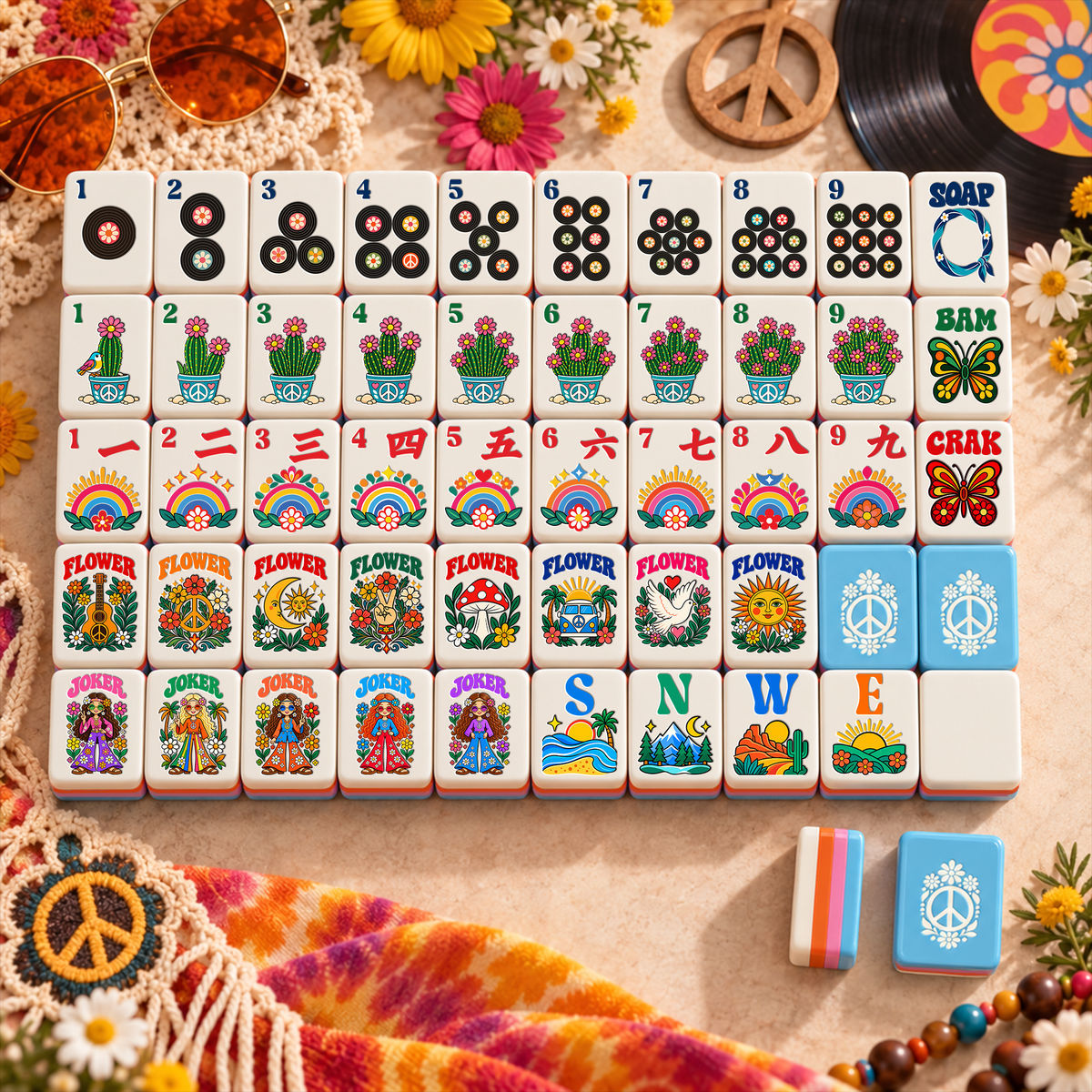
Filipino mahjong blends American mahjong rules with Tagalog-language terms and unique hand patterns developed over decades in the Philippines. Players use words like "sipag" (hard work, referring to winning with all identical pung sets), "charlie" (a hand with quints), and "buwan" (moon, for honors-heavy hands). The game typically uses the same 152 tiles as American mahjong—three suits of 1–9 (Bams, Craks, Dots), 16 winds, 12 dragons, 8 flowers, and 8 jokers—but Filipino players often modify the hand card to include regional favorites and betting strategies. The dialect reflects the Philippines' blended game culture: some tables follow strict American League rules, while others house-rule unique hand categories. Learning these terms isn't just linguistic; it signals respect for the game's regional heritage and speeds decision-making when tiles are called aloud. Most Filipino games last 2–4 hours and are played socially, with terminology passed down through family and neighborhood play rather than formal clubs.
What are the core Filipino mahjong tile names?
Filipino players use both English suit names and Tagalog descriptors. "Bam" tiles are often called "bamboo" or "kwatro" (four-dot bam is "kwatro bam"). "Crak" tiles bear the character symbol; players say "karakter" or simply the number. "Dot" tiles are "bola" (ball). The 1 Bam shows a bird, so it's "ibon" (bird). Winds are "hangin" (wind); dragons are "dragon" or by color: "pula" (red), "luntian" (green), "puti" (white/blank). Flowers are "bulaklak" and honors are "honor." Jokers are "loco" or "wildcard." Mastering these names speeds callouts during play and prevents the embarrassing pause of hesitation.

What do "sipag," "charlie," and "buwan" mean in hand terminology?
"Sipag" (literally hard work) describes a winning hand composed entirely of pungs—three identical tiles per set, no quints or sextets—demonstrating patience and discipline. "Charlie" (borrowed from English, possibly from the NATO phonetic alphabet) refers to a hand featuring one or more quints (5 identical tiles), making it flashier than sipag. "Buwan" (moon) traditionally means a hand heavy in honors—winds, dragons, or flowers—often because the player drew many honor tiles early and built around them. These terms aren't official League categories; they're house slang that varies by region and table. Understanding them lets you follow post-game banter and predict which hands your opponents might chase based on their opening draws.
How do Filipino players use "kong," "pung," and "meld" differently?
In American mahjong, all exposed sets follow strict rules: pungs (3), kongs (4), quints (5), sextets (6)—never chows or sequences. Filipino players use the same tile mechanics but may call them aloud in Tagalog: "pung" stays "pung," "kong" is "kong," but the ritual of announcing feels more emphatic. Some Filipino tables add house rule variations: allowing "semi-concealed" kongs (exposed but kept face-down until needed) or playing "free kong" variants during Charleston. A "meld" is any exposed set; when a player melds, observers say "may bukas na" (has an open/exposed set) or simply watch for the tiles laid flat on the rack. The key difference is cultural: Filipino games treat melding as a celebratory, social moment—often with running commentary and mild teasing—rather than silent American League formality.
🀄 Shop best-selling mahjong sets →
What does "dilis," "palipas," and "husto" mean in game flow?
"Dilis" (literally anchovy, a small fish) refers to a small or "cheap" winning hand—one that scores low points or relies on luck rather than strategy. "Palipas" means pass or skip; when a player passes during the Charleston or declines to call a tile, they say "palipas." "Husto" (just right/fitting) describes a perfect draw or a hand that "balances"—exactly the tiles needed to go out. These terms track moment-to-moment play and reflect Filipino humor: losing on a dilis hand draws laughs, and a husto draw is celebrated. The vocabulary humanizes the game, turning tile-by-tile progression into a narrative teammates and opponents follow together.
How do regional Filipino mahjong cards differ from the standard American League card?
Many Filipino tables use modified hand cards that include region-specific patterns not found on the National Mah Jongg League annual card. These house versions might feature a "triple" section (three complete identical sequences of the same suit), "all flowers," or "pair of dragons plus sipag" categories. Some tables weight the card toward 2024 or 2025 League hands with local nickname overlays, while others keep their own laminated cards printed from decades ago. The result: a Filipino game night often requires asking which card the host is playing before you sit down. This variation isn't a weakness; it reflects the game's living, evolving culture. Always confirm the house card at the start—misalignment here leads to disputes and frustration, not gameplay.
Term | Meaning | Context |
Sipag | All pungs (hard work) | Hand composition & strategy |
Charlie | Hand with quint(s) | Hand composition & prestige |
Buwan | Honors-heavy hand | Hand composition & luck factor |
Dilis | Low-scoring hand | Post-game commentary |
Palipas | Pass/skip | Active play callout |
Husto | Perfect/ideal draw | Celebration moment |
Loco | Joker tile | Tile reference |
Ibon | 1 Bam (bird) | Tile reference |
Hangin | Wind tiles | Tile reference |
Bulaklak | Flower tiles | Tile reference |

What's the difference between "taya," "bili," and house betting slang?
"Taya" (stake or bet) is the Philippines' primary betting term; when players say "magbayad ng taya," they're settling the stake for a hand. "Bili" (buy-in or cost) refers to the initial pot before play. Betting amounts vary wildly: casual home games may have minimal or symbolic stakes, while organized games in certain regions can run high. Filipino mahjong betting is culturally sensitive and legally gray in some areas; players usually agree on amounts before sitting, and visitors should always ask upfront rather than assume stakes. Most diaspora home games in North America are low-stakes social play. Understanding betting terminology prevents awkward misunderstandings and respects the financial trust at the table.
How do you call tiles and announce winners in Filipino games?
When a player wants to call a discarded tile, they announce it clearly: "Pung!" (pung call), "Kong!" (kong call), or simply the tile name and set type. Announcements are louder and more celebratory than in American League play—it's social theater. When someone goes out, the winner calls "Talo!" (lose—from the losers' perspective) or "Panalo!" (win—from the winner's perspective), depending on table energy. Some tables use a scorekeeper; others calculate on the fly. The loser pays the winner according to the house card scoring and the agreed stake. Filipino games prize verbal clarity because side conversations and laughter are constant; strong callouts cut through the social noise and prevent disputes over timing or intent.
✨ Find your Mahstead set — free US shipping →
What mistakes do English speakers make when joining a Filipino mahjong table?
Assuming all houses use the League card: Many do not. Always confirm the hand card before play.
Staying silent when unsure: Asking "Which hand is that?" shows respect, not ignorance. Filipino players expect questions.
Forgetting to negotiate stakes upfront: Cultural surprise during payout destroys goodwill. Agree in dollars or percentage before the first hand.
Mispronouncing tile names: Effort counts more than perfection. Try saying "bam" instead of "bamboo," "pung" aloud when calling, and "loco" for joker—players will correct gently and appreciate your effort.
Playing too fast or silent: Filipino mahjong is a social event. Pace your play to the table rhythm, react audibly to good draws or bad luck, and participate in the running commentary—silence feels cold.
Neglecting to learn house rules during the first few hands: Every table adds unique rules. Watch one complete hand before betting heavily; ask what happens on a kong draw, whether quints can be broken, or if a player can call out of turn for a pung in a certain situation.
What's the best way to learn more Filipino mahjong vocabulary?
Play regularly with the same group. Sit beside a long-time player and listen closely to callouts. Write down words you hear and ask their meaning during a break. Watch video clips of Filipino mahjong nights if available in your community. Most importantly: ask your hosts directly. Filipinos are warm to learners and enjoy teaching cultural nuance. Visit local community centers, libraries with Filipino populations, or cultural events where mahjong tables gather; many host casual drop-in games. Joining a regular table is the fastest path to fluency because vocabulary embeds in context and repetition, not from lists alone.
What to check before you buy or bring a set to a Filipino game
Tile quality and readability: Ensure your tiles' symbols and numbers are crisp and large. Filipino games often include less-formal players and younger family members who may struggle with faded or poorly printed tiles. An engraved American mahjong set with clear, durable markings prevents confusion during fast callouts.
Rack and pusher fit: Filipino tables often play on home furniture (dining tables, side tables) without dedicated mahjong tables. Bring a rack with pushers that anchors well and lets you organize tiles cleanly, especially if the host's setup is casual.
Mat or tablecloth requirement: Check whether the host prefers a mat or can accommodate your own. A quality mahjong mat protects both furniture and tiles from drink spills—common in social play.
Joker count: Confirm whether the house uses exactly 8 jokers (standard American) or has added extras. Some Filipino tables play with additional jokers as a house rule. The standard 160-tile set includes the correct count for play.
Bag or case for transport: If you're carrying your own set, use a durable mahjong bag or case to prevent tiles from shifting or spilling en route. Showing up with a well-organized set earns respect and ensures no tiles are lost before play starts.
🎁 See our most-loved mahjong sets & accessories →

FAQ
Is Filipino mahjong the same as American mahjong?
Filipino mahjong uses American mahjong's 152-tile structure and basic rules but adds Tagalog terminology, house-rule hand variations, and a social betting culture. The core game mechanics are identical; the language and social conventions differ. Always ask whether the table plays strict League rules or uses a local house card.
Can I play Filipino mahjong with a standard American League set?
Yes. A standard American mahjong set works perfectly; all Filipino games use the same 152 tiles and 8 jokers. Confirm the house card and betting stakes before sitting. You don't need special equipment—only clarity on rules and vocabulary.
What does "tala" mean, and is it the same as "taya"?
"Tala" refers to a scorecard or running tally of points in some regional dialects; "taya" is the more common term for stake or bet amount. Usage varies by region and family. Ask your table directly if you hear either term and aren't sure of its meaning in that context.
Do Filipino players use jokers the same way as American mahjong players?
Yes. Jokers (loco) substitute for any tile in a pung, kong, quint, or sextet, but never appear alone as a single tile or in a pair. The rules are identical to American League play—no exceptions in mainstream Filipino games, though ultra-casual house variants may bend this rule.
How do I know which hand card a Filipino table is using before I sit down?
Ask the host directly: "What hand card are we playing—League card or house card?" If it's a house card, ask to see it and familiarize yourself with a few example hands during the first game. Never assume; misalignment on the card causes disputes and halts play.
Is betting required in Filipino mahjong, or can we play for fun?
Betting is cultural but negotiable. Many casual home games use symbolic or zero stakes. Always ask upfront: "What are we playing for today?" Confirm amounts in dollars or percentage before the first hand. Respect the table's comfort level—no pressure to wager if you're uncomfortable.


View More
View More
View More
