
Western Classical Mahjong Rules: How It Differs from American Play
Last updated: Nov 23, 2026
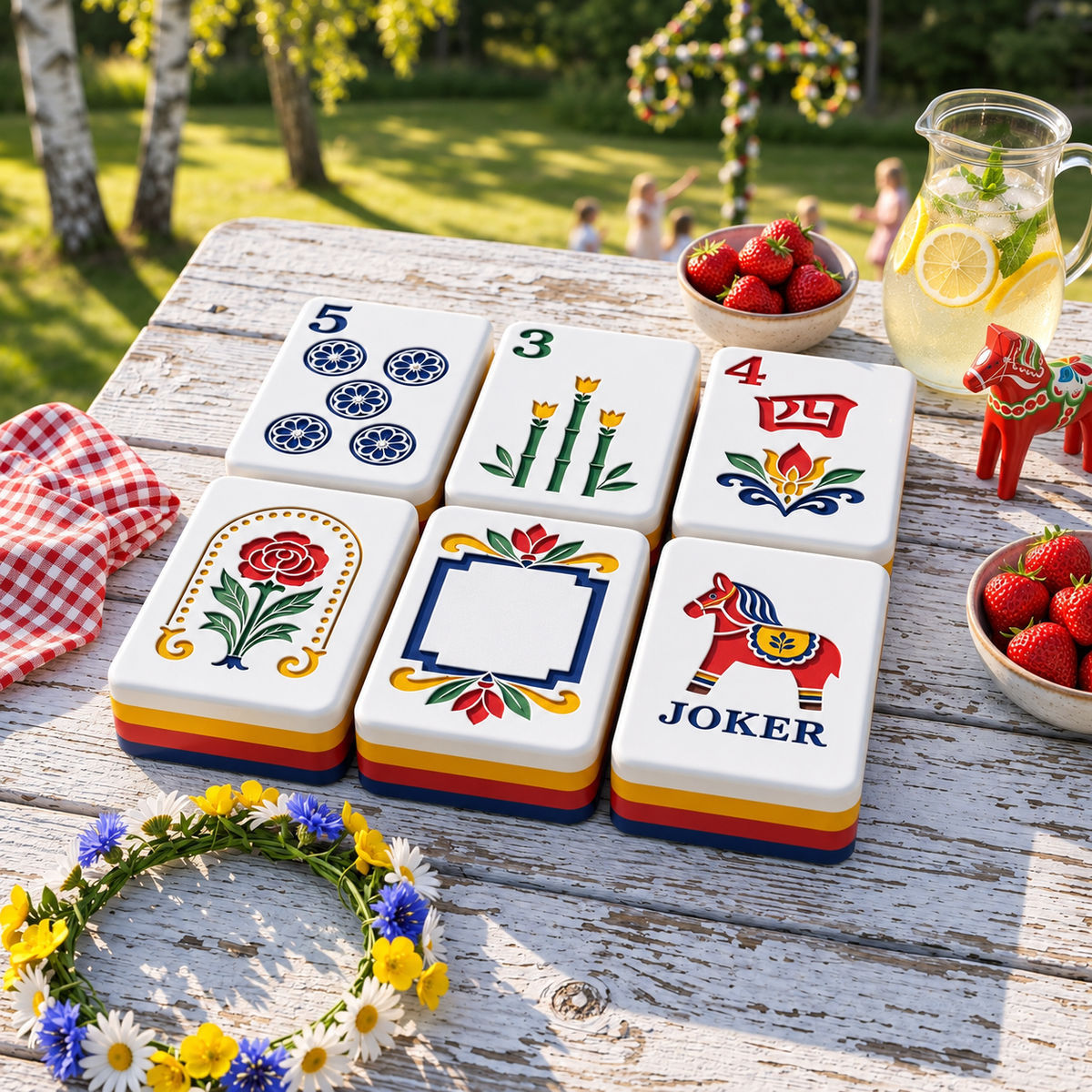
Western classical mahjong (Hong Kong style) uses 136 tiles: the four honors (winds and dragons) and three suits numbered 1–9, with four copies each. Play focuses on sequences (chows: 1-2-3, 4-5-6, etc.) and pungs (three identical tiles), plus pairs, unlike American mahjong which prohibits exposed sequences and draws only from an annual pattern card. Hands win when all 14 tiles form four melds plus one pair; scoring is simpler, based on hand type, with no complex point charts. The game runs 13 or 16 rounds per session, drawing and discarding one tile per turn. Setup requires a 136-tile classical set, whereas American players need a best-selling 160-tile set with jokers and the current year's National Mah Jongg League card. Western classical is faster, more combinatorial, and emphasizes building from live draws rather than calling existing melds—a fundamentally different mental game.
What tiles and setup do Western classical rules use?
Western classical mahjong plays with exactly 136 tiles: three suits (Bamboo, Character, Dot) numbered 1–9, each copied four times (108 tiles), plus 16 honors split into winds (North, East, South, West, four copies each) and dragons (Red, Green, White, four copies each). No jokers, no flowers, no blanks. Each player draws 13 tiles; the dealer draws 14 and plays first. The remainder forms the wall. Unlike American mahjong, which requires the current year's National Mah Jongg League card to verify hand legality, Western classical allows any combination of melds and a pair—provided they fit the core rules—so you need only the tiles themselves, a flat mat for organization, and a way to keep score (pencil and paper suffice).

How do sequences and pungs differ from American rules?
In Western classical, both sequences (chows) and identical triplets (pungs) form legal melds. A chow is three consecutive numbers: 1-2-3, 5-6-7, or 8-9-1 (the 1 wraps around). A pung is three or four identical tiles—for example, three Red Dragons or four 5 Dots. You can pick up a tile another player discarded to complete any meld and expose it on the table (unlike American, where only pungs, kongs, quints, and sextets can be called). A pung you build from your own draws stays hidden. American mahjong permits no sequences whatsoever and restricts exposed melds to identical sets only, making hand construction far more limited and grid-bound to the official card.
What happens when someone discards a tile you need?
When a player discards a tile, the next players in turn order (by position, not necessarily the next seater) can claim it immediately. The highest-priority claim is "win"—if the tile completes your hand. Next is a pung (three identical tiles, one of which is the discard). Third is a chow (three consecutive numbers ending with the discard, or the discard in the middle, or the discard starting the sequence). If two people claim the same discard at different priorities, win beats pung beats chow. In practice, you call out your claim quickly—"pung," "chow," "win"—and show your tiles. American players cannot claim discards for sequences at all, and pung calls are limited to hands that match the official weekly card pattern, so the rhythm is entirely different. Western classical feels more reactive and fast-paced.
How do hands win and what counts as a winning combination?
A hand wins when all 14 tiles form four melds (or exposed calls) plus one pair. That pair must be two identical tiles—never a sequence or mixed set. Each of the four melds can be a pung (three or four), a chow (three), or a kong (four identical). You win on your 14th tile either by drawing from the wall (a self-draw win, sometimes worth a bonus) or by claiming a discard that completes your fourth meld and pair. If nobody wins by the time the wall is exhausted, the round is a draw (no payment). American mahjong requires hands to match exact patterns on a printed card updated yearly; Western classical has no such grid, so the combinations are infinite—you build logic-based melds, not card-based puzzles. This makes Western classical more mathematical and less dependent on memorization.
What is the scoring system and how does it work?
Scoring in Western classical is much simpler than American. The winner is paid by each other player; the amount depends on hand type. A basic self-draw win (tiles you drew, not a discard) from each player is typically one unit; a winning hand built entirely from your own draws and then you draw the 14th tile is worth 2 units per player. Tricky melds—like a hand with all pungs and no chows, or all one suit plus honors—may be worth double or triple, depending on house rules. Special hands like a pair of pungs plus a pair of honor triplets earn bonuses. There is no complex multiplication of multipliers as in American (where points are calculated based on the card, the hand type, and your seat). Many Western classical players play for small stakes (a few cents per unit) or play for honor only. American scoring involves reading a detailed card, adding multipliers, and often totaling several hundred points per winning hand.
🀄 Shop best-selling mahjong sets →

How do rounds progress and how long does a game last?
Each round lasts until someone wins or the wall runs out. One round typically takes 10–30 minutes. A session is traditionally 16 rounds (four rounds with each player as dealer); some groups play 13 rounds. Between rounds, the dealer rotates. If the dealer wins, they deal again; if someone else wins, the dealer seat rotates to the next position. Settling happens after each round: the winner collects chips or points from the other three players. The entire game—16 rounds—usually wraps in 2–4 hours depending on pace and table chat. American mahjong typically plays 8 rounds (2 per position) or 16 rounds, but a single round can be longer because the call for a winning hand must match the official card pattern, so it's less frequent.
Aspect | Western Classical | American |
Tile count | 136 (no jokers) | 152 (includes 8 jokers) |
Sequences allowed | Yes, exposed or hidden | No sequences at all |
Hand source | Any legal combo | Official weekly card only |
Pungs | Yes, unlimited exposure | Yes, limited to card melds |
Scoring | Simple (units per type) | Complex (multipliers, points chart) |
Rounds per game | 13 or 16 | 8 or 16 |
Pair rules | Two identical tiles only | Same: two identical |
Joker use | None | Yes, wild tiles (except in pairs) |
Learning curve | Moderate (logic-based) | Steep (card pattern memory) |
Do Eastern variants differ from Western classical?
Yes. Chinese classical (often called "Chinese Mahjong") is very similar to Hong Kong rules but may allow a "concealed hand" (all tiles drawn by you, not from any discard, worth more points). Japanese Riichi mahjong uses 136 tiles but has a completely different winning system—you must declare "riichi" (ready) before someone else wins, and hands are scored by "han" (value level) rather than units. Korean baduk-influenced variants exist but are rare outside Korea. Taiwanese mahjong uses small cards instead of tiles and has its own hand definitions. Vietnamese mahjong is rarely played outside Vietnam. The core difference between all Eastern variants and American mahjong is that American uses a fixed card-based hand list and forbids sequences, whereas every Eastern variant permits sequences and allows infinite hand combinations. If you're learning to host a mixed game, clarify which rules apply before the Charleston (if American) or the first discard (if classical).
✨ Find your Mahstead set — free US shipping →
What equipment do you need for Western classical play?
You need a 136-tile Western classical set (available as traditional carved sets or modern acrylic), a flat mat to organize tiles and keep score visible, racks with pushers to hold and arrange your hand (optional but helpful for beginners), a way to keep score (paper, pen, or a tally app), and a way to shuffle tiles (usually by hand or with a mechanical mixer). If you're traveling or hosting often, a durable mat protects surfaces and speeds setup. A travel bag keeps your set and mat together. American mahjong requires the same equipment plus the current year's card—a critical legal tool you cannot improvise. Both games benefit from quality sets that won't chip during years of weekly play.
🎁 See our most-loved mahjong sets & accessories →
What common mistakes do Western classical beginners make?
Forgetting that chows must be consecutive. Many new players think 1-3-5 is a legal chow. It is not; chows are always three tiles in unbroken sequence (1-2-3, 2-3-4, etc.).
Confusing the 1 and 9 wrap rule. In most Western classical variants, 9-1-2 is illegal. The sequence wraps only in one direction for some hands or never, depending on house rules; clarify before play.
Holding onto honor tiles too long. Wind and dragon tiles make weak pungs if nobody else is building those sets. Discard them early unless your whole strategy hinges on an honor-heavy hand.
Exposing melds too greedily. Every exposed meld tells opponents what you're building. Hide safe combinations and expose only when you're close to winning.
Not tracking discards. Western classical rewards memory. Note which tiles each player discarded and which suits or sequences they're avoiding; that reveals their strategy.
Miscalculating wait conditions. Beginners often hold two tiles waiting for one discard when they could trade one away and wait for two. Count your winning tiles and compare odds.
What to check before you buy a Western classical set
Tile count: Confirm it is exactly 136 tiles (no jokers, flowers, or blanks). Some sets marketed as "classical" include extras that violate the rules.
Material and weight: Acrylic tiles are durable and feel similar to traditional bone-and-bamboo sets. Check that tiles are thick enough to survive daily reshuffling (not thin plastic).
Clarity of markings: Numbers and suit symbols should be easy to read under normal lighting. Avoid sets with faded or ambiguous characters.
Completeness: Verify all four copies of each tile are present. Missing even one tile makes the set unplayable.
Mat and storage: If the set includes a mat, ensure it lies flat and doesn't slide during play. A sturdy bag prevents tiles from scattering during transport.
Comfort of hand stands (racks). If you use them, they should hold tiles upright without strain and allow quick rearrangement.
House rules alignment: Before buying, confirm whether your group plays Hong Kong, Chinese, Japanese, or another variant—sets are interchangeable by tile count, but scoring and winning conditions differ sharply.

FAQ
Can I use an American mahjong set to play Western classical?
No. American sets contain 160 tiles (including 8 jokers and often flowers), whereas Western classical requires exactly 136. The tile set and joker behavior are incompatible. You need a dedicated 136-tile classical set.
Is Western classical mahjong faster than American?
Yes, typically. Western classical rounds often finish in 15–25 minutes because any legal combo of melds and a pair wins (no card pattern check), and sequences can be called from discards. American requires matching an official card, which limits winning hands and can extend rounds. Both depend on table pace and player experience.
What's the easiest variant for a beginner: American or Western classical?
Western classical is easier conceptually—sequences and pungs are intuitive once you memorize that chows are three consecutive numbers. American requires memorizing or constantly referencing an annual card with hundreds of hand patterns. However, American is simpler to teach formally because the card is the rule book. Choose based on your group's preference and whether someone already knows one variant well.
Can I play Western classical with house rules, or must I follow a standard?
House rules are the norm in Western classical. Most groups agree on basics—number of rounds, bonus hands, wrap rules for 1-9—before play begins. Unlike American mahjong, which has a formal national card, Western classical thrives on local variation. Clarify your group's specific rules before sitting down.
How does a "self-draw win" differ from claiming a discard in Western classical?
A self-draw win occurs when you complete your hand by drawing a tile from the wall; you receive payment from all three players (usually double). A discard win happens when someone else discards the tile that completes your hand; you receive payment from only that player. Some house rules award bonuses for self-draw wins or "robbing the kong" (claiming a tile another player just added to a pung). Always confirm the payout structure.
Why does the American mahjong card matter if Western classical doesn't use one?
American mahjong was formalized in the 1920s–1930s with a fixed card of legal hands, updated yearly by the National Mah Jongg League. This ensures consistency across clubs and tournaments. Western classical evolved over centuries in Asia with regional variation, so no single universal card exists. American is rule-based on paper; Western classical is rule-based on tradition and house agreement.


View More
View More
View More
