
Vintage Style Mahjong Accessories: How to Choose
Last updated: Nov 23, 2026
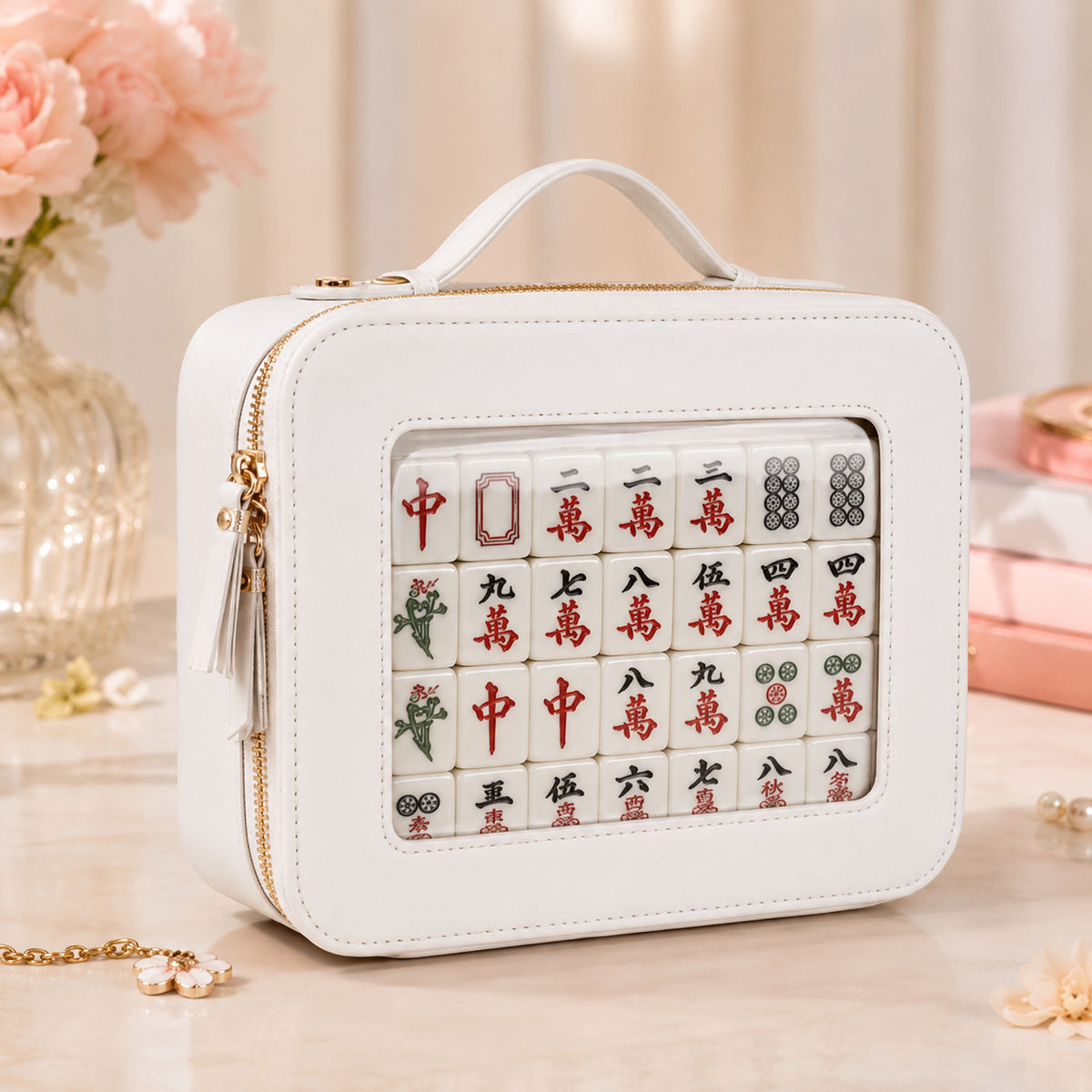
Vintage-style mahjong accessories bring warmth and character to your game—think bone-toned tiles, art-deco designs, or retro wood-grain racks that recall neighborhood games from decades past. These aren't reproductions of 1920s sets; they're modern 160-tile American mahjong sets and equipment designed with a nostalgic aesthetic. You'll find vintage vibes in engraved tile finishes, classic mat patterns, and racks styled to feel handcrafted rather than sleek. Mahstead offers engraved American mahjong sets in collections that capture that feeling while using durable acrylic—no fragility, all the charm. The cost basis varies by design complexity and material; simpler vintage finishes tend toward our best-selling collection, while heavily customized pieces run higher. Before ordering, check tile size (standard American is consistent across sets), verify the mat's playing surface matches your table, and confirm pushers and racks feel balanced in hand—vintage styling shouldn't sacrifice grip or speed of play.
What makes a mahjong set look "vintage"?
Vintage-style mahjong sets lean on era-inspired design cues: matte or semi-gloss finishes instead of high gloss; subdued color palettes (ivory, sage, rust, cream); engraved tile faces that suggest hand-painted detail; and typography or symbols evoking Art Deco, 1950s Americana, or Chinese classical motifs. The tiles themselves are acrylic (durable, modern), but the visual language feels like a set your grandmother might have owned. Racks might feature wood-tone finishes, natural knurling, or simple geometric handles. Mats often use jacquard weaves or felt-backed cotton in earth tones rather than neon brights. The aesthetic bridges nostalgia with present-day durability—you get the soul of a vintage game without the fragility or missing tiles.
🀄 Shop best-selling mahjong sets →

Who is vintage-style mahjong right for?
Vintage-inspired accessories appeal to players who value ambiance as much as functionality, collectors drawn to mid-century design language, and groups hosting themed nights or multigenerational games. If your game circle includes players who learned from their parents or grandparents, a vintage-styled set can deepen that connection—the set becomes a conversation piece, not just equipment. Hosts who entertain frequently often choose vintage styling because it photographs well and creates a cohesive table aesthetic. Players upgrading from a basic set also gravitate here; the investment in a beautiful, durable set signals that mahjong is a regular part of their life. Conversely, if you prioritize function over form or prefer modern minimalism, a sleek contemporary design may suit you better. Beginners learning how to play American mahjong rarely need vintage styling—a standard set works identically—but once you've won a season or two, the upgrade to something beautiful feels earned.
Which pieces matter most for vintage character?
Element | Why it shapes vintage feel | What to check |
Tile finish | Matte or satin reads as aged; high gloss reads modern | Does the surface catch light softly, not mirror-bright? |
Color palette | Bone, cream, soft greens, terracottas evoke older games | Are colors restful, not neon or primary-bright? |
Engraving depth | Deeper engraving suggests hand-carving | Do engravings cast shadow or feel shallow? |
Mat pattern | Jacquard weave, felt backing, earth-tone borders | Is weave texture visible, or is mat plastic-smooth? |
Rack finish | Wood-tone, natural wood, or rubbed metal ages better than glossy plastic | Do handles feel warm and have texture, or cold and slick? |
Pusher design | Simple wood or matte finish vs. bright injection-molded plastic | Are pushers understated or do they draw attention? |
The most visible element—the tiles themselves—sets the entire tone. A matte finish with subdued color instantly signals vintage; glossy neon reads contemporary. Mahjong racks with pushers contribute heavily to tactile nostalgia; natural materials and rubbed finishes feel established, while plastic gloss feels provisional. Mats anchor the scene; a woven mat with a felt backing and border design grounds the whole table more than a thin polyester surface. Investing in one truly vintage-styled piece—say, a beautiful engraved set—paired with simpler functional accessories, often works better than forcing every item to match an era. Cohesion matters; authenticity to the aesthetic doesn't mean theatrical overkill.
🎁 See our most-loved mahjong sets & accessories →

What to check before you buy vintage-style accessories
Tile legibility under game conditions. Vintage-styled engravings can be beautiful but shallow. Play-test them—hold a tile at arm's length under your game-time lighting. Can you read the suit and number immediately, or do you squint? If slow tile recognition slows your game, the set looks great but fails its primary job. Mahstead sets prioritize legibility; the engraving is deep enough that game speed never suffers.
Mat sizing and playing surface. A vintage-styled mat may have a narrower playing area if the border design is decorative and thick. Measure your table; confirm the mat's playable surface fits your four player zones and wall. Some vintage-style mats use felt backing; confirm it grips your table without sliding (a mat that moves during discard or wall play creates mis-tiles and frustration).
Rack weight and grip. Vintage-inspired racks sometimes prioritize look over ergonomics. Hold them if possible, or ask for user feedback. Racks should feel substantial enough to hold 13–14 tiles without flexing, with handles angled to prevent tiles cascading off. Natural wood is beautiful; cheap wood that splinters isn't.
Joker and tile count. All American mahjong sets contain 152 playing tiles plus 8 jokers. Mahstead's 160-tile sets include spare tiles for replacement. Verify your set arrives complete before your first game; a missing Soap (White Dragon) or joker mid-hand creates disputes.
Color accuracy in photos. Vintage-inspired sets can appear quite different on-screen vs. in person. Request images under natural daylight, not studio lighting, if choosing a set online. Many retailers show only studio shots; ask specifically about how the set looks in home lighting.
How to style your table with vintage accessories
Layer pieces intentionally. Start with a mahjong mat in a classic weave—jacquard cotton, earth-tone border, felt backing—as your foundation. Set your engraved set in the center. Flank the set with racks in a complementary wood tone or rubbed metal finish. If you use mahjong bags and cases, choose fabric or leather finishes, not glossy nylon. Dice should be simple, bone-colored, or wood-toned, not novelty shapes. A small dish for coin tracking (if you play Western-style scoring) in ceramic or brass adds warmth. Avoid mixing eras; a 1920s-inspired set with neon-bright modern racks looks confused. If your friends bring their own sets, embrace the mix—vintage-styled mahjong thrives on personal history, and a table with three different generations of sets tells a deeper story than uniformity.
✨ Find your Mahstead set — free US shipping →
Why acrylic wins over vintage bone or bamboo
True vintage sets—carved bone tiles, bamboo racks—are beautiful museum pieces but fragile. Tiles crack, bamboo splinters, and replaced tiles never match. Modern acrylic replicates the aesthetic of vintage sets while solving practical problems: acrylic tiles won't stain, crack under humidity shifts, or yellow unevenly. They're dishwasher-safe (genuine bone is not). Racks and pushers in acrylic with vintage finishes deliver the look without the upkeep burden. For serious players hosting weekly games—the backbone of the mahjong community—durability matters as much as aesthetics. You want a set that looks beautiful in year five, not one that requires careful storage and insurance. This is why best-selling mahjong sets tend toward modern materials with vintage finishes; they're the sweet spot between heart and practicality.

FAQ
Can I use a vintage-style set for competitive play in leagues?
Yes, if the set meets American mahjong standards: 152 tiles plus 8 jokers, standard tile size, and complete winds, dragons, and flowers. Vintage styling—matte finish, engraved design—doesn't affect legality. Always confirm with your league before a tournament, as some organizations prefer unadorned tiles.
Are vintage-style mats better than simple ones, or just prettier?
Better depends on your priorities. A woven vintage-style mat often offers superior grip and durability because of its construction (jacquard weave, felt backing) compared to thin polyester. But a simple mat plays identically well if it doesn't slide. Choose vintage-style for both form and function; don't sacrifice playability for looks alone.
How do I tell if an engraved set is shallow engraving (hard to read) vs. deep?
Look at product photos taken in natural light at an angle—deep engraving casts visible shadow; shallow looks flat. If you can't tell from photos, contact the seller and ask for close-up images of individual tiles under directional light. Mahstead's engraved sets prioritize legibility; depth is designed for game-speed recognition.
Can I mix vintage-style pieces from different brands or collections?
Absolutely. A vintage set, modern-but-neutral mat, and simple racks create coherence through restraint. Mismatched vintage pieces (say, a 1950s-inspired set with Art Deco racks) can work if the overall palette is unified—earth tones, matte finishes, natural materials. Chaotic mixing of eras looks cluttered; intentional mixing tells a story.
What's the difference between vintage-inspired and actual vintage sets?
Vintage-inspired are new, using acrylic and modern manufacturing with retro design language—durable, complete, and affordable. Actual vintage sets are 50+ years old: rarer, fragile, and often incomplete. Vintage-inspired is the smart choice for regular play; true vintage is for collectors or display. We make vintage-inspired so you get the nostalgia without the risk.
Do racks with pushers in wood or natural finishes require special care?
Not much. Wipe them dry after play; don't submerge in dishwashers if they're real wood. Quality wood racks from Mahstead are finished to resist wear and moisture. Avoid leaving them in direct sunlight for months (which can fade finish), but normal weekly games won't stress them. They age beautifully—slight patina is part of the vintage charm.


View More
View More
View More
