
Vietnamese Mahjong Scoring: Rules, Points & Strategy
Last updated: Nov 23, 2026
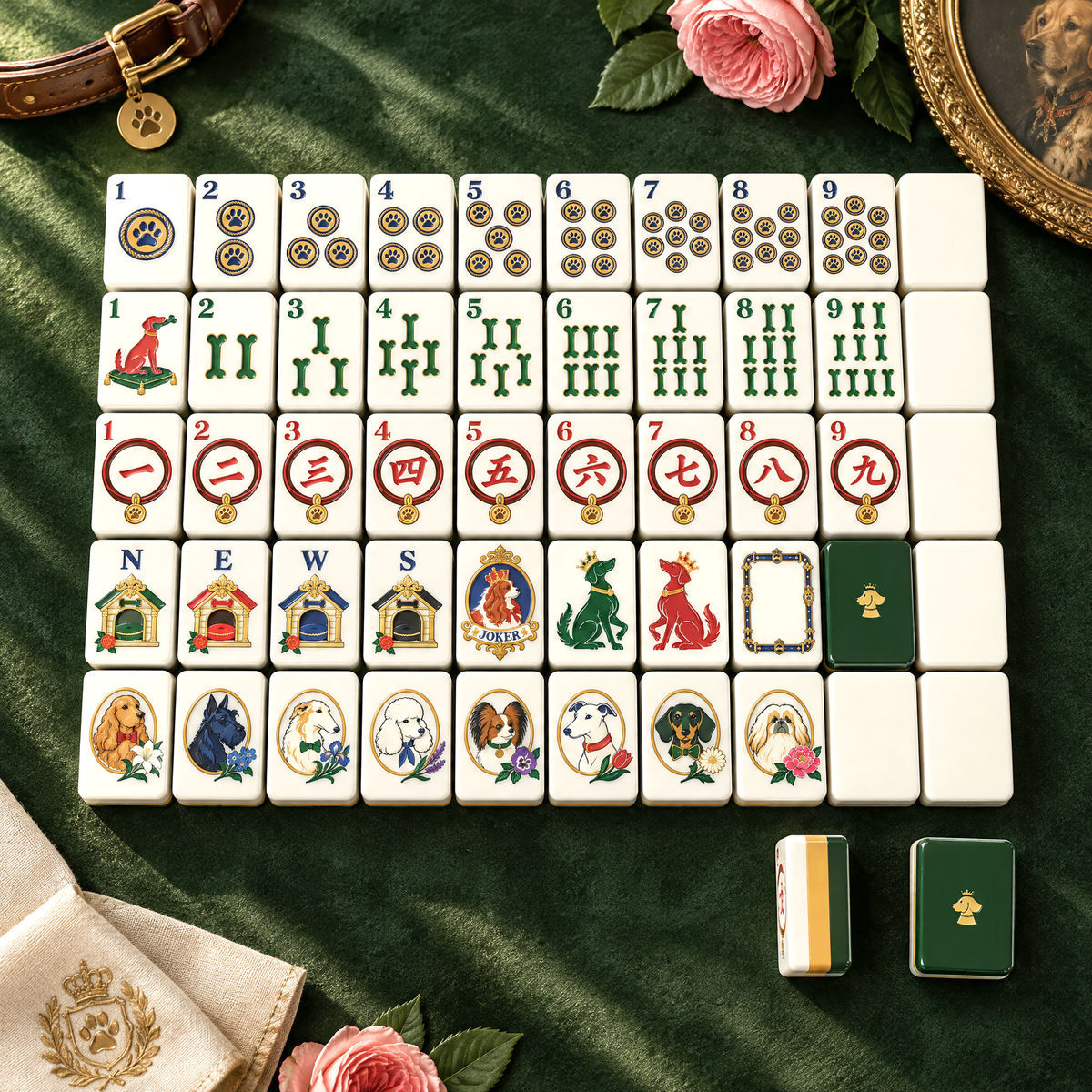
Vietnamese mahjong scoring awards points based on melds (pungs, kongs, chows), terminal and honor tiles, winning conditions, and bonus elements like flowers and seasons. A winning hand typically requires a standard "1 pair + 4 melds" structure (similar to Hong Kong mahjong), where each pung of simples scores 2 points, honors score 4, and kongs double the value; chows (sequences of 1-2-3, 2-3-4, etc.) are allowed and score 1 point. Bonuses include flowers (1 point each), seasons (1 point each), and concealed melds. The final score is calculated by summing all elements, then often doubled or multiplied based on winning style (self-drawn, discard win, limit hands). Vietnamese play is more pattern-focused than American mahjong—which uses the yearly National League card and has no chows—so players memorize hand types rather than checking a reference card during play.
How does Vietnamese mahjong differ from American scoring?
American mahjong uses an entirely different framework: players must match hands on the current year's National Mah Jongg League card (no chows allowed), and scoring is binary (you either win or don't). Vietnamese mahjong scores every hand element separately and allows chows (sequences like 1-2-3 or 7-8-9 in one suit), making it closer to Chinese and Hong Kong variants. American players work with a fixed hand list; Vietnamese players calculate points live. If you're hosting mixed games, use our best-selling mahjong sets with clear tile markings so all players—whether American or Vietnamese—can spot sequences and honors instantly.
🀄 Shop best-selling mahjong sets →

What tiles and melds score points in Vietnamese mahjong?
In Vietnamese scoring, melds are the foundation:
Pung of simples (e.g., three 5 Bams): 2 points
Pung of terminals or honors (e.g., three 1 Craks or three East Winds): 4 points
Kong of simples (four identical 2–8 tiles): 4 points (double a pung)
Kong of terminals or honors (four 1s, 9s, or winds): 8 points
Chow (e.g., 4-5-6 Dots): 1 point, can be called or concealed
Flowers (plant tiles): 1 point each
Seasons (season tiles): 1 point each
Winning conditions add multipliers: self-drawn wins (tsumo) often earn 2× base score, while discarded wins remain at base. This is fundamentally different from American mahjong, which has no chows and uses jokers to plug incomplete melds—Vietnamese mahjong demands exact sequences and higher pattern recognition.
How do you calculate the final Vietnamese mahjong score?
A worked example: Player has one pung of honors (4 pts), two pungs of simples (2 pts each = 4 pts), one chow (1 pt), one flower (1 pt), and wins on a discard. Base = 4 + 4 + 1 + 1 = 10 points. Many tables apply a 2× multiplier for discard wins or 3–4× for special limits (all terminals, all honors, seven pairs), bringing the payout to 20–40 points or more per player. Some Vietnamese circles use limit hands with fixed high scores (like 8 or 12 points max) to speed settlement. Scoring rules vary by region and table custom, so agree on the system before the Charleston. American mahjong scoring, by contrast, awards only 1 or 2 points per winning hand—no internal meld calculation—because hands are pre-defined on the card.

What winning conditions and limit hands exist in Vietnamese mahjong?
Vietnamese mahjong recognizes several premium hands:
Hand Type | Requirement | Typical Score |
All Pungs | No chows, all melds are 3+ identical | 6–8 pts |
All Terminals & Honors | Every tile is 1, 9, or a wind/dragon | 8–12 pts |
All Simples | No terminals, no honors | 3–4 pts |
All Flowers/Seasons | Tile bonus melds only | Limit (8–12 pts) |
Seven Pairs | Seven identical pairs, no melds | Limit (8–12 pts) |
Self-Drawn Win | Discard win multiplier | 2× base |
Limits cap payouts—essential at friendly tables to keep games balanced. Vietnamese play emphasizes hand purity; American play emphasizes pattern matching against a card. For home games with mahjong mats and racks with pushers, write your house rules clearly on a slip before starting—Vietnamese, American, and Hong Kong variants coexist, and mixing them causes disputes.
Can you mix Vietnamese and American mahjong scoring at one table?
No. They are incompatible systems. American mahjong requires the current year's hand card, prohibits chows, and uses jokers as wild tiles; Vietnamese mahjong forbids cards, rewards chows, and scores every meld independently. If your group plays both, host separate games with separate tiles and clear rules posted. Some casual players hybrid "American tiles, Vietnamese chows + scoring," but this confuses hand building and settlement. Stick to one variant per session. If you're teaching beginners, start with mahjong for beginners resources tailored to your chosen system—mixing them breeds errors and frustration. Equipment-wise, both use the same tile inventory (152 playing tiles), so our best-selling sets work for either; what differs is the rulebook and scoring pad.
🎁 See our most-loved mahjong sets & accessories →
What to check before you buy
Confirm your table's regional rules. Vietnamese scoring varies between North Vietnamese, South Vietnamese, and Cantonese dialects. Ask experienced players at your venue or club which system applies.
Get a scoring pad or agreement sheet. Write down multipliers, limit hands, and discard vs. self-drawn bonuses before the Charleston.
Verify chow vs. no-chow rule. Some casual groups allow chows; others don't. This changes every hand's value.
Test with a full 4-player set. Vietnamese mahjong requires exactly four players and all standard tiles; don't attempt 2- or 3-player variants of this scoring system without expert guidance.
Use clear-tile mahjong sets with visible suit symbols. Quick tile recognition prevents scoring disputes over what meld you're building.
✨ Find your Mahstead set — free US shipping →
Where can I learn Vietnamese mahjong hands and strategies?
Video tutorials from Vietnamese and Cantonese mahjong communities (search "Vietnam mahjong" or "Cantonese mahjong" on major platforms) are your best resource—rules differ by province and family tradition. Local community centers, cultural associations, and Meetup groups in areas with Vietnamese populations often host beginner tables; ask regulars for a glossary of hand names and scoring terminology in your language. Books on Hong Kong or Cantonese mahjong (closely related to Vietnamese variants) are available online; cross-reference with your table's house rules. Unlike American mahjong—where the National Mah Jongg League card is the single authority—Vietnamese play is decentralized, so learning from your actual game host is essential. Bring a notebook to your first session and jot down the scoring matrix and limit hands in use; this saves time and reduces misunderstandings.

FAQ
Is Vietnamese mahjong scoring easier or harder than American?
Vietnamese is more complex mathematically—you add up every meld and bonus—but easier conceptually: memorize a few hand types and bonuses, play by sight. American requires decoding the card each turn; Vietnamese requires speed at mental math and pattern memory. Difficulty is equal, just different.
Can I play Vietnamese mahjong with an American mahjong set?
Yes. Both use 152 playing tiles with the same suit and honor symbols. The difference is the rulebook and scoring pad, not the hardware. Tiles from our best-selling sets work for any variant.
What is a "chow" and why doesn't American mahjong use it?
A chow is a sequence like 4-5-6 Dots. American mahjong bans chows to simplify hand recognition and eliminate ambiguity with the card. Vietnamese allows chows because hands are calculated live, not matched to a list.
How much does a player typically win or lose per hand in Vietnamese mahjong?
Depends on house limits and base scoring. A simple hand might pay 2–4 points; a limit hand 8–12 points. At stake money, agree on cents per point before the game starts. American mahjong typically pays 1–2 points per hand, so Vietnamese games settle faster.
Do flowers and seasons count toward both points and hand completion in Vietnamese mahjong?
Flowers and seasons are bonus tiles, not melds. They score points but do not fill the "1 pair + 4 melds" requirement—you still need four standard melds or an all-pairs/all-terminal hand. In American mahjong, flowers are drawn separately and do not contribute to scoring; they're just drawn and replaced.


View More
View More
View More
