
Vietnamese Mahjong Rules: How It Differs From American
Last updated: Nov 23, 2026
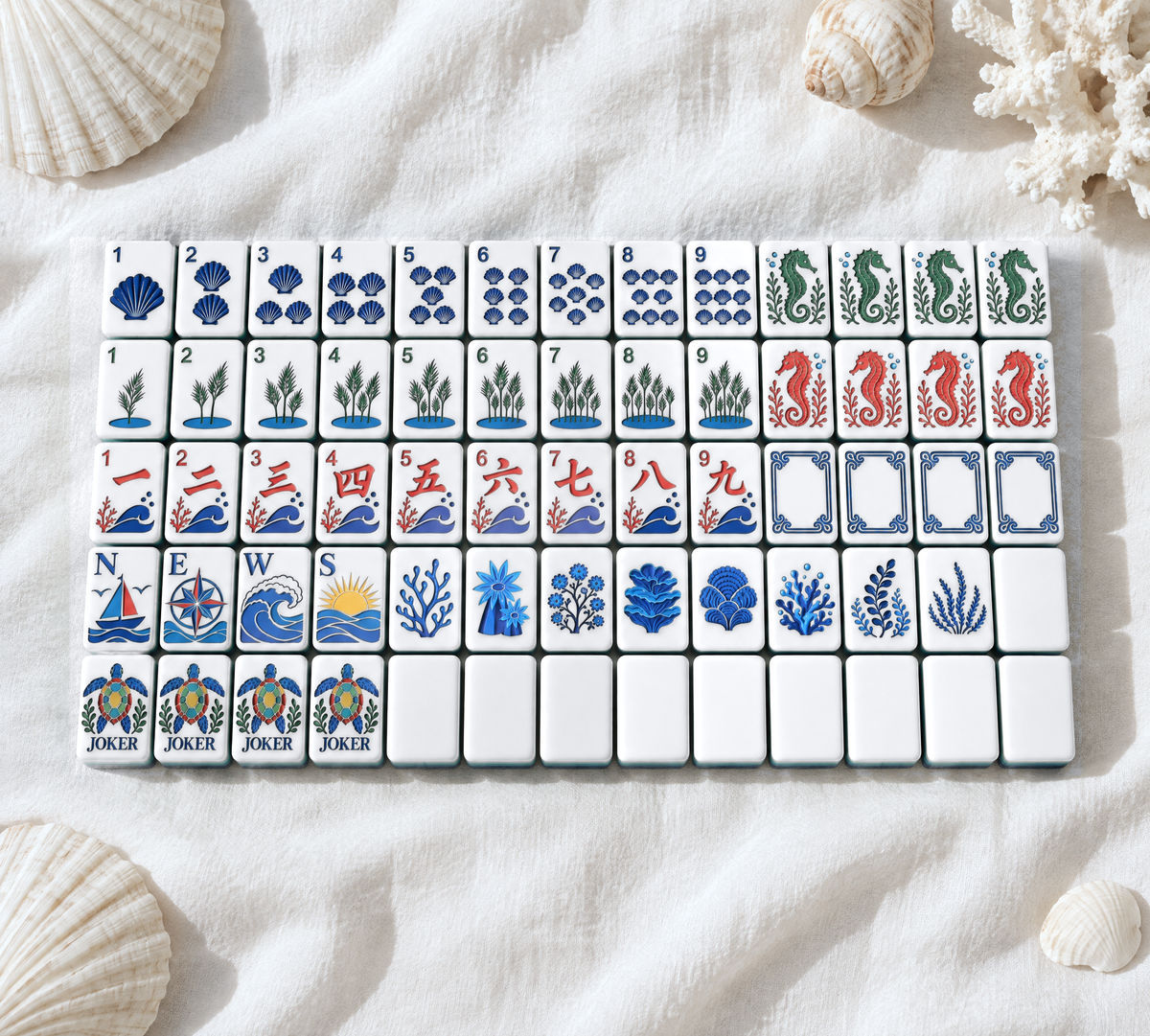
Vietnamese mahjong is a simplified variant of Chinese mahjong played with 144 tiles (no American jokers or flowers). Players draw and discard to form melds: pungs (three identical tiles), kongs (four identical), and chows (sequences like 1-2-3 of the same suit). The key difference: all tile ranks 1–9 in each suit and honor tiles (winds, dragons) carry the same value—there's no special scoring multiplier for dragons or honor combinations. Hands resolve faster because winning relies on pattern completion, not matching a card-based scoring sheet. Games typically play 4–16 rounds per session. You can play Vietnamese mahjong casually with a standard Asian mahjong set; many players worldwide learn it as an entry point before moving to American or Hong Kong variants.
What tiles do you use in Vietnamese mahjong?
Vietnamese mahjong uses 144 tiles: three suits (Bams, Craks, Dots) numbered 1–9, four copies of each (108 tiles total), plus 16 winds (4 each of North, East, West, South) and 12 dragons (4 Red, 4 Green, 4 White). No jokers, flowers, or blank tiles. The simplicity makes it a natural step between casual play and competitive American mahjong, which uses 152 playing tiles plus extras. Many home players in Vietnam and diaspora communities simply use a single deck without storing spare sets.

How is hand-winning different from American mahjong?
Vietnamese mahjong requires winning hands to consist of four melds (12 tiles) plus one pair (2 tiles). American mahjong uses the National Mah Jongg League card each year, which dictates legal patterns ranging from all pungs to mixed sequences and honors. Vietnamese hands have no card—you win by any valid combination of melds plus a pair. This means the game plays faster and feels more improvisational; winning doesn't require matching a specific pattern on a reference sheet. New players often find Vietnamese rules easier to learn because the pattern logic is simpler and more intuitive.
🎁 See our most-loved mahjong sets & accessories →
Can you call melds and build exposed sets?
Yes. In Vietnamese mahjong, players can call (claim) discarded tiles to complete a pung, kong, or chow and expose it on the table, just like in Chinese mahjong. This is fundamentally different from American mahjong, where exposed sets can only be created by the player holding them; American players cannot call a neighbor's discard to add to an existing pung. Vietnamese players interrupt the flow to claim tiles for incomplete melds, which speeds play dramatically. Calling a tile for a pung or chow triggers immediate exposure; the round continues after the discard. A player can only win by drawing from the wall or claiming a discard to complete their final meld and pair.
What's the scoring system in Vietnamese mahjong?
Vietnamese mahjong uses a flat-point system: each winning hand is worth one point (or a fixed chip/stake agreed before play starts). Some regional rules award bonus points for all-simples (tiles 2–8 with no honors), all-honors, or all-one-suit, but the base win is one. American mahjong awards variable points based on the hand pattern (some worth 30, others worth 40, 60, or more). Vietnamese play is therefore quicker to settle: no calculator needed, no complex multipliers. This simplicity attracts casual players and speeds up tournament-style rounds. Players typically reset scores after each hand and play to a target—often 16 points wins the session—rather than playing a fixed number of hands.
How do you start a game and pass tiles?
Vietnamese mahjong typically uses a simplified shuffle and build: players gather tiles, shuffle them face-down, build four walls of 18 tiles each (or 36 tiles per wall in some variants), then each player draws their starting hand from their wall section. There is no formal "Charleston" tile-passing ritual like American mahjong. Players draw one tile from the wall and discard one each turn in sequence. East (the player opposite the dealer's left) usually starts the first discard. Rounds rotate East position around the table. The game flows continuously without the pause needed for American mahjong's three-pass Charleston, making Vietnamese play feel more streamlined for drop-in sessions.
✨ Find your Mahstead set — free US shipping →

How does Vietnamese mahjong compare to American play?
Aspect | Vietnamese | American |
Tile count | 144 tiles, no jokers | 152 tiles + 8 jokers |
Melds allowed | Pungs, kongs, chows (all called and exposed) | Pungs, kongs, quints, sextets only (no chows) |
Scoring basis | Pattern completion, flat points per win | National Mah Jongg League card with hand values |
Winning hand | 4 melds + 1 pair, any valid combo | Must match current year's card exactly |
Tile-passing ritual | No—direct wall draw | Yes—formal Charleston before each game |
Play pace | Fast; 4–16 rounds per session typical | Moderate; typically 8–12 hands per session |
Learning curve | Easier; fewer rules | Steeper; requires annual card memorization |
The simplest way to think about it: Vietnamese mahjong is to American mahjong as poker is to bridge. Both are strategic, but one is learned in an afternoon and the other rewards deep study of reference material.
Where do you find Vietnamese mahjong games?
Many Vietnamese cultural centers, community centers in areas with diaspora populations, and informal home games host Vietnamese mahjong weekly. Check local libraries, community boards, and social-media groups (especially Facebook community pages and Meetup) for open games or lessons. Some players blend Vietnamese and American rules in casual settings—always clarify which variant your group is playing before sitting down. Online platforms have also begun hosting Vietnamese mahjong, though in-person play remains the tradition. If you're starting your own group, a standard Asian mahjong set works fine for casual play, though some players prefer bamboo or bone tiles for authenticity.
What should you check before you buy tiles for Vietnamese mahjong?
Tile count: confirm your set has exactly 144 tiles (or 152 if you plan to add jokers for variant play later).
Weight and feel: heavier resin or bamboo tiles ($) feel more authentic and slide better during play; lightweight plastic sets work fine for learning.
Engraving clarity: check that the numeral and suit symbols are deeply carved and easy to read under lamp light, especially if players wear glasses.
Storage: verify your bag or case accommodates your set size and closes securely (Vietnamese community play often means traveling to friends' homes).
Racks and pushers: optional but helpful—mahjong racks with pushers make handling larger hands easier and reduce table fatigue.
🀄 Shop best-selling mahjong sets →
Starting a Vietnamese mahjong night: a quick checklist
Gather four players (essential) or two–three if using house rules for fewer players.
Set stakes or point target (e.g., 16 points wins the session).
Shuffle and build walls without a Charleston; East takes first turn.
Each player draws and discards one tile per turn in sequence (East, South, West, North, repeat).
Players call and expose melds when they complete a pung, kong, or chow from a discard.
First player to form four melds plus a pair wins the round and scores one point.
Rotate East position and play next hand.
Record score; play until target is reached or time is up.
The rhythm is immediate and forgiving—new players catch on within one or two hands.

FAQ
Can I use an American mahjong set to play Vietnamese mahjong?
Yes, but you won't use the jokers or flowers. American sets ship with 152 playing tiles; Vietnamese mahjong needs only 144. Set the extra tiles and jokers aside. The tile faces, suits, and honors are identical between sets, so gameplay works the same.
Is Vietnamese mahjong faster than American mahjong?
Usually, yes. Vietnamese games play 4–16 rounds per session because there's no card to reference and no Charleston ritual. American mahjong typically runs 8–12 hands per session due to hand lookup time. Both games take similar wall-clock hours, but Vietnamese fits more rounds into them.
What's the easiest way to learn Vietnamese mahjong if I've never played before?
Start by learning the four meld types (pung, kong, chow, and pair), then play one practice round with a coach who calls out legal moves. The pattern logic is intuitive—most new players grasp it in 20–30 minutes. American mahjong requires memorizing a card; Vietnamese play is more forgiving for beginners.
Do I need special tiles or a mat to play Vietnamese mahjong?
No. Any 144-tile set, a flat table, and four players are enough. A mahjong mat makes play more comfortable and quieter (tiles don't clack on bare wood), and racks with pushers reduce hand fatigue during longer sessions. Both are optional but improve the experience.
How do ties or dead draws work in Vietnamese mahjong?
If the wall is completely drawn and no one has won, the round is a draw (or "no hand"). Some groups award bonus points to players closest to winning; others simply reset and play another hand. House rules vary by region and friend group, so agree on this before play starts.
Can Vietnamese mahjong be played with two or three players?
Not easily with standard rules; the game is designed for four. Some groups modify walls and hand sizes for three-player games, but this is informal and regional. If you want two- or three-player mahjong, American mahjong has formal two and three-player rules on the National Mah Jongg League card.


View More
View More
View More
