
Where to Learn Malaysian Mahjong: Complete Guide
Last updated: Nov 23, 2026
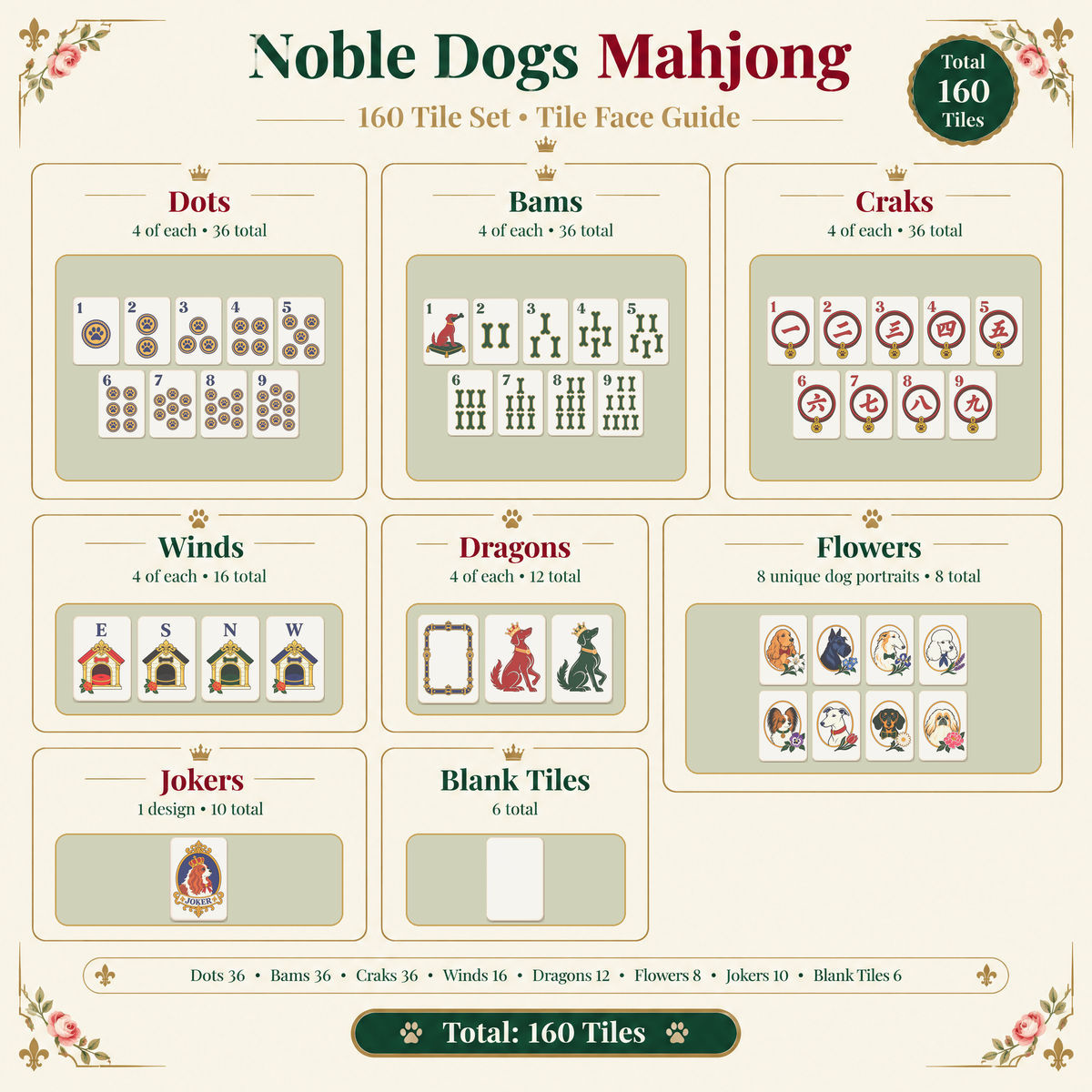
Malaysian mahjong is played on the same 152-tile foundation as American mahjong but differs in hand construction (chows—sequences—are legal and can be exposed), scoring systems, and wind-round mechanics. You can learn it online through YouTube channels dedicated to Hong Kong-style play (the closest rulebook cousin), in-person at Malaysian cultural centers or mahjong clubs in cities with large Malaysian or Southeast Asian communities (search community centers, libraries, and cultural associations), or through private tutoring arranged via mahjong meetup groups. Most learners spend 4–8 weeks on basics and 3–6 months to play confidently at casual tables. Books on Hong Kong mahjong provide the most relevant rule foundation. You'll need a standard 160-tile set from our best-selling collection, a mat to protect your tiles, and racks if you prefer not to hold your hand. Avoid learning from American-only rulebooks—the hand structures and call mechanics are fundamentally different, which frustrates players from both traditions.
Malaysian mahjong sits at the crossroads of Hong Kong and Taiwanese variants, adapted for the pace and social rhythm of Southeast Asian play. If you've learned American mahjong, unlearning a few rules matters: chows (1-2-3, 4-5-6 sequences) are central here, jokers have different power, and the wind rounds cycle differently. We host weekly games in Dallas and have taught players who switched from American to Malaysian mid-learning—the pivot is real, but learners who embrace it often prefer Malaysian's flow within weeks.
Where do Malaysian mahjong clubs actually exist?
Malaysian mahjong thrives in cities with established Malaysian, Chinese, or Taiwanese communities: Toronto, Vancouver, Singapore, Kuala Lumpur, Los Angeles, San Francisco, and smaller pockets in Sydney and Melbourne. In the US, check community centers, cultural associations (Malaysian, Chinese, or Pan-Asian), libraries with cultural programming, and university Asian student groups. Search "[Your City] mahjong club," "[Your City] Malaysian community center," or "[Your City] Chinese cultural association." Many clubs advertise on Meetup, WeChat, or WhatsApp group chats—ask at local Malaysian restaurants or noodle shops; staff often know the Tuesday or Thursday night crowds. Start by visiting once as an observer; most players welcome genuine learners and loan spare tiles.

How does Malaysian mahjong differ from American rules?
The core difference: chows are legal and can be exposed. In American mahjong, you can only expose pungs (three identical tiles), kongs (four identical), and higher melds. In Malaysian play, you also build and call chows—sequences of three consecutive numbers in one suit, like 4-5-6 Bams. This changes hand strategy entirely. You chase different combinations, hand-building follows chow patterns, and the tile reading accelerates. Jokers in Malaysian mahjong are less powerful than in American; many hands forbid or limit joker use. The wind-round structure also differs: Malaysian games often run shorter rounds (8 hands vs. 16 in some American games), and dealer rotation can shift mid-round. The scoring sheets are unique to each club or region, not standardized like the American NMJL card. If you know American mahjong, think of Malaysian as the same alphabet but a totally different grammar.
What resources teach Malaysian mahjong online?
YouTube channels: Search for "Hong Kong mahjong rules tutorial" or "mahjong hongkong 麻將" (mixing English and Chinese searches captures more content). Hong Kong tutorials are your best proxy—Malaysian play borrows heavily from that rulebook. Look for channels run by Southeast Asian mahjong clubs or tutors; they often explain chow mechanics, hand patterns, and counting step-by-step with tile examples.
Facebook groups: Search "[Country name] mahjong players" or "Malaysian mahjong"; join regional groups and ask moderators for learning resources or club referrals.
WhatsApp and Telegram: Many clubs share rules and hand photos here. Ask a club contact to invite you.
Books:The Complete Book of Mahjong by Ann Israel and Ruth Levine covers Hong Kong rules, the closest published match to Malaysian play. Look for Taiwanese or Hong Kong mahjong rule books at Asian bookstores or online.
Reddit: r/mahjong has threads on regional variants; search "Malaysian" or "Hong Kong" rules and ask for beginner-friendly resources.
Honest note: Malaysian mahjong lacks a single "official" rulebook like American mahjong has in the NMJL card—regions and clubs vary slightly. Your first weeks should focus on chow mechanics and the hand-building mindset shift, then adapt to your local club's scoring rules once you join.
What equipment do you need to play Malaysian mahjong?
You need a standard 160-tile acrylic set (152 playing tiles plus spares). Malaysian mahjong uses the same tile lineup as American and Hong Kong: three suits (Bams, Craks, Dots numbered 1–9), four winds, three dragons, flowers, and jokers. Acrylic tiles are durable, clean easily after Friday night games, and won't split in humid Southeast Asian climates the way bamboo can.
Beyond tiles, add:
A mahjong mat: Protects tiles from table damage and shows clear tile spaces for hand organization. Explore our mats—some players prefer lighter felt for faster tile movement, others choose thicker protection for tournament play.
Racks with pushers: Not mandatory but speeds up hand management and keeps your melds visible without holding tiles in your hand. See our racks if you play 2–3 times weekly or host regular games.
A storage bag or case: Protects your set between games and makes carrying to club nights easy. Check our travel bags for sized options.
Dice are optional (many Malaysian clubs use random tile draws or app randomizers for dealer selection). Start with tiles, mat, and a pencil for scoring—add racks and cases later as you settle into club play.
🀄 Shop best-selling mahjong sets →

What's the realistic timeline from beginner to confident player?
Milestone | Weeks | What You Master |
Rules and chow mechanics | 1–2 | Hand structure, chow vs. pung vs. kong; illegal melds; basic win patterns |
Hand reading and tile counting | 2–4 | Recognize 30–50 common patterns; predict neighbors' hands; track discards |
Speed and table etiquette | 4–8 | Play a full game without pausing; follow draw/discard rhythm; read signals |
Local scoring and strategy | 8–16 | Master your club's point rules; make tactical calls; switch hands mid-game |
Casual table confidence | 12–24 weeks | Play socially without anxiety; teach new players; enjoy multiple hands weekly |
Real talk: If you play 1–2 hours weekly, timeline stretches. If you play 4–8 hours weekly with patient teachers, you compress it. Most of our group learned American mahjong in 6–8 weeks, then adapted to Malaysian rules in an extra 2–3 weeks—the tile-reading foundation transfers fast.
How do you avoid common beginner mistakes in Malaysian mahjong?
Don't memorize hand patterns yet. Learn chow and pung logic first. Patterns follow naturally after 3–4 games.
Don't hold onto high-value tiles too long. Malaysian play rewards speed over American caution. Discard aggressively to read your neighbors' intent.
Don't ignore the discards pile. Hong Kong–style games read the discard pattern like a map of the table's intent. Watch what others throw and why.
Don't assume American joker rules apply. Many Malaysian hands limit jokers to 1–2 per hand or ban them in certain melds. Always ask before play.
Don't skip the scoring explanation. Scoring varies wildly by region. Spend 10 minutes pre-game understanding your club's point multipliers and bonus rules. You'll play better and lose less money.
Don't play with a cracked or mismatched set. Worn tiles confuse hand-reading (is that a 1 or a 7 Crak?). Use a well-maintained 160-tile set from a reliable source like Mahstead's best-selling collection—we sell acrylic sets designed to last through hundreds of games without wear.
🎁 See our most-loved mahjong sets & accessories →
What to check before you buy a mahjong set for Malaysian play
Tile clarity: Can you read every number and suit symbol from across a card table? Test in daylight. Acrylic outperforms bamboo here.
Tile weight and sound: Lighter tiles feel cheap and sound hollow. Heavier acrylic tiles (4–5mm thick) click pleasantly and feel stable on a mat.
Set completeness: Confirm it includes 152 playing tiles plus spares. Never buy a set labeled "144-tile" for Malaysian play—you need the full lineup.
Mat compatibility: If you buy a mat, ensure it fits your table and that your tile size matches the mat's spaces (standard is 26–28mm). A cramped mat wastes your set's quality.
Bag or case fit: Measure your set's packed dimensions before buying a travel bag. Over-stuffing damages tiles or splits seams.
✨ Find your Mahstead set — free US shipping →

FAQ
Can I learn Malaysian mahjong if I only know American mahjong?
Yes, and it's faster than learning American from scratch. You know tile names, wind and dragon mechanics, and hand strategy. Unlearning the "no chows" rule and adapting to chow-centric play takes 2–4 weeks of practice, not months.
Is Malaysian mahjong the same as Hong Kong mahjong?
Very close—Malaysian play borrows Hong Kong rules as its foundation, then adapts for regional pace and scoring. If you learn Hong Kong rules, you're 85% ready for Malaysian clubs. Regional tweaks are explained at your first table.
Do I need a scoring app or pad for Malaysian mahjong?
A pen and paper work fine. Some clubs use apps or printed scoresheets, but clubs vary. Ask before your first game. Most players learn club scoring in the first 2–3 rounds by watching.
Where's the best online community to ask Malaysian mahjong questions?
Reddit's r/mahjong has active Hong Kong and regional players who answer quickly. Facebook regional groups (search "Malaysian mahjong players" or "[City name] mahjong") often have club moderators who mentor beginners.
What happens if I make a mistake in my first games?
Experienced players gently correct you without penalty in casual games. The goal is learning, not profit. Honest clubs frame early mistakes as teaching moments. Avoid high-stakes games until you've played 20+ casual hands.
Can I play Malaysian mahjong with the same set I use for American mahjong?
Completely. The tiles are identical—152-tile sets work for both variants. The difference is hand structure and rules, not equipment. Swap rulebooks, same tiles.


View More
View More
View More
