
Two Player Mahjong Quick Start Guide
Last updated: Nov 23, 2026
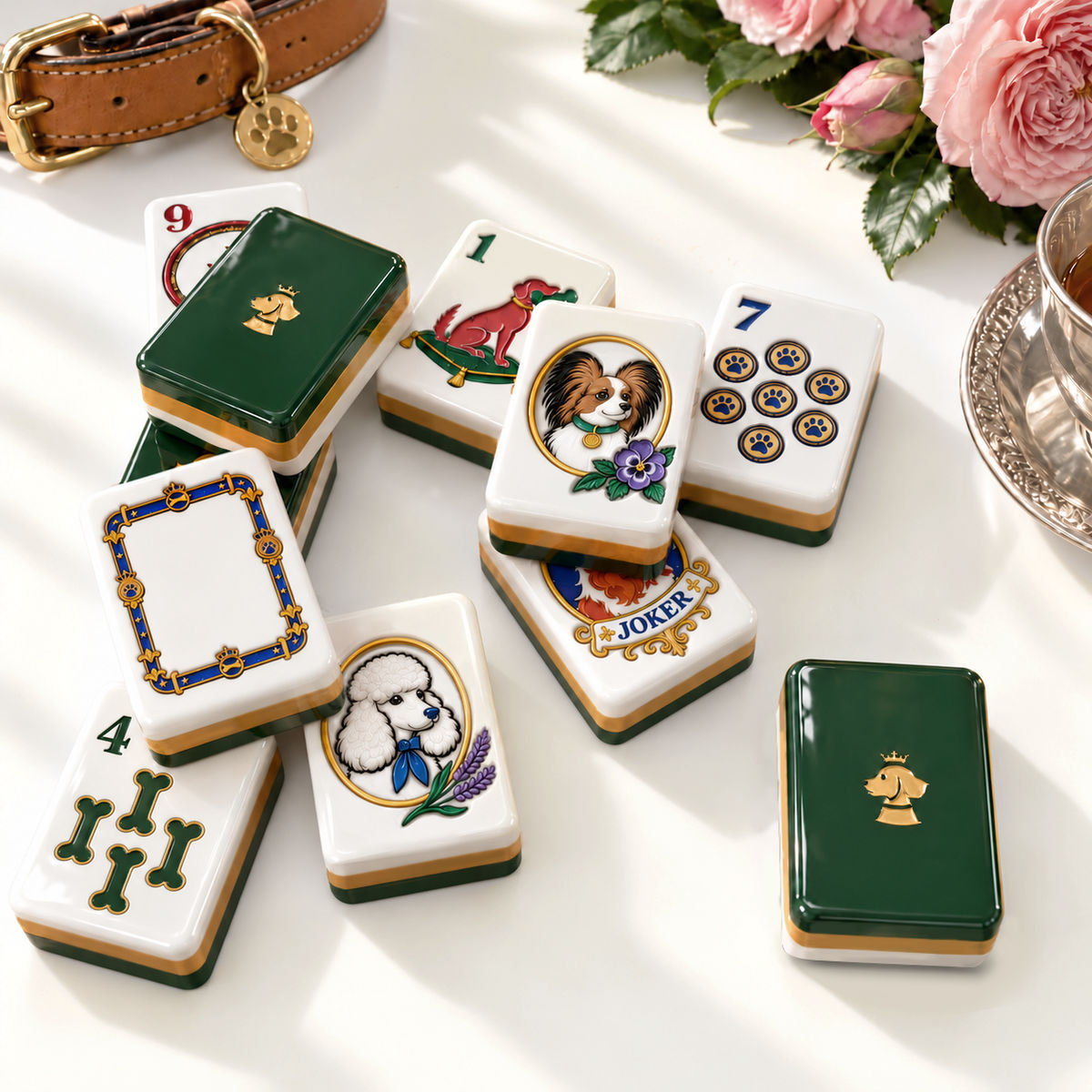
Two-player American mahjong uses all 152 tiles and 8 jokers from a standard set, with East taking one extra tile at the start. The wall is built in a single row instead of four sides; players alternate drawing and discarding until someone wins by matching the current year's National Mah Jongg League card. A two-player game typically takes 20–40 minutes depending on experience. You'll skip the Charleston (tile-passing ritual) and deal by having East draw 13 tiles and West draw 14; then East discards first. The core rules—exposed sets (pungs, kongs, quints, sextets), joker placement, no calling or picking other players' discards—stay the same. Avoid stalling on your discard or misbuilding the wall; keep score honestly and use a pencil on paper so disputes are clear later. You can play competitively or socially; many players enjoy two-player practice before joining a regular four-player group.
How do we set up a two-player game?
Start with a standard 152-tile American mahjong set plus 8 jokers. Place your mahjong mat or playing surface between you—or skip it if space is tight; you just need a flat surface where tiles can rest face-down. Build the wall as a single continuous row of tiles (not four walls), 19 tiles long and 2 tiles high, stacked face-down in front of the player who will be West. East sits opposite. Decide who is East by drawing a tile; highest wind (North > East > South > West) wins East, or flip a coin. Keep your best-selling mahjong sets → tile box nearby so you know you have all 152 tiles before you start; spotting a missing tile mid-game is awkward.

Who deals first and how does the discard work?
East always deals first in American mahjong. East draws 13 tiles, West draws 14—so West has one extra. East discards any tile face-up on their side of the wall. Unlike four-player, there is no "calling" or picking a discard from the other player; the discarded tile stays there, and West draws from the wall. If West does not want that tile, they ignore it and draw their own. West discards one tile. East now draws a tile from the wall (not the discard). Play alternates: discard, opponent draws from wall (and can also ignore the discard), discard. This continues until someone matches a winning hand on the card.
What hands win, and do they work like four-player?
Yes—winning hands come only from the current year's National Mah Jongg League card. You must have 14 tiles that form a complete pattern: either a pair plus four sets (pung, kong, quint, or sextet), or special hands like all quints. Jokers substitute for any single tile except a pair (a pair must be two identical tiles; you cannot use a joker there). Two-player hands are the same as four-player; the difference is just the setup and discard rhythm. If you have not played before, download or print the current year's card and sit with it face-up so you can scan for matches as you draw. After you win, write down your score using standard American mahjong scoring rules, then shuffle tiles and deal again with the other player now as East.
What mistakes do new two-player players make?
Forgetting to skip the Charleston. In four-player, you pass tiles in three rounds before dealing; in two-player, you deal straight from a shuffled pile. Skip it entirely or your setup is wrong from the start.
Picking up an opponent's discard by accident. In two-player, discards sit there—you do not have to take them. Many new players reach for any discard out of habit. Agree before play: "Discards stay on the board until the next player's turn" or use a small tray to keep them visually separate.
Miscounting the wall. With two players building one row, it is easy to lose track of where the "break" is. Mark it with a small chip or pen so you both know where to draw from.
Stalling on a discard. Two-player games move faster; slow play is noticeable. Know your discard before your turn begins. If you are stuck, pick the safest tile (usually a flower or terminal honor) and move on.
Not keeping clear score. Use a pencil and paper, not phone notes. Write down every hand won, the hand type, points, and a running total. Disputes happen, and a visible record stops them cold.
How does strategy change with only two players?
With two players instead of four, tile probability shifts—you see half as many players' discards, and your opponent's rack is simpler to read. Watch what they keep; if they hold a tile for three turns, they likely need it for a pung or a specific suit. Conversely, they are watching you; discard a dangerous tile (something they just drew) early and often. Because there is no calling or stealing sets, the entire game is about reading the wall and the discard pile. Keep your tiles organized by suit and number, high to low, so you can spot near-complete sets quickly. Do not hoard jokers—use them to speed up hand completion. Two-player games reward speed and focus more than four-player, where multiple discard options give you flexibility.
Factor | Two-Player | Four-Player | Why It Matters |
Deal | East 13, West 14 | Each 13; East first | West has initial advantage |
Wall | One row (19 × 2) | Four sides (7 × 2 each) | Fewer tiles to draw from; wall is exhausted faster |
Discards | Ignored unless wanted | Cannot call or pick | Both players decide independently when to draw |
Game length | 20–40 min | 30–60 min | Faster pace; fewer players slows fewer decisions |
Tile sight | Half the discards visible | Three discards visible each round | Harder to track opponent's strategy |
Winning odds | Higher (fewer sets needed to be complete) | Lower (more competition) | You win more often; games feel tighter |
Setup ritual | No Charleston | Three passes | Shuffle, deal, play immediately |
🀄 Shop best-selling mahjong sets →

What if I want a dedicated two-player mat or bag?
Standard American mahjong mats are designed for four players and fold into quarters; for two-player, they often feel oversized, but many of us still use them for the wrist rests and card holders. If you play two-player regularly, a smaller mahjong mat → is not a necessity—a smooth wooden or cloth surface works fine. However, if you want to keep your game portable and professional, a compact set bag with a built-in divider lets you store your tiles and card safely; no mat needed. Mahjong bags and cases → make cleanup instant and protect your tiles from dust. If you already have a mat and bag for four-player games, they work for two-player too—just push everything to one side of the mat and use half the space.
When do we call "mahjong" and when do we pay?
As soon as your hand matches a pattern on the card, say "Mahjong" aloud and lay your tiles down in sets so the opponent can verify. The winner collects points from the loser based on hand type and visible sets (exposed pungs, kongs, etc. are worth more than all-concealed hands). Both players use the same National Mah Jongg League card → to agree on the point value. Use a standard American mahjong scoring reference (available free online or in the rules booklet that comes with sets) to calculate payouts. Record the winner's initials and points, and then shuffle for the next game.
🎁 See our most-loved mahjong sets & accessories →
Can I play two-player mahjong casually, or only competitively?
Both. Casual two-player is how many people practice alone with a friend before joining a weekly four-player group—it is low-pressure, no money, just learning. You can also play for points or fun league-style scoring. The rules are identical; the only difference is intent. Casual games often run longer because players chat and take breaks; competitive games move faster. If you are new, casual is recommended. Play 5–10 games to build tile recognition and hand patterns before trying competitive scoring.
Before You Buy or Play: A Quick Checklist
✓ Confirm you have all 152 tiles + 8 jokers; sort by suit before shuffling
✓ Print or download the current year's (2026) National Mah Jongg League card
✓ Decide East and West; build a single-row wall face-down
✓ Deal: East 13, West 14
✓ East discards first, then alternate draw + discard cycles
✓ Skip the Charleston (no tile-passing in two-player)
✓ Keep paper and pencil for scoring
✓ Never call or steal another player's discard—just ignore it
✓ Use jokers freely in sets (but never as a pair)
✓ Play until someone matches the card; verify with your opponent before paying
✨ Find your Mahstead set — free US shipping →

FAQ
Do I need a special two-player mahjong set?
No. Any standard 152-tile American mahjong set with 8 jokers works for two-player. The tiles are identical; only the setup and play rhythm differ from four-player.
Can I use a four-player mat for two-player games?
Yes. Standard mahjong mats work fine; just use one half of the mat or push everything to one side. A compact mat takes less storage space if you play two-player often.
What if we want to play best-of-five or tournament style?
Play five consecutive games (one player as East each game, then alternate). Keep a cumulative score on paper. The player with the most points after five games wins the match. Same rules apply.
Is two-player mahjong in the official rules, or is it a house variant?
Two-player is recognized by American mahjong organizations as a valid format, though four-player is standard. The National Mah Jongg League card works for both; hand patterns and scoring are identical.
How long does a two-player game really take?
Most games finish in 20–40 minutes after the first few games. Your first game may take 45 minutes or more while you learn the card. Casual play with chat adds time; focused competitive play is faster.
Can I practice two-player alone to prepare for four-player?
You can play solo to memorize patterns and tile combinations, but two-player strategy differs from four-player (fewer discards, no calling). Play both formats before joining a regular four-player group so you see how multi-player dynamics change hand-reading and discard safety.


View More
View More
View More
