
Mahjong East Strategy Tips: Seat Positioning and Tile Flow
Last updated: Nov 23, 2026
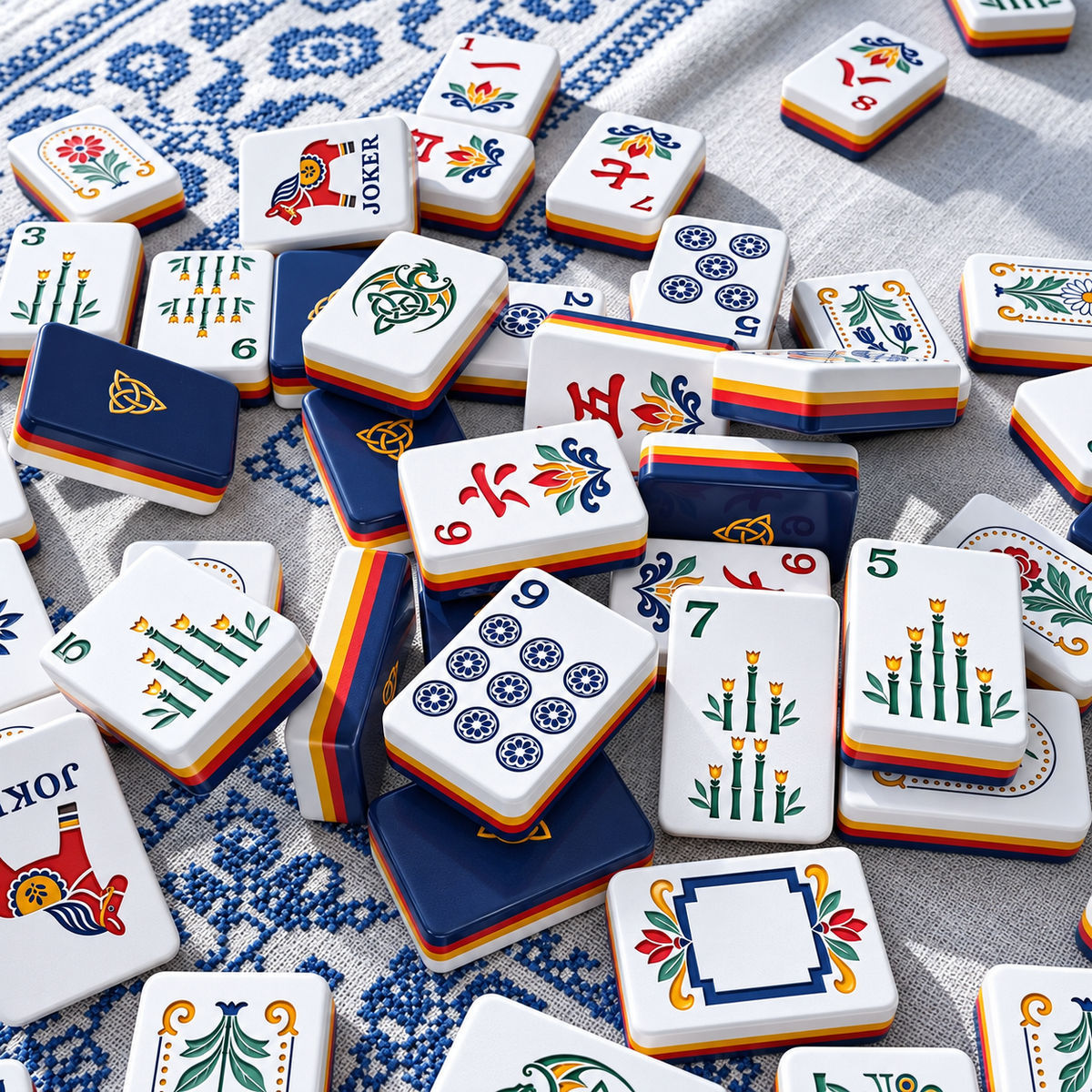
East is the dealer and draws first after the Charleston ends, giving you a one-tile advantage in hand development—your 14th tile arrives before West, North, or South claim theirs. East faces two key benefits: you see the discard pattern earliest and can read other players' hand types before committing your own strategy, plus you play first in each round, setting the tempo and forcing defensive calls. However, East also endures higher discarding pressure—opponents watch your tiles closely for patterns. Winning East strategy means building conservative early hands to read the table, discarding from the highest-value suit first (typically Dragons or Winds if not scoring them), and using your first-draw advantage to lock pung and kong combinations before competitors settle their racks.
Why does East seat matter more than other positions?
East rotates dealer status—you play twice per full rotation, not once. Your opening draw of 14 tiles (versus 13 for others) is small but cumulative: after four hands, you've drawn one extra tile before any other player and seen one extra discard sequence. This matters because American mahjong hands come from the current year's National Mah Jongg League card, which changes annually. Early pattern recognition determines whether you pursue a hand type or pivot. East reads South's discard on turn two, West's on turn three, North's on turn four—before deciding whether to commit to exposing a pung or kong. Other seats wait passively; East steers.

What's the best opening discard strategy from East?
Discard Dragons or Winds first unless they're already in a pung or part of your target hand. American mahjong hands rarely score isolated single Dragons or honors—they score in pung (three identical), kong (four identical), or pairs. If your opening 14 includes, say, one Red Dragon and two Green Dragons, expose nothing yet; keep the Greens. If you hold one of each Dragon with no multiples, discard an uncalled Dragon early (turn one or two) to signal you're not building Winds-and-Dragons scoring, which stops opponents from defensive calls. Never discard from your target suit in the first four turns—you'll telegraph your hand and face three discards pushing tiles away from the wall. Discard unpaired number tiles from your weakest suit instead. This forces South, West, and North to guess your intent for five more turns.
How do you read the discard pile as East?
Watch for paired discards (same tile, two separate discards by the same player) and singletons appearing twice. If South discards a 5 Bam and a 5 Crak in the first three turns, South is avoiding a suit or not pursuing Bams and Craks together. If North discards only 1 Dots, 2 Dots, then 3 Dots—a run—North is NOT building a pung-based hand in that suit; North is cycling number tiles to hunt a different hand type. As East, you can use this to predict defensive patterns. When West then exposes a 5 Bam pung (calling your 5 Bam discard), you already know South will not call the next 5 Bam because South avoids Bams; your 5 Bam is safer in a future discard. Combine discard patterns with how jokers work—opponents preserve jokers only for hands already half-built—to narrow their targets to two or three hand types by turn eight.
What does "controlling tempo" mean from East position?
Tempo is how fast the hand fills. When you expose a kong (four identical tiles), the wall advances and all players draw a replacement tile. If you're East and expose two kongs while others expose one each, you've moved the wall three times faster than the average player—and locked four tiles twice over, lowering the odds that North or West complete competing hands. Controlling tempo from East means exposing pungs and kongs strategically: expose them when you're close to hand completion (12 or 13 of 14 tiles ready) so that the accelerated wall pace works in your favor, not others'. Conversely, if you're blocked (stuck on 10 tiles with no clear path), slow tempo by NOT exposing; discard and let others expose. Use your first-player status to decide when to accelerate, not just what to discard. This flips East's advantage from passive luck to active leverage.
When should you pivot hands as East, and how?
Pivot when your target hand disappears (tiles are already exposed by others or discarded excessively). If the National Mah Jongg League card shows three valid hand types for your tiles at turn five, but West has already exposed both Pung-Kong combinations you need, eliminate those options and scan the card for a second-choice hand using your remaining 12 available tiles. East has the luxury of one extra tile—if your primary hand required all three 1 Dots, both 2 Dots, and jokers, but two 1 Dots are already in an exposed kong, you have 12 tiles to find a new hand instead of 11. Pivot early (turn four to six), not late (turn ten), to avoid ghost hands—hands that look complete but require a critical tile that's already gone. Study how to read the mahjong card before East rotates to you so you can scan and pivot in under 15 seconds.
Comparison Table: East vs. Other Seats—Key Metrics
Factor | East | West | North | South |
Opening tile count | 14 (first draw) | 13 | 13 | 13 |
Turn order in early rounds | 1st (sets tempo) | 3rd (reactive) | 4th (reactive) | 2nd (reactive) |
Discard visibility to you | All three from turn 1 | South from turn 2 | South & West from turn 2 | West & North from turn 1 |
Best early strategy | Conservative read → commit | Follow East's hints | Passive until turn 5 | Aggressive if East slows |
Exposure timing | Turn 5–8 (aggressive) | Turn 6–9 (follow East) | Turn 7–10 (wait) | Turn 6–9 (mirror West) |
Defensive strength | High (first discarder aware) | Medium (one removed player) | Low (two removed) | Medium-high (two active) |

What's the most common East-position mistake?
Exposing too early (turns two to four) telegraphs your hand type before reading the table. Opponents then discard away from your suit or call every tile you discard that's not Winds, Dragons, or jokers. New players as East see a pung (three identical tiles) in their opening 14, expose immediately, and feel like winners—until West calls the next two tiles, completes a kong, and wins hand. Experienced East players wait. They hold their three 5 Bams hidden until turn six, watch South and West's discard patterns, confirm no one else is building Bams, then expose. By then, the discard pace supports their hand; they've stolen information.
Another error: cycling jokers early. Jokers are rarest (eight total in a 160-tile set), and using all three jokers from your opening hand in one exposed set (e.g., a quint) wastes jokers. American mahjong hands on the card use jokers as wild tiles for multiples or missing numbers. Preserve them. As East, use your first-draw advantage to fill pungs with natural tiles (three identical), not jokers, so jokers remain for your second or third set when the wall is tight and tiles are scarce.
How do racks and pushers help East strategy?
A well-designed rack lets you see all 14 opening tiles at once and rearrange faster than others can count. Racks with pushers keep your hand organized by suit and number—Bams left, Craks center, Dots right—so you scan the National Mah Jongg League card without fumbling. Your opening move as East should take 10–15 seconds: draw 14, arrange in your rack, scan the card for two to four valid hand types, signal your choice to yourself, and discard your first tile before West even finishes their opening hand organization. If your rack is chaotic or small, South watches your hesitation and predicts you're blocked or hunting, which informs their discarding strategy. A best-selling mahjong set includes a sturdy rack that keeps tiles stable and visible; poor racks slide, hide tiles, or force recounting.
🀄 Shop best-selling mahjong sets →
When should you call another player's discard as East vs. let it pass?
Call (expose a pung or kong) when:
The tile completes a pung and you have at least one joker or natural tile already in that pung.
The wall has advanced past turn 12 (fewer tiles remain), so your hand completion odds drop without the extra tile.
You're confident the hand type is on the card and no blocker tiles (critical numbers you still need) are in the discard pile.
Let a discard pass when:
The tile fills an incomplete set (e.g., you have two 5 Dots and someone discards a 5 Dot, but you still need three more Dots for that hand and only two are left in the wall).
Exposing commits you to one hand when two valid options exist and one uses jokers more efficiently.
You're East and leading the table—opponents are watching; a false call (revealing your hand early) gives them 25 turns to plan defensive discards.
As East, your call sets the table's pace. If you call aggressively (turn four, turn five), West, North, and South accelerate their own calls or discard more cautiously. If you let passes pile up (turn four, turn five without exposing), the table slows and becomes passive—opponents wait for you. Use this leverage: call when your hand is strong and the wall favors you, let passes accumulate when you're blocked or uncertain.
🎁 See our most-loved mahjong sets & accessories →
What should you do if you're stuck as East mid-game?
Stuck means 11 or 12 tiles committed to a hand type, but the critical tile (a specific number or Dragon) is gone or being held by another player. You have two turns left before winning; otherwise, you "eat it" (lose without completing). As East, you have options:
Discard a joker. If your hand needs five of six tiles and you hold a joker in a Kong, discard a different tile (a low-value pair or singleton) and retain the joker for the final draw. Opponents calling your low tile won't hurt your hand completion odds.
Discard face-up from another set. If you're building a Bam pung but also have one Red Dragon isolated, discard the Red Dragon. Signaling that Dragon is spare lets opponents ignore it; if West calls it, they take one tile and not a critical Bam.
Read the wall. Count remaining tiles in the wall (usually 8–12 by mid-game). If your hand needs the 3 Dots and only one 3 Dot remains unseen, calculate odds: ~1 in 10 chance you draw it. Discard everything except the joker and commit to a final draw. If you draw the 3 Dot, win; if not, losing was inevitable.
Pivot (if only one turn has passed): Jump to a second hand type using your 14 tiles. See how to read the mahjong card for hands requiring only numbers (no Dragons or honors you haven't already discarded) and shift fast.
East's first-draw advantage matters here: your 14th tile is your 11th or 12th committed tile, not your 13th, so you have one extra tile to pivot than West would. Use it.
✨ Find your Mahstead set — free US shipping →
What to check before you buy
Tile clarity. East reads discards quickly; choose a set with legible suit symbols (Bam bird, Crak crack, Dot pip) from across the table so you spot patterns without leaning forward.
Rack stability. Your rack holds 14 tiles; confirm the rack base is wide and tiles don't shift when you reach for your discard.
Mat space. East's discard pile sits nearest to you; ensure your mat has enough room for eight exposed sets (pungs, kongs, quints, sextets) and your rack without crowding.
Joker count. A 160-tile set includes spare tiles; verify your set has eight jokers in the main play pile (not extras in a spare packet).

FAQ
Can East reset the game faster to win multiple consecutive hands?
No. In American mahjong, East status rotates: after one hand, East moves to West, West to North, North to South, South to East. Playing East twice in a row requires a full four-hand rotation. Each player becomes East once per game. East's advantage is density per hand, not frequency.
Should East always discard Winds first?
Not always. If your target hand includes a pair of North Winds or an honor/number combination with Winds, retain them. Discard uncalled, unpaired honors (single East Wind if no East pair is in your hand type). Check the card before discarding.
What if I'm East and South discards a tile I need the same turn?
As East (first player), you discard before South plays. You cannot call South's discard on the same turn. Wait until North's turn or West's turn to call if the tile is still on the table. This lag is why East's first-draw advantage is offset by last-discard timing for some tiles.
How do I know if the wall favors me as East?
After four turns (one full round after East's opening discard), count how many tiles were called as exposed sets versus discarded unseen. If two kongs have been exposed, the wall moved four times in seven turns—fast pace. Fast pace favors hands already half-built (like yours as East with first draw). If no sets were exposed, the wall moved once—slow pace favors flexible hands with joker reserves.
Can I fake a slow hand to trick West into discarding away from my target suit?
Yes, but rarely. If you're building Craks but discard two Bams and one Dot with no exposures through turn five, West may assume you're hunting Winds-and-Dragons and discard Craks freely. However, if you then expose a 5 Crak pung on turn six, West adjusts and discards Craks again (defensive). Better strategy: discard strategically (high-value tiles first) and let your actual hand type emerge through calls, not deception.


View More
View More
View More
