
Three-Player Mahjong Strategy: Rules, Tile Flow & Winning Tactics
Last updated: Nov 23, 2026
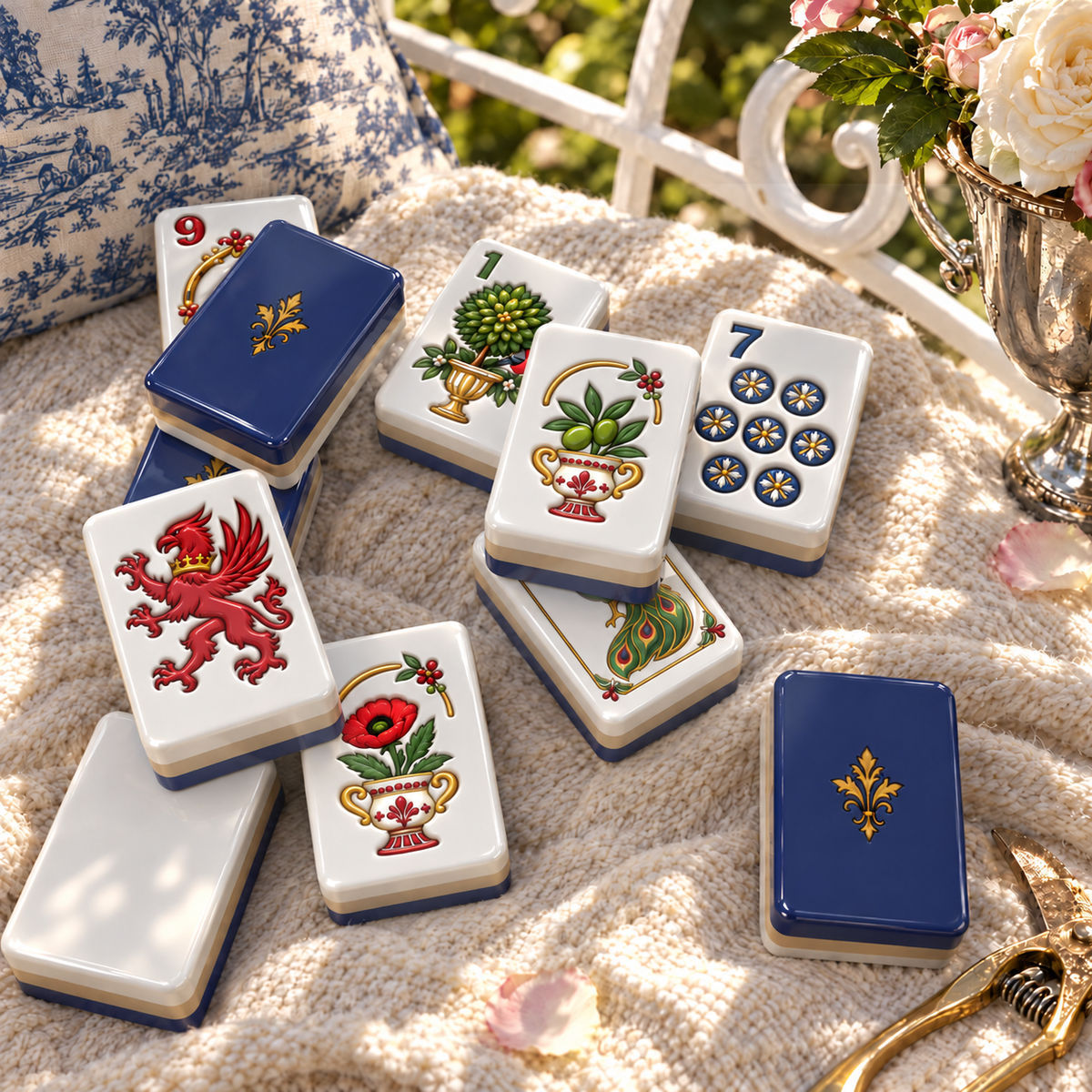
Three-player American mahjong removes all Bams (36 tiles), leaving 116 playing tiles plus 8 jokers—played exactly like four-player, but with tighter draws, fewer concealed tiles, and faster exposure. The dealer sits directly opposite the discarder, creating a triangle where you see two opponents' hands fully and can predict discards more accurately. Games typically run 30–45 minutes per hand. Strategy flips: you'll discard more aggressively because fewer tiles are buried, honor walls early, and track suit depletion faster. Our best-selling sets work perfectly scaled down—just set aside the Bams and shuffle the rest. Most players find the tighter hand-building teaches conventional four-player tactics faster.
Three-player mahjong strips out one entire suit and reshapes hand-building and discard pressure. We break down positioning, sight lines, and the tactical shifts that separate winners from players who don't adapt.
What tiles stay in play for three players?
Remove all 36 Bams from your set—every 1 through 9 Bam, all four copies of each. You'll use 116 active tiles: all Craks and Dots (72 total), all Winds and Dragons (28 total), all Flowers and Jokers (8 total). The math forces faster cycles: fewer tiles means the wall empties quicker, and the person drawing the 17th or 18th tile from their wall often finds it's the last draw available. Players familiar with the complete rules for two- and three-player variants notice immediately that fewer buried tiles change discard safety.

How does positioning change strategy in three-player?
Sit in a triangle with the dealer roughly opposite you. One opponent is always at your left (the discorder you're watching), and one at your right (the person who draws from your wall). You see both opponents' exposed melds fully—no hidden angles. This kills anonymity: if an opponent exposes two Craks and a joker, you know their suit preference and can disclaim Craks more safely. The player opposite the dealer often has the hardest read because they face two opponents simultaneously. Rotate dealer position each hand. The tighter triangle means you're never more than one hand-width from seeing every tile someone plays. This cuts bluffing power dramatically compared to four-player games.
Should your discard order change?
Yes. In three-player, honor tiles go out faster—Winds and Dragons create fewer buried backups. Discard terminal Winds (North and South) before mid-game, not late. Because only three people are drawing, the wall empties in roughly 9–10 rounds of draws instead of 13–14. Play aggressively for melds by round 5; after round 7, you're fighting for scraps. Hold pairs longer early (they're safer), but flip to melding priority by mid-hand. The person who held three pairs in a four-player game will lose waiting for a fourth tile. Craks and Dots thin out evenly because both suits stay full-strength; don't assume one suit will dry up before the other—track actual plays on the table.
What's the biggest tactical mistake in three-player?
Treating it like four-player with one chair removed. Players hoard tiles (waiting for buries that won't come), delay melding (the wall finishes before they claim), and discard too cautiously (safer tiles run out fast). The second biggest mistake is assuming honor safety: because Winds move quicker and fewer are buried, a discard that would sit harmlessly in a four-player game gets claimed in round 4. Watch the first three rounds closely—if no one's exposed a Wind, assume someone is building it. Disclaim generously after round 6; the pool shrinks too fast to hold back. New players also fail to adjust their pair-holding timeline: pairs are more valuable early (fewer total tiles means statistically harder to complete), but less valuable late because the wall will close before you draw your fourth tile.
How does the National Mahjong League card work in three-player?
You still use the current year's National Mah Jongg League card, but only hands using Craks and Dots (no Bams) are legal. Hands listing Bams are not playable. Most modern cards have roughly 30–50% usable hands for three-player (exact count varies yearly). This makes winning harder—fewer viable hand types mean narrower paths to meld. Players often pre-select hands before the Charleston (the tile-passing ritual) to know which hands they're targeting. Learning the card-reading basics is essential, but in three-player you'll reject more patterns than in four-player simply because Bam-free options are fewer.
Strategy Shift | Four-Player Logic | Three-Player Adjustment | Why It Matters |
Discard timing | Mid-game (round 6–7) | Early (round 4–5) | Wall closes faster |
Pair holding | Hold 2–3 pairs mid-hand | Hold 1 pair, meld aggressively | Fewer buried tiles to wait for |
Honor (Wind/Dragon) safety | Discard by round 8 | Discard by round 5–6 | Fewer tiles = quicker claims |
Hand selection | ~80% of card is playable | ~40–50% of card is playable | Bams removed = fewer patterns |
Sight lines | One opponent has hidden melds | Both opponents' melds visible | Reduces bluffing; read dominates |

What jokers and special tiles mean in three-player
Jokers work identically to four-player: they substitute for any tile in a meld (pung, kong, quint, sextet), but never for a pair or a single tile, and never appear alone on the rack. Because there are fewer melding opportunities overall (fewer tiles, faster closes), jokers become more contested—players grab them faster. If someone exposes a kong with two jokers by round 4, assume they've committed to a specific hand and discard accordingly. Flowers stay at eight total (two per player, drawn at game start); they don't speed up or slow down uniquely in three-player, but scoring adjusts if your house uses three-player-specific bonuses (not standard League play—confirm with your group first).
Comparing three-player to two-player and four-player
Three-player sits between two-player (even tighter, fewer tiles still, requires completely different card) and four-player (the standard, most hand options, longest games). Two-player games are chaos—only 92 tiles, wall closes in 5 rounds, and you see your opponent's entire hand; strategy collapses into speed and memory. Three-player keeps enough complexity that four-player skills transfer, but adds the forced focus of knowing both opponents perfectly. Four-player, the standard, spreads tile pressure across more players, letting buried tiles survive longer and giving you more anonymity in discards. If you're learning, three-player is the best stepping stone from two-player to four-player because it builds discard discipline fast without the complexity of full four-player positioning.
🀄 Shop best-selling mahjong sets →
Setting up three-player on the right equipment
For three-player, use a full best-selling 160-tile set; remove and set aside the Bam suit (all 36 tiles). You'll use 116 tiles plus 8 jokers. A padded mahjong mat with a triangle layout (or three-sided meld pocket) helps organize the triangle seating and keeps exposure clean. Racks with pushers hold the smaller hand size (roughly 13–14 tiles instead of 14) comfortably and let you push melds to the side without losing track. Because games move faster, clear acrylic tiles with bold engraving reduce read-time and prevent the accidental missed claim that happens when sight lines are tight. If you rotate between three- and four-player games, a mat designed for flexible meld pockets saves resetting. Three-player introduces no new equipment rules—the same racks, mats, and set work perfectly.
Common mistakes to avoid before your first game
Set up with all 152 tiles initially, then remove Bams. Don't try to shuffle only 116—you'll lose track. Verify the current year's card: older cards might list hands differently. Pre-agree on scoring—three-player payouts aren't standardized (some groups split the pot three ways; others use dealer bonuses). Rotate dealer position after every hand, not every round, so no one gets trapped. Mark the wall's midpoint clearly before play; with fewer tiles, it's easy to overcount or undercount the wall. Call out melds loudly—sight lines are tighter and misheard claims slow the game. Track the discard pile in a single line (not a pile), so players at odd angles can still read what's out. Never assume a hand type from early plays—without Bams, patterns shift, and a player building Dots-and-Winds might surprise you.
🎁 See our most-loved mahjong sets & accessories →
What to check before you buy or play
Confirm your group uses the National Mah Jongg League card (not a house variant or old card). Only Bam-free hands are legal.
Set your payout rules in advance: three-way split, dealer bonuses, or bonus for winning hand type. Don't assume.
Test sightlines in your triangle seating before dealing. Can both opponents see both opponents' melds clearly?
Time your first game to confirm how long 116-tile rounds actually take (usually 30–45 min, but depends on player speed and hand complexity).
Verify everyone knows standard joker rules—some casual groups invent three-player-only joker tweaks that confuse League-play switchers.
Use acrylic or painted tiles over plain bamboo if playing under fluorescent light; clarity matters when you're reading across a tighter angle.
✨ Find your Mahstead set — free US shipping →

FAQ
Can you play three-player mahjong with a standard 152-tile set?
Yes. Remove all 36 Bams, leaving 116 playable tiles. Use the same 8 jokers and proceed as normal. Many players keep a note on their set noting which suit to remove for three-player games.
Does three-player use the same National Mah Jongg League card?
Yes, same card, but only hands without Bams are legal. Roughly 40–50% of listed hands remain playable. This makes winning harder because fewer hand paths exist.
How long does a three-player game take?
Typically 30–45 minutes per hand, depending on player speed. The wall empties faster than four-player (roughly 9–10 draw rounds instead of 13–14), so games close quickly.
Is three-player easier or harder than four-player?
Strategically harder because fewer tiles and both opponents visible mean less room for error and faster discard cycles. Tactically, it teaches four-player discipline faster.
Should payout change for three players?
Yes. Common methods: split the pot three ways (each winner takes one share), use a dealer bonus (winner gets a bonus if dealer), or adjust the per-point value. Agree beforehand.
What's the biggest rule change for three-player?
No rule changes—only tile removal. Remove all Bams; everything else (jokers, melds, scoring, the card, Charleston) stays identical to four-player.


View More
View More
View More
