
Three Player Mahjong Setup: Rules, Tile Count & Seating
Last updated: Nov 23, 2026
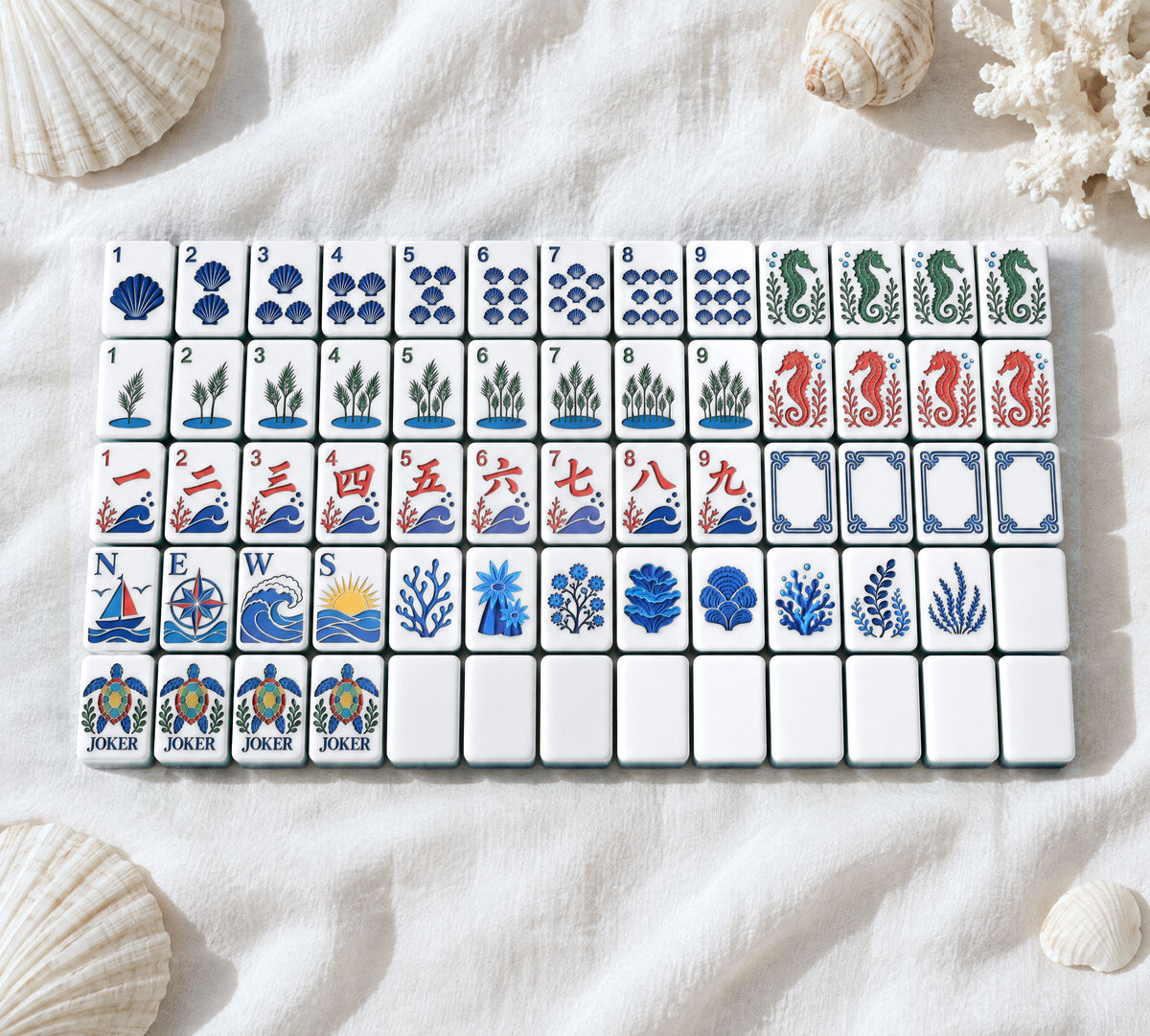
Three-player American mahjong uses 108 tiles instead of 152—one full suit (Bams, Craks or Dots) is removed, along with all eight flowers and four jokers. Each player draws 13 tiles; the dealer draws 14. The wall shrinks to 27 stacks per player. Discard piles work the same way: players take turns calling exposed pungs, kongs, or quints. The main differences: a shorter game (fewer hands to draw), simplified hand-reading (one suit missing), and tighter money splits because only three players are paying. American three-player mahjong is less common than four-player, but the National Mah Jongg League publishes a separate annual card listing valid hands for three-player. Setup is faster with best-selling American mahjong sets designed for full-game play; you'll manually remove one suit beforehand each session.
How many tiles do you actually remove for three players?
Remove one entire suit—all 36 tiles (1–9 in that suit, four copies each). Most groups remove the Bams or Dots. Also remove all eight flowers and four jokers, for a total of 108 playing tiles. This keeps hand-drawing balanced: each non-dealer draws 13, the dealer draws 14. The remaining wall has 27 stacks of two tiles per player, matching the four-player ratio of wall-to-hand proportion.

Does seating and dealer rotation stay the same?
Yes. Three players sit in a triangle. The dealer draws last (14 tiles), the second player draws 13, and the third draws 13. Dealer position rotates after each hand—typically East, South, West, then back to East (skipping the North position). Winds still matter for scoring: the dealer is East regardless of physical position. Each player can be East dealer in rotation.
Can you use the same mahjong card as four-player?
No. The National Mah Jongg League publishes a separate three-player card every spring. Hands look different because one suit is gone—for example, patterns using two colors are now impossible. Always buy or download the current year's three-player card before playing; using the four-player card leads to impossible hands and table arguments. Your local mahjong community (check community centers, libraries, or synagogue game groups) can point you to where to order or download the correct card.
What happens to hand reading and calling without four players?
Hand-reading stays the same: you're still matching tiles to the active card, watching your own hand and the discard rack, and calling (or holding) when a discarded tile completes your pung, kong, or quint. Fewer players mean fewer active hands at once and shorter hand lengths overall. You'll see the same players' tendencies faster. Jokers work identically: they're wildcards, never used in a pair or single tile. The discard rhythm quickens because turns come around faster, so strategic pauses matter more.
Does scoring change, and who pays whom?
Scoring stays identical per the card and American mahjong scoring rules, but payouts split three ways instead of four. A hand worth one point typically earns you 1 point from each other player. The dealer bonus (an extra point from each player on winning hands) remains. Because there are only three payers, pots are smaller, but hands come faster. Keep a running tally; at the end of a session, whoever is plus pays whoever is minus.

Setup Checklist: What You'll Need
Element | Four-Player | Three-Player | Difference |
Tiles in play | 152 | 108 | Remove 1 suit + flowers + 4 jokers |
Hand size (dealer) | 14 | 14 | Same |
Hand size (non-dealer) | 13 × 3 | 13 × 2 | Same per player |
Wall stacks per side | 18 | 27 | Proportional; fewer tiles overall |
Card used | Four-player NMJL | Three-player NMJL | Separate card every year |
Dealer rotations | East, South, West, North | East, South, West (loop) | No North hand |
Discard calling | Pung, Kong, Quint | Pung, Kong, Quint | Identical |
Joker use | Wildcard (never pair/single) | Wildcard (never pair/single) | Identical |
🀄 Shop best-selling mahjong sets →
Common Mistakes to Avoid
Using the four-player card. The most frequent error: sitting down with a four-player card and discovering halfway through that three-player hands look nothing like what's on it. Download or order the current three-player NMJL card before your first hand.
Not removing exactly one suit beforehand. Pulling tiles randomly leaves your count off; dealer draws 15 or a non-dealer draws 14, breaking the game. Organize your set, remove all tiles of one color/suit, flowers, and four jokers before dealing.
Forgetting that North doesn't play. Some groups rotate dealers through all four winds. Three-player cycles through East, South, West only. After West finishes as dealer, East returns to the center.
Miscounting the wall. With 108 tiles and three players, the wall should have 27 stacks of two. Count your wall before beginning; uneven stacks cause hands to stall mid-game.
Calling rules from four-player memory. Calling mechanics are identical, but with faster turn cycles, strategic holding and pace feel different. Expect quicker discard decisions.
What to Check Before You Buy
If you already own a four-player American mahjong set, you have everything needed: manually remove one suit and flowers at session start. No new set is required. However, if you're buying your first set specifically for mixed four- and three-player groups, choose one with color-coded suits so removing one suit is visually obvious to all players. A quality mahjong mat helps with wall alignment when three players sit in a tighter triangle; standard mats work fine, but some players prefer a smaller footprint. Racks with pushers are optional but reduce hand-reveal accidents in faster three-player games.
🎁 See our most-loved mahjong sets & accessories →
The Pacing Advantage: Why Some Players Prefer Three-Player
Three-player games move faster—fewer hands, shorter walls, and quicker dealer rotations mean you fit more complete games into an evening. If your group likes rapid-fire sessions or has limited table time, three-player is efficient. The trade-off: less deep strategy (one fewer opponent to track, fewer defensive patterns). Long-term sessions with the same three players build strong hand-reading intuition quickly because repeating styles become obvious sooner.
Honest Setup Reality
Three-player mahjong is valid, playable, and fun—but it's less common in the US than four-player, so finding active groups takes more effort. Your best starting points: ask at local community centers, libraries, synagogues, or country clubs if anyone runs three-player sessions. Online meetup boards sometimes list mahjong groups; call ahead to confirm they include three-player nights. If your crew is exactly three people, you'll build skill faster because the table stays stable. If you're rotating between three and four, keep both cards on hand and confirm which one you're using before play begins.
✨ Find your Mahstead set — free US shipping →

FAQ
Can I use four-player hands on the three-player card?
No. The three-player card lists only hands that work with one suit removed. Using four-player hands creates impossible combinations and breaks the game. Always verify you have the correct year's three-player card before sitting down.
Do I need to buy a separate three-player mahjong set?
No. Any standard American mahjong set works; simply remove one suit, the flowers, and four jokers before each session. If you play both regularly, a label or bag divider helps manage which tiles are in play.
How long does a three-player game take?
Typically 30–45 minutes for four to six hands, depending on pace and skill. Shorter walls and fewer discard cycles speed play compared to four-player sessions, which often run 60–90 minutes.
Do the money splits feel fair with three players?
Yes, as long as scoring is consistent. A one-point hand earns one point from each player—three total—versus four players paying in four-player. Adjust house stakes if desired, but the mathematical fairness stays the same.
Where do I find the current year's three-player mahjong card?
The National Mah Jongg League publishes the official card every spring. Order from the NMJL website or contact local mahjong clubs, community centers, or synagogue game coordinators who stock them. Download is also available through some NMJL-affiliated retailers.
Can I play three-player Hong Kong or Riichi mahjong?
Yes, those variants have their own three-player rules. This article covers American three-player specifically. If you're learning a different variant, consult rules specific to that style; the tile and hand structure differ significantly.


View More
View More
View More
