
Taiwanese Mahjong vs. American Mahjong Competition Rules
Last updated: Nov 23, 2026
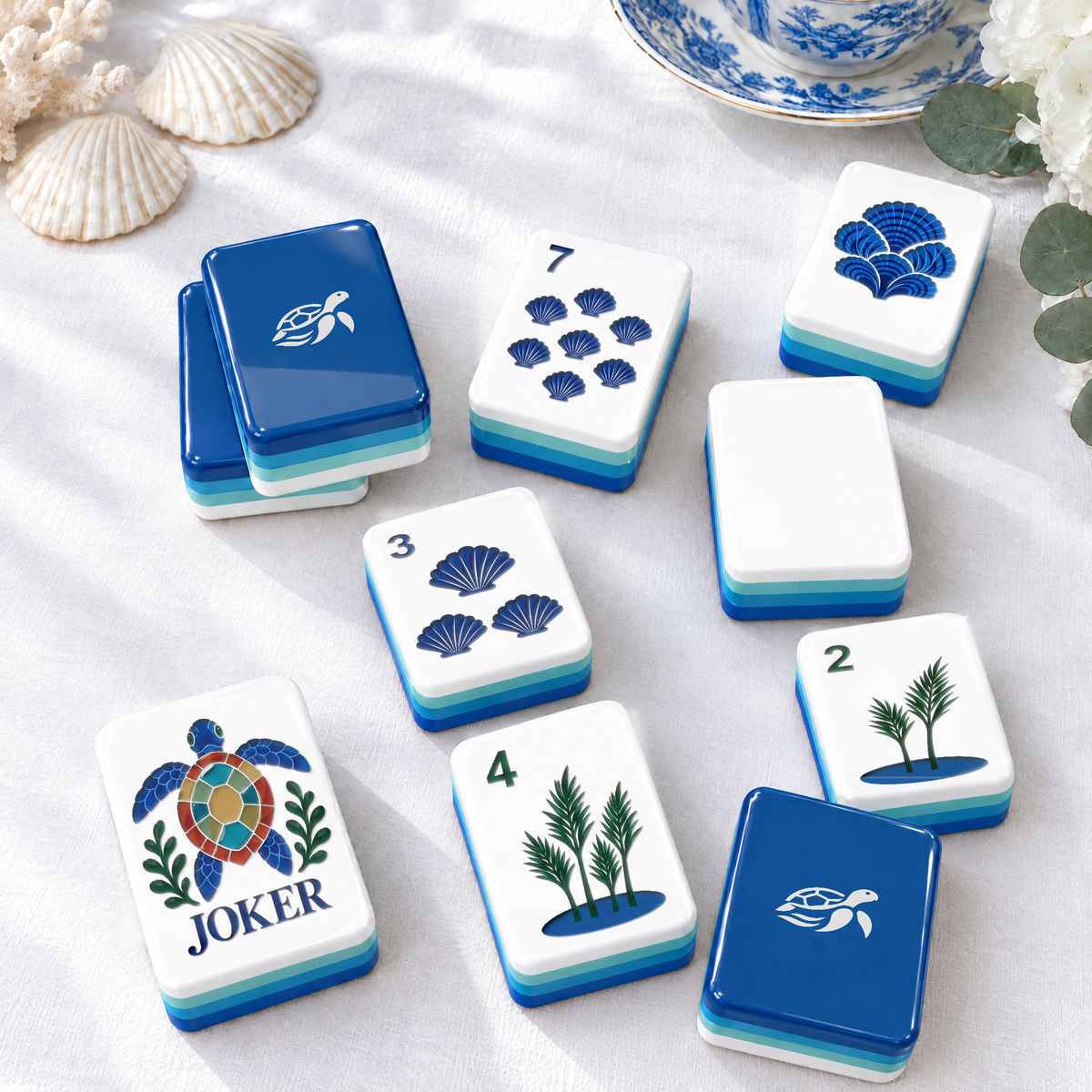
Taiwanese mahjong (also called Taiwanese/Hong Kong modern rules) typically uses 144 tiles with sequences (chows), pungs, and kongs all callable and exposable, plus a much larger hand catalog allowing far more combinations than American mahjong competition play. American mahjong competition—governed by the National Mah Jongg League card—uses exactly 152 tiles, forbids sequences entirely, restricts exposure to pungs, kongs, quints, and sextets only, and limits legal hands to those printed annually on the League card. Taiwanese play emphasizes pattern flexibility and fast combinations; American play rewards memorization and strict card adherence. Tile values, joker use, and claiming rules also differ: Taiwanese mahjong allows jokers as wild tiles in most positions, while American mahjong restricts jokers from pair and single-tile positions. Both traditions are legitimate and widespread—your choice depends on your local community, learning resources, and table preference. We at Mahstead stock best-selling mahjong sets suitable for learning either variant, with clear tile markings that adapt to any ruleset you choose.
What tile count does each variant use?
American mahjong competition is played with exactly 152 tiles plus 8 jokers, standardized across all National Mah Jongg League tables. Taiwanese mahjong traditionally uses 144 tiles with no jokers in classical play, though modern casual Taiwanese games sometimes add jokers as house rules. The tile composition differs too: American sets separate suits into Bams, Craks, and Dots (108 tiles total across three suits), plus 16 winds, 12 dragons, 8 flowers, and 8 jokers. Taiwanese sets contain four suits (Bams, Craks, Dots, Characters) numbered 1–9, four winds, three dragons (Red, Green, White), and eight flower/season tiles—no jokers in the base game. This structural difference means a Taiwanese hand plays through multiple rounds faster, while American hands typically take longer to assemble because you must match the current year's League card exactly. If you're hosting weekly games and want flexibility across both traditions, choose an engraved American mahjong set with bold, clear tile faces; the contrast lets players unfamiliar with either ruleset learn tile recognition quickly.

Can you use sequences in both games?
No—this is the sharpest difference. Taiwanese mahjong permits and often requires chows (sequences of three consecutive numbers in the same suit: 4–5–6 Dots, for example) as core hand components; these sequences are callable, meaning any player can claim a discard to complete a sequence, and exposed sequences appear on the table. American mahjong competition forbids sequences entirely. Legal American hands consist only of pungs (three identical tiles), kongs (four identical), quints (five identical), and sextets (six identical), plus pairs—no runs whatsoever. This single rule creates entirely different mental strategies: Taiwanese players scan for number flow and suit connection; American players memorize fixed tile combinations from the League card. A Taiwanese player joining an American table for the first time often struggles because the hand shapes look completely foreign. Conversely, American players new to Taiwanese mahjong may chase sequences and discard unpredictably. When learning, expect a 3–5 session learning curve if switching between the two. Whichever game you settle on, use a mahjong mat with clear zone markings so players remember which melds are legal in your chosen ruleset.
🀄 Shop best-selling mahjong sets →
How does scoring differ?
American mahjong scoring is printed directly on the current year's National Mah Jongg League card; each legal hand is assigned a specific point value (typically 2 to 80 points depending on rarity and difficulty), and players earn those exact points when they win. Ties go to the player whose hand appears higher on the card, or scores are split among players who claim identical melds. Scoring is deterministic: no hand calculates points—you look it up. Taiwanese mahjong, by contrast, builds points through base scoring plus multipliers. A basic win is worth a minimum point value (often called a "base hand"), and scoring increases based on winning conditions: winning off discard versus draw, whether you're "ready" (one tile from victory), pung/kong combinations, whether you hold all winning tiles or drew your final tile yourself. Scoring multipliers can compound—a hand with multiple bonus conditions might be worth 2×, 4×, or 8× base. Taiwanese scoring requires quick mental math at the table; American scoring requires quick card lookup. Neither system is harder; they reward different skills. For American players, how to read the mahjong card is an essential reference. For Taiwanese players, your local game teaches scoring by repetition—no single card dictates it.
Which joker rules apply to each?
American mahjong allows exactly 8 jokers in play, and each joker acts as a wild tile that can substitute for any tile except a pair (two identical tiles forming part of a hand) or a single uncovered tile. A joker can stand in for one Bam, one Dragon, one Flower—whatever you need—but your hand's pair must always be genuine, non-joker tiles, and any exposed single tile cannot contain a joker. Jokers can be stolen when another player melds a tile the joker was representing, a rule that adds risk. Taiwanese mahjong in classical form includes no jokers. Modern casual Taiwanese home games often add jokers as house rules (similar to American rules or with local variations), but competitive Taiwanese tournaments typically ban them. This distinction matters if you're traveling or joining an organized game: always ask whether jokers are in play and what restrictions apply. American mahjong joker rules are standardized; Taiwanese joker rules vary by table. When hosting, state your joker rule upfront. If you play both games regularly, racks with pushers help you organize tiles clearly regardless of ruleset, so players see exactly which tiles are real and which are jokers.
🎁 See our most-loved mahjong sets & accessories →

Which ruleset should a new player learn first?
If you live in North America, join an American mahjong community (synagogues, community centers, and country clubs often host weekly games), or want structure and card-based clarity, start with American mahjong competition rules. The League card provides a single source of truth, reducing table disputes, and online resources are abundant. If you live in Asia, play with family in a Taiwanese tradition, or want to learn faster in a casual home setting, start with Taiwanese mahjong. Taiwanese play flows quicker per round because more hands are legal, and the game has a longer global history across multiple countries (Hong Kong, Taiwan, mainland China, Singapore, Vietnam), so finding teachers is easier in many regions. Neither ruleset is simpler than the other—American demands memorization; Taiwanese demands pattern recognition and quick scoring. We recommend matching your learning style to your available community: Are experienced players nearby? What language are they teaching in? Do you have weekly access to a group? These questions matter more than ruleset design. Both traditions are legitimate, fun, and playable with the same quality tile set. Choose based on your table, not on perceived difficulty.
Comparison: What Your Table Needs
Aspect | American Competition | Taiwanese Modern |
Tile count | 152 tiles + 8 jokers | 144 tiles (jokers variable) |
Suits | Bam, Crak, Dot | Bam, Crak, Dot, Character |
Sequences allowed? | No | Yes, required often |
Scoring method | Look up on League card | Calculate with multipliers |
Jokers permitted? | Yes, 8 standard | Varies by house rules |
Hand variety | One year's card only | Hundreds of patterns possible |
Learning pace | Slower (memorization) | Faster initially (recognition) |
Best for | Organized clubs, tournaments | Family play, casual groups |
What to check before you buy a set for either ruleset
Tile clarity: Can you read Bam (bird icon), Crak (leaf icon), and Dot (circle icon) easily in poor light? Both American and Taiwanese players mistake similar-looking suits when tiles are small or dull. Mahstead's engraved American mahjong sets use high-contrast acrylic, so marks stay legible through years of play.
Joker marking: If playing American mahjong, jokers must be visually distinct. If playing Taiwanese, confirm whether your house rules include jokers and whether they're physically present. Check whether spare tiles (included in a 160-tile set) can be separated clearly from active play tiles so a joker substitution doesn't confuse players.
Suit count: American sets have three suits (no Characters). Taiwanese sets have four. If you switch between games, you'll need two different sets—no single set bridges both. Confirm which variant your local table uses before purchasing.
Storage and transport: American players often host weekly games and need portable sets. Taiwanese casual play may happen at one family home. A mahjong bag protects tiles from damage and keeps jokers, racks, and dice organized during travel. A protective bag isn't optional if your tiles move between locations.
Rack fit: Not all racks accommodate both acrylic tile dimensions equally. If you're adding racks with pushers to an existing set, test the fit first or buy from a seller (like Mahstead) who bundles compatible parts.
✨ Find your Mahstead set — free US shipping →
Where do you play each variant?
American mahjong competition is organized primarily through the National Mah Jongg League. Games happen at synagogues, country clubs, community centers, senior centers, and casual home groups across North America. Search your city's public library or community center for "mahjong" to find weekly games; most operate drop-in or membership formats. Taiwanese mahjong thrives in family and cultural communities, particularly among Chinese diaspora communities in North America, and throughout East and Southeast Asia. Casual Taiwanese games often happen at home, in Chinese community centers, or through friends' networks rather than formal leagues. If you're new to a city, meetup boards, neighborhood Facebook groups, and local Asian cultural centers post game times. No single registry exists for Taiwanese mahjong the way the League functions for American play, so word-of-mouth and cultural networks are primary. Both rulesets reward hosting your own weekly game once you've learned. How to play American mahjong provides a full guide if you're hosting an American game; Taiwanese rules are best learned in-person at a table because house variations are common. Either way, invest in a quality mahjong mat to define playing zones clearly and protect your tiles from wear.

FAQ
Can I play American mahjong rules with a Taiwanese mahjong set?
Not reliably. Taiwanese sets contain four suits and no jokers; American sets have three suits and include eight jokers. The tile composition is fundamentally different. You'd also miss the National Mah Jongg League card required for American play. Buy the correct set for your intended ruleset.
If I learn American mahjong, can I switch to Taiwanese later?
Yes, but expect a 3–5 session adjustment. The core differences (no sequences in American, strict card adherence, joker restrictions) will feel unnatural at first. Many players enjoy both and switch between them at different tables. Taiwanese play feels more fluid once you adapt to sequences and scoring multipliers.
Is Taiwanese or American mahjong more popular in the United States?
American mahjong is more organized and structured in North America through the League. Taiwanese mahjong is played widely but primarily in family and cultural community settings rather than formal clubs. Your local city determines availability—check community centers and cultural organizations near you.
Do I need a mahjong mat if I play American mahjong competitively?
Yes. A mat defines the discard wall, player zones, and meld areas clearly. Competitive American play (at League clubs or tournaments) typically uses mats. Casual home games may use tables or mats depending on preference. A mat protects tiles and speeds play.
Why can't sequences appear in American mahjong if they appear in Taiwanese?
American mahjong was formalized in the 1920s–1930s with hand patterns derived from early Chinese games but simplified for Western players. Over time, the League card eliminated sequences entirely, creating a fixed list of legal hands. Taiwanese mahjong evolved separately and retained sequences as a core mechanic. The two traditions diverged historically and were never designed to overlap.
What's the fastest way to learn which ruleset my local game uses?
Ask the group organizer directly or attend one session as an observer. Watch whether players use a card, whether sequences appear, and how many suits are on the tiles. Within 10 minutes you'll know. Never assume—house rules vary even within the same city.
Can a 160-tile set (with spares) work for either ruleset?
A 160-tile set contains 152 active tiles plus spare tiles (extra jokers and blanks). American play uses all 152 tiles exactly; Taiwanese uses 144. Spares are not added to play in either game. Buy a set appropriate to your ruleset, but the spare tiles don't change what's legal in play.
Is scoring harder in American or Taiwanese mahjong?
They're hard in different ways. American scoring is deterministic but requires card lookup (memorization over time). Taiwanese scoring is mental math but follows clear multiplier rules once you internalize them. Neither is objectively harder; they reward different cognitive styles.


View More
View More
View More
