
Singapore Mahjong Scoring: Complete System & Hand Values
Last updated: Nov 23, 2026
Singapore mahjong scoring awards points based on fan (point multipliers, 1–8 per hand) and points (the base unit, typically 20 or 32). A winning hand's total value = fan count × base points × 2 for non-dealer wins, or × 2 or × 3 for dealer/special wins. Common scoring sources: pungs (melds of three identical tiles), kongs (four identical), eyes (the final pair), and bonus tiles (dragons, winds, flowers). Unlike American mahjong's rigid NMJL card-based hands, Singapore play values any combination of pungs, kongs, and chows (sequences like 1–2–3 Bams) that follows legal patterns and earns fan. Games last until agreed points are reached—typically 500, 1,000, or 2,000. We play it regularly for its speed and flexible hand-reading; scoring practice takes one session to internalize.
What is a "fan" and why does it matter in Singapore scoring?
A fan is a multiplier that counts the complexity and luck of your winning hand. Each legal combination of melds—a pung of dragons, a kong of winds, a self-drawn win, a win off the discard—adds one fan. The total fan (1–8 typical; some variants cap at 13) multiplies your base points, so an 8-fan hand is worth far more than a 2-fan hand. Mastering fan recognition speeds up payment calculation at the table, letting everyone play faster and stay focused on strategy rather than math.

How do melds contribute to fan in Singapore mahjong?
Melds earn fan differently than in American mahjong. In American play, you expose pungs, kongs, or joker-heavy combos to build card hands; Singapore rewards any meld that follows traditional rules: pungs (three identical), kongs (four identical), or chows (sequences: 1–2–3, 5–6–7, etc. of the same suit). A concealed pung or kong (kept hidden until you win) earns more fan than an exposed one. A chow usually adds no fan by itself but combines with others to form larger patterns. Pung + pung + pung + eyes + chow = one complete hand; each pung is one fan, plus bonus fan for honors (winds, dragons), simples (1 or 9 tiles), and draws (self-picked vs. discard wins).
What's the difference between Singapore and Chinese scoring?
Singapore and Chinese (Cantonese) mahjong share roots but diverge in rigor. Chinese scoring applies strict pattern names (dragons pung = 1 fan; all-simples chow hand = 2 fan; all-terminals = high value) and a closed rulebook. Singapore is more casual: the same hand-type may earn 1–3 fan depending on table agreement, and local variants often allow optional melds or bonus draws. Both ban American chows entirely. Chinese play emphasizes balance (one of each suit, mixed terminals and simples); Singapore rewards any legal combo. For players moving between tables, confirm the fan table before play—some groups use written scoresheets, others memorize standard combinations. Either way, the mahjong variants guide covers how setup and tile counts shift across regions.
🀄 Shop best-selling mahjong sets →
Can you score a Singapore hand without a fan chart?
Yes, but a written chart cuts errors and keeps play flowing. At every serious Singapore table, someone writes or prints the standard fan list: self-drawn win (1 fan), pung of dragons (1 fan), pung of winds (1 fan if it's your seat wind or the prevailing wind; 2 if it's both), all-simples (no honors, 1 fan), mixed terminals (1 or 9 tiles only, 2 fan), chows only (1 fan). Many players carry phone photos or laminated cards. If you're hosting weekly games, a printed scoreboard or mat with fan listings eliminates disputes and speeds up everyone's learning curve. Start simple: print a one-page cheat sheet listing 10–15 common combos and their fan values, confirm it with your players, and revise after a few sessions.
How do dealer status and draws affect Singapore payouts?
Dealer (the player who wins or whose turn it is) gets paid more. A typical payout when the dealer wins: all other three players pay dealer 2× (fan × base points). If a non-dealer wins off the dealer's discard, non-dealer receives 2× from the dealer and 1× from each other player. A self-drawn win (any player picks the tile from the wall, not the discard) often earns a bonus fan or a 0.5× multiplier on the base, so all three opponents pay equally. A "kong draw" (winning immediately after a kong) is a bonus, sometimes worth an extra fan or double points. Always agree on these modifiers before the Charleston (or tile-shuffling at your table); write them down if your group is new to Singapore rules or mixes variants. Different regions and clubs have house rules, so confirm payouts with your regular group weekly.

Which Singapore hands score the highest?
"All honors" (only dragons and winds), "thirteen orphans" (one each of 1, 9, and all winds/dragons), and self-drawn all-pungs rank highest. These are rare and worth 8–13 fan depending on the variant. More common high-scorers include "all terminals" (only 1 and 9 tiles, no honors), "chows only" (no pungs or kongs), and "all-green" or "all-red" (suit + dragons matching one color). A winning hand that includes four kongs is also premium. However, no Singapore hand scores as high as rare American card hands like "big like and like"—American's rigidity creates extreme combos; Singapore's flexibility means even 6-fan hands are playable. If you're learning, focus on common 2–4 fan hands first (pung + pung + chow, mixed terminals, pung of winds). High-fan hands come naturally once you internalize the basic patterns.
🎁 See our most-loved mahjong sets & accessories →
Scoring Comparison Table
Hand Type | Fan Count (Standard) | Meld Combo | Notes |
Self-drawn win | +1 | Any complete hand | All three opponents pay 1× each |
Pung of dragons | 1 | Three identical dragons | Red, green, or white |
Pung of seat wind | 1 | Three of your seat wind (N/E/W/S) | Dealer pays 2×; non-dealer 1× |
Pung of prevailing wind | 1 | Three of current round wind | Counts separately if not seat wind |
All-simples (no honors) | 1–2 | Only 2–8 of three suits | Lower value than mixed patterns |
Mixed terminals & simples | 2–3 | 1 and 9 only, mixed suits | Honors not allowed |
Chows only (no pungs) | 1–2 | Three sequences, three suits | Risky; requires luck |
Pung + pung + pung + eyes | 3–4 | Three melds of three + pair | Standard winning shape |
Concealed kong bonus | +1 | Kong drawn, not claimed | Self-drawn adds value |
Win off opponent discard | Base | Any complete hand | Dealer pays 2×; others 1× |
What to check before you buy—or before you play
Confirm the base point value with your group: 20, 32, or 50 points per base unit? Written down, not assumed.
Agree on all modifiers before shuffling: self-draw bonus, kong bonus, dealer payout multiplier, caps per hand (some tables cap at 500 or 1,000 total points per hand).
Use a calculator or scoreboard for the first 3–5 sessions if your group is new; human math errors multiply fast in fan systems.
Check tile counts: Singapore play uses 136 standard tiles (one each of 1–9 Bams, Craks, Dots × 4 copies, plus 16 winds and 12 dragons = 108 + 28 = 136). American sets have 152; do not mix them. If you're hosting, a purpose-built mahjong set marked with your house rules eliminates confusion.
Print or laminate a fan chart and post it at the table for the first month, so everyone learns the same patterns.
✨ Find your Mahstead set — free US shipping →
Hosting Singapore Mahjong at Home: What You'll Need
If you're starting a regular Singapore group, invest in clarity over style:
A durable acrylic or composite set labeled with your house-rule fan values; Mahstead offers engraved options so your group's scoring reference is always visible.
A mahjong mat with printed fan listings or a blank zone for house rules; speeds up reference checks mid-hand.
A rack with pushers to keep tiles organized and reduce mis-discards.
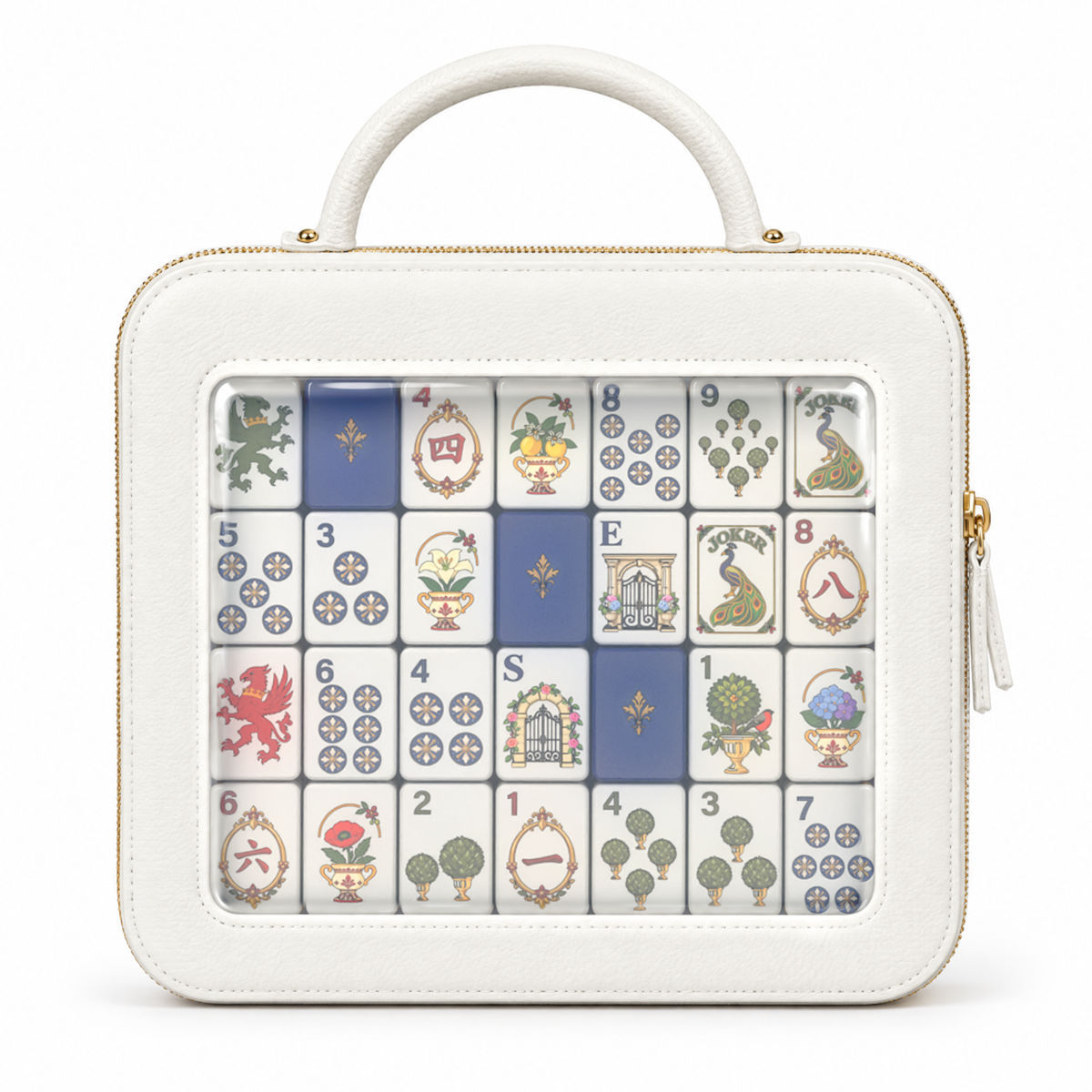
A travel bag or case if you rotate hosting; protects tiles and keeps the group's shared set safe.
None of these are essential to play, but they cut argument friction and let newcomers join faster.

FAQ
Is Singapore mahjong fan scoring the same as Chinese mahjong?
No. Chinese scoring is stricter with fixed pattern names and rules; Singapore allows more house-rule variation and casual re-negotiation. Both use fan multipliers but apply them differently. Confirm table rules before play; they vary by region and club.
What happens if two players win on the same tile?
In most Singapore rules, the player closest to the discarder in rotation order wins; that player becomes the dealer next round. Some tables allow a tie-break re-hand or dealer repeats. Agree before play starts.
Can I play Singapore mahjong with an American tile set?
Not recommended. American sets have 152 tiles (extra jokers and blanks); Singapore uses 136. The extra tiles and jokers break the game's balance and force re-math. Use a standard 136-tile set or a full acrylic set marked for your variant.
How long does a typical Singapore mahjong game last?
45 minutes to 2 hours, depending on base points and cap. Most home games play to 500–1,000 points per winner or until 4–6 hands per player. Faster than American mahjong (which uses a card, so hand-reading is fixed).
What's the easiest first-time Singapore fan to count?
Self-drawn win = +1 fan always. Start there, add "pung of dragons or winds" = +1 each, and memorize 3–4 common combos. Build your mental fan list week by week; no one expects mastery on day one.
Can I use a mahjong mat with Singapore rules?
Yes. A mat labeled for Singapore play or a blank mat with house-rule stickers keeps everyone on the same page. Mats also protect tiles and table surfaces, especially if you host weekly.


View More
View More
View More
