
South Wind Mahjong Tile Meaning & Play
Last updated: Nov 23, 2026
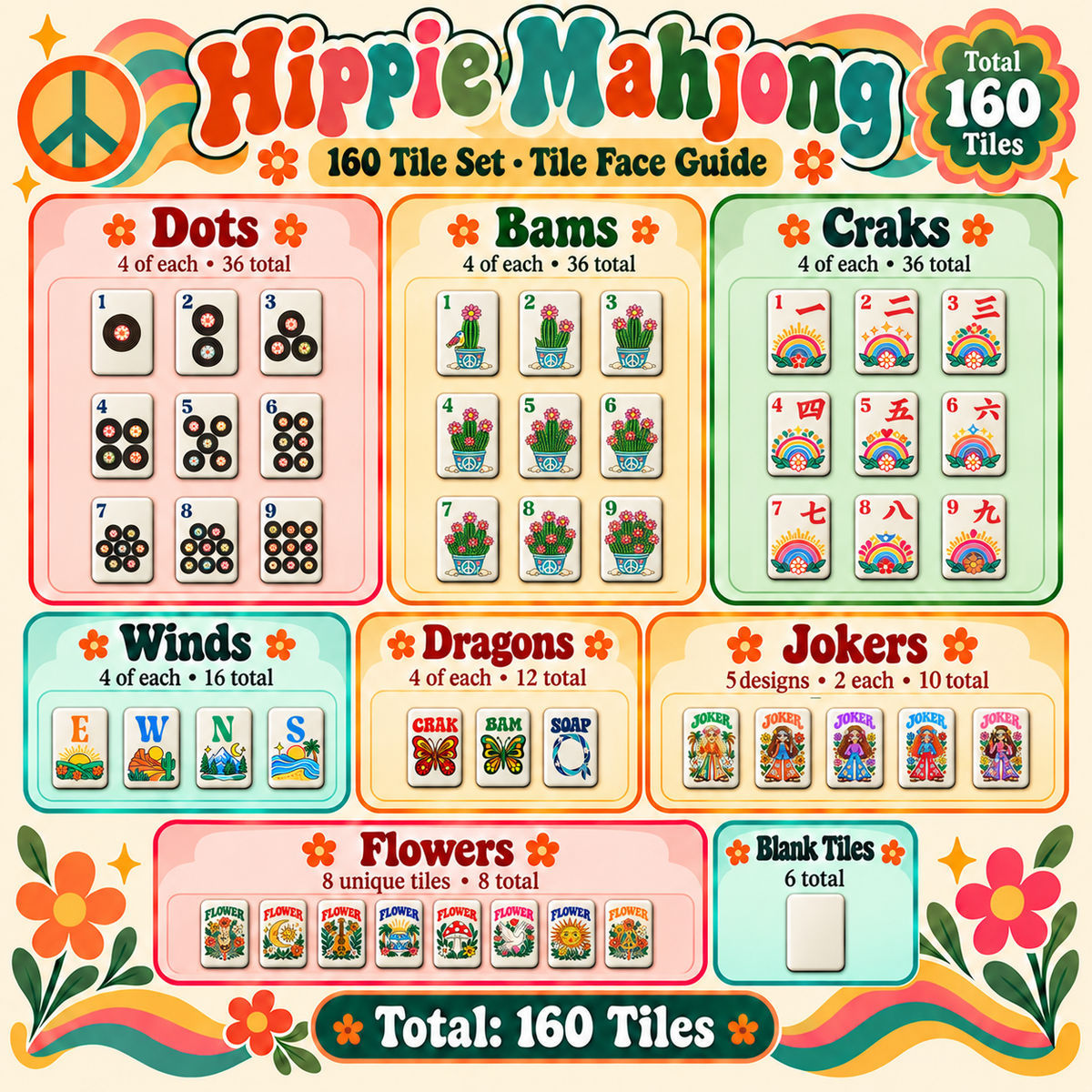
The South Wind tile (marked "S") is one of 16 wind tiles in a standard American mahjong set—four each of North, East, West, and South. It serves two functions: it identifies a player's seating direction at the table and acts as a bonus tile in certain hand patterns on the National Mah Jongg League card. South Wind appears in pungs (three identical tiles), kongs (four identical tiles), or as part of honor sequences on the card. Because American mahjong ties payouts to player position—East (dealer) scores highest—knowing which wind you hold and which wind the dealer represents affects both your hand strategy and your winnings. South Wind has no inherent point value separate from the hand pattern itself; it's purely functional within American rules. Beginners often confuse wind tiles with dragons or number suits, so learning the full tile structure before your first game prevents costly mistakes at the table. 🀄 Shop best-selling mahjong sets →
What is the South Wind tile in American mahjong?
The South Wind is a white or off-white honor tile bearing the letter "S" (or a Chinese character representing South in traditional sets). It's one of four identical South Wind tiles in any standard set. In American mahjong, honor tiles—winds and dragons—function differently than number suits; they cannot form runs or sequences. A South Wind pung must be three identical South Wind tiles, never mixed with other winds or numbers. When you hold South Wind in your hand, you're either working toward an honor hand on the card or using it as a flexible tile (if it's a joker substitute).

How does wind direction affect scoring and table play?
Each player is assigned a wind position at the start of play: East (the dealer), South, West, and North. Your wind position determines how much you pay or receive when hands are won. The dealer (East Wind) scores the highest payout; North Wind scores the lowest. If you're sitting South, you occupy the South position, but South Wind tiles in your hand are simply tiles—they don't automatically match your seat. This confusion trips up new players: your seating wind and the tiles you draw are independent. The seating arrangement rotates after each hand, and the player who becomes East (dealer) next round is determined by the discard and outcome of the previous hand.
Where does South Wind appear on the National Mah Jongg League card?
The annual League card groups patterns by type: pairs, pungs, kongs, quints, sextets, and mixed honors. South Wind appears in honor-heavy sections, often paired with other winds, dragons, or number tiles to form multi-tile patterns. You'll see hands like "South Wind pung + East Wind pung + specific number suits" or "South Wind + Green Dragon + 1 Bam pung," for example. The card sections change yearly, so your understanding of how to read the card directly impacts which hands you can claim. Honor tiles like South Wind are never exposed in your hand until you're ready to declare a complete mahjong—or you expose them as part of a pung, kong, or other group. Always cross-check the card before claiming any hand.
🎁 See our most-loved mahjong sets & accessories →
Why is South Wind harder to use than number tiles?
Number tiles (1–9 in each suit) offer more flexibility because they form sequences (runs) on the card; winds cannot. If you draw three 5 Dots, three 6 Dots, and three 7 Dots, you have multiple hand options. But if you draw three South Winds and three East Winds, your options are limited to the exact card patterns that list those wind combinations. This scarcity forces strategic discard decisions early. Many new players hoard wind tiles hoping to build an honor hand, only to discover the card requires a specific mix they never draw. The lesson: study the current year's card before the game begins, or you'll waste turns clinging to tiles that don't fit any available pattern.
How do you distinguish South Wind from other tiles at a glance?
A traditional tile set stamps or engraves each wind with a large capital letter (N, E, W, S) for quick recognition during fast play. Acrylic tiles used in weekly games are often engraved with high contrast so the "S" is unmistakable even under poor table lighting. Some players personalize sets with larger fonts, contrasting colors, or even custom engravings to speed identification. Bone or bamboo sets may use smaller or finer lettering, which slows the pace in casual play. If your set's wind tiles are hard to read—worn lettering, faded paint, or small print—consider replacing them. Our best-selling tile collections include sets with clear, durable engraving designed for legibility during rapid draws and discards.

What's the difference between South Wind and other honor tiles?
American mahjong includes 16 wind tiles (4 of each: N, E, W, S), 12 dragon tiles (4 Red, 4 Green, 4 White/Soap), and 8 flower tiles. Winds and dragons are both honors but serve different purposes on the card. Winds are directional, linked to seating; dragons are symbolic (Red with Craks, Green with Bams, White as a "zero" with Dots). Flowers are the rarest and most restrictive honor tiles—they're fixed, cannot be swapped for jokers in the same position, and appear in only a handful of hands on the card each year. South Wind, like all winds, is more frequently available than dragons or flowers, making honor hands built around winds slightly more achievable than all-dragon hands.
Tile Type | Count | Key Role | Flexibility |
South Wind (honor) | 4 identical tiles | Directional & seating marker | Limited to card patterns |
Red Dragon (honor) | 4 identical tiles | Paired with Craks suit | Limited to card patterns |
White Dragon (honor) | 4 identical tiles | Paired with Dots suit; acts as zero | Limited to card patterns |
Flower (honor) | 8 tiles (1 Spring, 1 Summer, 1 Fall, 1 Winter, × 2) | Rare bonus | Fixed; no joker substitution |
Number tiles (1–9) | 12 of each (4 per suit) | Sequences & pungs | High; used in most hands |
✨ Find your Mahstead set — free US shipping →
How jokers interact with South Wind (and when they don't)
In American mahjong, jokers are wild tiles that substitute for any tile except pairs, single tiles, and certain fixed positions on the card. South Wind tiles can be replaced by jokers within a pung or kong in most card patterns. However, if a hand calls for "South Wind pair," no joker can stand in—you must have two actual South Wind tiles. This rule prevents players from building pairs from thin air, keeping the game honest. When you're one tile short of a pung and a joker sits unclaimed on the table, you can often pick it up as your fourth tile (even though you only expose three), but again, never for a pair. Understanding how jokers work is critical to avoiding illegal claims and slow-downs at the table.
Common mistakes when playing South Wind tiles
Confusing seating wind with tile wind. Your assigned seat (e.g., South player) doesn't mean South Wind tiles prioritize you. They're just tiles until they fit a card pattern.
Hoarding honors too long. Beginners keep South Wind in hand for three or four turns, hoping to build an honor hand, then discard it after the discard window closes. Always reference the card within the first turn or two.
Mistaking South Wind for White Dragon. Both are pale or white tiles, but one is marked "S" (or South symbol) and the other is blank or marked with a "Z." Read carefully before claiming.
Exposing a South Wind pung prematurely. Once you expose a pung, you've committed to that hand direction. If the card changes (you draw a better hand with that pung), you cannot pick it back in. Verify the card before exposing.
Assuming South Wind has bonus points. It doesn't. Only the hand pattern on the card determines your payout. A South Wind pair contributes zero points independently.
What to check before you buy a set
Clarity of wind engravings: Can you read "S," "E," "W," "N" clearly from arm's length? Worn or faint letters slow the game.
Tile weight and feel: Acrylic tiles should be substantial (not hollow-sounding) and smooth to shuffle and draw. Test the feel if possible.
Joker count: A standard American game uses 8 jokers; a 160-tile set supplies 152 playing tiles plus extras. Confirm your set includes extras before play.
Case or bag included: Weekly players need storage. If hosting, invest in a travel bag or case to protect tiles between sessions.
Mat and rack fit: If ordering tiles, check whether your existing mat accommodates the tile size and whether racks with pushers are compatible.
Why new players should learn wind tiles first
Before memorizing every hand on the card, spend one session identifying each tile type: number suits, winds, dragons, and flowers. Draw a South Wind from a fresh set and hold it for an entire round. Notice how rarely it appears in your hand compared to number tiles. Ask your experienced players when and where they use South Wind in their favorite hands. This hands-on learning embeds the tile's role far better than reading rules. Once you're comfortable distinguishing South Wind from other honors, learning the full hand-reading process becomes faster and more intuitive. Many long-time players say their first two or three games were trial-and-error; that's normal and expected.
🀄 Shop best-selling mahjong sets →
Our best-selling mahjong sets come with clear, deep engravings that make South Wind and all other tiles readable under any light. Whether you're hosting your first weekly game or replacing worn tiles after years of play, starting with a set where honors are unmistakable saves frustration and keeps the pace flowing.

FAQ
Can South Wind be used in a pair for mahjong?
Only if the card lists a hand with a South Wind pair. Most South Wind hands use pungs or kongs (3 or 4 identical tiles), not pairs. Check the current year's card before claiming any pair hand.
Is South Wind always called the same way by American players?
Yes—American mahjong players universally refer to the four winds as North, East, West, and South, aligned with compass directions. No variant naming exists in standard American play.
Can a joker replace South Wind in a pung?
Yes, in most card patterns. A South Wind pung can be two South Winds plus one joker, for example. But if the card specifies a South Wind pair, no joker is allowed—you must have two actual South Wind tiles.
What happens if I draw all four South Wind tiles?
You can form a Kong (4 identical tiles). Once exposed, a Kong scores higher than a Pung and opens more hand options on the card. Always check the card to see if a South Wind Kong fits an available pattern.
How do I teach beginners the difference between South Wind and White Dragon?
Show them side by side. South Wind is marked "S" (or a South symbol); White Dragon is blank or marked "Z." Pass both tiles around the table so everyone touches and names them twice. Muscle memory and repeated naming stick faster than explanation alone.


View More
View More
View More
