
Mahjong Case Size Guide: Pick the Right Fit for Travel
Last updated: Nov 23, 2026
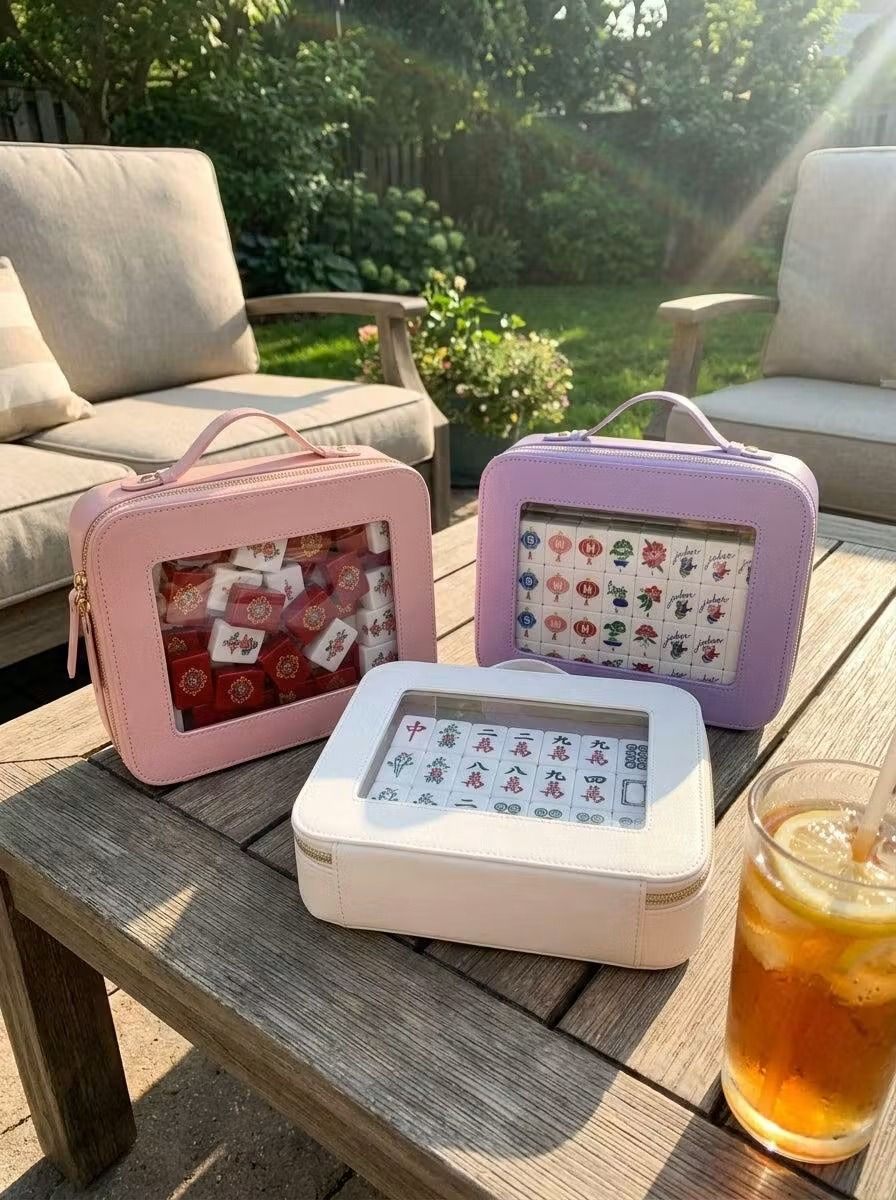
A mahjong case holds 152 tiles (American standard) plus accessories. Cases come in three main types: soft drawstring bags (lightest, smallest footprint, portable to a friend's house), structured soft-sided cases (middle ground—room for tiles, racks, and a small mat), and hard cases with foam inserts (tournament-grade, best protection for expensive or engraved sets). Size matters: a compact bag fits only tiles and jokers; a medium case accommodates tiles plus one pair of racks with pushers; a large case holds tiles, two racks, a rolled mat, and dice. Most players hosting weekly games choose medium soft-sided cases because they fit a car seat and cover tiles, racks, and sometimes a mat—see current price on the product page. Before ordering, measure your mat when rolled (typically 18–24 inches long) and confirm your case's interior depth.
A mahjong case protects your tiles during transport, but sizes range from compact drawstring bags to structured hard cases that fit full-size sets with mats and racks. Picking the wrong one means cramped tiles, damaged pushers, or wasted space in your car.
Which case size do I actually need?
Most weekly players choose one of three. A compact drawstring or zippered pouch (roughly 12 × 8 inches) holds a 160-tile set and eight jokers—perfect if you carry just tiles to a friend's house and swap back there. A medium structured case (roughly 18 × 10 × 6 inches) fits tiles plus a pair of racks with pushers, and sometimes a small rolled mat. A large hard or padded case (roughly 24 × 14 × 8 inches or bigger) holds tiles, two racks, a full-size rolled mat, dice, and spare jokers. The sweet spot for weekly hosts is medium: it goes in a sedan trunk or back seat, and you're not lugging unnecessary space. If you travel to tournaments or store expensive engraved sets, go large with foam inserts.
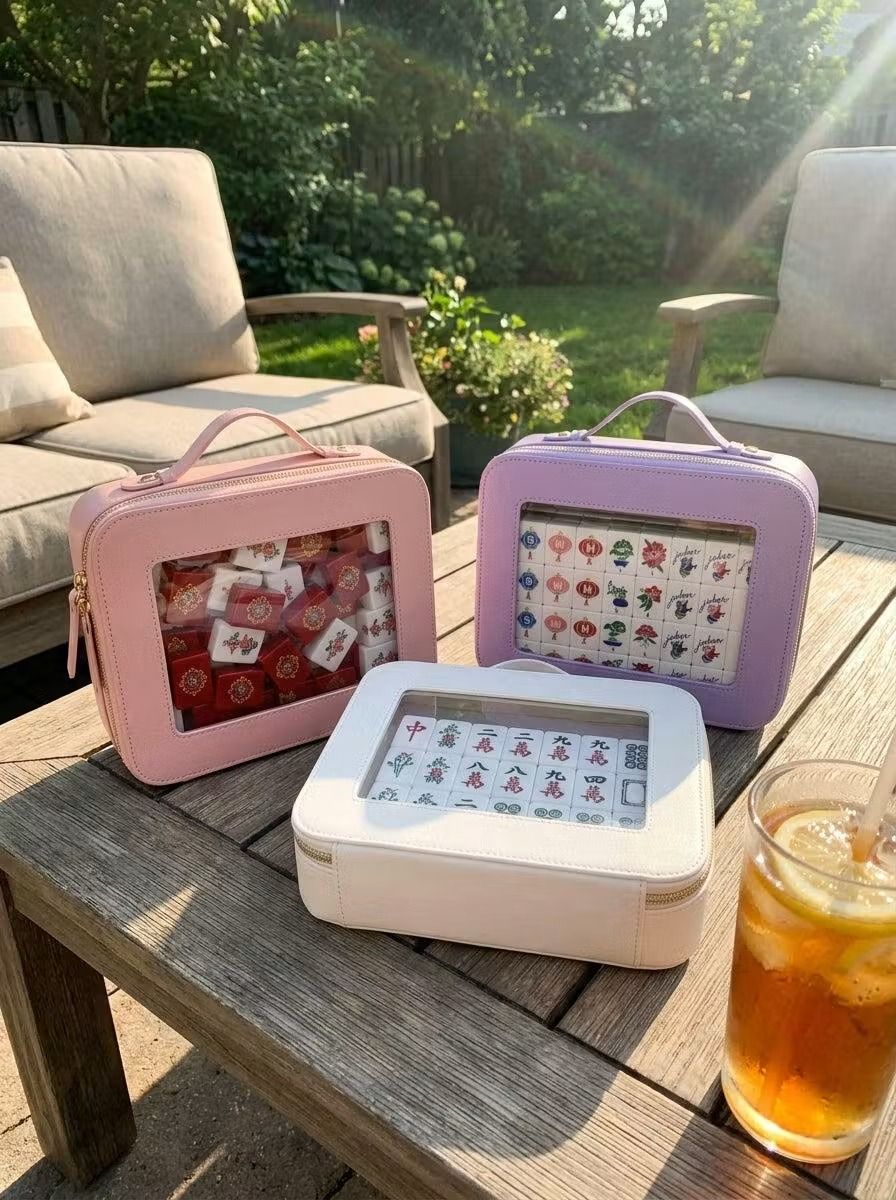
What's the difference between soft and hard cases?
Soft cases are lightweight, pack flat, and fit anywhere—ideal if you play at a different house each week. They offer less impact protection but work fine for regular table play where your set sits safely. Hard cases with foam inserts are rigid, protect tiles and racks during rough travel (airport luggage, car trunks with heavy items stacked), and last decades. Hard cases weigh more and don't fold, so they stay in your closet or car permanently. For a best-selling mahjong set played locally, soft suffices; if your set is hand-engraved or you travel by plane, hard is worth it.
🀄 Shop best-selling mahjong sets →
Do I need room for a mat and racks too?
Yes, if you host. A rolled mat adds 3–5 inches in length and 2 inches in diameter, and a pair of racks with pushers adds 2–3 inches of depth and takes up floor space. If you carry only tiles and plan to play on a bare table, a compact case works. If you host weekly games and want to bring your own mat and racks (for consistency and comfort), you need a medium or large case. A medium case typically holds tiles and one pair of racks sitting flat, with a small mat rolled alongside. A large case lets you pack tiles, both racks, a full mat, and dice without cramping tiles into corners—which risks chipping acrylic. Check the interior dimensions before ordering: multiply length × width × depth and compare to your rolled mat's dimensions plus a rack's footprint (typically 2.5 × 10 inches per rack).
What should I check before ordering a case?
Measure three things: (1) your rolled mat (wrap it in the mat bag, then measure length, width, and diameter), (2) one rack with pushers (length and width when laid flat), (3) confirm the case's interior depth to avoid stacking racks. Look for padded interiors or dividers that keep racks from sliding onto tiles. Check if the case closes without forcing tiles—overloading causes cracks in acrylic corners. Inspect zippers or latches in photos; cheap zippers jam on fabric. If the case is soft, verify it has reinforced handles and a base that doesn't sag when fully loaded. For hard cases, confirm foam inserts are pre-cut for a standard 160-tile set, or buy a blank foam kit separately. Test the case's weight when empty—soft cases should weigh under 2 pounds, hard cases 4–6 pounds. If you buy an engraved set or custom-designed tiles (such as from our mahjong titles collection), choose a case that protects your investment: medium soft with a padded base for weekly play, or large hard for storage and travel.
Case Type | Best For | Interior Space (approx.) | Weight (empty) | Why Pick It |
Compact pouch | Tiles only, quick carry | 12 × 8 × 4 in. | <1 lb | Smallest, lightest, goes in a purse |
Medium soft | Tiles + one rack + small mat | 18 × 10 × 6 in. | 1.5–2 lb | Fits car seat, covers essentials, affordable |
Large soft | Tiles + racks + full mat + dice | 24 × 12 × 8 in. | 2–3 lb | Room to breathe, no stacking, easy access |
Hard with foam | Tournament or engraved set | 24 × 14 × 8 in. | 4–6 lb | Maximum protection, long-term storage |
🎁 See our most-loved mahjong sets & accessories →
What's included in our travel-bag collection?
We design cases and bags specifically for American mahjong sets. Our travel bag collection includes drawstring pouches for tiles alone, structured soft-sided cases sized for a full set plus racks, and hard cases with pre-cut foam. Every case is built to handle 160-tile acrylic sets (152 playing tiles plus spare jokers). Soft cases use durable nylon or canvas with padded bottoms to prevent tiles sliding. Hard cases come with handles and latches. All ship with free US shipping. Choose a compact pouch if you attend different games each week and carry nothing but tiles; choose a medium case if you host and want one convenient bag for tiles, racks, and a rolled mat; choose a large hard case if your set is engraved or you're a tournament player who needs maximum durability and storage.

How do I pack a case so tiles don't shift?
Place tiles in their original tray (if it came with your set) or in a divided organizer that keeps them sorted by suit. Lay racks flat on top of the tray, and roll your mat lengthwise before placing it along the side or top edge. Wrap the mat with a tie or elastic band so it doesn't unroll. For hard cases with pre-cut foam, tiles slot into their designated pockets—no shifting possible. For soft cases, use the internal dividers or pack tiles snugly so nothing slides during a bumpy car ride. Avoid stacking racks directly on exposed tiles—they can crack acrylic edges. If the case has a base compartment, store dice and spare jokers there, keeping them separate from play tiles. Test the case once packed: gently shake it side to side. You should hear no rattle. If tiles shift, repack or upgrade to a larger case.
✨ Find your Mahstead set — free US shipping →
Can I use a case for storage, not just travel?
Absolutely. Many players store their weekly set in a case in a closet or hall cabinet. Hard cases with foam inserts are ideal because they stack and protect tiles from dust, direct sunlight (which can fade acrylic dyes), and accidental knocks. Soft cases take less shelf space but offer less rigid protection—fine if your closet is climate-controlled and no one moves boxes around. Store the case upright or flat (not tilted), away from heat sources and humidity. If you own a custom-engraved set, a hard case becomes furniture—something you're proud to show at the table. Label the case with your name and initials using a waterproof marker in case it sits in a community center or synagogue storage room. Never leave a case in a hot car for hours; heat can warp acrylic edges and cause tile gaps.
What features should a travel bag have for weekly hosting?
Look for reinforced handles that won't tear after five trips up stairs. A carry strap or shoulder option is nice if you walk between locations. Interior pockets keep dice and jokers from rattling loose. Padding on the base and sides absorbs bumps; thin cases let tiles crack if the bag is dropped or sat on. Water-resistant fabric (or a small rain cover) protects acrylic if your bag tips in the car. A full-coverage zipper (not a partial one) keeps dust out during storage. Legs or feet on the base prevent the bag from sitting directly on wet ground. Check reviews (on the product page) from other weekly players—they'll mention if zippers jam, if handles fray, or if padding shifts over time. A well-made medium soft case should last 5+ years of weekly play if you pack carefully and don't overload.
What to Check Before You Buy
Question | Why It Matters | Action |
Does the case fit my rolled mat lengthwise? | Forcing a mat into a case causes wrinkles and may bend racks. | Measure your mat when rolled; confirm case interior length is ≥rolled mat length. |
Are the dividers or pockets built-in? | Empty cases force you to buy organizers separately. | Check product photos for interior layout before ordering. |
Can racks lay flat without bending? | Racks that bend or fold crack tiles when stacked. | Compare case depth to rack height; depth should be ≥2× rack height. |
Is the fabric reinforced at stress points (handles, corners, zipper base)? | Cheap seams fray after a few months of weekly use. | Look for double-stitching or leather reinforcement in photos. |
What's the case's weight? | A heavy case is tiring to carry weekly; a light case may lack padding. | Compare empty weight; soft cases typically 1.5–3 lb, hard cases 4–6 lb. |
🀄 Shop our travel bag collection →

FAQ
Can I fit a full-size mat in a medium case?
A small mat (roughly 60 × 60 inches when unrolled, ~18 inches when rolled) fits a medium case if the case length is ≥19 inches. Standard tournament mats are larger and require a large case or a separate mat bag.
What's the difference between a case and a bag?
A case is structured (hard shell or firm sides) and protects shape; a bag is soft and flexible. Cases protect engraved or valuable sets; bags are lighter and better for weekly play if your tiles are standard acrylic.
Do I need a separate mat bag if I have a case?
No, if your case fits your rolled mat alongside or on top of tiles and racks. If your mat is very large or your case is snug, a separate drawstring mat bag keeps the mat compressed and lets you leave it in your car.
How much should I spend on a case?
See current price on the product page. A compact pouch is affordable; a medium structured case costs more and lasts longer; a hard case with foam is an investment for tournament players or custom sets.
Is a hard case worth it for a standard acrylic set?
Only if you travel by plane, play in tournaments, or own an engraved set you want to protect long-term. For weekly home games, a padded soft case is sufficient.
Can I pack my dice, pushers, and tile racks in the same case?
Yes, if the case has internal pockets or is large enough. Racks and pushers should lay flat; dice and jokers go in small pouches or compartments to avoid noise when you move the case.


View More
View More
View More
