
Soap Mahjong Tile: Meaning, Role & Identifying the White Dragon
Last updated: Nov 23, 2026
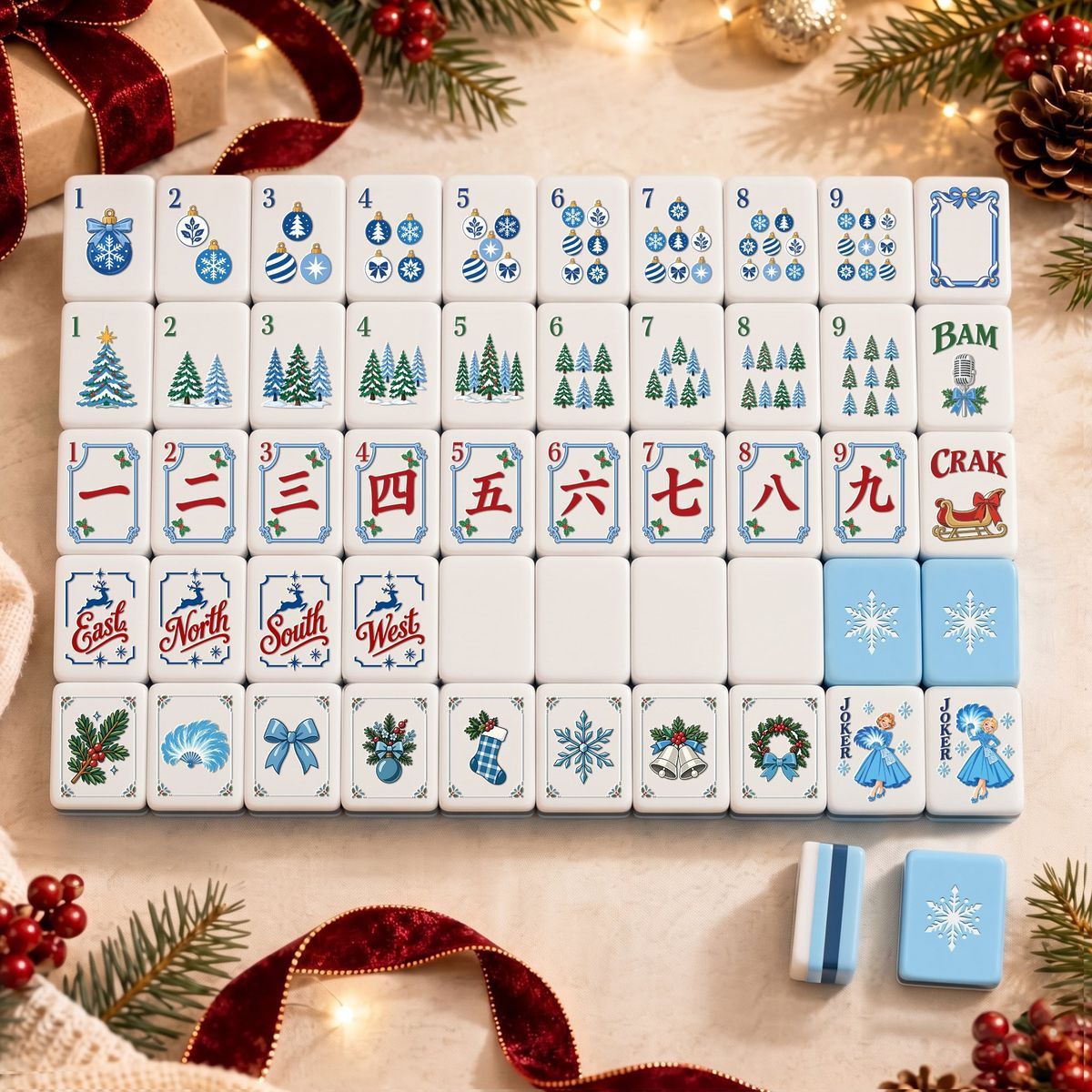
The Soap tile (also called the White Dragon or simply "Soap") is one of 12 dragon tiles in an American mahjong set—four copies total. It appears as a largely blank white tile, often with a small frame or dot marking its center, and represents the number zero. Unlike the Red Dragon (which pairs with Craks) and the Green Dragon (which pairs with Bams), Soap pairs with Dots; it also functions as a wildcard joker in many hands. You'll find exactly four Soap tiles in every 160-tile set sold at Mahstead. Beginners often confuse Soap with blank spare tiles because of its plain appearance—the key difference is that Soap has subtle face markings and plays an active role in hands, while spares are unmarked and never enter play. On the NMJL card, Soap appears in section notation and is essential for recognizing winning patterns.
The Soap tile is the White Dragon in American mahjong—a blank-looking tile with subtle markings that represents zero. It pairs with Dots and also serves as a wild joker substitute. Unlike the Red Dragon (which pairs with Craks) and the Green Dragon (which pairs with Bams), Soap pairs with Dots; it also functions as a wildcard joker in many hands. You'll find exactly four Soap tiles in every 160-tile set sold at Mahstead. Beginners often confuse Soap with blank spare tiles because of its plain appearance—the key difference is that Soap has subtle face markings and plays an active role in hands, while spares are unmarked and never enter play.
Why Is It Called "Soap"?
The nickname "Soap" comes from the tile's appearance—a clean, blank white face that looks like a bar of soap compared to the ornately printed Red and Green dragons. The name helps players quickly identify it during fast-paced play. In formal notation, Soap is written as "WD" (White Dragon) but most home players use "Soap" for speed. The term has stuck in American mahjong circles for decades, passed down through weekly games and tournament play. It's purely colloquial; the official name remains White Dragon.

Where Does Soap Appear on the Mahjong Card?
The White Dragon (Soap) appears on the National Mah Jongg League card in specific hand sections, typically grouped with other Dots-related patterns because it pairs with the Dot suit. When reading the card, you'll see Soap listed as "WD" in hand descriptions. Because Soap is also a joker substitute, it appears in hands where jokers are marked. The card is issued each spring by the NMJL; new players should always check the current year's version. Soap's dual role—as both a Dot-paired dragon and a wildcard—makes it one of the most flexible tiles in winning hands.
How Does Soap Function as a Joker?
In American mahjong, jokers are wildcards that complete any tile position in a hand. Soap functions identically—it can substitute for any missing tile needed to win. However, Soap cannot be used as a single tile by itself or as part of a pair; jokers follow strict rules about placement and visibility. When you use Soap as a joker, you typically expose it on the table (unless the hand notation forbids it). The key difference between Soap and standard joker tiles is that Soap is a numbered tile and a joker, while plain jokers exist only as wildcards. This dual nature means Soap often shows up in more hands than any other dragon tile. Smart players keep track of where all four Soap tiles are discarded, since controlling Soap flow can shift winning odds dramatically.
Soap vs. Other Dragons: A Quick Comparison
Dragon | Color & Markings | Paired Suit | Also Joker? | Tiles in Set |
Soap (White) | Blank white with subtle frame | Dots | Yes | 4 |
Red Dragon | Bold red symbol/character | Craks | No | 4 |
Green Dragon | Bold green symbol/character | Bams | No | 4 |
All three dragons appear in pungs (three matching tiles), kongs (four matching), and higher melds. Soap is special because it serves both roles simultaneously: a Dots dragon and a joker replacement. Red and Green dragons are purely paired tiles—they never substitute for other tiles. Because Soap is the most versatile, it's also the most contested; experienced players discard Soap carefully to avoid feeding opponents' winning hands.
How to Spot Soap on Your Rack
Soap tiles vary in appearance depending on the set design. Most Mahstead sets feature a clean white tile with a delicate border or centered dot to distinguish it from blank spares. Some designs include a subtle character or symbol in the corner. The safest way to identify Soap during play is to compare it directly to your set's reference guide or the tile legend printed on many sets. Hold Soap next to the Red Dragon (clearly marked) and Green Dragon (clearly marked)—the contrast will be obvious. Never confuse Soap with spare tiles, which have zero markings and remain in a separate pile off the table. If you're new to your set, spend 30 seconds sorting all tiles by type before the game starts; this prevents costly mistakes during play. Quality acrylic sets from Mahstead feature laser-engraved or high-contrast printing so Soap is always legible, even under low light at the mahjong table.

Soap in Winning Hands: Real Examples
A typical winning hand might read: "2468 Dots, Soap Dot, Soap Dot Soap" (shorthand for a pung of Soap, a pung of paired Dots, and a pair). Here, you're using the three Soap tiles as a meld and holding two more for flexibility. Another pattern: "1 Crak pung, 5 Dot kong with 1 Soap joker" means you've used all four Dot-5s plus one Soap as a wildcard inside the kong to complete the four-tile group. Because Soap also pairs with Dots, you'll often see it in hands dominated by Dot melds and Soap dragons mixed together. The NMJL card structure means Soap-heavy hands appear several times per season, so learning to spot and build them is essential. Experienced players know which suit combinations trigger Soap opportunities and watch the discard pile accordingly.
🀄 Shop best-selling mahjong sets →
What to Check Before You Buy a Mahjong Set
Before purchasing any set, confirm that the White Dragon (Soap) tiles are clearly visible and marked—not blank. A good set will distinguish Soap from spare blanks instantly. Verify the set includes exactly four Soap tiles and four copies of each other dragon. If you're buying as a gift or for regular home play, choose a set with durable acrylic construction and an engraved design so markings won't fade after hundreds of games. Check that the set includes a matching mat, racks, and carrying bag if you plan to move it between players' homes. For beginner groups, sets with clearly labeled suit symbols and dragon faces (including a distinct Soap tile) reduce confusion and speed up learning. All Mahstead sets ship complete with all tiles sorted and ready to play—no assembly or guesswork needed.
Soap's Role in Strategy and Discard Play
Skilled players treat Soap differently than other dragons because it's also a joker. Holding Soap late in a round signals flexibility—opponents know you can complete almost any hand. Discarding Soap early is risky; it gives an opponent a joker substitute. Many experienced players adopt a rule: hold Soap unless your hand is nearly complete or you're confident no one else benefits. Because there are only four Soap tiles per set, counting them during play (especially tracking when they've been used or discarded) gives you a mathematical edge. If all four Soap tiles are exposed in melds on the table, you know no joker substitution is possible for remaining players. Conversely, if three Soap tiles are already in play and the fourth hasn't appeared, it's likely in someone's winning hand—a signal to tighten your own strategy.
🎁 See our most-loved mahjong sets & accessories →
New vs. Experienced Player Perspective
For beginners, Soap often feels like "just another dragon." You learn its name, count it, and forget it. But after 10–15 games, newer players realize Soap is the gateway to flexibility. Experienced players immediately scan for Soap during the deal and Charleston exchange. Knowing where all four copies are headed—into your hand, into melds on the table, or into other players' holds—defines winning strategy. Many clubs and home groups develop "Soap awareness" drills for beginners: practice identifying Soap instantly, counting Soap in the wall, and predicting when Soap-heavy hands appear. The NMJL card's seasonal layout means certain months reward Soap hoarding while others minimize its presence. Experienced players study the card before the season starts and adjust their play accordingly.
✨ Find your Mahstead set — free US shipping →

FAQ
Can I use Soap as a pair by itself?
No. In American mahjong, Soap (like all jokers) cannot form a pair alone or serve as a single tile. It must be part of a three-tile meld or substitute within a larger group. The only valid pair is two identical tiles of the same rank and suit.
Is Soap the same as a blank spare tile?
No. Soap is a White Dragon tile with face markings (subtle frame, dot, or design) and plays an active role in hands. Blank spare tiles are unmarked, carry no game value, and never leave the spare pile. Confusing them causes illegal plays.
Why do some sets look like Soap is blank while others have clear markings?
Different manufacturers use different design styles. Some sets use a thin border or centered symbol; others use laser engraving or translucent designs. Quality sets always distinguish Soap visibly. If Soap looks identical to a spare, the set design may be unclear—request a photo or specification before buying.
How many Soap tiles should I expect in a 160-tile set?
Exactly four Soap tiles. A standard American mahjong game uses 152 tiles plus 8 jokers (160 total). Soap tiles are always four of those 152 playing tiles. The remaining spare tiles (spares beyond the 152) never enter play.
Does Soap count differently in scoring than Red or Green dragons?
No. In American mahjong, all three dragons score identically when melded in pungs, kongs, or higher patterns. The National Mah Jongg League card determines point values; dragon type doesn't change the score. Soap's joker function doesn't add bonus points—it simply makes hands achievable that otherwise wouldn't be.
If I'm learning American mahjong, should I practice with sets that highlight Soap clearly?
Yes. Beginner-friendly sets use high-contrast colors and clear symbols for all dragon tiles, including Soap. Engraved acrylic designs from Mahstead make Soap instantly recognizable under any table lighting, reducing confusion during learning phases and letting you focus on hand patterns instead of tile identification.


View More
View More
View More
