
Singles and Pairs in Mahjong: American Rules Explained
Last updated: Nov 23, 2026
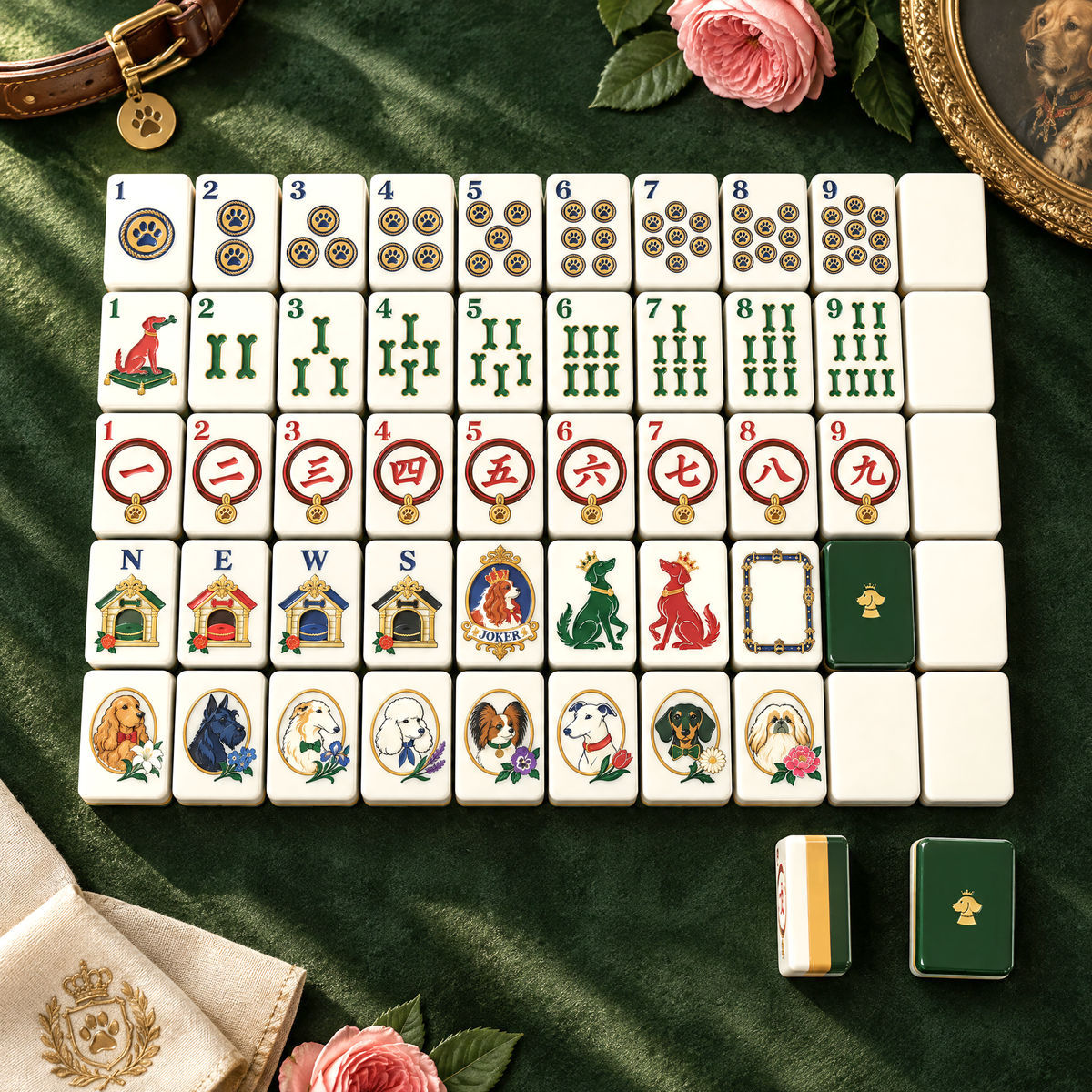
In American mahjong, a single is one tile and a pair is exactly two identical tiles—the only hand component where jokers cannot substitute. Both appear on the current National Mah Jongg League card as fixed requirements for most hands: typically one pair (the "eyes") and multiple other melds. A single tile must match one specific number and suit; a pair must be identical in all respects (same number, same suit). Jokers can replace any tile in a pung (three), kong (four), quint (five), or sextet (six)—never in a single or pair. This rule prevents players from wildcarding the most critical hand locks. Most hands require exactly one pair; some specialized hands allow none. Mistakes here—like using a joker as one half of a pair or misidentifying which tiles form your pair—are among the fastest ways new players lose points or misdeclare. We recommend starting with hands that have a clear, jokerless pair: they're easier to track, harder to miscall, and build confidence.
🀄 Shop best-selling mahjong sets →
Why can't jokers ever be used in a single or pair?
Jokers are wildcards that replace any tile you need in melds of three or more. But a single and pair are "locks"—they anchor your hand. If jokers could fill pairs, players could declare almost any hand by wildcarding the hardest tile to find, collapsing strategy and bluffing. The no-joker rule for singles and pairs keeps the hand honest: you must actually hold the physical tile. This is a unique American rule; Chinese and Hong Kong variants allow jokers differently or not at all. The rule also prevents disputes: a pair on the table is visible and undeniable, joker or not. Your pair is your responsibility to protect—count it twice before you declare.

How do you identify a valid pair on the card?
The card lists hands by section, and most sections show a pair symbol (typically two identical tiles side by side). Your pair must be from one of the suits—Bams, Craks, or Dots (numbers 1–9)—or winds (N, E, W, S), or dragons (Red, Green, White). The two tiles must be identical in number and suit: three 5 Dots is a pung, not a pair; three 5 Bams is a different pung. When you read the card, locate your section, find the pair, then verify you hold exactly those two tiles, unjokeered. If the card shows "P. 5D 5D" (pair of 5 Dots), and you have three 5 Dots, you have one too many—you'd need to use one as a single or in another meld. Pairs are non-negotiable: you cannot split one across two sections or use one tile from a different number. Check the card before the game begins so you know what pair you're hunting.
What's the difference between a single and a pair at the table?
Element | Single | Pair |
Number of tiles | 1 | 2 |
How it appears | Face-up or concealed | Always two identical tiles |
Joker allowed? | No | No |
Card notation | Usually marked alone or at end | Marked with dot symbol or label |
Common role | Rare; some hands require one | Most hands require exactly one |
Mistake cost | Miscall, replay hand, lose points | Miscall, replay hand, lose points |
A single is played in very few American mahjong hands—mostly in specialized sections of the card. It sits alone, exposed or in your concealed rack, and counts as one complete meld by itself. A pair is far more common: it's the "eyes" of most hands, the final lock that completes your set. The pair is visible once you declare, sitting openly with your other melds. Both must be real tiles, never jokers. The pair is easier to defend and explain (you can point to it); the single is rarer and often surprises new players. When you buy a new set, learn how the tiles are numbered and suited so you can spot pairs instantly—especially the 1 Bam (the bird tile) and White Dragon, which look different and confuse newcomers.
🎁 See our most-loved mahjong sets & accessories →

How do you avoid common mistakes with pairs and singles?
Mistake 1: Using a joker as one half of a pair. This is illegal and an immediate miscall. Many new players think, "I have one 3 Crak and a joker, so I can make a pair." No. Both tiles must be real, physical 3 Craks. Prevention: count your pair before you declare. Never pick up a joker and a single tile together.
Mistake 2: Confusing the pair with part of a larger meld. You have three 7 Dots. That's a pung, not a pair. If your card calls for a pair of 7 Dots and a pung of 7 Dots in separate sections, you cannot use the same three tiles for both. Prevention: read the card line-by-line. Count how many copies of each tile you need, total. Know the difference between a pair (2), pung (3), kong (4), and larger melds.
Mistake 3: Holding the pair but forgetting to expose it. Your pair stays in your rack until you declare. Once you declare, expose it along with all other melds. If you forget and the hand is challenged, you may not be able to prove the pair. Prevention: lay out your entire hand in sections on the mat as you play, so your pair is always visible and ready.
Mistake 4: Misidentifying tiles. A 1 Bam (bird) is not a 1 Dot. A White Dragon (blank) is not a zero. Red and Green Dragons are completely different. These look similar and cause rookie errors. Prevention: spend 5 minutes with a brand-new set before your first game, naming every tile aloud. Most mistakes vanish after one play session.
When does a hand have no pair?
Some hands on the card require no pair at all—only singles, pungs, kongs, or larger melds. These are typically found in special sections and are rare but legal. They're often harder to complete because you don't have the pair as a safety net. If your card shows "S. 1B 2C 3D 4B 5C 6D 7B 8C 9D" (nine singles), you need exactly one tile of each, nothing more. These hands are high-risk because a single discarded tile breaks the whole hand. Understanding the card layout and sections helps you spot which hands allow no pair and whether they're worth chasing. Most tables avoid these hands in casual play because they're slow to complete and cause frustration. Beginners should focus on hands with a clear, easy pair first.
How do pairs and singles fit into the larger hand strategy?
Your pair is your anchor. Once you have it, you're halfway home. Singles and pairs don't change strategy—they enforce it. You're looking for a complete, valid hand from the card, and the pair is usually the hardest piece to find because it requires two of an uncommon tile. Many players hunt the pair first, then build melds around it. If you can't find your pair early, switch hands before the mid-game. Singles are so rare they rarely affect strategy; just be aware they exist. Learn the full rules of American mahjong and how singles and pairs fit into the broader game before your first table.
What to check before you buy a set:
Does the set include clear, readable tile faces so you can spot pairs fast?
Are the tiles durable acrylic (not bamboo, which warps) so they last through weekly games?
Does it come with a mat or rack to organize your tiles, so your pair is always visible?
Is the set 160 tiles (152 playing tiles + spares), so you never run short mid-game?
Our best-selling acrylic sets are designed for weekly players and come with clearly marked tiles, so beginners spot pairs instantly and veterans track complex hands without strain.
✨ Find your Mahstead set — free US shipping →

FAQ
Can a joker ever be one tile in a pair?
No. Jokers cannot substitute for a single or pair under any circumstance—only in melds of three or more (pungs, kongs, quints, sextets). A pair must be two identical real tiles.
What happens if I declare a hand with a joker pair by mistake?
It's a miscall. Your hand is invalid, and play reverts to the previous state. You typically lose the hand and may lose points, depending on house rules. Always verify your pair before declaring.
Are there hands with more than one pair?
Yes—some specialized card sections allow two pairs or a pair plus a pair-like pattern. Always read your section on the card carefully to know exactly what's required before you hunt tiles.
Why are singles so rare compared to pairs?
Pairs are locked, visual, and prevent wildcarding abuse. Singles would allow too much flexibility. American mahjong is designed around the pair as the hand's foundation.
If I have four of the same tile, can two of them be my pair?
Yes. Four tiles of the same kind can include a pair for one hand section and serve as a kong (four-tile meld) for another section, or fill multiple melds. The key is matching the card exactly.
How do I practice spotting pairs faster?
Lay out a full new set by suit and number. Call out pairs aloud: "pair of 5 Dots, pair of East Wind," etc. This 10-minute drill makes table recognition automatic.
Can I use a wind or dragon as a pair?
Yes. Winds (N, E, W, S) and dragons (Red, Green, White) appear as pairs on the card just as often as numbered tiles. A pair of East winds is the same as a pair of 5 Craks—two identical tiles, no jokers.


View More
View More
View More
