
Malaysian Mahjong with 2 Players: Rules & Setup Guide
Last updated: Nov 23, 2026
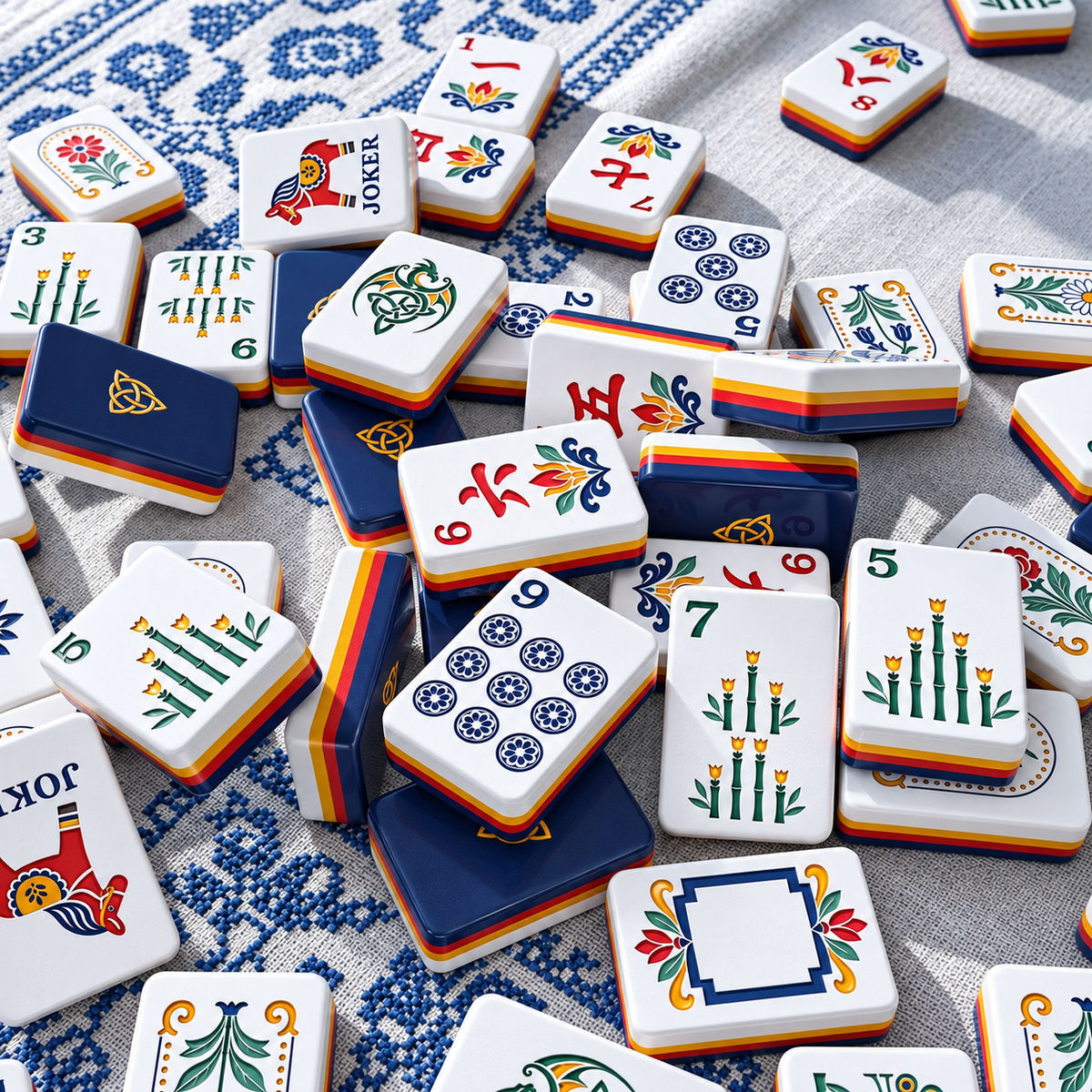
Malaysian (Hong Kong/Cantonese) mahjong uses 136 tiles—three suits (Bams, Craks, Dots) numbered 1–9 in sets of four, plus 16 winds and 12 dragons. For two players, each draws 13 tiles instead of the standard 14; the dealer draws 14. Hands are drawn from the wall in turn order. Unlike American mahjong, Malaysian mahjong allows sequences (chows: 1-2-3, 5-6-7) and is purely about melds (pungs, kongs, chows) with no printed annual card. A game typically lasts 2–4 hours. You'll need a 136-tile set (many sellers also stock 144-tile versions with jokers); our best-selling mahjong sets include variants that work for both American and Asian play. Two-player rules require adjusted scoring, wall depth, and draw mechanics—check a Hong Kong mahjong rulebook before starting to clarify tie-breaking and limit hands specific to your region.
Is Malaysian mahjong really playable with just two players?
Yes, but with major caveats. Malaysian mahjong was designed for four; two-player versions exist but reduce strategy and luck balance. With two, you split the wind positions (one player is East-North, the other is West-South), each draws 13 tiles initially, and the dealer draws 14. The game moves faster but loses the blocking and waiting tension of four-player rounds. Play it as a casual variant rather than tournament-standard.

What tile set do you actually need for Malaysian mahjong?
Malaysian mahjong uses 136 tiles, not the 152 used in American mahjong. The composition is: three suits (Bams, Craks, Dots) with numbers 1–9, four copies of each (108 tiles) + 16 winds (four N, E, W, S) + 12 dragons (four Red, Green, White). Many sets sold as "144-tile" add jokers to the 136-tile base. Do not use an American set (which has flowers and different joker rules). Look for sets labeled "Hong Kong," "Cantonese," or "Malaysian" mahjong explicitly, or buy a flexible acrylic set designed for multiple variants—check the description for 136 or 144 tiles and the presence of chows (sequences) in the printed rules.
🀄 Shop best-selling mahjong sets →
How do the two-player draw rules differ from four-player?
Rule | Four-Player Malaysian | Two-Player Malaysian |
Initial hand size | 14 tiles | 13 tiles (non-dealer); dealer draws 14 |
Wall size | 136 tiles split four ways | 68 tiles per player (modified wall) |
First discard | Dealer discards after draw | Non-dealer discards first, dealer draws |
Draw sequence | Counterclockwise from dealer | Strict alternation |
Win conditions | Standard pung/kong/chow/pair | Often simplified; check local rules |
In two-player, the wall becomes much shorter—each player controls 68 tiles instead of 34. This means fewer draws before the wall is exhausted, and hands are often won or drawn before a natural end. You'll finish rounds in 20–45 minutes instead of 1–2 hours, and dead walls (the Kong box) are either minimal or skipped. Agree on your wall-draw method before the first hand.
What's the biggest rule difference between Malaysian and American mahjong?
Malaysian mahjong allows chows (sequences: 1-2-3, 5-6-7, 8-9-1, etc.); American mahjong does not. In Malaysian play, melds are pungs (three identical), kongs (four identical), chows (three consecutive in the same suit), and one pair. Any meld can be called and exposed during play. American mahjong uses only pungs, kongs, quints, and sextets—no sequences—and hand patterns are drawn from a published National Mah Jongg League card issued each spring. Malaysian mahjong is free-form: you win whenever you hold one winning combination of melds plus a pair, with no card lookup required. Scoring systems also differ; Malaysian uses point limits and often plays to a set total (e.g., 2000 points) rather than counting individual rounds.

What specific adjustments make two-player Malaysian mahjong playable?
Wind roles: Designate one player East (dealer) and one West (non-dealer). Rotate after each hand if playing multiple rounds.
Wall layout: Build two walls of 17 tiles each (68 total) or use a modified 68-tile wall per player, leaving about 8 tiles as the dead wall.
Draw order: East (dealer) draws first after the discard phase begins. West draws second. Alternate strictly.
Calling: Any exposed meld (pung, kong, chow) can be claimed from either player's discard—there's no blocking.
Winning: First to declare a winning hand (one pung/kong/chow, one pair) wins the round. If the wall exhausts before a win, it's a draw (no points awarded).
Scoring: Use a simplified point system: winning hand scores a fixed amount (often 1 point or a preset stake); optional: add bonuses for kongs or all-winning-melds (all chows, all pungs, etc.). Many casual groups skip complex scoring and play "first to three wins" instead.
Since two-player removes spectator dynamics, play with a mahjong mat to keep tiles organized and visible—it also protects your tile edges during intensive back-and-forth play.
🎁 See our most-loved mahjong sets & accessories →
Why do most players prefer four-player Malaysian mahjong?
Four-player Malaysian mahjong is the standard because it balances luck, memory, and blocking strategy. With two players, you sacrifice discarding pressure, wall denial, and the social element. Two-player removes the chance for a third or fourth player to interrupt your melds—making wins more predictable and less exciting. Competitive players avoid two-player variants. However, two-player works well if you're learning the tile combinations, practicing hand recognition, or playing as a couple at home. Think of it as a drill, not the real game. If you love two-player play, consider American mahjong with two or three players—which has published official rules and is equally valid.
Common mistakes when setting up a two-player Malaysian game
Mistake 1: Using the wrong tile set. Don't use an American 152-tile set for Malaysian play—it has flowers and no chows. Verify your set includes suits, winds, dragons, and supports sequences before opening it.
Mistake 2: Skipping wall agreement. Write down your wall layout (e.g., "17 tiles per side, 8-tile dead wall") before play. Ambiguity kills momentum.
Mistake 3: Forgetting to swap dealer positions. After each hand, rotate East and West so both players deal equally over a session.
Mistake 4: Mixing American and Hong Kong scoring. Decide: Are you playing for points, rounds won, or stakes? Mixing systems mid-game causes disputes.
Mistake 5: Not clarifying the "Kong" rule. Agree upfront: Does a player drawing a tile and immediately declaring a Kong (four of a kind) restart the game, or does it count as a normal exposure? Different regions rule differently.
Test one full game without money or high stakes, playing by a single rulebook (print one page and read it aloud), to nail down your group's version.
✨ Find your Mahstead set — free US shipping →
What to check before you buy a two-player Malaysian mahjong set
Tile count: 136 or 144 (not 152). If the listing doesn't say, ask the seller.
Suit labels: Confirm all three suits (Bams/Craks/Dots) are present and numbered 1–9.
Winds and dragons: 16 winds, 12 dragons minimum.
Material: Acrylic or bamboo+plastic are durable for frequent play; resin can crack under pressure.
Size: Standard tiles are about 1 inch wide; confirm they fit your hands and table.
Jokers or blanks: Not required for Malaysian mahjong, but extras won't hurt.
Printed rules or QR code: Some sets link to online rule videos—helpful for two-player learning.
Carrying case: Essential if you're moving between homes; a travel bag or case saves wear.

FAQ
Can I use an American mahjong set for Malaysian mahjong?
No. American sets have 152 tiles, flowers, and don't support chows. Malaysian requires 136–144 tiles, three suits, winds, and dragons only. Using the wrong set will confuse hand reading and break scoring.
How long does a two-player Malaysian mahjong game take?
One hand typically lasts 20–45 minutes; a full session (5–10 hands) takes 2–3 hours. Four-player rounds are usually longer because more players mean more waiting between turns.
Do I need to learn Hong Kong mahjong scoring to play two-player?
Not for casual play. You can simplify: winner gets 1 point per round, first to 10 points wins the session. For tournament or complex scoring, buy a rulebook or watch a tutorial video specific to Hong Kong mahjong.
Is two-player Malaysian mahjong considered "real" mahjong?
No. Four-player is the standard. Two-player is a casual variant, useful for practice or intimate play—but competitive players and tournaments always use four.
What's the difference between Malaysian, Hong Kong, and Cantonese mahjong?
These terms are often used interchangeably (all are played primarily in Hong Kong and Southeast Asia). Rules vary slightly by region and family house rules. Always agree on a single rulebook before play.
Can I play two-player American mahjong instead?
Yes, and it's officially supported. American mahjong offers published two and three-player rules without adaptation. If you prefer American tiles and the National Mah Jongg League card, this is a better choice than forcing Malaysian into a two-player mold.


View More
View More
View More
