
Singapore Mahjong Special Hands: Winning Patterns Explained
Last updated: Nov 23, 2026
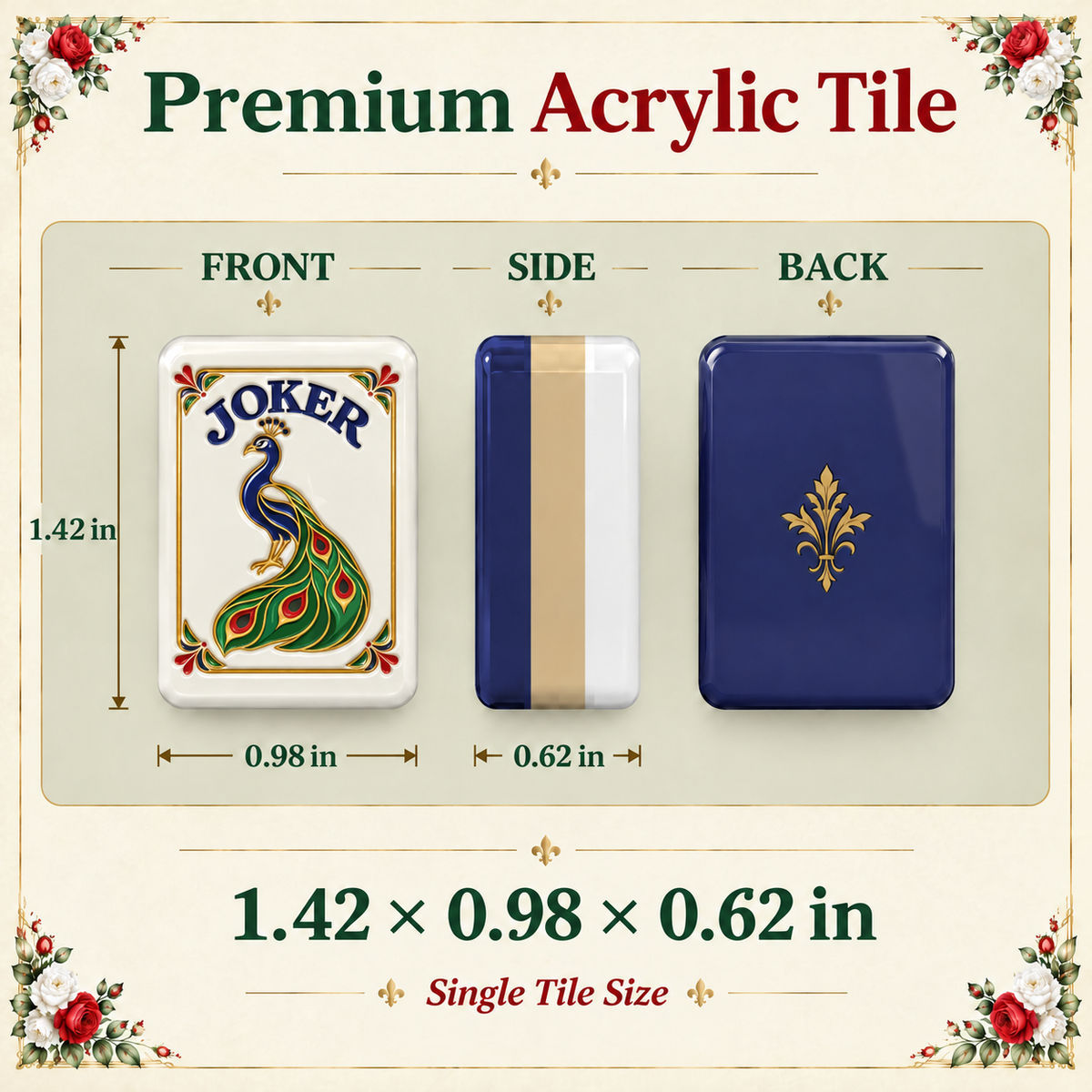
Singapore mahjong (also called Malaysian or Cantonese-influenced regional play) wins on specific hand patterns: Pung hands (sets of three identical tiles), Kong hands (sets of four), and Eyes (a matching pair). Unlike American mahjong, Singapore play requires no card reference—hands are built from memory and table convention. Winning hands typically consist of four melds plus one pair, though all pungs (no sequences allowed in strict variants) or all kongs hands score highest. Jokers are used sparingly or not at all depending on house rules. A complete standard mahjong set contains 136–144 tiles across three numbered suits plus honors (winds and dragons), though regional play varies tile counts. Common mistakes include misidentifying honor tiles, miscounting melds, or applying American mahjong rules to a Singapore game—each variant has distinct winning conditions and scoring multipliers. We recommend learning your table's specific house rules before betting, as no single "official" Singapore standard exists.
What are the four core winning hand types in Singapore mahjong?
Singapore mahjong recognizes four primary winning patterns. All pungs wins when your hand contains four sets of three identical tiles plus a pair—for example, three 5 Bams, three East winds, three Red dragons, three 2 Dots, and a pair of White tiles. All kongs means four sets of four identical tiles plus one pair, scoring the highest multiplier because drawing the final kong tile is statistically rare. Mixed pung-kong combines both pung and kong sets; most everyday wins follow this pattern. Eyes and melds wins when you draw or claim the final tile to complete either a meld (pung, kong, or a pair) while holding three other complete melds. Each pattern has a fixed multiplier; your final score multiplies the base points (calculated from tile types and meld origins) by that pattern multiplier, then often doubled or tripled by winning method (self-drawn vs. claimed from discard).

How does Singapore mahjong differ from American mahjong scoring?
American mahjong requires consulting the current year's National Mah Jongg League card—you must match one of hundreds of pre-set hand designs to score points, and every valid hand has an explicit point value printed on that card. Singapore mahjong uses algorithmic scoring based on tile composition and meld types, not a reference card. For example, honor tiles (winds and dragons) add fan (doubling units); a pung of dragons might count as two fan, a self-drawn win adds one fan, and your total fan converts to base points via a fixed table, then multiplies by pattern and method. American mahjong also prohibits sequences (called "chows") from being exposed or called—only pungs, kongs, quints and sextets count—whereas many Singapore variants do allow and encourage sequences in specific winning patterns. A Singapore player switching to American mahjong often struggles because the mental math shifts entirely: you must memorize card sections rather than calculate multipliers on the fly.
What tiles and honors define a strong Singapore mahjong hand?
Honor tiles—four winds (North, East, South, West) and three dragons (Red, Green, White)—form the backbone of high-scoring Singapore hands because each honor pung or kong adds fan immediately. Numbered tiles (1–9 in three suits: Bams, Craks, Dots) are lower-value but faster to complete. A strong hand typically prioritizes terminals (1 and 9 of any suit) and honors early; these are hardest to draw late in the game and losing them to discard is costly. Simples (2–8) fill melds more flexibly because many players discard them safely. The White dragon (often called "Soap" or the zero tile) is especially valuable because it serves as both an honor and occasionally as a zero tile in certain regional variants, making it doubly useful for melds. Our best-selling mahjong sets include clearly marked honor tiles and suit symbols so you spot high-value melds instantly during live play.
🀄 Shop best-selling mahjong sets →
Why do Singapore players track the discard pile so carefully?
In Singapore mahjong, the discard pile (the wall of tiles played by all players each turn) is your primary intelligence source—it tells you which tiles are dead (impossible to draw), which player may need which tile, and whether a winning hand is still possible. If both players have discarded two East winds, only two Easts remain in play, making an all-Easts pung nearly impossible; savvy players adjust their strategy instantly. The discard pile also signals when a player is fishing for a specific tile: if Player A discards high terminals, they likely hold middle or honor tiles, so claiming from them is safer than from Player B who discards only high honors. Tracking also prevents dead hands—hands where all tiles needed have been discarded—so you fold or change tactics before wasting turns. Beginners often ignore the discard pile and play reactively; experienced players study it after every turn, updating their mental map of available tiles. This is why Singapore games feel faster than American mahjong: the decision loop is tighter and memory-based rather than card-dependent.
How do house rules and regional variants shape Singapore mahjong play?
Singapore mahjong has no universally printed rulebook; instead, each table or club follows house rules agreed before play begins. One table may award triple points for all honors (no numbered tiles), while another table's rule is all simples (no honors) worth double. Some regions allow jokers or wildcards (usually kept at zero to three per set); others forbid them entirely, making dead hands more likely and timing more critical. Payment systems vary too: some tables use point-only scoring (no money), others multiply points by a fixed cent value. The hand limit also differs—traditional Singapore play often runs to 16 rounds (four players, four rotations), but some clubs play open-ended until a player reaches a target score. Winning method multipliers change too: self-drawn typically wins (1.5× to 2×) but one table may allow "robbing the kong" (claiming the tile a player drew to form their fourth kong) as a special win condition. Before joining a Singapore mahjong table, always ask: When do we stop? What's the payout per point? Are jokers in or out? Do sequences count? Which honors are wild? Writing these down prevents disputes and lets you calculate risk accurately.

Comparison: Singapore vs. American Mahjong Winning Hands
Aspect | Singapore Mahjong | American Mahjong |
Winning hand structure | Four melds + one pair (mostly) | One pre-set hand design from current-year card |
Tile count in play | Typically 136–144 tiles | Always 152 tiles (no exceptions) |
Scoring method | Algorithmic (fan multipliers based on tile types) | Fixed point value per hand design on card |
Sequences allowed? | Yes, in many variants; depends on house rules | Never; sequences cannot be called or exposed |
Honors value | Each honor pung/kong adds fan multiplier | Specific hand designs; no automatic multiplier |
Card required? | No; hands built from memory & house rules | Yes; current-year National Mah Jongg League card mandatory |
Joker usage | 0–3 per set, house-dependent; often optional | 8 jokers per standard game; essential mechanic |
Typical game length | 4–16 rounds (varies by agreement) | Usually 8 rounds (East, South, West, North × 2) or to agreed target |
Decision pace | Fast (memory-based, live math) | Moderate (card-checking required) |
What to check before you buy a mahjong set for Singapore play
Tile clarity: Honor tiles must be instantly recognizable in a dim room or fast discard pile review. Check that wind characters and dragon colors are printed boldly, not faint.
Tile count: Confirm your set matches your table's standard (typically 136–144 for Singapore; American sets use 152). Check the product listing or ask the seller before buying.
Joker/blank count: If your table forbids jokers, buy a set with minimal spares; if jokers are in play, ensure you have enough. Mahjong racks with pushers help organize and display your full working hand so nothing is missed.
Tile weight & texture: Heavy tiles (resin or bone) slide smoothly on felt and are easier to shuffle quickly; lightweight tiles stick to fingers, slowing play and risking fumbles.
Case or bag quality: Singapore mahjong is often played at clubs or moved between homes; a reinforced travel case or padded bag prevents tile loss or cracking during transport. Browse our mahjong bags and cases for durable options.
Dice included: Verify your set includes two or three dice; Singapore play uses them to determine starting player and wall position, just as American mahjong does.
🎁 See our most-loved mahjong sets & accessories →
Related guides to deepen your play
Learning to read honor tiles quickly and remember suit patterns is critical in Singapore mahjong, just as understanding American mahjong's card-based strategy is essential there. Our guide on how to play American mahjong explains the opposite approach—card-reference play—so you see why Singapore variants feel more like rapid mental math. If you're new to any mahjong format, our mahjong for beginners resource walks you through tile names, suit symbols, and the universal rhythm of draw-and-discard that all variants share. For hosting a Singapore game at home, choosing a mahjong mat ensures a smooth playing surface where tiles move predictably—critical when speed and accuracy matter.
The bottom line: Master Singapore hands through house rules and live practice
Singapore mahjong special hands reward pattern recognition, discard pile memory, and fast mental arithmetic. The four core winning types—all pungs, all kongs, mixed pung-kong, and eyes-and-melds—each have distinct multipliers and strategic value; your score compounds when you combine a winning pattern with a winning method (self-drawn, robbing the kong, or claiming from discard). The biggest advantage over American mahjong is freedom: no card to consult, faster decisions, and a tighter social loop around the table. The biggest disadvantage is ambiguity: every table's house rules differ, so always confirm the rules before betting money. Start by observing a Singapore game at a local club without playing; write down the multipliers and winning methods used, then practice one round with play money until the math becomes automatic. With a quality mahjong set that has clear honor tiles and smooth shuffling action, you'll be calling wins confidently within a few sessions.
✨ Find your Mahstead set — free US shipping →

FAQ
Can I use an American mahjong set to play Singapore mahjong?
Yes, but with caveats. American sets have 152 tiles (8 jokers included), while Singapore typically uses 136–144. The jokers may or may not fit your table's house rules. More importantly, you won't have the NMJL card, so you must memorize your table's winning patterns and multipliers. Many players do this successfully, but it adds cognitive load early on. If you plan to play Singapore regularly, buy a set sized and configured for your specific table.
What's the difference between *fan* and points in Singapore mahjong?
Fan (translated as "doubles" or "units") is a multiplier. A base score starts at 20 or 30 points depending on your table; then each fan you earn (from honors, melds, or winning method) doubles or adds to the multiplier. So two fan might mean 20 × 4 = 80 points, or 20 × 2 × 2 = 80 points depending on house rules. Always clarify your table's fan-to-points conversion before wagering.
Why do Singapore players reject sequences in some games but allow them in others?
Tradition and regional preference. Classic Cantonese-style Singapore play (called "Old Style") forbids sequences entirely—only pungs, kongs, and pairs count. Modern or club variants often allow sequences to speed up the game and create more winning opportunities. Sequences also introduce new high-scoring patterns (like all-terminals-and-honors). Ask before joining whether sequences are in or out; if they're allowed, ask which winning patterns give bonus fan for sequences.
How many jokers should be in a Singapore mahjong set?
It depends entirely on your table. Traditional Singapore mahjong uses zero jokers; modern casual play often includes 0–3. Some clubs forbid jokers because they reduce the skill element (dead hands matter more without wildcards). Before buying a set, ask your table leader how many jokers are in play; then confirm the set you're buying includes at least that many spares in the case.
Is Singapore mahjong faster than American mahjong?
Yes, usually. Singapore play has no card to reference, so you make meld decisions and scoring calls in real time, keeping pace quick. American mahjong requires pausing to check the card, especially for new players. However, Singapore's mental math (calculating fan and multipliers) can slow things down if players argue about scoring—we recommend writing the multiplier table on a card and posting it during play to keep the game moving.
What's "robbing the kong" and how does it work as a winning method?
If another player draws a fourth tile to form a kong (four identical), and that tile is the one you need to complete your hand, you may claim it before they declare the kong—this is called "robbing the kong" and counts as a special win. It scores bonus fan (often triple or quadruple) because it's rare and skillful. Not all tables allow it; confirm with your house rules before play.


View More
View More
View More
