
Sichuan Mahjong Winning Hands: Rules, Scoring & Strategy
Last updated: Nov 23, 2026
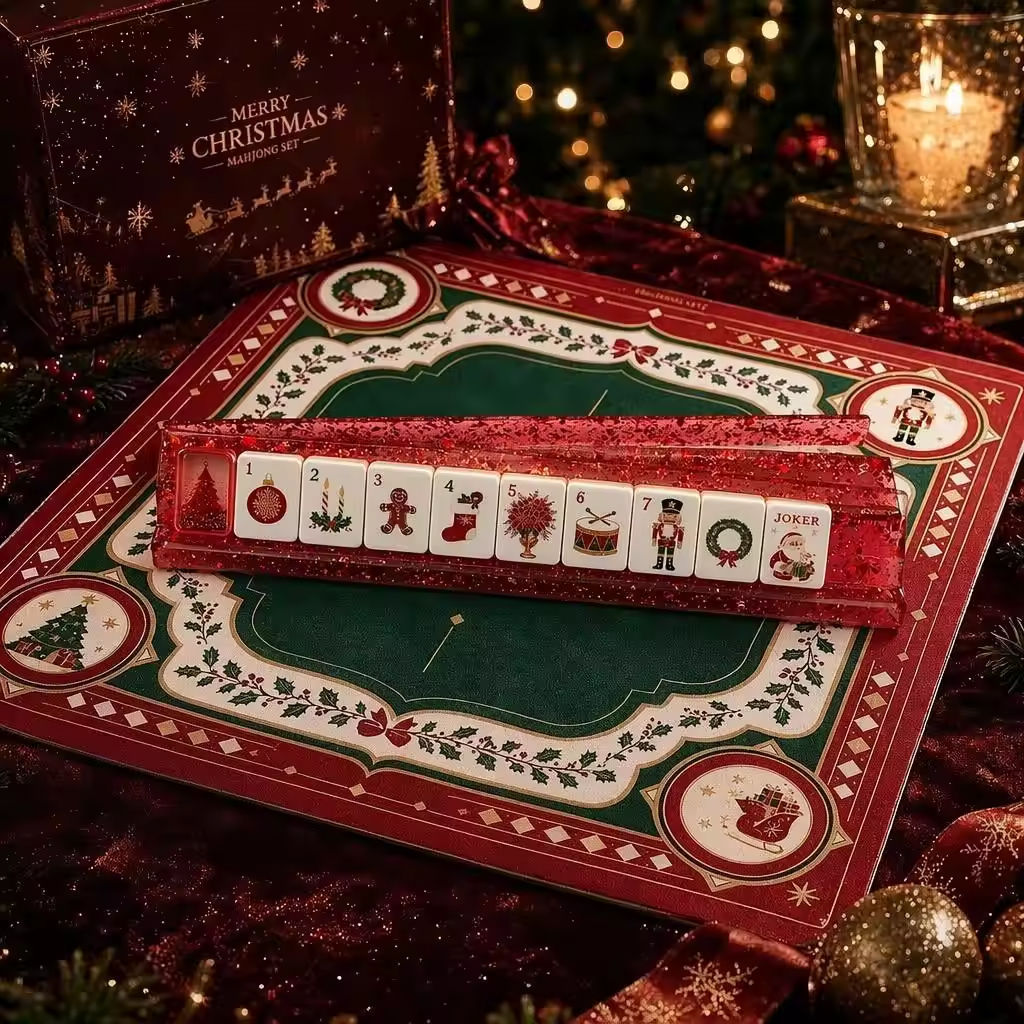
Sichuan mahjong winning hands are melds of identical tiles—pungs (threes), kongs (fours), chows (sequential triplets like 1-2-3), or pairs—declared when a player draws or calls a discard. The first hand completed and declared wins the round. Unlike American mahjong, which uses a fixed National League card, Sichuan hands are recognized by their structure and point value on the fly. Players draw and discard in turn; jokers (called "wildcards") substitute for any tile. Scoring depends on hand composition—concealed hands score higher than exposed ones, honors and terminals multiply value. A basic winning hand requires one pair plus melds totaling 14 tiles; advanced hands add bonus patterns. The game is typically played by four players with one 144-tile Chinese set, drawing from a central wall and calling discards. Rounds resolve in minutes, making Sichuan mahjong faster and more social than rule-heavy American variants. 🀄 Shop best-selling mahjong sets →
How is a Sichuan hand structure different from American mahjong?
Sichuan mahjong hands are built live from any tile combination, not matched to a published card. American mahjong requires hands to conform exactly to the current year's National League card—predetermined patterns printed on cardstock. In Sichuan, a player wins with any valid meld arrangement: one pair plus either four pungs, one pung and one chow plus two more melds, or other legal combinations totaling 14 tiles. Jokers are liberal substitutes (in American play, jokers have strict rules and cannot complete pairs). Sichuan rewards speed and pattern recognition; American rewards planning, card study and exact hand execution.

What tiles make up a valid Sichuan winning hand?
A standard Sichuan winning hand contains 14 tiles arranged as one pair plus four melds of three tiles each. A meld is either a pung (three identical tiles: 5 Dot, 5 Dot, 5 Dot), a kong (four identical), or a chow (three consecutive numbers in one suit: 4 Bam, 5 Bam, 6 Bam). Honors (winds and dragons) cannot form chows—only pungs and kongs. The pair must be two identical tiles; it cannot be part of a meld. Jokers fill gaps: if you hold 4 Crak, 5 Crak and need a 6 Crak, a joker substitutes. Some Sichuan rule sets allow seven pairs (a hand of seven matched pairs) as an alternative win. Concealed hands (tiles not shown until declaration) score double; exposed hands (melds revealed as they're formed) are worth face value. A player must declare a win immediately upon completing a 14-tile hand; delayed declaration forfeits the win.
How do you score a Sichuan mahjong hand?
Scoring in Sichuan mahjong is point-based and contextual. Every hand has a base score—a standard pung is worth 2 points, a kong 4 points, a chow 0 points, and the pair 0 points—but multipliers apply based on hand type. A concealed hand doubles all points. Honors (winds and dragons) increase value: a pung of winds or dragons is 4 points instead of 2; a concealed pung of these is 8 points. Terminals (1 and 9 tiles) in pungs score double. "All pungs" (no chows) is a premium hand; "all terminals and honors" is rarer and worth much more. The player who discarded the winning tile (if called) often pays double or triple; the other two non-winning players split or each pay base value. Total scores vary widely—a basic 8-point hand might be settled at 8 units from each non-winner, while a 24-point concealed all-terminal hand could settle at 24 or 48 units. Players agree on unit value (yuan, dollars, or points) before play begins. Most casual Sichuan games cap rounds at 30 points or play until a target score is reached.
What role do jokers play in Sichuan mahjong?
Jokers (or wildcards) in Sichuan are free-agent tiles that substitute for any needed tile to complete a meld. If you hold 7 Dot, 8 Dot and draw a joker, you can play it as a 9 Dot to finish a chow. Jokers are never discarded voluntarily—holding one until you need it is tactically smart. A hand containing no jokers scores bonus points in some rule variants. Unlike American mahjong, where jokers cannot form pairs or be used in a single tile call, Sichuan allows jokers in almost any position except the final winning pair in many regional variants (some allow it, some don't). A kong that includes jokers is still valid; a concealed kong with a joker is worth 8 points or more depending on local rules. The exact number of jokers in a Sichuan set varies by region—most use one or two per set. Because joker scarcity increases tension, advanced players watch carefully who's holding them. If a player declares a win and a joker is visible in their hand (not as part of the winning meld), that hand may be void in strict rule sets.
What mistakes do new Sichuan players make?
Common error top: Misunderstanding chows. New players often think 1 Dot, 1 Dot, 2 Dot is a chow (it's not—it's a pung plus a stray tile). Chows must be three different consecutive numbers in the same suit: 3 Bam, 4 Bam, 5 Bam. This is why honors—winds and dragons—cannot chow at all; there's no "next" dragon after Red.
Error #2: Holding jokers too long. Beginners hoard jokers waiting for a perfect moment, then discard them late-game when other players are close to winning. Better strategy: use jokers early to build melds, or discard one if you sense an opponent has few gaps.
Error #3: Not tracking discards. In American mahjong, players can verify hands against the card. In Sichuan, you must memorize what's been played to judge what's still in the wall. Beginners forget a key tile was discarded two rounds ago and waste draws chasing it.
Error #4: Calling too casually. If you call a discard to complete a meld and then cannot form a valid winning hand, your hand is dead and you cannot win that round (rules vary by region; some enforce this strictly). Wait until you're certain a hand is winnable.
Error #5: Confusing regional rule variants. Sichuan has many sub-variants (Chengdu-style, Leshan-style, etc.) with different hand values and bonus patterns. Always clarify bonus hands, point multipliers and settlement method before the first game.

Comparison: Sichuan vs. American mahjong at a glance
Aspect | Sichuan | American |
Tile count | 144 (4 suits × 9 ranks + honors + flowers/jokers) | 152 (3 suits × 9 ranks + winds + dragons + flowers + jokers) |
Hand source | Any valid meld structure, recognized live | Must match current year National League card exactly |
Winning structure | 14 tiles (1 pair + 4 melds) or 7 pairs | Varies by card pattern (often 14 tiles, some 13 + draw) |
Chows | Yes; required in many hands | No; American has no sequences—only pungs, kongs, quints, sextets |
Joker use | Substitute freely in most positions | Jokers only in exposed melds; never in pairs or single calls |
Draw timing | Draw during your turn; declare when 14-tile hand is complete | Must draw, then discard; hand must be drawn from wall or called discard |
Game pace | Fast; rounds often 5–15 minutes | Moderate; rounds 20–45 minutes due to card lookup |
Scoring | Point multipliers for concealment, hand type, honors | Fixed point values on card; players calculate totals |
Is Sichuan mahjong played with a different set than American mahjong?
Not necessarily a different set, but a different tile count. Sichuan uses the traditional Chinese 144-tile set (one complete set per player setup). American mahjong uses 152 tiles (8 additional jokers built into a single shared pool). The suits, ranks and basic tile shapes are the same—Bams, Craks, Dots numbered 1–9, plus winds (North, East, West, South) and dragons (Red, Green, White). Both include flowers (typically 4 or 8). The main physical difference: American sets often include spare tiles and come pre-packaged as 160-tile kits to cover jokers and spares in a single durable box, whereas traditional Sichuan sets ship with the bare 144 tiles and a few jokers. If you're learning Sichuan, any quality set with clear tile markings, comfortable racks and a sturdy carrying bag will work. The tile faces in both games are identical; learning to read Craks (often marked with character symbols) and Bams (shown with colored dots or birds) takes the same study regardless of variant.
🎁 See our most-loved mahjong sets & accessories →
Can you play Sichuan mahjong with only two or three players?
Yes, but rules shift. Standard four-player Sichuan uses a 144-tile wall divided into four sections. With three players, the fourth position remains empty and no wall section is used; the wall shrinks and tiles deplete faster, making the game more aggressive. With two players, many rule sets disallow the game because the discard pile becomes too predictable and luck dominates. Some local groups play "three-player Sichuan" by removing specific tiles (e.g., all 1 and 9 Flowers) or reducing the winning hand to 13 tiles. Play-testers report two-player Sichuan is possible but requires house rules; before attempting it, consult regional rules from the group you're joining. If you plan to host occasional Sichuan games with varying player counts, owning one high-quality mahjong mat (marked with positions and a center discard area) is invaluable—it clarifies player order and wall position even when seats shift.
What strategies help win at Sichuan mahjong?
Strategy top: Read your opponents' melds. As players form and expose melds, track what's leaving play. If two opponents each exposed a pung of 5 Dots, the remaining two 5 Dots are either in hands or the wall—narrow your chow options accordingly.
Strategy #2: Discard danger early. Honor tiles (winds, dragons) are hoarded by many players late-game. If you hold them early and they're not in your winning pattern, discard them before they become a liability. Discard "live" tiles (tiles many players might need) before "dead" ones (tiles few would use).
Strategy #3: Build flexible melds. Hold 4 Bam, 5 Bam, 7 Bam early; you can chow with either 3–5 Bam or 5–7 Bam, adapting as the game unfolds. Rigid hands (three 8 Dots and nothing else) leave you stuck if the deck turns cold.
Strategy #4: Play speed, not perfection. Sichuan rewards declaring first; a 12-point concealed hand wins the round, even if a 24-point hand was theoretically possible. Aim to complete a valid hand fast rather than wait for bonus patterns.
Strategy #5: Watch the jokers. Count visible jokers in melds. If two jokers are exposed and the set contains only three, the third joker is either in a player's hand or not yet drawn. Do not risk holding low-pair hands if the deck is likely to refresh soon and give an opponent a joker.
What to check before you buy a mahjong set for Sichuan play
Tile clarity: Can you easily distinguish 5 Bam (bird), 5 Crak (character symbol) and 5 Dot (five circles) at a glance? Sichuan rewards speed; blurry or hand-painted tiles slow play.
Set count: Most Sichuan players in casual settings use one shared 144-tile set. If you plan to host and provide your own set, confirm your group's preference. American mahjong sets (152 tiles) work but include extra jokers; clarify with your group before investing.
Joker quantity: Confirm how many jokers your set includes and how many your group's rules require. Some sets include only one or two; verify this matches local play.
Racks and comfort: Sichuan games last 5–15 minutes per round but can run for hours in a session. Quality racks with pushers reduce hand fatigue and keep tiles from sliding. This is not optional for regular play.
Carrying case: If you'll transport your set to games or friends' homes, a padded travel bag or case prevents tile loss and keeps everything organized.
Mat preference: A mahjong mat is optional but helpful for Sichuan—it defines the discard zone and keeps the wall organized, especially in fast play.
✨ Find your Mahstead set — free US shipping →

FAQ
Can I use American mahjong tiles to play Sichuan?
Yes, if the tile faces are the same (Bams, Craks, Dots 1–9, winds, dragons, flowers). American sets have 8 extra jokers; clarify with your group whether to use all of them or remove some. The core gameplay is identical once tile count is settled.
What is the quickest way to learn Sichuan hand patterns?
Play 10–15 rounds with an experienced player explaining hands as they appear. Memorize the five basic structures: all pungs, one chow + three pungs, two chows + two pungs, etc. Avoid rule-book study alone—Sichuan is tactile and learned fastest at the table.
Do all Sichuan groups use the same scoring system?
No. Regional variants (Chengdu, Leshan, Chongqing) have different multipliers for concealment, all-terminal hands, and flower bonuses. Always ask before joining a group: "What hands get bonus points and how much?" Clarify whether the first to declare wins or if ties break by highest score.
How many jokers should a Sichuan set have?
Traditionally one to three per set. Most casual games use one or two. Confirm with your group before buying; too few jokers makes the game luck-dependent, too many makes luck irrelevant.
Is Sichuan mahjong harder than American mahjong?
Different, not harder. American requires card memorization and exact hand matching; Sichuan requires pattern recognition and quick calculation. Beginners in each find their own variant easier after five games of practice.
Can I play Sichuan online or do I need a physical set?
Many Sichuan apps and online platforms exist, especially in China. For in-person play—which is the social heart of the game—a physical set is essential. Tiles, racks and mat create the sensory experience that makes Sichuan social.


View More
View More
View More
