
Classical Chinese Mahjong Cheat Sheet: Rules, Hands & Play
Last updated: Nov 23, 2026
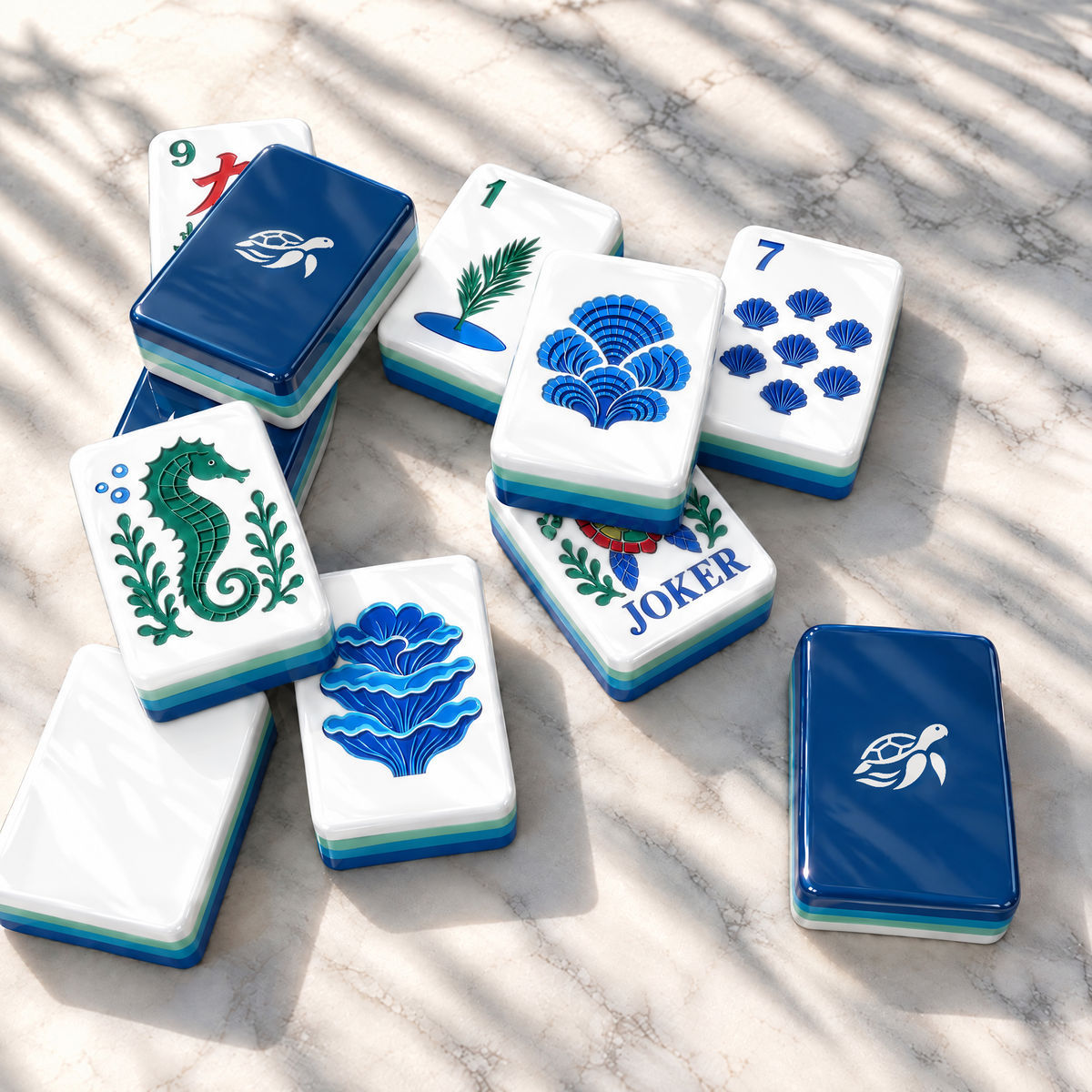
Classical Chinese mahjong uses 136 tiles split into three suits (Bamboo, Character, Dot) numbered 1–9 with four copies each, plus 16 winds (four each: North, East, South, West), 12 dragons (four each: Red, Green, White), and eight flowers. The core difference from American mahjong: you can form chows (sequences of three consecutive numbers in one suit, e.g., 1–2–3 Bamboo) and expose them. Winning requires fourteen tiles: a pair plus four melds of three tiles each (pung, kong, or chow). A hand is complete when you draw or are dealt the final tile that forms this pattern. The game opens with a dealer and wall draw; play moves counterclockwise; players discard and call tiles to form melds. Jokers don't exist in classical Chinese play. You'll play rounds (typically four games per round) and score by the difficulty and type of hand—bonus points for going out without calling discards, special tile combinations, or all-honours patterns.
🀄 Shop best-selling mahjong sets →
How do tile ranks and grouping rules work in classical Chinese mahjong?
In classical Chinese, every tile belongs to a suit and rank. The three number suits—Bamboo (stick symbols), Character (Chinese numerals), and Dot (circles)—are ranked 1 through 9. Honour tiles (winds and dragons) have no rank order and are used only to form pungs or kongs, never sequences. A valid meld is either a pung (three identical tiles), a kong (four identical tiles), or a chow (three consecutive number tiles from one suit only). A pair (two identical tiles) is mandatory—it's the foundation of your winning hand. You must have exactly one pair and four three-tile groups to win; never two pairs or incomplete groups. This structure is absolute in classical play, unlike some western house variants that permit alternative endings.

What's the difference between exposed and concealed melds?
An exposed meld is any pung, kong, or chow you've called from a discard or taken after drawing—it shows on the table where everyone sees it. A concealed meld stays in your hand until you win; all tiles remain hidden. When you win, you declare your concealed melds face-up along with your pair. Scoring is tied to this split: a hand with more concealed melds scores higher, and a completely concealed hand (drawing your own winning tile rather than calling) earns a major bonus or instant win, depending on house rules. This is why classical players often hold onto tiles longer—the payoff for going "all-concealed" or "self-drawn" is steep. If you call a discard or draw openly, you lose points and points stack against you if the table figures out your hand type early.
How does the flower tile and bonus mechanics work?
Flower tiles (eight total: four Flowers and four Seasons, named for spring, summer, autumn, winter in traditional sets) are drawn at the start and during play. When you draw a flower, you must immediately replace it from the wall and set the flower aside on the table. You do not count the flower as part of your fourteen-tile hand; instead, flowers generate bonus points when you win. Holding all four Flowers is a major hand type that scores very high. Similarly, drawing multiple flowers gives you a points boost regardless of whether you win that round. Some house games add flowers to discards to jump up bonus values. Always clarify flower rules before sitting—house variants range wildly, from "flowers don't count at all" to "flowers are mandatory bonuses that double your score." In strict tournament play, flower tiles are foundational scoring multipliers and are never optional.
What are the major winning hand types in classical Chinese mahjong?
Classical Chinese scoring recognizes dozens of hand patterns, but the most common—and easiest to chase—fall into a few families. An all-pung hand contains only pungs and kongs (no chows). An all-chow hand is the reverse: four chows plus a pair. An all-honours hand uses only winds and dragons. A mixed hand blends honours and number tiles. A limit hand (the highest category) is typically all-green, all-red, all-white, nine-gates (a very specific sequence), or hands requiring every single honour type. Each pattern and tile combination earns points on a scale, and bonuses stack: going self-drawn, being the dealer, drawing flowers, or announcing "ready" (one tile away from winning) all multiply your payout. Most social games score the winner in an agreed unit (e.g., one point = one dollar, one chip, or one penny), and losing players pay equally. A limit hand sometimes triggers an automatic payout regardless of calculation; tournament rules differ.

How do you read the dealer, rotation, and turn order?
The dealer (East Wind) holds the first advantage: they win the opening hand deal, play first, and if they win that round, they stay dealer for the next. If a non-dealer wins, the dealer rotates counterclockwise (dealer passes to the player to the right). Each full game cycle consists of four rounds—East, South, West, North—such that each player deals once. Turn order always goes counterclockwise: East draws first, then South, West, North. Discard order matches draw order. If a player calls a discard, play halts and the calling player takes that tile, then play resumes from the next player in order. If no one calls, the discard is dead and play moves on. Timing matters: you must call a discard immediately or it's gone. Most errors occur when a new player misses a call window or doesn't realize they can grab a discard out of turn (yes, you can call from any player, not just the player before you—that's a classical rule distinct from American play).
What are the most common beginner mistakes and house-rule traps?
New players frequently call a tile they think they need, only to realize it breaks their planned hand type—you cannot un-call. Always finish your hand concept before calling. A second trap: forgetting that a chow must be consecutive in one suit; 1 Bamboo, 1 Character, 1 Dot is not a chow, it's just three different tiles. Third: assuming the dealer advantage is small—it is not. If one player is strong and always or mostly dealer, they will accumulate points quickly. Fourth: misreading bonus scoring. If your house rules say flowers double points, and you hold two flowers but miss a small hand, you've forfeited a 2× multiplier. Fifth: failing to clarify limits upfront. One table plays limit hands worth one point; another plays them worth double; a third has no limit at all. Before you start, ask: "What's our limit hand value? Do flowers double? Self-drawn bonus how much? Dealer retains if they win—yes or no?" Write it down. The most expensive errors happen because house rules were ambiguous and a big hand was scored differently than expected.
Aspect | Classical Chinese Mahjong | American Mahjong | Key Difference |
Total Tiles | 136 | 152 (8 jokers, no blanks) | American adds jokers and honours variants |
Sequences (Chows) | Allowed and callable | Forbidden entirely | Chinese allows 1-2-3, American does not |
Flowers | 8 tiles; trigger bonuses | 8 tiles; no gameplay effect | Chinese flowers give points; American uses them as bonuses only when matching card |
Jokers | None | 8 mandatory | American relies heavily on joker flexibility |
Winning Logic | Pair + 4 melds (pung/kong/chow) | Hand matches current National League card only | Chinese is open-ended; American is fixed-card-based |
Dealer Advantage | Can retain as dealer if won | No retention | Classical keeps same player; American rotates |
Scoring Basis | Hand type + bonuses (self-drawn, flowers, limits) | Exposure + hand type from card | Classical is algorithmic; American is card-lookup |
House Rules | Highly variable by region/table | More standardized (NMJL card) | Classical games rarely identical; American more uniform |
🎁 See our most-loved mahjong sets & accessories →
What to check before you buy a classical Chinese mahjong set
If you're building a regular game, look for a set with 136 tiles clearly labeled in English or Chinese—many online retailers miscount or mix American and Chinese tile compositions. Check that bamboo, character, and dot suits are distinct (colour or symbol). Flowers and seasons should be identifiable (not all sets include the season names on the reverse; some sellers skip seasons entirely). Verify wind and dragon tiles are readable; wind tiles sometimes show directional characters that are hard to parse if you're new. A typical set comes in a hard case or cloth bag; if you're hosting weekly, choose a case that locks or seals. Some players prefer a felt mat underneath to prevent scratching; others use a mahjong mat with pushers to keep tiles upright during play. If your group plays fast or you have arthritis, mahjong racks with pushers help enormously. For travel or storage, a durable travel bag designed for mahjong protects your investment; classical sets are often made of heavier resin or bone and chip easily in transit.
✨ Find your Mahstead set — free US shipping →
Bringing it home: practice hand structure first
Start by learning the three meld types cold: pung, kong, chow. Write them down, draw them, dream them. Ask an experienced player to set up five practice hands and have you identify the melds aloud. Then drill the winning structure: pair + 4 melds = 14 tiles, always. Next, learn the three suits and two honour categories (winds and dragons). Play a slow, talkative game with a patient group; call every move and explain your strategy. After ten games, the flow clicks. The scoring layer comes later—first master the mechanics.
🀄 Shop best-selling mahjong sets →

FAQ
Can I play classical Chinese mahjong with an American mahjong set?
No. American sets have 152 tiles, include eight jokers and flowers that don't function in classical play, and lack the chow/sequence mechanic. You'd be missing tiles and have rules conflicts. Use a classical set (136 tiles) for classical play.
Is there a cheat sheet card or quick-reference I can carry to the table?
Most classical players don't use a card; instead, they memorize hand types and point thresholds through repeated play. Some regions print hand posters (in Chinese), but these are regional. The best shortcut: ask your table's strongest player to walk you through scoring after each round—you'll absorb patterns fast.
Do I have to go self-drawn to win, or can I call any discard?
You can call a discard and win, but calling a discard scores lower than self-drawn or "all-concealed" (winning off your own draw). House rules vary on penalty sizes; check yours before playing for stakes.
If I draw a flower mid-game, do I skip a turn?
You draw a replacement tile immediately from the dead wall, then continue your turn. You do not skip. The flower is set aside and contributes bonus points if you win that round.
How long does a round of classical Chinese mahjong take?
One complete round (four games, one per dealer) typically takes 45 minutes to two hours in a social setting, depending on table speed and conversation. Tournament play moves faster: 20–30 minutes per game.
What's the easiest starting hand type to chase as a beginner?
An all-pung hand (pungs and kongs only, no sequences). It's simpler to spot and collect than mixed or all-chow hands, and it scores well without bonus complexity. Ask your table which hand type beginners usually win with.


View More
View More
View More
