
Sichuan Mahjong vs. Competition Rules: Key Differences Explained
Last updated: Nov 23, 2026
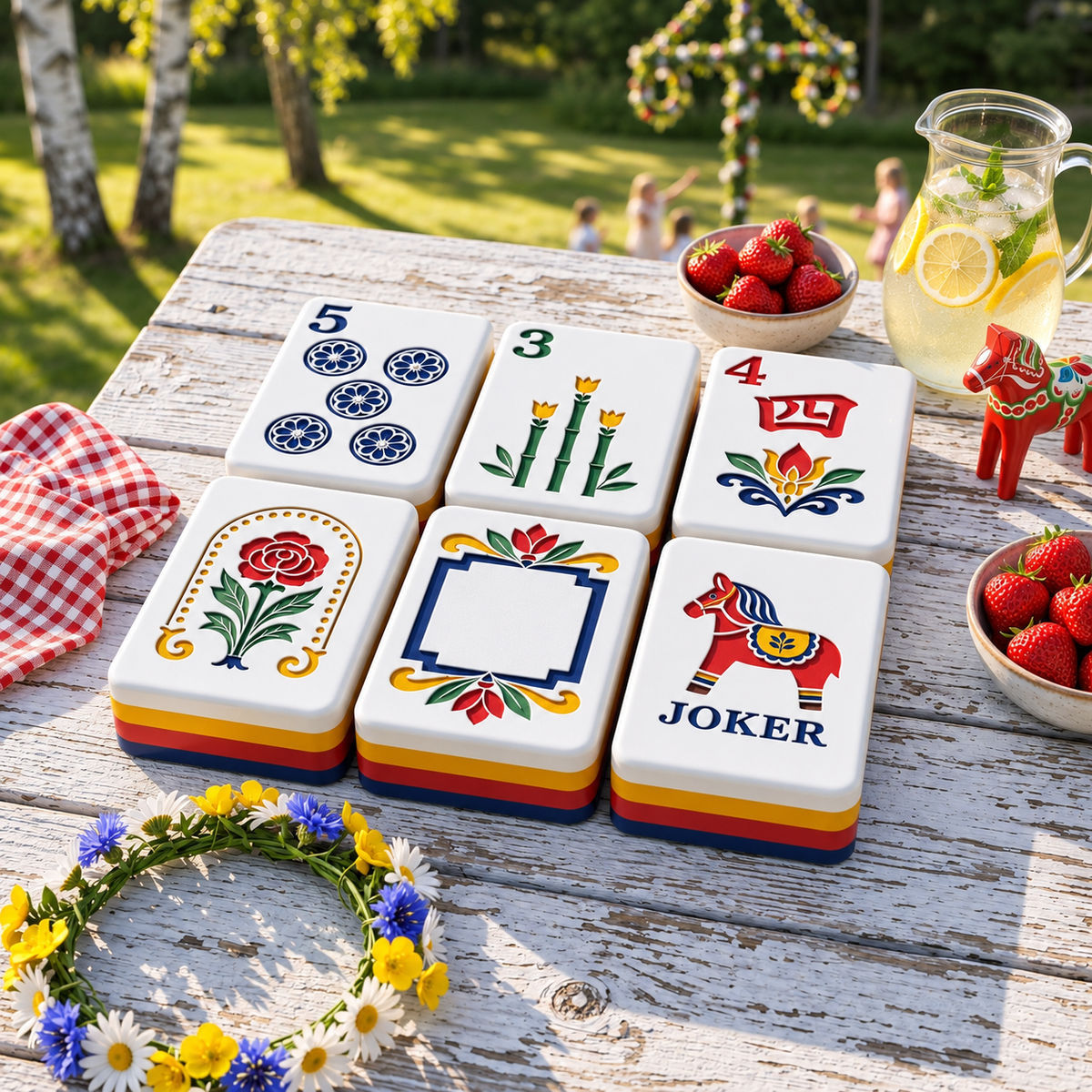
Sichuan mahjong (四川麻将) is a regional Chinese variant played with 108 tiles (typically one suit—Bams—plus winds and dragons, omitting Craks and Dots entirely) and emphasizes melds called "hu" that require specific numeric patterns and honor combinations. Competition mahjong—whether American, Hong Kong, or tournament-standard Chinese—uses 136–152 tiles across multiple suits and follows printed league rulebooks with standardized hand catalogs, Charleston passing rituals (American only), and strict pung/kong/quint exposure rules. Sichuan play focuses on speed and local house rules; competition mahjong prioritizes consistency, scoring transparency, and compliance with official cards. A Sichuan game may finish in 30 minutes with flexible scoring; a competition round lasts 1–2 hours with audit-ready scores. Both require dedicated tiles—Sichuan sets are narrower and often come without flowers or jokers—while American competition sets from Mahstead include the full 160-tile complement and acrylic durability for weekly league play.
Sichuan mahjong and competition mahjong represent two vastly different philosophies: one regional, fast-moving, and house-rule friendly; the other standardized, scoreable, and legalistic. If you've played casually in a Sichuan tearoom or online, then sat down to an American league table, you'll notice immediately that the tiles, hand patterns, and call mechanics feel foreign. We play both variants regularly, and the confusion is real—especially on tile quantity, suit composition, and what counts as a winning hand.
This guide breaks down exactly where they diverge, helps you spot the differences at a glance, and steers you toward the right equipment for your game.
What tiles does each variant actually use?
Sichuan mahjong typically uses 108 tiles: one numeric suit (Bams) plus winds and dragons—no Craks or Dots. Competition mahjong (American, Hong Kong, Chinese tournament) uses 136–152 tiles across three numeric suits plus honors. Sichuan tiles are often narrower, with simpler graphics. Competition tiles (especially acrylic) are thicker, wider, and designed to stack and click reliably through dozens of games per season.
The Sichuan 108-tile deck means your hand builds from far fewer unique tile options, favoring repeated patterns and honor melds. Competition mahjong spreads hand combinations across three suits, multiplying pattern variety and preventing any single suit from becoming stale. This is why a Sichuan hand feels repetitive after 20 games; a competition hand stays fresh because the National Mah Jongg League reissues its hand card every spring. You cannot use a Sichuan set for American competition play—the tile mix is wrong—and likewise, a competition set overkills a casual Sichuan session.

How do winning hands differ between the two?
Sichuan mahjong wins with "hu" (胡), which require numeric progression plus at least one honor tile (wind or dragon) integrated into the pattern. Winning hands often follow sequences like 1–2–3, 4–5–6, 7–8–9 within the Bam suit, each meld of three identical tiles (pung) or a sequence of three consecutive numbers (chow—a concept absent entirely from American mahjong). Competition American mahjong forbids chows; you win only with pungs, kongs, quints, or sextets pulled from the league card—never with freestyle numeric progressions.
In Sichuan, a common win is "all chows plus one honor pung"—for example, three 1–2–3 Bam melds, one 4–5–6 Bam meld, and one wind pung (three North, or three East). In American competition, you consult the printed league card, match your hand to a listed pattern (such as "2 Pung 2 Kong 1 Pair"), and declare that specific pattern number when you win.
The Sichuan ruleset is regional and flexible; the American ruleset is rigid, printed, and auditable. A Sichuan table might accept a house variation; an American league table will not.
What is the scoring system for each game?
Sichuan mahjong scoring is typically multiplied by the base value (often 1 or 2 points per hand) and scaled by conditions: self-draw wins score higher, certain melds ("pung of dragons" or "kong of dragons") earn bonuses, and penalty tiles add or subtract. Scoring is fast, sometimes mental, and varies by region and table. Hong Kong mahjong scoring is similarly flexible, with fan values and point multipliers that vary by hand composition.
American competition mahjong assigns fixed point values to each league-card hand: 30 points for an "All Simples" hand, 50 for "Mixed Terminal Pung," 70 for "Like Numbers," and so on. The card itself is your scoring reference—no mental math, no ambiguity. A scoresheet documents every hand, every player's total, and every game's winner. This auditability is critical for league play, tournaments, and money games where disputes must be settled by rule, not memory.
Here's a concrete example: In Sichuan, you draw the fourth and final tile you need—a 5 Bam—and declare hu. Players assess your hand: three 1–2–3 Bams (one chow), three 4–5–6 Bams (another chow), one pung of White dragons, one pung of East winds, one pair of 7 Bams. Your table might say, "That's a standard two-chow hand with two honor pungs—2 points base, times 2 for self-draw, times 1.5 for the dragon pung—so 6 points total from each player." Settle in cash or chips immediately.
In American competition, you place your winning hand on the rack. The scorekeeper pulls the league card, finds your pattern among the hand listings, reads the point value (say, "Mixed Terminal Pung, 50 points"), and records it. If anyone disputes whether your hand matches the card, the card is law. No negotiation.
How does play flow and pacing differ?
Sichuan mahjong moves fast—a complete game (often called "four winds" or one round of play) takes 30–45 minutes, with minimal downtime between hands. Players call and discard rapidly; melds happen in real time; scoring is swift. The game rewards quick decision-making and pattern recognition. Breaks between hands are brief; the next hand begins within seconds.
American competition mahjong is slower and more deliberate: a complete game is typically 16 hands (four rounds of four players each taking the dealer position), taking 1.5–2 hours. Between each hand, players perform the Charleston—a formal tile-passing ritual that takes 3–5 minutes and resets every player's rack. The scorekeeper documents each hand and total. Discards are face-up and organized by suit; players study the discard pile to infer other players' strategies. Winning hands are verified against the league card before points are awarded.
This pacing difference is crucial if you're hosting. A Sichuan evening accommodates more hands, more casual drop-ins, and more social chatter. An American league night is structured, timed, and focused—ideal for players who prize consistency and want to improve their strategy.

Which ruleset should you learn first?
If you have friends or family in China or Taiwan, or you encounter online Sichuan games, start there: the learning curve is gentle, house rules are forgiving, and no printed reference is required. You learn by doing, pick up local variations, and adapt. Sichuan is more forgiving of mistakes and rule drift.
If you plan to join an American mahjong league, attend a regular game at a club, or want to compete in a tournament, commit to American rules from day one. The National Mah Jongg League card is your scripture; every rule, hand, and point value flows from it. You must memorize the hand card (or at least know how to read it quickly), understand the Charleston, and accept that there are no house rules—only law and exceptions published by the league. This rigor feels rigid at first, but it's what makes American mahjong playable anywhere in the country with the same outcomes.
A pragmatic choice: Learn whichever variant your regular table plays. If you're joining a weekly game at a local community center or country club, ask what rules they follow before you buy tiles. Most American clubs follow the league card; most casual home games in Chinese households follow regional house rules (Sichuan, Cantonese, Shanghai—each with its own tile count and melds).
🀄 Shop best-selling mahjong sets →
Quick comparison: side-by-side breakdown
Aspect | Sichuan Mahjong | American Competition Mahjong |
Tile count | 108 (one numeric suit) | 152 (three numeric suits, 8 jokers) |
Suits included | Bams only; winds & dragons | Bams, Craks, Dots; winds & dragons |
Winning hand concept | "Hu"—chows + honor pungs | League-card hand patterns only |
Chows allowed? | Yes, essential | No, forbidden |
Exposable melds | Pungs, kongs, chows | Pungs, kongs, quints, sextets only |
Scoring system | Flexible, house-rule based | Fixed, printed on league card |
Typical game duration | 30–45 minutes | 90–120 minutes |
Hand reference | None; memory & consensus | Printed league card (annual) |
Audit trail | Rare; scores verbal | Scoresheet required |
Setup ritual | Minimal | Charleston (formal tile pass) |
Regional variation | High; rules vary by table | None; standardized nationwide |
What to check before you buy—and which set suits your game
If you're shopping for a Sichuan game, you need a narrower, lightweight tile set often sold without flowers or jokers. Many online sellers label these "simplified" or "single-suit" mahjong sets. Check the tile dimensions: Sichuan tiles are typically 1 inch × 0.5 inch or smaller. You won't need a large mat or heavy rack; a simple cloth surface and a basic bamboo or plastic rack suffice. New Mahstead arrivals include traditional acrylic sets designed for American play; if you're planning Sichuan, verify the tile count and suit mix before ordering.
If you're joining an American league or hosting regular competition games, you need a full-size 160-tile acrylic set with all three suits, winds, dragons, flowers, and jokers. Mahstead acrylic sets are designed to withstand weekly shuffle and play for years. Pair it with a quality mat that suits your table size and a rack with pushers so players can organize and slide tiles smoothly. If you're traveling to games, invest in a sturdy travel bag or case to protect your tiles.
🎁 See our most-loved mahjong sets & accessories →
The most common mistake: buying a single set and assuming it works for both variants. It doesn't. A Sichuan tile set is wrong for American league play; an American set is overkill and unnecessary for casual Sichuan sessions. Choose your game, then choose your tiles—and you'll avoid frustration and waste.
Honest note on learning both
We've hosted players who mastered Sichuan at home, then discovered their hand patterns don't exist in the American league card. The frustration is real. Conversely, American players who try Sichuan online get lost in the chow sequences and flexible scoring. Both games reward pattern recognition and spatial memory—the skills transfer—but the rulesets are different enough that you must relearn one before switching the other. Don't try to blend them at one table; it confuses everyone. Pick one, commit to its rules, and save the other for a separate night or group.
✨ Find your Mahstead set — free US shipping →

FAQ
Can I use a Sichuan mahjong set to play American league mahjong?
No. Sichuan sets omit the Crak and Dot suits entirely, leaving you unable to form hands on the American league card. You need all three numeric suits. Borrowing is possible in a pinch, but don't plan to join a league with Sichuan tiles.
Are chows allowed in American mahjong?
No. American mahjong allows only pungs (three identical tiles), kongs (four identical), quints (five identical), and sextets (six identical). Sequences like 1–2–3 do not exist in American rules. Sichuan mahjong requires chows as a core meld type.
How often does the American league card change?
The National Mah Jongg League issues a new official card every spring. The hand patterns remain largely consistent year to year, but some hands are retired and new ones added. You must play with the current year's card; old cards are valid only for casual play with explicit agreement.
What happens if I win but my hand doesn't match the league card?
Your win is not recognized. The scorekeeper will review your tiles against the card, and if no match exists, you must return your tiles to play. There are no exceptions in league play—the card is absolute law.
Can I play Sichuan mahjong with house rules at a casual table?
Yes. Sichuan is a regional game with many local variations (Chengdu style, Chongqing style, etc.). House rules are normal and expected. Discuss them before the first hand. American league mahjong has no house rules—only the official card.
What's the minimum number of players for each variant?
Both typically require four players. American mahjong has published rules for two and three-player variants (adapting hand patterns and tile counts). Sichuan is designed for four and rarely played with fewer.


View More
View More
View More
