
Sichuan Mahjong Etiquette: Rules, Respect & Table Culture
Last updated: Nov 23, 2026
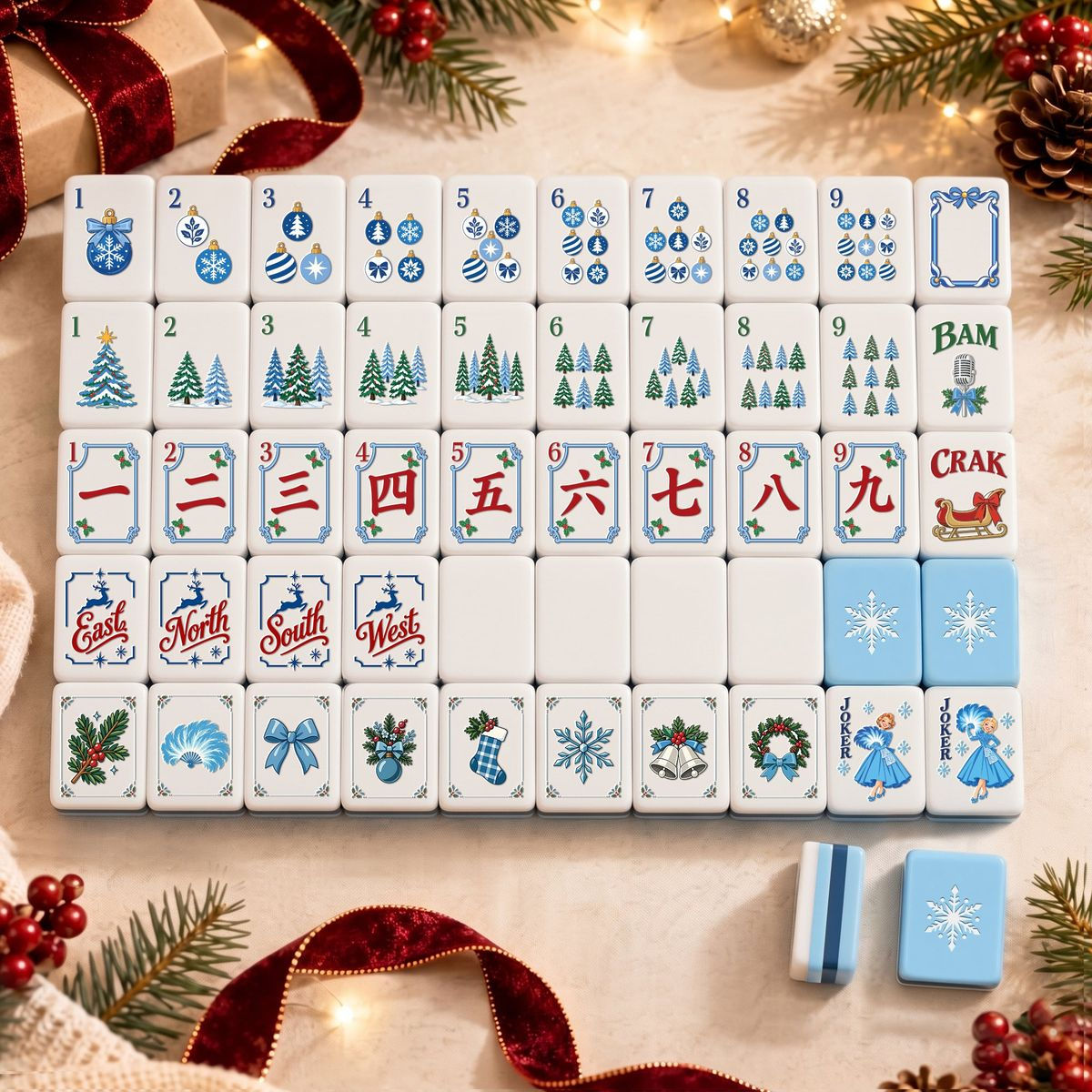
Sichuan mahjong etiquette centers on hand signaling, rapid silent play, and strict tile handling—no verbal calls, no exposing tiles early, no touching another player's hand. Unlike American mahjong, which relies on spoken declarations and the National Mah Jongg League card, Sichuan (a Chinese regional variant) uses fixed hand patterns, tile discards read instantly from position and speed, and penalties for rule breaks enforced by the table. Players sit in a fixed order (East, South, West, North), signal draws and melds with subtle hand or finger movements, and maintain absolute tile integrity—never fanning tiles in hand where opponents can glimpse them, never rearranging after a discard, never hesitating to mask tells. Games move at speed; a violation (such as exposing a tile face-up in error or calling out loud) costs points immediately. Respect for the ritual—quiet focus, clean tile movement, decisive play—separates skilled Sichuan tables from casual ones. If you're transitioning from American play, expect a steep learning curve: American mahjong emphasizes transparency and the annual card; Sichuan demands memory, speed, and near-total silence.
Why is silence so critical in Sichuan mahjong?
Verbal communication creates unfair information flow and disrupts the rhythm of play. In Sichuan mahjong, every discard is a statement; the tile choice, the angle it's placed, the speed—all carry meaning. Speaking aloud breaks concentration and risks accidental information leaks that bend odds. American mahjong, by contrast, allows and even requires verbal calls ("pung," "kong," "mah-jongg") because tiles are drawn from a common wall and the year's card is public. Sichuan tables enforce silence with small point penalties (typically 1–5 chips, set by house rules) to preserve fairness and flow. A brief greeting before the game or a brief acknowledgment of the winner is fine; mid-game chatter is not.

How do hand signals replace spoken calls in Sichuan play?
Signals vary by region and house, but core gestures are consistent. A player draws a tile and taps the table once (or twice for a bonus turn) to signal completion; others respond with a hand wave or shoulder nod to acknowledge they're passing. When melding (a pung or kong), a player places the tiles in a designated zone and taps once—no announcement. Kong declarations sometimes involve a specific finger tap or a slight lift of the hand. Discard signals are silent: you simply place your tile in the river (the discard row) face-up, angled slightly toward the center. Speed and placement do the talking. If you're unsure of a signal at a new table, watch two hands before joining and ask a neighbor before the game starts—never mid-play. This differs sharply from American mahjong, where "how to read the mahjong card" and explicit hand calls are essential to gameplay.
What tile-handling mistakes cost you chips?
Mistake | Penalty | Why |
Fanning tiles so edges show | 1–3 chips | Reveals tile count/identity to adjacent players |
Rearranging hand after a discard | 1–2 chips | Signals hesitation or fake tells |
Touching another player's tiles | 1–5 chips (or hand reset) | Violates hand integrity; can restart the hand |
Exposing a tile face-up in error | 2–5 chips | Creates public information; unfair advantage |
Hesitating > 3–5 seconds on a draw | 1 chip (house-dependent) | Slows play; can signal a tell |
Placing a tile in the river face-down | Hand disqualified or reset | Unreadable; breaks flow |
Keep tiles upright and close to your body—13 tiles in hand, held in a tight vertical row so only you see faces. When you draw, add the tile to your hand before choosing a discard. When discarding, place the tile in the river in a single fluid motion: no fumbling, no second-guessing. If you draw a tile that completes a meld, place the melds face-up in front of you in a clean row—don't mix them with your closed hand. Tile racks (if used at your table) should sit at a consistent angle and height; never tilt or rotate them mid-hand.
🎁 See our most-loved mahjong sets & accessories →
Why is seating order sacred in Sichuan mahjong?
Sichuan mahjong assigns fixed roles: East (dealer, plays first after the deal), South, West, North. This order rotates after each hand or session, depending on house rules. The dealer advantage (extra tile, first draw) carries ceremonial weight; sitting East is both a privilege and responsibility. You must never voluntarily leave mid-session or swap seats without group consent—doing so disrupts wind rotation, scoring tallies, and the ritual flow. American mahjong uses a similar wind system but allows seat rotations and is more fluid about starting positions. In Sichuan, the seating chart is printed or agreed before tiles are shuffled. If a player must leave early, the hand is typically voided or another player substitutes; you don't just empty a seat. This reflects the regional tradition that mahjong is a ceremony, not just a card game. Respecting your seat and your turn maintains the table's authority.

What happens if you break a rule—and how do you recover?
Penalties are immediate and public but proportional. Common infractions and remedies:
Exposing a tile face-up: 1–3 chips to the table or a designated player; tile is either buried back into the wall or left exposed for all to see (depending on house rule).
Touching another's hand or tiles: 2–5 chips; sometimes the offender's entire hand is reset (all tiles returned, hand redrawn).
Speaking during play: 1 chip, often waived for a first offense.
Melding out of turn: 2–3 chips; the meld is reversed and the tile returned to the offender's hand.
Claiming a win incorrectly: Forfeiture of the hand plus a penalty (3–10 chips), sometimes the entire hand is voided.
Most tables use a "three-strike" etiquette: a first violation is a warning; a second is a small penalty; a third is removal from that session. The key is acknowledgment—if you break a rule, admit it calmly and accept the penalty without argument. This builds trust and keeps the table social. Never accuse another player publicly; instead, pause and call a table consensus to review the rule. If you're unsure, say so before playing the hand.
🀄 Shop best-selling mahjong sets →
How do you read the room and adapt as a newcomer?
Arrive early—10–15 minutes before play starts—and observe a full hand without playing. Watch how experienced players tap tiles, pace their draws, manage the river, and signal melds. Note the seating ritual, the money or chip flow, and how penalties are called. Ask a neighbor, "What are the house rules here? How do you signal a meld?" Most tables will cheerfully brief you; they want you to play correctly, not slowly or wrong. Listen for any house tweaks—some tables allow "robbing" a kong (a specific meld recovery), others forbid it. Some use a timer (1–3 minutes per decision); others play by feel. Ask before you sit. If you're unsure during play, hesitate and ask a neighbor quietly—it's better to lose a hand than to violate an unwritten custom and lose credibility.
The hardest shift for American mahjong players is silence and speed. American play invites conversation, card-reading aloud, and careful hand building. Sichuan demands instinct, memory, and poker-faced decisiveness. Your first few sessions will feel alien; embrace that discomfort. Watch, ask, adapt, and come back. Within three to five games, you'll internalize the rhythm.
✨ Find your Mahstead set — free US shipping →
What to check before you buy a set for Sichuan play
If you're hosting a Sichuan game, invest in a set with best-selling mahjong sets that have durable, clearly marked tiles. Sichuan tiles see rapid handling; acrylic or high-gloss finishes reduce wear and keep suits distinct. Ensure your set includes a mahjong mat with clearly marked zones for each player's hand, melds, and river—this speeds up play and prevents accidental tile exposure. If your group uses mahjong racks with pushers, tall, narrow designs work best for Sichuan's rapid-fire pace; pushers help you hide tiles while moving them smoothly. Check that your tiles are standard size (typically 28–30 mm) so they fit your racks comfortably. A mahjong bag with a soft interior protects tiles between sessions and makes transport easy if you're moving the game between homes.

FAQ
Can I talk if I'm not actually playing a hand?
Yes. Between hands and during setup, conversation is expected and polite. Once the deal is complete and the first player draws, silence begins. You can offer advice to a friend before the game, but not once tiles are dealt.
What's the standard penalty system across all Sichuan regions?
There is no single standard—each region (Chengdu, Chongqing, etc.) and house sets its own. Penalties range from 1–10 chips per infraction. Always confirm house rules in writing or verbally before you sit, and ask a veteran at the table if you're unsure mid-session.
If I misread my hand and accidentally discard the wrong tile, can I take it back?
No, almost never. Once a tile hits the river, it's locked in play. Taking it back violates tile integrity and fairness. Accept the error and adjust your strategy; most tables do not allow mid-hand reversals.
How do I know when it's my turn if no one speaks?
The player to the East's right draws first. After that, play rotates North → West → South → East. Watch the discard river: when a tile lands, the next player (moving counterclockwise) draws from the wall. If you miss a turn, a neighbor will tap your shoulder or clear their throat quietly.
What's the etiquette if someone wins and I suspect they're cheating?
Do not accuse during play. After the hand ends and chips are settled, pull that player and a neutral third player aside privately. Describe your concern calmly and ask to review the winning hand. If the table agrees there's doubt, the win is voided and that hand is replayed or abandoned. Civility and evidence matter more than suspicion.
Is it rude to bring my own set to a friend's Sichuan game?
Yes—bring only yourself. The host provides the tiles and sets house rules. Bringing your own suggests the host's tiles are subpar or that you don't trust the game. If you want a personal set for your own games, that's different; keep it at home and use it only for games you organize.


View More
View More
View More
