
Chinese Mahjong vs Filipino Mahjong: Key Rules & Differences
Last updated: Nov 23, 2026
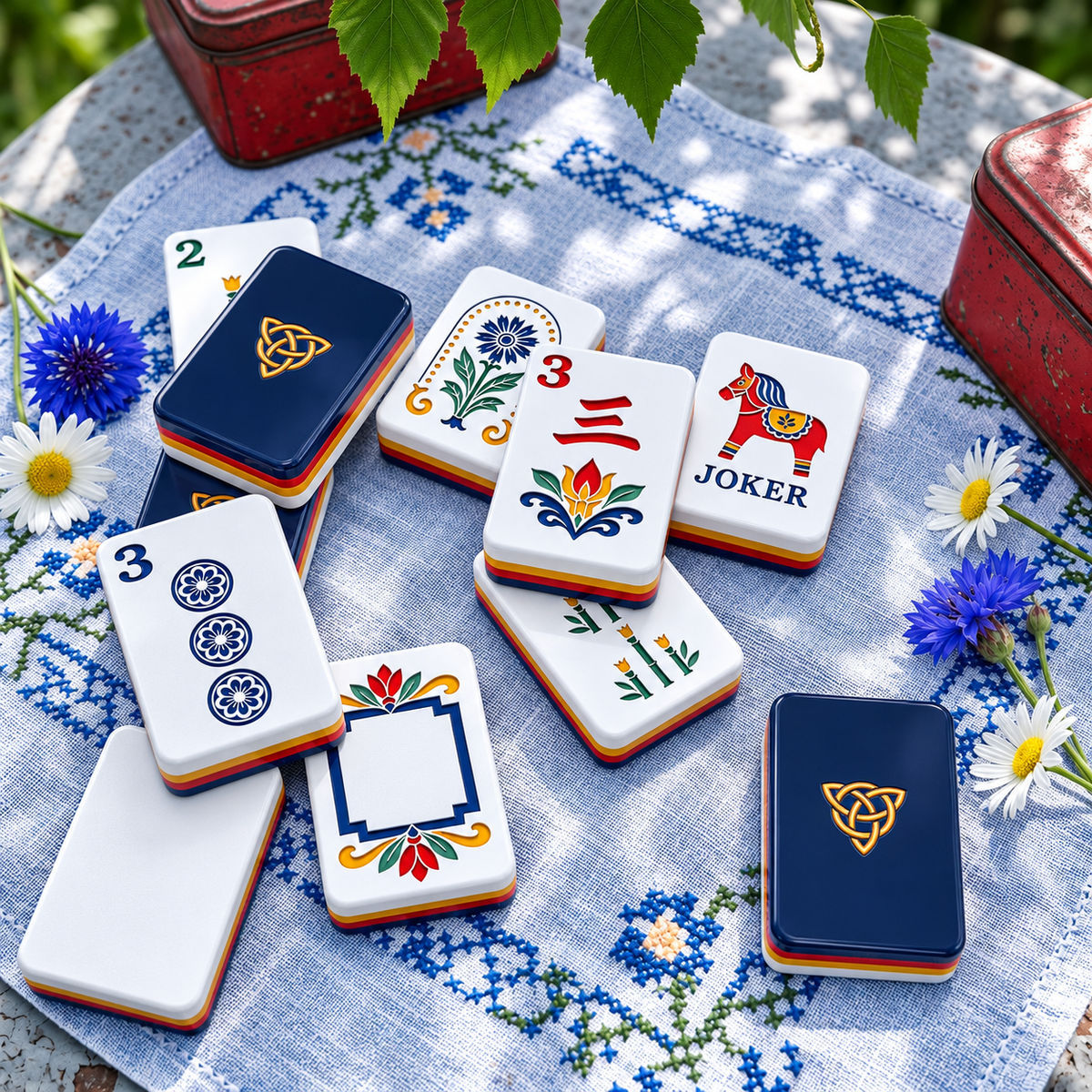
Chinese mahjong (Cantonese-style) uses 144 tiles with sequences (chows) as core melds; players call winning hands freely and use a scoring system based on hand complexity and circumstances. Filipino mahjong adapts Chinese rules but often plays with 152 tiles (adding extra jokers and blanks), emphasizes faster gameplay, and sometimes adds local house rules around calling and discards. American mahjong, by contrast, uses exactly 152 tiles with NO sequences allowed—only identical sets (pungs, kongs, quints, sextets)—and requires hands to match the current year's National Mah Jongg League card. If you host games in the US, a best-selling set with strong acrylic tiles lets you support all three rule sets at your table, though each variant demands its own strategy and tile composition.
Chinese mahjong and Filipino mahjong share a common ancestor but have evolved into distinct games with different tile counts, hand structures, and scoring systems. Understanding these differences helps you choose the right tiles and rules for your table.
What tiles does each variant use?
Chinese mahjong (standard Cantonese) uses exactly 144 tiles: three suits (Bams, Craks, Dots) numbered 1–9 with four copies each, plus 16 winds (North, East, West, South), 12 dragons (Red, Green, White), and eight flowers or seasons. Filipino mahjong typically plays with 152 or 160 tiles—the same 144 base plus eight additional jokers or wildcards—borrowed from American mahjong's tile count. American mahjong uses the same 144-tile core but always plays a game with exactly 152 tiles and eight jokers, with any additional tiles (included in a 160-tile set) reserved as spares and never added to active play. The extra jokers in Filipino games make sequences easier to complete and speed up rounds; Chinese players stick to the traditional 144 to maintain hand difficulty and strategic depth.

How do hand structures differ?
Chinese mahjong builds winning hands around sequences: a player wins with four melds (each three tiles) plus a pair, and melds can be chows (1-2-3, 4-5-6, etc. of the same suit), pungs (three identical tiles), or kongs (four identical tiles). Any player can call a tile from the discard pile to complete a chow, pung, or kong and expose it immediately. Filipino mahjong follows the same meld logic but often allows players to use jokers more liberally as wild tiles, making it easier to complete sequences mid-game. American mahjong eliminates chows entirely: winning hands consist only of pungs (three identical), kongs (four identical), quints (five identical), or sextets (six identical), plus a pair—and every winning hand must match a pattern printed on the current year's National Mah Jongg League card. This fundamental difference means a hand that wins in Chinese mahjong (for example, three tiles in sequence) is impossible in American play.
What are the scoring differences?
Chinese mahjong assigns points based on hand complexity: a simple pung-and-pair hand scores fewer points than a hand with all chows, multiple triplets, or special conditions like "all one suit" or "concealed hand" (no exposed melds). The player who discards the winning tile pays the winner; other players also contribute based on hand value. Filipino mahjong uses similar scoring principles but house rules often vary by region—some tables award bonuses for fast wins or penalize certain discard patterns. American mahjong scoring relies on the exposure level printed on the League card: a hand exposed on a specific line carries a fixed point value (typically 20–80 points per hand in a standard four-player game), and the player who discards the winning tile pays all other players. American games have no negotiation of hand value; the card is law.
Can you call tiles mid-game in all variants?
Yes, but the rules differ sharply. In Chinese mahjong, any player can call a discarded tile to form a pung, kong, or chow immediately, interrupting the turn order if needed. This open calling creates a faster, more competitive rhythm and rewards attentiveness. Filipino mahjong follows the same open-calling rule but some tables add house rules—for instance, restricting the types of tiles you can call or penalizing certain calls—so confirm with your group before the first hand. American mahjong prohibits calling except to declare a win: you draw one tile per turn, pass or pick new tiles during the Charleston shuffle, but never call a tile from anyone's discard pile. You win only when you pick the right tile yourself on your own turn, or when someone else discards your winning tile on your turn. This restriction makes American mahjong a deeper memory and strategy game because every tile in the discard area stays visible and uninterrupted.

Which variant is easiest to learn?
Filipino mahjong is often the gentlest entry point because it borrows Chinese melds (sequences included) while using the extra jokers to soften difficult hands and speed up rounds. New players see their first win within one or two games. Chinese mahjong requires stronger tile memory and strategic planning because chows demand consecutive numbers and the 144-tile count limits your options. American mahjong has the steepest learning curve: you must learn the League card's layout and notation, memorize which hands are legal (the card changes annually), and adjust to the no-calling rule—but once you memorize the card, the logic becomes clear and many players find it more satisfying because luck plays a smaller role.
Variant | Tile Count | Sequences Allowed? | Can Call Mid-Game? | Scoring | Best For |
Chinese (Cantonese) | 144 | Yes (chows) | Yes | Hand complexity + circumstances | Strategy lovers, memory players |
Filipino | 152–160 | Yes (chows) | Yes (usually) | Similar to Chinese; house rules vary | Casual groups, learners, social play |
American | 152 | No (pungs/kongs only) | No (win only) | Fixed points per League card pattern | Competitive players, rule clarity |
🀄 Shop best-selling mahjong sets →
What should you buy if you play multiple variants?
If your table rotates between Chinese, Filipino, and American games, invest in a best-selling set with acrylic American-standard tiles (152 tiles); acrylic holds up through repeated play and tile shuffling better than laminated bamboo or bone. The 152-tile count covers Filipino play perfectly and works for Chinese mahjong if you simply remove the eight jokers before each hand—most players keep the jokers in a small bag near the table for quick swaps. For American play, you'll also need a printed League card (available from the National Mah Jongg League each spring) and ideally a sturdy mat to protect tiles and organize your hand. Many weekly players use racks with pushers to hold tiles upright—essential for American play since you're arranging hands by pattern on the card, not by suit or number.
🎁 See our most-loved mahjong sets & accessories →
What to check before you buy
Tile thickness & finish: Acrylic tiles resist moisture and don't warp; check the product description for tile material and whether they're engraved (legible in low light) or printed.
Complete 152-tile count: American and Filipino games need all 152 tiles plus spares; confirm the set includes eight jokers and isn't short-packed.
Joker design: Some sets stamp jokers with color or pattern to distinguish them from blanks—matters if your table uses strict rules about joker visibility.
Case or bag: If you transport your set weekly, a padded travel bag or case prevents tile loss and keeps sets organized during storage.
House rules agreement: Before buying, confirm with your group whether you're playing strict Chinese (144 tiles, full chow rules), Filipino (house rules apply), or American (League card required). This avoids buying the wrong set type.
✨ Find your Mahstead set — free US shipping →

FAQ
Can I use an American mahjong set to play Chinese mahjong?
Yes. Remove the eight jokers and play with 144 tiles. The tile denominations are identical; American sets simply include jokers for flexibility. Most players keep the jokers in a nearby bag to swap back when switching to American or Filipino rules.
Why does Filipino mahjong use 152 tiles if Chinese uses 144?
The eight extra tiles (typically jokers or blanks) act as wildcards, making it easier to complete sequences and speeding up rounds. Filipino groups adopted this from American mahjong to keep casual play faster and more forgiving for newer players.
Is American mahjong harder to learn than Chinese?
Different difficulty: Chinese requires stronger tile memory and sequence strategy; American requires memorizing the League card's hand patterns but eliminates calling. Most players find American easier to teach once they learn the card, because winning logic is printed and unambiguous.
Can I play American mahjong rules with a Chinese tile set?
Technically yes, but it's awkward: a Chinese set has 144 tiles (you'd need 8 more to reach 152) and no jokers, so you'd need to find or add eight blank tiles separately. It's simpler to buy a set designed for American play.
Do I need a League card every year?
Yes, if you play American mahjong. The National Mah Jongg League issues a new card every spring with updated hand patterns. Old cards become invalid, so you'll need the current year's card to play competitively or in organized games. Casual home groups sometimes use old cards, but official play requires the new one.
What's the biggest rule trap when switching variants?
American players forget they cannot call a discarded tile mid-game; Chinese and Filipino players forget that American mahjong has no sequences. Practice the winning hand structure before your first game to avoid frustration and scoring disputes.


View More
View More
View More
