
Is Mahjong Harder Than Rummikub? A Player's Honest Comparison
Last updated: Nov 23, 2026
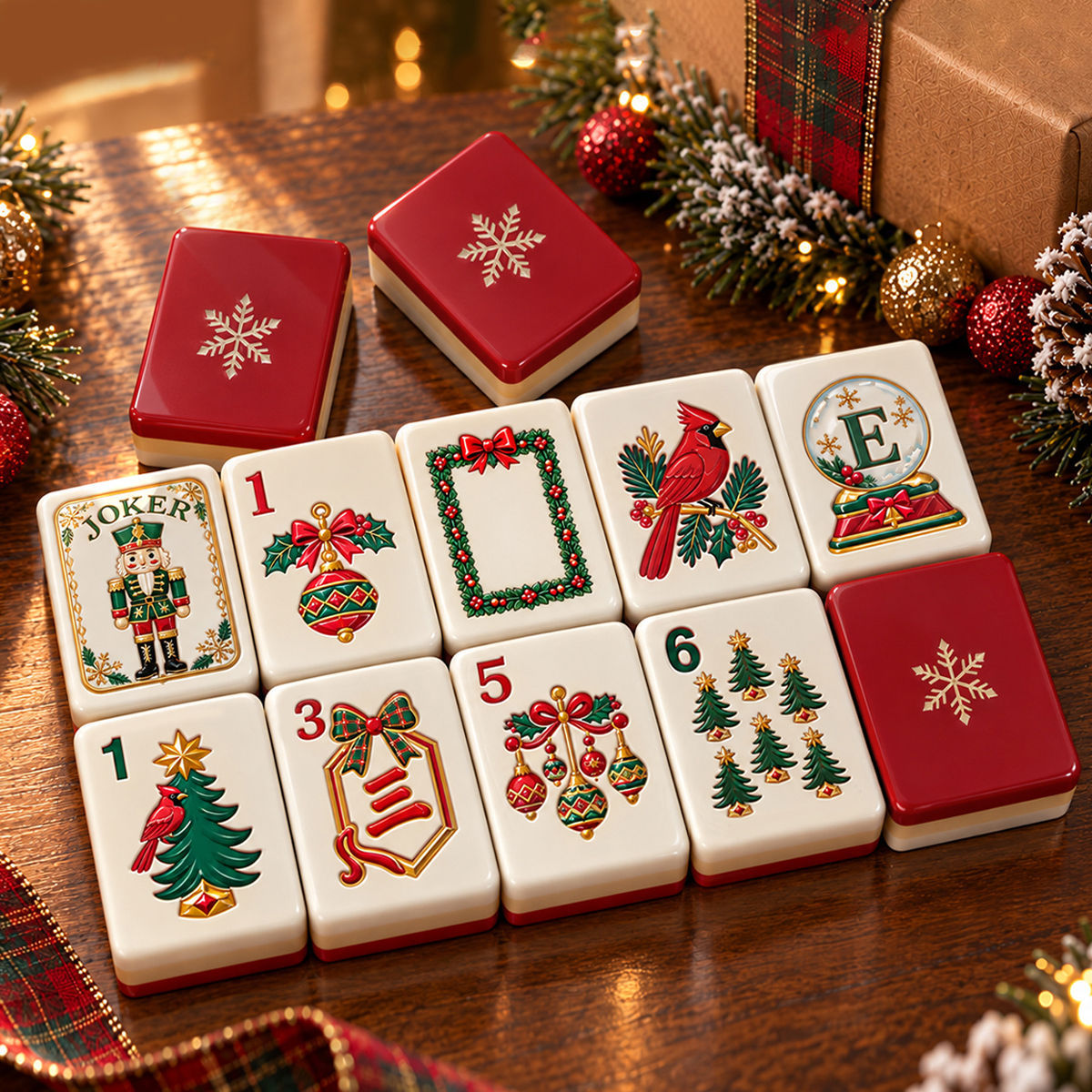
Mahjong is objectively harder than Rummikub for most new players. Rummikub feels intuitive: meld number sequences and sets using 104 tiles and jokers; the rules fit on two pages. American mahjong uses 152 tiles across three suits, winds, dragons, and flowers; hands must match a printed card that changes every spring; the Charleston (pre-game tile pass) adds ritual; jokers have strict placement rules; and scoring rewards specific patterns. A casual Rummikub player wins in one session. Mahjong beginners need 4–8 games to grasp the framework and 20+ to play confidently. Both reward pattern recognition, but mahjong layers memory (knowing 40+ valid hands), bidding strategy, and tile probability—plus you must track joker use across the whole game. If your group has 2–4 hours and loves structure, mahjong rewards the effort; if you want a quick evening, Rummikub wins. Mahstead's guide to starting mahjong breaks the learning path into digestible steps. 🀄 Shop best-selling mahjong sets →
What makes mahjong feel harder at first?
Mahjong asks you to hold more variables in working memory simultaneously. In Rummikub, you manipulate visible tiles into runs (3–13 of one number/color) and sets (three or four of one number across colors). The end state is always clear: complete a run or set and lay it down. Mahjong starts differently: you don't build a single hand—you bid on completing one of 40+ patterns shown on the National Mah Jongg League card (a reference sheet updated annually). You must decode the card's grid notation, know which tiles form a pung (three identical), kong (four identical), or quint (five identical), and remember that jokers can substitute for any tile except the pair (your 2-tile meld). Rummikub assumes no external reference; mahjong requires constant consultation of the card.

How does tile complexity differ?
Rummikub uses one color scheme: numbered tiles 1–13 in four colors, plus jokers. Mahjong uses 152 tiles split into five categories. Three suits (Bams, Craks, Dots) each have numbers 1–9 in four copies—matching Rummikub's "tiles repeat." But mahjong adds winds (North, East, South, West), dragons (Red, Green, White), flowers, and jokers in ways Rummikub never does. A Bam is a Bam; a 5 Dot is just a 5 Dot—but a pung is always three identical tiles, never a run like "3 Dots–4 Dots–5 Dots." Rummikub treats sequences as the default; American mahjong forbids sequences altogether. This means your mental model must flip: you're no longer hunting for "1–2–3 in a line" but for "three matching units, five of the same tile, or a pair." That architectural shift is why experienced Rummikub players sometimes struggle early on.
Does the setup time change the difficulty?
Rummikub setup takes 2–3 minutes: shuffle the tiles, draw 14 each, place the deck. Mahjong requires 10–15 minutes before anyone reveals a tile. First, arrange 152 tiles face down in a wall. Each player draws 13 tiles from the wall and arranges them on a rack (which helps prevent sniping or accidental reveals). Then comes the Charleston: a ritualized three-stage pass where you slide three tiles to your right, then three to your left, then three across. After the Charleston, the dealer draws one tile to total 14, and play begins. This pre-game rhythm feels ceremonial—and for new players, feels like a hurdle. But it serves a purpose: the Charleston randomizes starting hands more fairly than a simple shuffle. Rummikub avoids this step, so mahjong feels slower to launch. Once you've done it three times, it becomes muscle memory. On your first night, though, the extra setup does make mahjong feel more demanding.
How much do memory and card-reading demand differ?
This is the core difference. Rummikub requires you to recognize sequences (any ascending run of three or more) and sets (any three or four of one number). The logic is simple enough to internalize in one session. Mahjong requires you to memorize the current year's hand patterns—or commit to studying the card every turn. The card groups hands into sections: singles and pairs in the first rows, progressions (like "1–2–3 / 4–5–6 / 7–8–9 all in one suit") in the middle, and mixed patterns lower down. Some hands allow jokers freely; others restrict them to a single position. A hand marked "5 diff" means five different tiles—not a typo. Learning to "read" the card fast is a skill itself. Beginners slow down because they're scanning the card every draw. Rummikub speeds up; mahjong slows down, because there's more to verify. After 10 games, card-reading becomes automatic, and mahjong pace matches Rummikub.
When should you choose one game over the other?
Pick Rummikub if you want a game anyone can play after a 10-minute explanation, if your group meets once a month, or if you have younger players (ages 8+). It's friendly, fast, and forgiving—players catch on mid-game. Pick mahjong if your group can commit to learning, meets weekly or twice a month, enjoys ritual and strategy, and has 4+ hours for a session. Mahjong rewards repeat play: every game teaches you new hand combinations and tile probability patterns. Rummikub reaches a skill ceiling faster; mahjong has a much deeper curve. If your friends enjoy card games like Bridge or Gin Rummy (games that demand memorization and bidding precision), mahjong is a natural fit. If they prefer fast, flashy, low-stakes tile play, Rummikub is lighter. An honest take: mahjong is harder because it is more complex—and that complexity is intentional. It's not harder because the rules are poorly written; it's harder because there's genuinely more to learn.
🎁 See our most-loved mahjong sets & accessories →

What helps beginners close the difficulty gap?
A good mahjong set and layout matter. Buying cheap travel sets with tiny tiles and no racks forces you to hold tiles in your hand, which adds cognitive load—you're managing the tiles physically and mentally. A quality set with pushable racks lets you sort tiles face-down on the rack, exposing only what you need, so you focus entirely on strategy. A clear, readable mahjong mat with zones for the Charleston and discard pile cuts setup time by 3–4 minutes every game. Engraved sets (like those with clear suits and dragon symbols) eliminate tile-reading errors. Jokers are the other hidden factor: American mahjong uses eight jokers per game. Understanding how jokers work—they can sub for any tile except a pair, and they can't appear alone in a single or pair position—closes a gap that trips up many newcomers.
What to check before you buy:
Tile size: 0.75 inches or larger; smaller tiles slow beginners down.
Rack design: Pushable racks let you stand tiles face-down; this cuts physical and mental fatigue.
Joker clarity: jokers should look distinct from regular tiles; colored jokers or emblems help.
Mat included or separate: if you're hosting weekly, a dedicated mat saves setup time.
Card readability: The National Mah Jongg League card should be large and printed in clear fonts; laminate it for durability.
Comparison: Rummikub vs. Mahjong at a glance
Factor | Rummikub | Mahjong |
Learning time | 1 session (30 min) | 4–8 sessions (2–3 hrs each) |
Tile count | 104 + jokers | 152 tiles (fixed) + 8 jokers |
Core mechanic | Runs & sets | Patterns from annual card |
Sequences allowed? | Yes, core mechanic | No, forbidden |
Setup time | 2–3 min | 10–15 min (includes Charleston) |
Card/reference needed? | None | Yes (annual League card) |
Best for | Quick, casual, all ages | Committed groups, weekly play |
Skill ceiling | Moderate | High |
Replayability | Good | Excellent (hands change yearly) |
Do you need special equipment to bridge the gap?
Yes, but not expensive. A set with pushable racks and a play mat removes two friction points: scrambling tiles on a table surface and fumbling with hand arrangement. A laminated copy of the current year's National Mah Jongg League card keeps everyone on the same page and cuts lookup time by half. If your group plays weekly, a dedicated bag or case (rather than a box) signals that mahjong is a regular commitment—and it protects your tiles from damage. We've noticed newer players stick with mahjong longer when the physical setup feels organized and intentional. Rummikub out of a cardboard box works fine; mahjong benefits from a slight upgrade in presentation.
✨ Find your Mahstead set — free US shipping →
Final honest take
Mahjong is harder than Rummikub—but it's not harder in a discouraging way. It's harder the way chess is harder than checkers: more to learn, deeper strategy, longer payoff. If your group asks "Can we learn this tonight?"—Rummikub. If they ask "Can we build a regular game?"—mahjong. Both are tile games that reward pattern recognition. Mahjong just asks you to recognize more patterns, remember an external reference, and commit to a longer learning curve. That's not a flaw; it's the design. For groups that embrace it, mahjong becomes the game you play for years. Rummikub is the one you play when someone visits. Choose based on your group's appetite, not on difficulty alone.

FAQ
Can beginners play mahjong on the first night?
Yes—but they'll need coaching and will likely slow down the game. Expect the first hand to take 15–20 minutes. By hand three or four, pace improves. Rummikub plays faster from hand one, so if speed matters, start there.
Do I need to memorize the entire mahjong hand card?
No. Study 5–10 common patterns before your first game, then consult the card each turn. After 10 games, you'll recognize 80% without looking. Rummikub requires no memorization at all.
Is mahjong better for strategy-loving players?
Yes. Mahjong includes bidding (declaring which hand you're chasing), tile probability (tracking what others have discarded), and joker placement strategy. Rummikub is more tactical (moving existing melds) than strategic.
How long is a typical mahjong game vs. Rummikub?
A casual Rummikub game takes 20–40 minutes. Mahjong (four rounds, or "hands") takes 60–90 minutes for experienced players, 2+ hours for beginners. This is why mahjong needs bigger time blocks.
Can younger children play mahjong, or is it too complex?
Ages 10+ can learn mahjong with adult guidance. Rummikub is friendlier for ages 8+. Mahjong's abstract symbols and rule layers suit kids who already enjoy card games or puzzles.
What's the one thing that makes mahjong harder than Rummikub?
The hand card. You can't just see "1–2–3" and play it; you must match a specific pattern from a reference. That external dependency adds a layer Rummikub doesn't have.


View More
View More
View More
