
Riichi Mahjong vs Sichuan Mahjong: Rules, Tiles & Play
Last updated: Nov 23, 2026
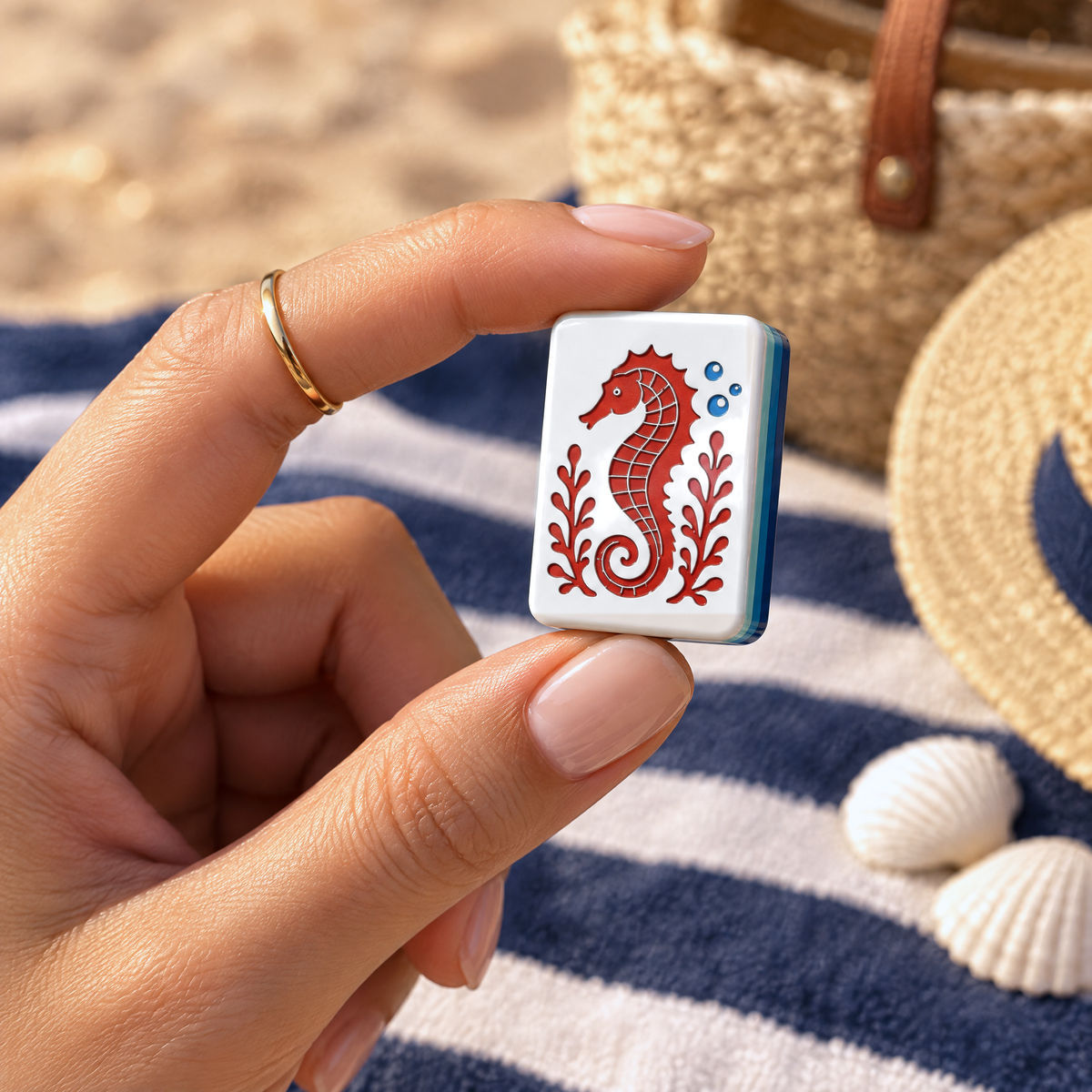
Riichi mahjong (also called Japanese mahjong) uses 136 tiles in four suits: Honors (winds, dragons) and three number suits (1–9). Sichuan mahjong, played primarily in southwest China, uses 108 tiles and focuses on pairs, triplets, and sequences. Riichi emphasizes concealment and declaration—a player announces riichi (ready to win on one tile only) before drawing, which locks their hand but signals strength and earns scoring bonuses. Sichuan is faster and more social; players expose more melds and can win on chows (sequences). Riichi typically takes 30–60 minutes per round; Sichuan rounds move in 15–25 minutes. Both use tile-drawing mechanics, but riichi scoring is deterministic (points tied to hand pattern and wait type), while Sichuan scoring often multiplies based on hand composition. Neither uses jokers. Choose riichi for strategic depth and hand concealment; choose Sichuan for speed and social flow. Our best-selling mahjong sets focus on American variants, but understanding these differences sharpens your grasp of all mahjong family branches.
What tiles does each variant use?
Riichi mahjong uses 136 tiles total: 108 number tiles (three suits × nine ranks × four copies each) plus 28 Honor tiles (four each of East, South, West, North winds; four each of White, Green, and Red dragons). There are no jokers or flowers. Sichuan mahjong uses 108 tiles: three suits × nine ranks × four copies each, with no Honors, flowers, or jokers. Both variants are played with all tiles in play; nothing is held back as spares. The smaller Sichuan set makes setup faster and reduces hand complexity—fewer tile combinations mean learning winning patterns takes weeks rather than months.

How do hand-winning conditions differ?
In riichi mahjong, a winning hand consists of four melds (triplets, sequences, or quints) plus one pair—14 tiles exactly, called tenpai when one tile away from win. A meld must be either a triplet (three identical tiles), a sequence (1-2-3, 2-3-4, etc. in the same suit), or a quint (five of the same). You may also win on a single pair if the hand is all pairs (a special hand pattern). Sichuan mahjong also requires 14 tiles but structures them differently: typically five melds of three tiles each plus two pairs, or patterns like three pairs and two triplets. In Sichuan, sequences (chows) are common and exposed more freely; in riichi, sequences are valuable but often hidden until you declare riichi. Riichi rewards concealment; Sichuan rewards speed and tactical exposure.
What does "riichi" actually mean, and how does it change scoring?
Riichi (麻雀) is a declaration made after drawing your 14th tile: you announce that your hand is tenpai—one tile away from win—and you are waiting on exactly one specific tile to complete it. Once you declare riichi, your hand is locked: you cannot change your melds or rearrange tiles. If you win after a riichi declaration, you earn bonus points (typically 1,000 additional points in the scoring table). If someone else discards that tile and you claim it to win, you score the riichi bonus plus the meld bonus. If you win from the wall (self-draw), you earn tsumo bonus points instead. Declaring riichi is optional but strategic: it signals strength to the table, earns you points, but also locks your hand if another player's discard suits a different win. In Sichuan mahjong, there is no equivalent declaration; players simply declare win as soon as their hand meets the 14-tile pattern, and scoring is calculated on the spot.
🀄 Shop best-selling mahjong sets →
How is scoring calculated differently?
Riichi mahjong scoring is deterministic and point-heavy. Every hand pattern has a base score called fu (符, counted in increments of 10) and a multiplier called han (翻, meaning "doubles"). A 1-han hand scores around 1,000–2,000 points; a 5-han hand scores 8,000–12,000 points. Bonuses apply: declaring riichi adds 1,000 points if you win; drawing your own win (tsumo) earns you payment from all three players instead of one. The dealer (East player) receives 1.5× payout. After each hand, East remains dealer if they won; otherwise, the deal rotates. Sichuan mahjong typically uses a flat-point or coin-based scoring system tied to hand rarity. A simple hand (one sequence and triplets) earns one "unit"; a hand with all sequences earns two units; a rare hand like "all terminals" or "all Honors" earns four to eight units. Players settle payouts at the end, often using coins or chips. Riichi scoring is precise and progressive; Sichuan scoring emphasizes quick, egalitarian payouts.
Aspect | Riichi Mahjong | Sichuan Mahjong |
Total tiles | 136 (108 numbers + 28 Honors) | 108 (numbers only) |
Winning hand size | 14 tiles: four melds + one pair | 14 tiles: pattern-dependent |
Sequences (chows) | Hidden; only triplets/quints exposed | Exposed and common |
Jokers/flowers | None | None |
Round duration | 30–60 minutes | 15–25 minutes |
Scoring method | Points table (fu × han) | Units or coin-based |
Dealer bonus | Yes; 1.5× payout | Typically no |
Declaration element | Riichi locks hand; signals ready | Win declared; no lock |
Learning curve | 2–4 months for hand patterns | 4–8 weeks |

Which variant should you learn first—or play both?
If you are new to mahjong entirely, start with American mahjong if you are in North America: it uses a published card (updated yearly), four-player rules are standardized, and you can attend clubs and lessons easily. If you have never played American mahjong and want to compare riichi and Sichuan directly, riichi has deeper strategy and more online communities (Mahjong Soul, Tenhou); resources and books in English are abundant. Sichuan is faster and more forgiving—lower stakes, social play, and no complex scoring tables—making it ideal for casual friends who want a quick, fun game. Many experienced players host both: a riichi round for strategy and a Sichuan round for wind-down and laughs. The tile costs differ too: riichi sets often run higher because 136-tile production is less common globally; Sichuan sets (108 tiles) tend to be more affordable. If you are building a mahjong library, buy a set designed for American mahjong first (152 tiles, acrylic, durable for weekly games), then explore riichi or Sichuan once you grasp the fundamentals.
🎁 See our most-loved mahjong sets & accessories →
What should you check before choosing one to play?
Player availability. Riichi requires four committed players and 30–60 minutes; Sichuan can run with four or three (with dealer rule modifications) and plays faster. Check if your local community plays riichi (via online forums, Discord servers, or meetups at community centers); Sichuan is less common outside China but growing in diaspora communities.
Rule clarity. Riichi has regional variants (Japanese, Chinese, European rule sets); make sure your group agrees on fu calculation, limit hand bonuses, and dead-wall tile counts before you start. Sichuan rules vary by province; nominate one player to decide variant rules upfront.
Time commitment. Riichi rewards players who study hand patterns and scoring; expect 2–4 months of regular play to feel comfortable. Sichuan can be learned in one session, making it ideal for tourist or occasional games.
Tile supply and cost. American mahjong sets (152 tiles) are widely available at reasonable cost; explore our collection and you will find durable acrylic options with free US shipping. Riichi and Sichuan tiles are harder to source outside Asia, and importing adds cost and time.
Social vibe. Riichi is competitive and thoughtful; Sichuan is fast and talkative. Choose based on your table's energy and goals.
What equipment do you need to host either game?
For riichi mahjong: a tile set (136 tiles, often bamboo), one mat, four racks (one per player), a dealing indicator (four-wind marker), paper and pen for scoring. For Sichuan mahjong: a tile set (108 tiles), one mat, racks optional (tiles stay in hand), coins or chips for payouts. Both benefit from a quality mat (felt or neoprene with grid lines) to keep tiles organized and protect them from spills. Our mahjong mats collection includes designs that work for any variant—look for mats with clear scoring zones and non-slip backing.
✨ Find your Mahstead set — free US shipping →

FAQ
Can I use an American mahjong set to play riichi?
No. American mahjong uses 152 tiles (108 numbers + 16 winds + 12 dragons + 8 flowers + 8 jokers); riichi uses 136 tiles with no flowers or jokers. The Honors are also different: American has only four winds and three dragons, while riichi has four of each dragon type. You need a dedicated riichi set.
Is Sichuan mahjong the same as Cantonese mahjong?
No. Cantonese mahjong (played in Hong Kong and southern China) uses 144 tiles and includes flowers, different scoring, and more exposed melds. Sichuan mahjong uses 108 tiles, no flowers, simpler patterns, and faster rounds. Both are Chinese variants but use different tile sets and rules.
How long does a riichi game take compared to American mahjong?
Riichi rounds typically run 30–60 minutes per hand; American mahjong rounds run 45–90 minutes because hand complexity is higher (eight jokers, more tile combinations). Sichuan is fastest: 15–25 minutes per round.
Do riichi and Sichuan mahjong use jokers?
Neither uses jokers. Only American mahjong uses eight jokers as wild tiles. Riichi and Sichuan rely on fixed tile sets and hand patterns without wildcards.
Where can I learn riichi or Sichuan mahjong near me?
For riichi: search online for local riichi clubs, check Discord servers (many have country-specific channels), or visit community centers and libraries in areas with Japanese or East Asian communities. For Sichuan: look in neighborhoods with Sichuan Chinese communities (check social media meetup boards, temples, or cultural centers). Both have online platforms (Mahjong Soul for riichi, QQ Games or Tencent for Sichuan) where you can learn rules and play remotely before committing to in-person games.
Can I play riichi or Sichuan with three or two players?
Riichi and Sichuan are designed for four players. Both can be adapted for three (dealer plays against two) or two (one-on-one, modified hand sizes and bonus rules), but the experience changes significantly. American mahjong also has specific two- and three-player variants if you are interested in non-four-player formats.


View More
View More
View More
