
Mahjong vs Poker: Which Game Suits You?
Last updated: Nov 23, 2026
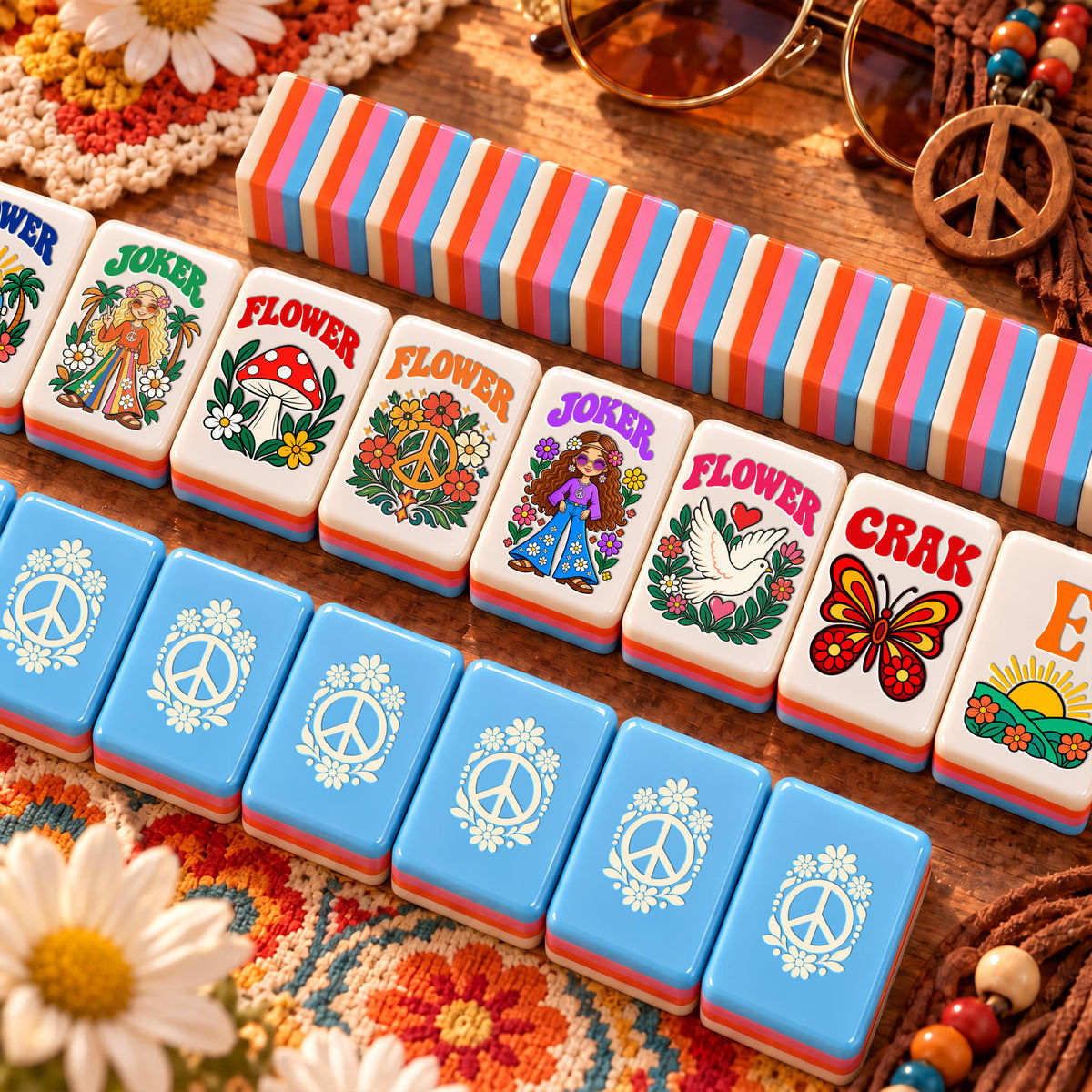
Mahjong and poker are both skill games involving hidden information and calculated risk, yet they diverge completely in execution. Poker uses a standard deck of 52 cards and revolves around hand ranking and betting psychology across 2–10 players in rounds lasting minutes. Mahjong (American version) uses 152 tiles across three suits, four winds, dragons, flowers, and jokers; play involves drawing, discarding, and claiming exposed sets to form a hand matching the season's official card—a full game lasts 1–3 hours with exactly four players. Poker rewards bluffing and pot odds; mahjong demands tile memory, pattern recognition, and knowledge of valid hand combinations updated yearly. Both are legal, social, and played competitively worldwide. Neither requires equipment beyond the game itself, though best-selling mahjong sets include custom racks and cases that make hosting easier. Poker attracts speed players; mahjong suits those who enjoy depth, ritual, and longer sessions.
Mahjong and poker share a reputation as strategic games played among friends, but side by side they're almost opposites. We've hosted weekly games of both, and the choice between them isn't about which is "better"—it's about what you and your group actually want from game night.
What's the core difference in how you win?
Poker victories come from having the highest-ranked hand when betting concludes or forcing opponents to fold. You make your five-card hand from seven total cards (in Texas Hold'em), and ranking is fixed: a royal flush beats a straight, always. Mahjong victory requires forming one specific hand from the current year's official card, claiming it by either drawing the winning tile or calling an exposed discard. Your goal isn't to beat everyone at once—it's to complete your chosen hand pattern first. This means mahjong players study one card all season; poker players adapt to one ruleset forever. Mahjong also rotates dealer position each round, while poker typically rotates action position per hand.

How long does each game actually take?
A single poker hand takes 2–10 minutes depending on table size, betting rounds, and player speed. A full session of multiple hands flexes from 30 minutes to all night. One mahjong game (four players, one round of winds = 16 hands) runs 1–2 hours, often followed by scoring, wind rotations, and a second round if time permits. Each mahjong hand is slower by design—more tile manipulation, more decision points per play, more reading of discards. If you want fast, social, frequent outcomes, poker suits you. If you prefer immersive, multi-hour engagement with the same group, mahjong wins.
What skills matter most in each game?
Poker emphasizes position awareness (where you sit relative to the dealer), pot odds (math of expected value), opponent profiling (spotting bluffers), and hand strength evaluation (knowing your odds instantly). Success comes partly from math, partly from psychology.
Mahjong prioritizes tile memory (tracking what's been discarded), hand recognition (spotting valid patterns on the card at speed), discard strategy (balancing safety with tempo), and rule consistency (knowing yearly card changes). Mahjong is less about reading people, more about reading the board and the probability that your desired tile will come or be available to claim.
Both reward discipline and long-term thinking. Poker players who chase every hand lose money. Mahjong players who ignore safety lose rounds. The difference is that poker punishes poor odds; mahjong punishes tile greed and pattern blindness.

What equipment do you actually need?
Poker: A standard 52-card deck (often two decks in rotation). Optional: dealer button, chip set, table felt. Total setup time: 30 seconds.
American Mahjong: Exactly 152 tiles (Bams, Craks, Dots, winds, dragons, flowers, jokers), four racks, a tile mat for privacy, the current year's card, and scoring reference. Setup involves shuffling tiles face-down, building a wall, and performing the Charleston (tile-passing ritual before play begins). Total setup time: 5–10 minutes. Serious hosts choose custom engraved mahjong sets for durability and racks with pushers to speed tile management and prevent accidental exposure.
🀄 Shop best-selling mahjong sets →
Which game fits your lifestyle?
Factor | Poker | Mahjong |
Group size | 2–10 players, flexible | Exactly 4 players |
Hand length | 2–10 min | 15–25 min |
Session length | 30 min–all night | 1–3 hours typical |
Learning curve | Hand ranking (fast), strategy (years) | Card reading (2–4 weeks), tactics (ongoing) |
Social tone | Competitive, fast, psychology-heavy | Ritualistic, strategic, memory-driven |
Betting/money | Central to play | Optional or absent in friendly games |
Luck factor | Card draw + betting decisions | Tile draw + discard availability |
Repeat play | Same ruleset all year | Card changes every spring |
Poker works for drop-in gaming, mixed-skill tables, and variable group sizes. Mahjong demands a committed core group of four, weekly or monthly recurrence (to build card familiarity), and tolerance for longer play sessions where disruption mid-game is awkward.
How do you actually start learning each one?
Poker — Read poker probability guides, watch YouTube hand breakdowns, play low-stakes games online or at home, and accept losing money while you learn. Most players feel competent in 10 hours of live play.
Mahjong — Get the current year's National Mah Jongg League card, learn American mahjong rules, and join a beginner-friendly group (check community centers, libraries, or local meetup boards). Most players feel competent in 20–30 hours of supervised play. The yearly card update means returning players refresh skills each spring; poker rules never change. Mahjong's learning curve is gentler (the card does the thinking for you), but the commitment is longer.
🎁 See our most-loved mahjong sets & accessories →
Honest truth: If you're comparing these games right now, you probably already know someone who plays one. Join that group. Poker clubs are easier to find in casinos or online; mahjong circles exist in cultural centers, synagogues, country clubs, and among friends who've played for decades. Both offer genuine skill, social depth, and reasons to meet the same people week after week.
The deciding factor is usually group, not game. If your friends play poker and have space at the table, play poker. If a coworker invites you to mahjong night, say yes. Both are worth the learning curve—but mahjong especially repays commitment with a ritualistic beauty that poker (despite its elegance) doesn't quite match.
If you're ready to host mahjong, start with a durable set. We make acrylic American mahjong sets with matching mats and racks designed to last, plus travel bags and cases for easy storage and transport—all with free shipping across the US.
✨ Find your Mahstead set — free US shipping →
What to check before you buy mahjong equipment
Tile material: Acrylic is durable and easy to clean; resin tiles feel heavier but are fragile in transit.
Set size: American mahjong always uses 152 playing tiles; sets sold as 160-tile include spare jokers and blanks for replacement.
Rack quality: Pushers speed play and prevent accidental tile exposure—worth the extra cost if you host regularly.
Mat purpose: A carrying mat (under 24") fits travel bags; a full play mat (36"+) gives every player privacy and serves as a permanent table cover.
Storage: A padded case protects tiles and racks during transport; a simple drawstring bag works for stationary hosting.

FAQ
Can I play mahjong with a poker-playing group?
No. Poker requires 2–10 players and a single deck; mahjong requires exactly four players and 152 tiles. The games can't coexist at the same table. But nothing stops your poker group from starting a separate mahjong night with a different group of four.
Is mahjong harder than poker?
Mahjong has a steeper initial learning curve (card patterns, Charleston, hand recognition) but a ceiling: once you know the yearly card and basic strategy, improvement plateaus. Poker has a shallower entry but deeper skill ceiling—best players spend lifetimes refining odds and psychology. Choose based on how long you want to keep learning.
Do I need to gamble to play mahjong or poker?
No. Friendly poker is played for chips or matchsticks; casual mahjong is often scoreless or tracked on paper. Both can be social and legal without money. Competitive poker and mahjong leagues sometimes involve stakes—check local rules.
How often do the rules change?
Poker rules are static year to year. American mahjong updates its official card annually (new hand patterns, tile distributions). If you play casually, yearly changes are minor; if you play competitively, you refresh in spring before the season starts.
Can I play mahjong solo or with friends I just met?
Mahjong requires exactly four committed players for a fair game. One-off play with strangers is possible but awkward—you'll all learn the card together slowly. Poker plays better with loose groups and rotating players because the rules never change and hand lengths are short.
What's the best way to host a first mahjong game at home?
Invite three friends who've played before or who are willing to learn together from the current year's card. Set up on a large table with a mat for tile protection, racks to keep hands private, and the card visible to everyone. Allow 20 minutes of setup and rule review, then play 2–4 hands (60–90 minutes). Offer snacks and expect questions mid-hand. See how to choose a mahjong mat for setup details.


View More
View More
View More
