
Red Fives in Riichi Mahjong Explained
Last updated: Nov 23, 2026
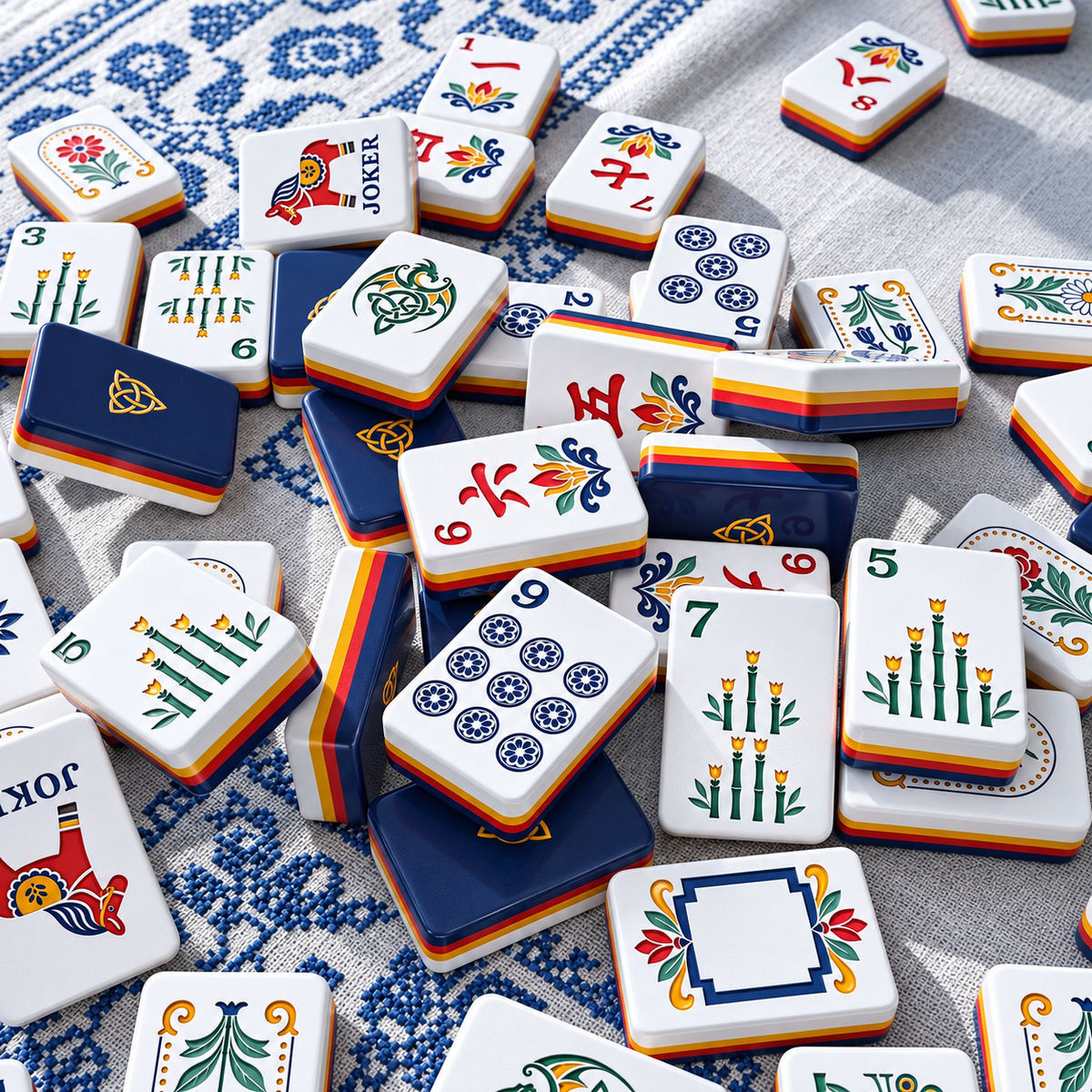
In riichi mahjong, red fives (called akago) are one red-colored 5 tile in each suit—one 5 Bam, one 5 Crak, and one 5 Dot—replacing three of the four copies normally in play. When your winning hand contains a red five, it automatically scores double points, even if the red five isn't part of the scoring pattern itself. This rule fundamentally shifts strategy: players pursue hands with red fives and risk discarding them to block opponents. Unlike American mahjong (which uses tiles only from the current year's National Mah Jongg League card), riichi mahjong's rules and tile sets are standardized internationally by the World Riichi Organisation. A riichi set contains 136 tiles total, including the three red fives mixed into the standard 108 suit tiles, 16 winds, 12 dragons, and flowers. If you're learning riichi after American play, understanding red fives is essential; they govern both hand selection and risk assessment throughout the game.
Red fives are one of the signature mechanics that distinguish riichi mahjong from American play. Unlike American mahjong's static 152-tile deck, riichi uses 136 tiles with exactly three red fives built into the deck. Each red five—one in Bams, one in Craks, one in Dots—looks identical to its standard counterpart except for its red color. When a riichi hand is complete and includes at least one red five, the entire hand doubles in value, regardless of which tile pattern it forms.
What exactly is a red five in riichi mahjong?
A red five is a single red-colored tile in each of the three number suits that replaces one of the four standard copies. In a riichi set of 136 tiles, you'll find one red 5 Bam, one red 5 Crak, and one red 5 Dot. Visually, the numeral and suit symbol remain the same; only the color shifts from black text to red. The presence of a red five in your winning hand triggers an automatic point doubler, making hands with red fives significantly more valuable than equivalent hands without them.

Why do red fives double your score?
The doubling rule rewards players for incorporating what's statistically a minority tile into their winning hand. Since only one red five exists per suit versus four standard copies of each number, drawing a red five is less common. The scoring bonus reflects this scarcity and adds strategic tension: players must decide whether to hold a red five in hopes of completing a winning hand, or discard it early to deny opponents a high-scoring opportunity. This risk–reward dynamic is core to riichi strategy and doesn't exist in American mahjong, where jokers serve a support function rather than a scoring multiplier.
How does the red five rule change your discarding strategy?
In American mahjong, you discard tiles you don't need for your hand with minimal regard for future turns. In riichi, discarding a red five early is often suicide: if an opponent later wins with that red five, their hand is worth twice as many points. Conversely, holding a red five signals to other players that you might be chasing a high-scoring hand, prompting them to discard defensively or push for faster wins. Experienced riichi players balance three competing pressures: completing a hand quickly, securing a red five if possible, and reading which opponents are red-five-heavy so they can predict risky discards and play defensively.
Does American mahjong use red fives?
No. American mahjong uses a fixed 152-tile set (three suits numbered 1–9, winds, dragons, flowers, and jokers), all in standard black-and-white or color-coded designs. The National Mah Jongg League card, which governs American play, contains no red-five bonus rule. American and riichi mahjong are separate rulesets with different tile counts, hand patterns, and scoring mechanics. If you're buying tiles for American play, red fives won't affect your game—though if you're learning riichi, you'll need a proper riichi-standard deck that includes the red fives.

How many red fives are in a riichi mahjong set?
Exactly three: one per suit. A complete riichi set holds 136 tiles, including the three red fives mixed evenly throughout the three number suits. This means that while standard 5 tiles appear four times each in American mahjong, a riichi deck has three standard (black) 5 Bams, one red 5 Bam, three standard 5 Craks, one red 5 Crak, and so on. The precise distribution ensures that red fives remain rare enough to feel significant when drawn but common enough that most hands involve at least one player holding one at some point during the game.
🀄 Shop best-selling mahjong sets →
Riichi vs. American: A comparison table
Feature | Riichi Mahjong | American Mahjong |
Total tiles | 136 | 152 |
Red fives | 3 (1 per suit, doubles hand score) | None (not in game) |
Hand source | Standardized worldwide rules | Current year NMJL card only |
Winning patterns | Fixed melds by rulesets | Hundreds, updated annually |
Chows (sequences) | Yes, used in melds | No, never used |
Joker function | Wildcard in melds | Cannot form a pair; support only |
Best for learners | Those wanting Japanese play | Those in North American clubs |
When choosing which variant to learn, start with American mahjong if you're in North America and have access to a local game group; it has a lower learning curve and deeper community infrastructure. If you're drawn to Japanese culture or play internationally, riichi offers richer strategic depth, though the red five mechanic and hand complexity require more study upfront. Since American and riichi use entirely different tile decks and rules, most players specialize in one or the other rather than switching mid-session.
Do I need a special set to play riichi with red fives?
Yes. A riichi-standard set must include the three red fives as built-in tiles. You cannot retrofit an American mahjong set to play riichi, since American sets contain 152 tiles without red fives and use a different structure altogether. Our best-selling mahjong sets collection features American-standard 160-tile acrylic sets designed for American play; if you're committed to riichi, seek a dedicated riichi deck from a supplier specializing in Japanese-standard tiles. If you're just exploring riichi as a variant, borrow a riichi-standard set from a club or experienced player before investing.
🎁 See our most-loved mahjong sets & accessories →
What to check before you buy
Confirm your variant first. Are you joining an American mahjong group or learning riichi with friends? The two are incompatible rulesets and tile decks; choosing wrong wastes money.
Verify tile count and design. American sets are 160-tile acrylic with engraved or printed designs; riichi sets are 136 tiles and often feature Japanese artwork. Read product descriptions carefully.
Ask your game group. Local American mahjong clubs have preferences for tile style, mat type, and accessory brands. Adopt their standards so your set integrates seamlessly into weekly games.
Test before committing to premium. If you're new to riichi, play with a borrowed set first. The red five mechanic changes strategy significantly; confirm you enjoy the variant before buying your own tiles.
✨ Find your Mahstead set — free US shipping →

FAQ
Can I use red fives in American mahjong?
No. American mahjong follows the National Mah Jongg League ruleset, which doesn't include red fives. They serve no function in American play and aren't found in standard American tiles.
Do red fives have to be discarded first in riichi?
No special discard rule applies to red fives. You may discard a red five on any turn if it doesn't harm your hand or strategy; however, most players hold red fives as long as possible to secure the point doubler.
How often does a player draw a red five in riichi?
Since three red fives exist in a 136-tile deck, roughly 2% of all tiles drawn are red fives. In a four-player game lasting 12–15 rounds, most players will encounter at least one red five, though drawing multiple in a single hand is rare.
What if two players claim winning hands with red fives?
Both hands are doubled. The scoring ruleset applies equally; if both opponents achieve a winning hand with red fives in the same round, each receives double points according to their hand pattern and position (dealer vs. non-dealer).
Can I play American mahjong rules on a riichi tile set?
Not practically. A riichi set has 136 tiles; American mahjong requires 152. The tile structures, flower counts, and dragon distributions differ. Use the correct tile deck for each variant to avoid confusion and missed scoring.
Where can I learn riichi mahjong in person?
Search online for riichi clubs in your area—they often meet at community centers, universities, or dedicated game cafés. The World Riichi Organisation website lists affiliated clubs by region; many welcome beginners and loan teaching sets during intro sessions.


View More
View More
View More
