
Riichi Mahjong vs. American Mahjong: Rules & Competition Differences
Last updated: Nov 23, 2026
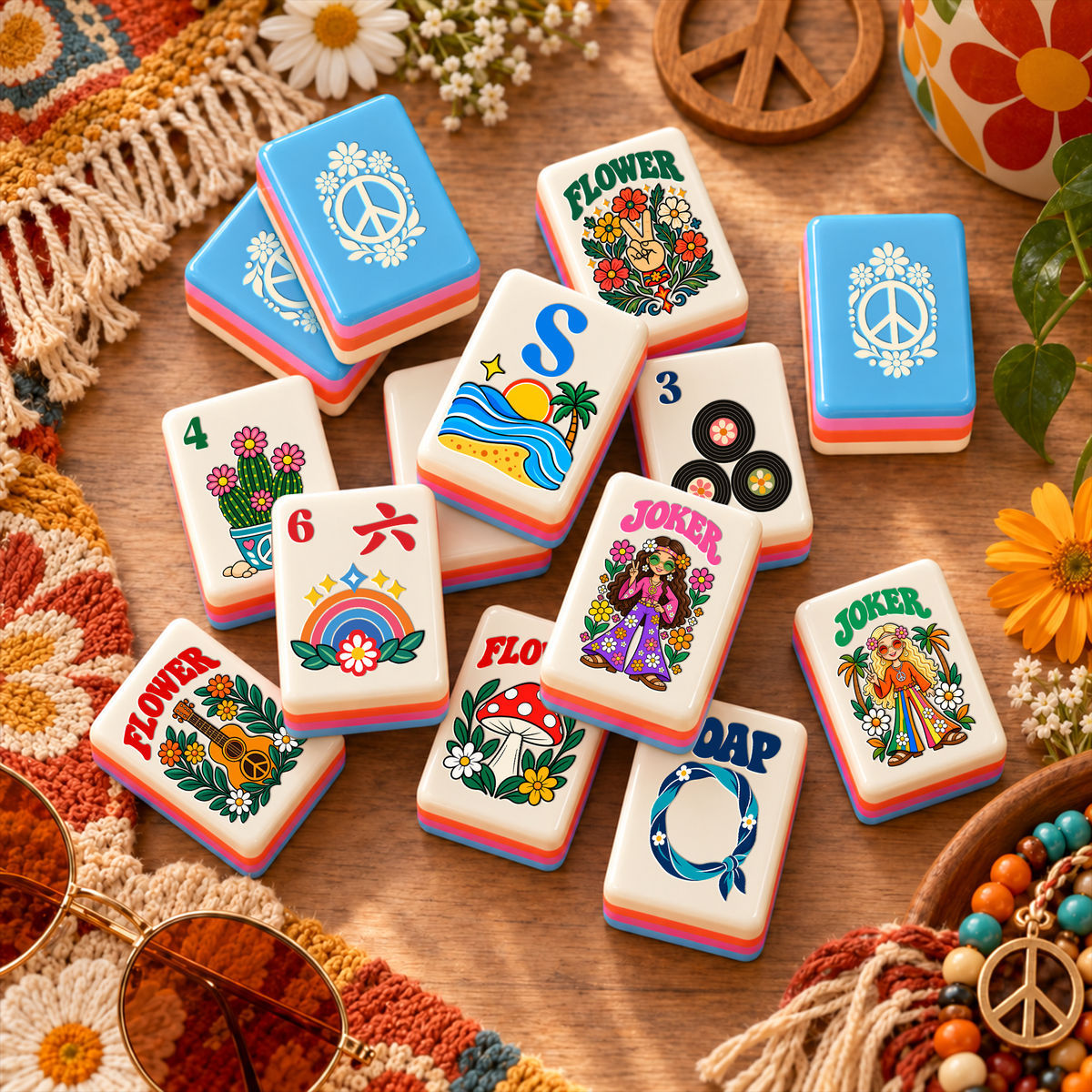
Riichi mahjong (Japanese variant) uses 136 tiles in fixed patterns called yaku, prioritizes the tsumo (self-draw) and ron (opponent discard) win conditions, and revolves around declaring "riichi"—a provisional hand before winning. American mahjong uses 152 tiles, pulls hands from an annual National Mah Jongg League card, requires a specific hand structure (pung/kong/quint combinations), and plays only four-player games with a pre-game tile pass called the Charleston. Riichi allows chows (1-2-3 sequences) and single pairs; American forbids chows entirely and restricts pairs. Scoring systems differ radically: riichi scores based on hand pattern value and wait type, while American awards points only when a hand matches the card exactly. Both demand strategic thinking but reward entirely different skills—riichi players anticipate blocking and honor point combinations; American players memorize card patterns and manage joker placement. Neither game is "easier"; they simply solve different puzzles.
Riichi and American mahjong share tile aesthetics and a four-player structure, but they're as different as poker and bridge. If you've learned one, approaching the other feels like learning a new language. Here's how they actually differ—and why that matters if you're choosing which game to play or which tiles to buy.
What tile count does each variant use?
Riichi mahjong plays with 136 tiles: three suits (Characters, Bamboo, Circles) numbered 1–9, four copies each (108 base tiles), plus 16 winds (four each of North, East, South, West) and 12 dragons (four each: White, Green, Red). American mahjong uses 152 tiles—three suits (Bams, Craks, Dots) numbered 1–9, four copies each, 16 winds, 12 dragons, 8 flowers, and 8 jokers. The joker is the single most consequential difference: riichi has no wild tile; American mahjong makes jokers central to hand completion. That extra 16 tiles (flowers + jokers) fundamentally changes strategy—American players must manage joker scarcity; riichi players never rely on wildcards.

How do winning conditions differ between the two?
In riichi, you win by tsumo (drawing your own winning tile) or ron (calling an opponent's discard if it completes your hand). Your hand must form a specific yaku—a named, scored pattern like "all simples" or "all terminals"—before you can declare riichi. Once riichi is declared, you lock your hand and can only win on that final tile. American mahjong has one winning condition: your 14-tile hand must match exactly one combination from the current year's National Mah Jongg League card. There is no "partial match" or "close hand" in American play—you either match the card or you don't. Riichi rewards pattern recognition under pressure; American rewards memorization and exact hand construction.
What are the scoring systems?
Riichi assigns point values based on hand pattern and the type of win (self-draw vs. opponent discard). A hand worth 5 han (pattern level) and 30 fu (wait count) scores differently than one worth 3 han and 60 fu. Scoring is continuous and mathematical—players calculate points mid-game and track running scores. American mahjong awards points only when a hand matches the card. If your hand doesn't match, you score zero; if it matches, you receive the exact point value printed on the card for that hand combination. No calculation, no partial credit, no variation. Riichi is fluid scoring; American is binary scoring. This changes risk appetite entirely: riichi players can win small hands early; American players often play defensively until a high-value match appears on the card.
Are hand patterns constructed the same way?
Riichi hands consist of four melds (groups of 3 or 4 tiles) plus one pair. A meld can be a pung (three identical), a kong (four identical), or a chow (a sequence: 1-2-3, 7-8-9, etc.). Sequences are foundational to riichi strategy. American mahjong hands consist of melds of 3, 4, 5, or 6 identical tiles (pungs, kongs, quints, sextets) plus no sequences allowed—chows are forbidden. American allows only identical-tile groups. The card specifies which combination of these groups forms a legal hand. Because sequences are barred, American hands look more uniform and repetitive at first glance; because American allows 5- and 6-tile groups, hands can be denser. Riichi offers more meld variety; American offers more group-size variety.
How does the competitive structure differ?
Riichi tournaments often run multiple games (called "rounds" or "sessions") and rank players by total point accumulation or placement across rounds. A player might score high in one round and low in another; final ranking reflects aggregate performance. American mahjong competition follows the National Mah Jongg League framework: a fixed hand card valid for one year, games counted by match (first to a target score or a set number of hands), and rankings based on wins or tournament bracket placement. Riichi emphasizes long-term scoring consistency; American emphasizes wins and exact hand mastery. Both are skill-based, but riichi rewards adaptive play and numerical judgment, while American rewards card familiarity and tile management across a known pool of legal hands.
Quick Comparison Table
Aspect | Riichi | American |
Tile count | 136 (no jokers, no flowers) | 152 (includes 8 jokers, 8 flowers) |
Winning tile source | Self-draw (tsumo) or opponent discard (ron) | Must match annual NMJL card exactly |
Melds allowed | Pungs, kongs, chows (sequences) | Pungs, kongs, quints, sextets; no chows |
Scoring | Points calculated by han/fu mid-game | Points awarded only for card-match hands |
Jokers | None | 8 (essential to most hands) |
Hand lock | Riichi locks hand before final draw | No lock; hand visible until win call |
Tournament style | Rounds; point accumulation; session ranking | Matches; first-to-score or bracket play |
Strategy focus | Pattern recognition, blocking, honor/number balance | Card memorization, joker placement, exact match |
🀄 Shop best-selling mahjong sets →
If you're already playing American mahjong and curious about riichi, know that the two games almost never cross skill—a strong American player may struggle as a riichi beginner because they have to unlearn the "no chows, must match card" framework entirely. Riichi is offered at Japanese cultural centers, some community colleges, and dedicated mahjong parlors; American is more common in North America and plays well in home groups. Both have thriving online communities and tutorial resources.

Which variant should a beginner choose?
If you live in North America and want to join casual home games easily, American mahjong is more accessible—community centers, libraries, synagogues, and social clubs often host regular games. If you're drawn to mathematical pattern-solving, cultural learning, and a worldwide competitive scene, riichi is rewarding. If you're choosing equipment, note that riichi and American tiles look similar but serve different purposes: American sets include flowers and jokers; riichi sets do not. Some tiles from a riichi set cannot legally be used in American play. Our best-selling mahjong sets are designed for American play and include everything you need for four-player games: flowers, jokers, and the full 152-tile structure.
What equipment do you need for each game?
Riichi requires a 136-tile set, which is less common in US shops. American mahjong needs a 152-tile set (our 160-tile sets include 152 playing tiles plus spares). Both benefit from a quality mahjong mat to organize tile placement and define player boundaries—critical for managing 140+ tiles smoothly. Racks with pushers prevent hand fatigue in longer sessions and keep tile sequences visible. A mat or table cover protects your playing surface. For American games specifically, you'll consult the annual NMJL card (purchased separately), which lists every legal hand for that year. For riichi, players typically own or reference an agari book (winning hand reference) or app. If you're hosting weekly games and want to play both variants, you'd need separate tile sets—riichi and American tiles aren't interchangeable because jokers and flowers are critical to American hands but illegal in riichi.
🎁 See our most-loved mahjong sets & accessories →
Why do players confuse these two games?
Both use Winds, Dragons, and numbered suits; both play four-handed; both require strong memory and forward planning. The surface similarities mask radical rule differences. A riichi player seeing an American card might expect to form sequences and will be shocked that chows don't exist in American play. An American player joining a riichi game will be confused by the concept of yaku (named hand patterns) and by the fact that any 14-tile combination is valueless—you must hit one of about 25 specific yaku patterns to score. Visually, the biggest red flag: if you see a mahjong set with flowers and jokers, it's designed for American play; a set without them is likely riichi-oriented. If you're buying your first set and unsure which game you'll play, ask your group explicitly—the variant matters more than you'd think.
What should you check before buying a set?
Tile count: Verify the set contains 152 tiles for American (our sets include this count). Riichi sets are rarer in US retail and typically contain 136 tiles.
Jokers and flowers: American sets include both; riichi sets typically omit them.
Material and durability: Acrylic tiles resist fading and damage better than bamboo over years of weekly play. Check that tiles are indexed (printed numbers or symbols on all four corners) so you can see your hand without tilting.
Rack and mat compatibility: If you buy racks and a mat, ensure they're sized for the tile dimensions (our mahjong racks with pushers are engineered for standard American tiles).
Storage: A protective bag or case prevents tile loss and chipping, especially if you host at different locations or transport sets to friends' homes.
Card: For American play, you'll need the current-year NMJL card (available separately from the set). Without it, you cannot verify legal hands.
✨ Find your Mahstead set — free US shipping →
What resources help you learn each variant?
For American mahjong: start with how to play American mahjong, the National Mah Jongg League card (annually updated), and local groups. YouTube tutorials abound; many show card-reading strategies and Charleston mechanics. Joining an established group is faster than self-teaching.
For riichi: the Japan Mahjong Association publishes official rules; many English-language tutorial sites explain yaku, ranking, and scoring. Online platforms like Tenhou and Mahjong Soul offer free riichi play against bots—ideal for practice before joining a club.
Neither game is a "gateway" to the other—they're parallel universes. Choose based on what's available in your area and what interests you: American rewards exact memorization and group ritual (the Charleston); riichi rewards mathematical flexibility and competitive ranking. Both are worth your time if you enjoy strategy, social play, and the meditative focus that tile games demand.

FAQ
Can I use a riichi tile set to play American mahjong?
No. Riichi sets lack the 8 jokers and 8 flowers that American hands require. American hands consistently use jokers; many hands depend on them. A riichi set is 16 tiles short and unusable for American play.
Is riichi harder than American mahjong?
They're differently difficult. Riichi demands real-time hand evaluation and pattern recognition during play. American demands memorization of 100+ card combinations before play. Neither is objectively harder—they challenge different cognitive skills.
How long does a riichi game take compared to American?
Riichi games typically last 1–2 hours per session (16 hands). American games vary widely: a casual home game might run 2–3 hours; a match-based tournament game continues until someone reaches a target score (often 1–2 hours). Speed depends more on group familiarity than the variant.
Do I need to buy two sets if I want to learn both variants?
Yes. The tile counts and composition differ too much—riichi needs 136 tiles without jokers/flowers; American needs 152 with them. You cannot swap between variants with a single set.
Where can I find a riichi mahjong group in my area?
Search for Japanese cultural centers, university game clubs, or dedicated mahjong parlors in larger cities. Online play platforms (Tenhou, Mahjong Soul) let you practice anytime. American groups are easier to find in North America through community centers, libraries, and synagogues.
Do the tiles look the same between riichi and American sets?
Mostly yes—the Dragon and Wind symbols are identical. The major difference is that American sets have flowers and jokers; riichi sets don't. The tile size may also differ slightly depending on the manufacturer.


View More
View More
View More
