
What Is All Pungs in Mahjong? American Rules Explained
Last updated: Nov 23, 2026
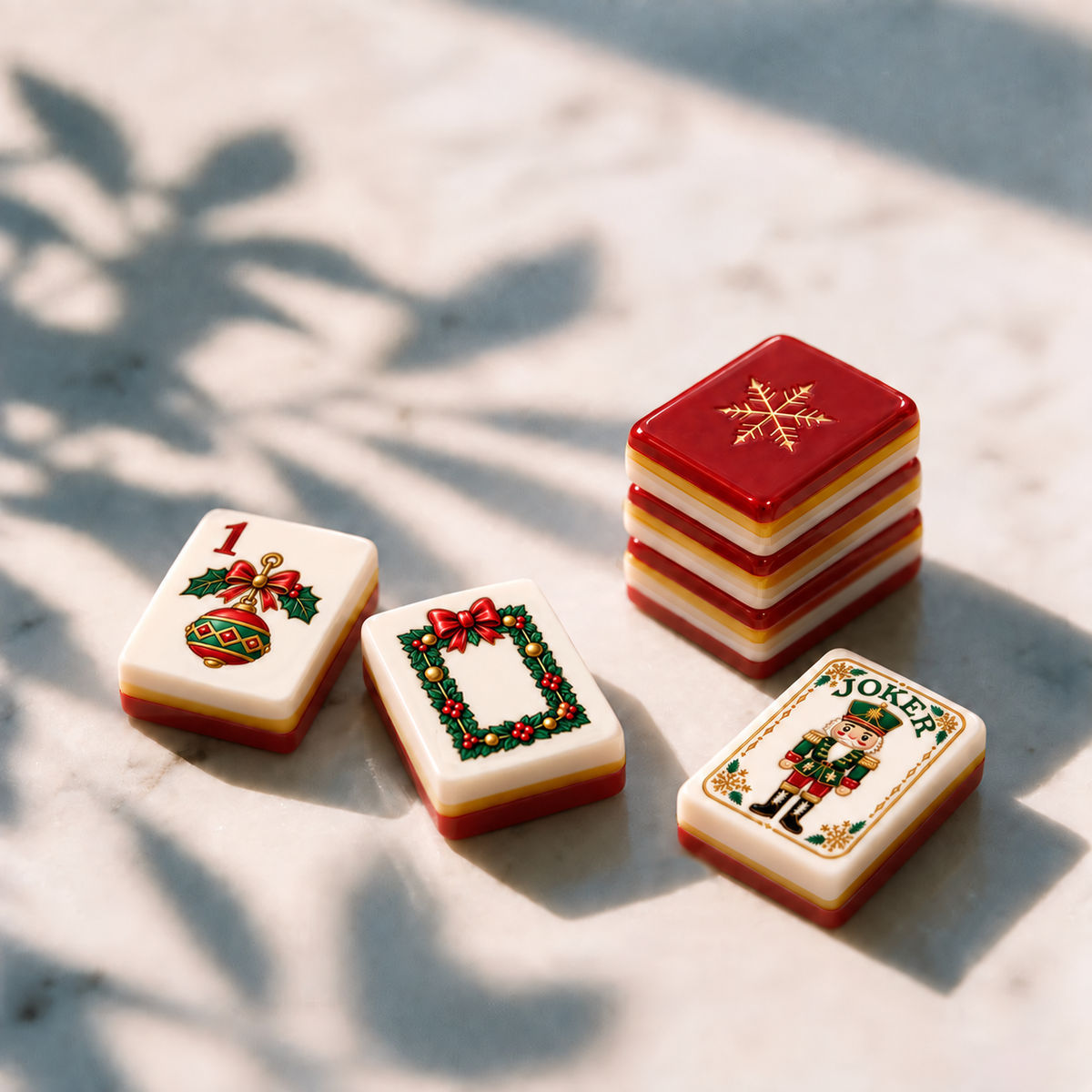
"All Pungs" in American mahjong is a hand composed entirely of pungs (triplets of identical tiles) and a pair, with no sequences (chows). American mahjong rules allow you to expose pungs, kongs (four of a kind), quints (five of a kind), and sextets (six of a kind) as you build toward your goal hand; the All Pungs pattern appears on the current year's National Mah Jongg League card. For example, three 2 Bams, three 5 Dots, three East winds, three Red Dragons, and a pair of White Dragons completes an All Pungs hand. You cannot use a joker in a single tile or a pair. Every hand must use exactly 152 tiles from the standard set. When you're ready to play, you need best-selling mahjong sets with clear, readable tiles so you can spot your pungs quickly and play with confidence.
How does a pung differ from a chow in American mahjong?
A pung is three identical tiles—same number and suit. A chow (or sequence) is three consecutive numbers in the same suit: 1 Dot, 2 Dot, 3 Dot. American mahjong allows you to expose and declare pungs, but never chows. This is the core difference from Chinese, Hong Kong, and Riichi mahjong, which all allow chows to be called and displayed. In American mahjong, all your melds must be either pungs, kongs, or longer runs of identical tiles. The All Pungs pattern exists only because American rules forbid chows; in other variants, "all pungs" would be just one option among many mixed patterns.
🀄 Shop best-selling mahjong sets →

What tiles can form a pung?
Any identical tiles form a pung: three 4 Craks, three South winds, three Green Dragons, three Flower 1s. You need three of the same tile—exact same suit, number, and symbol. In American mahjong sets with 152 playing tiles, there are four copies of every tile, so you can hold or see up to four of the same tile in a hand (a kong). Jokers can fill in for missing tiles in a pung but cannot replace one tile in a pair or stand alone as a single tile. For example, if you need three 7 Bams but have only two, one joker can complete the pung. Many players new to All Pungs hands find it easiest to lay tiles by suit on the rack first, then group identical numbers together.
Where does All Pungs appear on the league card?
The National Mah Jongg League card is published each spring and changes every year. All Pungs typically occupies several rows on the card, listed by hand composition (often grouped with other "like" patterns). The card shows which hands are legal that year—you cannot play a hand that is not on the current card. Each row lists the tiles required: sometimes all Bams, sometimes mixed suits, sometimes with specific dragons or winds. To find All Pungs hands, scan the sections labeled for patterns using only pungs (no sequences); these rows often appear early on the card because they are foundational. You must reference the official card during play; learning how to read the mahjong card shows you how to navigate the layout quickly.
How do you win with All Pungs?
Draw or claim tiles from the wall or discard pile until you complete one hand listed on the current card. Once you have the exact tiles in the exact pattern shown, you declare "Mahjong!" Your hand must match a single row on the card—no mixing rows, no partial matches. For All Pungs, you need four melds and a pair. A meld is either three, four, five, or six identical tiles; your pair is two identical tiles. You win by being the first to declare a legal hand on your turn. Scoring depends on which row your hand is on; American mahjong scoring explains how points are calculated by hand type and circumstances. Speed, observation, and familiarity with the card layout are your biggest advantages.
Why is All Pungs a good first pattern to learn?
All Pungs requires no knowledge of sequences or complex suit relationships—you simply match three of the same tile, four times, plus a pair. This makes it ideal for beginners. Unlike patterns that mix dragons, winds, and suits in intricate ways, All Pungs is visual and straightforward: look for triplets. Players learning American mahjong often practice All Pungs hands first because recognizing identical tiles is faster than calculating which numbers form valid sequences (which, again, don't exist in American rules anyway). Once you master spotting and grouping pungs, you build confidence to read more complex card rows. Many teachers recommend starting with mahjong for beginners guides that emphasize All Pungs and other simple patterns before advancing to limit hands or hand mixing.

What's the difference between All Pungs and other pung-heavy hands?
Some hands on the card require only pungs plus a specific tile type—like "All Pungs, No Terminals" (excluding 1s and 9s) or "All Pungs + Honors" (including winds or dragons). A "Like Number" hand might require all tiles to have the same number: four sets of 6s (any suit), plus a pair of 6s. These are all-pung variations but add restrictions. A "Like Suit" hand requires all pungs in one suit. In contrast, a "Limit Hand" might allow one hand per year and carries the highest score. The card lists all variations; your job is to know which version of "All Pungs" the table is playing that year and match it exactly. This is why reading the mahjong card is non-negotiable—one small detail changes the hand's legality.
Hand Type | Tile Pattern | Melds Required | Joker Rule | Difficulty |
All Pungs (basic) | 3 identical + 3 identical + 3 identical + 3 identical + pair | 4 pungs, 1 pair | Jokers substitute any tile in a meld | Beginner |
Like Number | All 6s (any suit) | 4 pungs, 1 pair, same number | Jokers substitute any 6 | Beginner+ |
Like Suit | All Bams (or Craks/Dots) | 4 pungs, 1 pair, one suit only | Jokers substitute same suit | Beginner+ |
Limit Hand | Card row marked "Limit" (max 1 per year) | Varies | Per card row | Advanced |
What should you check before playing All Pungs?
Before sitting down, confirm these details:
Is the current year's National Mah Jongg League card on the table? All Pungs rows vary year to year.
Which version of All Pungs are you playing? (basic, no terminals, with honors, like number, like suit—each is different)
Does your set have clear, easy-to-read tiles? Worn or small print slows recognition and ruins timing.
Are all eight jokers accounted for in your set of 152 playing tiles? One missing joker creates confusion mid-game.
Have you practiced spotting pungs on racks before your first game? Speed counts.
Quality tile sets make a real difference here. Engraved American mahjong sets with large, legible characters let you spot identical tiles at a glance. If you're hosting a regular game night, a mahjong mat and racks with pushers keep tiles organized and melds visible to all players.
🎁 See our most-loved mahjong sets & accessories →
Common mistakes when playing All Pungs
Mixing up the card. Players assume All Pungs rows are the same every year. The card changes; verify which version applies now.
Joker confusion. Beginners place a joker in a pair, which is illegal. Jokers substitute for missing tiles in pungs, kongs, and longer melds only—never in pairs or as single tiles.
Incomplete melds. Holding four identical tiles (a kong) when the card shows a pung (three) in that row wastes a tile and delays winning.
Slow tile recognition. Small or faded tiles slow pattern matching. Invest in readable sets early.
Declaring too fast. Always double-check your hand against the card row before calling "Mahjong!" One tile out of place invalidates the win.
✨ Find your Mahstead set — free US shipping →
How All Pungs compares to Chinese and Riichi mahjong
In Chinese, Hong Kong, and Riichi variants, sequences (chows) are core to nearly every hand. Players call chows openly, mix them with pungs, and build complex combinations. American mahjong eliminates sequences entirely. This means All Pungs is not a special pattern in other variants—it's just one option among thousands. Riichi mahjong also uses a fixed hand list (yaku), but those hands are standardized year to year and play quite differently. Hong Kong mahjong is typically more open (tiles declared and exposed as you go). Because American rules force all melds to be pungs, kongs, or longer runs of identical tiles, All Pungs becomes a foundational, easy-to-teach pattern. If you play multiple variants, the rule difference is the first thing to master.

FAQ
Can I use a joker in an All Pungs pair?
No. Jokers substitute for missing tiles in pungs, kongs, quints, and sextets only. A pair must be two identical tiles with no jokers.
If I have four of the same tile, do I have to declare a kong, or can I use three?
You can choose. If the card row shows a pung (three), use three and keep or discard the fourth. If it shows a kong (four), expose all four. Your decision depends on which hand you're building.
Does the All Pungs row change every year on the National Mah Jongg League card?
Yes. The card is published every spring and varies year to year. Always reference the current year's card; do not rely on last year's rules.
How many jokers are in a standard American mahjong set?
Eight jokers are included in the 152 playing tiles used in every game. A standard set has 160 tiles total (152 playing + spare tiles).
Is All Pungs the easiest hand pattern for beginners?
It is one of the easiest because it requires only identical tiles and no knowledge of sequences. It is often recommended as a first learning pattern alongside Like Number and Like Suit hands.
What happens if I declare All Pungs but one tile doesn't match the card row?
Your win is invalid. The hand is dead, and play resumes. This is why checking against the card before declaring is essential.
Can I expose my pungs during play, or must I hide them until I win?
You can expose pungs as you build them. American rules allow exposure of pungs, kongs, and longer melds. Exposure is optional; many players keep melds hidden until they declare to avoid giving away their hand type.
Is All Pungs the same in 2, 3, and 4-player games?
The pattern itself is the same, but 2 and 3 player mahjong rules adjust tile draws and Charleston passing. The hand requirements do not change; only the game setup does.


View More
View More
View More
