
Riichi Mahjong: Riichi or Dama—Which Playing Style?
Last updated: Nov 23, 2026
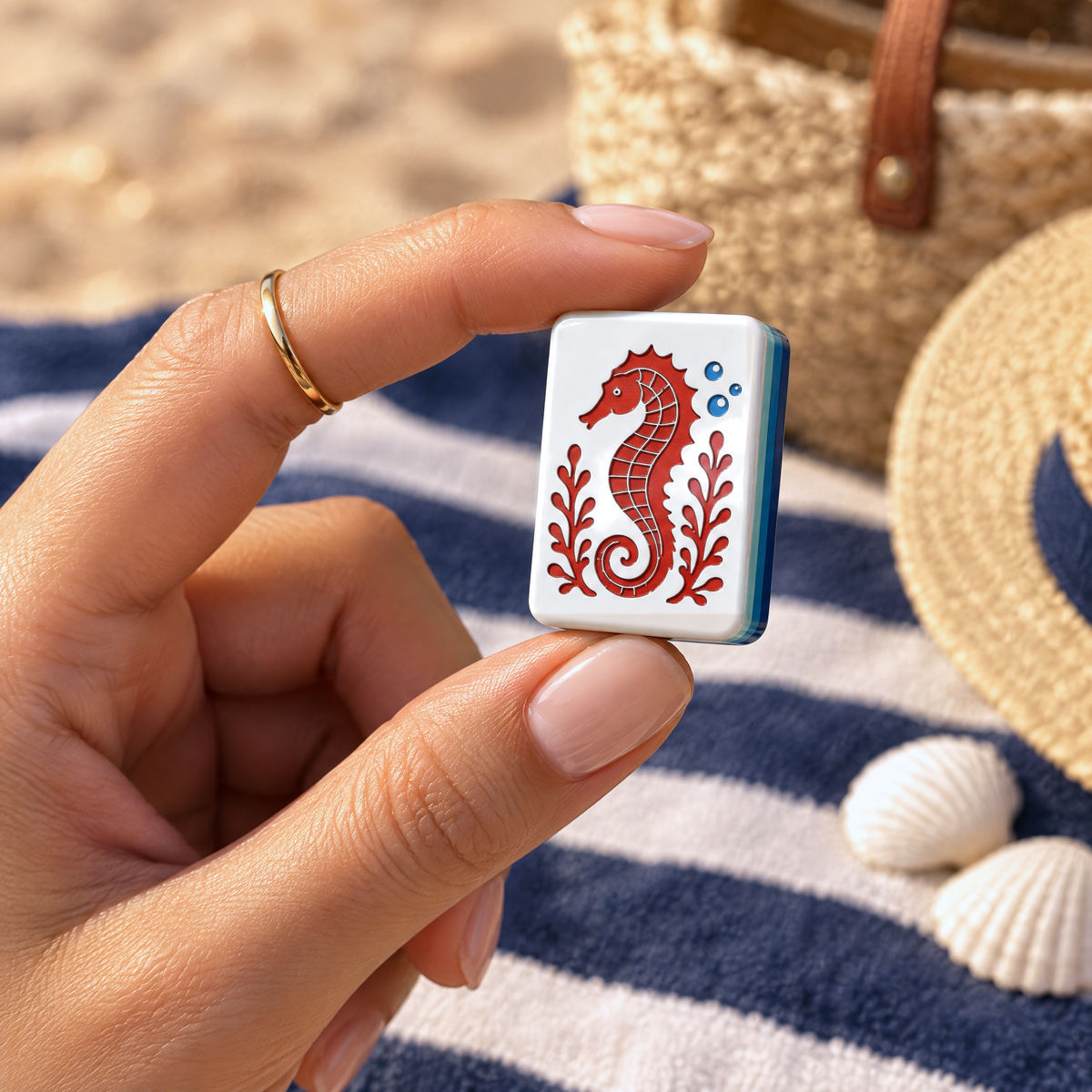
Riichi and dama are two opposing strategic declarations in Japanese (riichi) mahjong. Riichi means you publicly declare your hand is one tile away from winning and lock your discards face-up, freezing play temporarily; you earn bonus points (1,000–3,000 depending on who pays) if you win immediately after, but you cannot change your hand shape. Dama is the opposite: you keep your winning hand secret, discarding normally without announcement. If you win from a dama hand, you collect no riichi bonus but avoid signaling opponents and keep tactical flexibility. The choice hinges on hand strength, table position, and wind round. Riichi mahjong uses 136 tiles (four suits: Honors, Bamboo, Character, Dot; each numbered 1–9; plus 7 honor tiles) and follows strict hand patterns from the yakus list. Unlike American mahjong (which uses 152 tiles and a seasonal card), riichi hands are determined by pattern rules, not an external reference chart.
Riichi and dama are not variants of mahjong—they are competing tactical stances within riichi mahjong, the Japanese tournament standard played worldwide. Understanding when to riichi and when to play dama transforms your win rate and table presence, because each choice broadcasts different information to your opponents and locks you into different scoring paths.
What does riichi actually mean—and what happens when you call it?
When you declare riichi, you are announcing that your hand requires exactly one more tile to complete a winning pattern (called tenpai in Japanese). You place a 1,000-point stick (or equivalent) in front of you on the table, flip your discard face-up, and you cannot draw and discard again until someone discards the tile you need (or the game ends). Your hand is now frozen: you cannot rearrange melds, swap tiles, or alter your winning shape. If the next player discards your winning tile (or if you draw it), you take it immediately, declare mahjong, and your win is worth extra: a riichi bonus of 1,000 points from each opponent, plus a draw bonus if applicable. If no one discards the tile you need and the wall runs empty, you receive no payment and the hand ends.
Riichi locks you into one pattern shape and one discard sequence. This transparency—everyone sees your face-up discards—means opponents know roughly what you need and can block it (discard safely). The riichi bonus rewards you for the risk of locking your hand and signaling the table.

Why would you NOT call riichi and play dama instead?
Dama (also called noten, though technically noten means "not ready") is the strategy of winning your hand without ever declaring riichi. You keep your hand secret, continue discarding face-down in the normal discarded tile pool, and only reveal your melds when you finally win. If you win from dama, you receive no riichi bonus—only the base hand value and any yaku bonuses. You also never place a 1,000-point stick on the table.
Dama wins are worth less in points than riichi wins, but they carry a psychological and tactical edge: opponents have no idea you are close to winning. A skilled dama player can win hands that a riichi player would have been blocked on, because no one saw the threat coming. Dama is riskier (if you get too greedy waiting for a higher-value hand, the wall closes and you lose) but often more profitable in league play because opponents stay looser and discard tiles they would have guarded against a declared riichi.
Riichi vs. dama: A decision framework for each situation
Situation | Riichi | Dama | Why |
Hand value: 1,000–2,000 points base | ✓ Best | Weak | Riichi bonus adds 3,000–12,000; dama adds nothing. Declare. |
Hand value: 8,000+ points; 10+ tiles left in wall | Risky | ✓ Best | Base value already high; dama keeps it hidden; riichi blocks you on a premium hand. Wait. |
You are dealer (oya) and ahead on score | ✓ Strong | ✓ Also OK | Riichi bonus is split among 3 opponents; dama hides your lead. Either works; dama is slightly safer. |
You are non-dealer (ko) and losing | ✓ Best | Weak | Riichi bonus (1,000 from each player) closes the score gap faster than dama base hand. Declare. |
Only 1–2 tiles left in wall | ✓ Must | Risky | Dama risks the wall closing with no win. Riichi forces immediate resolution. |
Your winning tile is extremely common | Weak | ✓ Best | Riichi makes it obvious; opponents will hoard safe discards. Dama keeps them guessing. |
Your winning tile is rare; you have seen 3 of 4 already | Risky | ✓ Best | Riichi signals a dead tile. Dama lets you win secretly because opponents think it is still active. |
Choose riichi when your hand is cheap (1,000–3,000 points) and the wall is deep (8+ tiles remain), because the bonus outweighs the signal cost. Choose dama when your hand is expensive (5,000+ points), your winning tile is common or already partially exposed, or when you are losing and need to close the gap quietly.
🀄 Shop best-selling mahjong sets →
How do opponents use your riichi or dama status to defend?
Once you declare riichi, every opponent sees your face-up discard sequence and knows your hand shape is frozen. This is a tactical gift—they can read the pattern. For example, if you discarded 1 Bamboo early and later discard 9 Bamboo, opponents infer you are waiting for a tile in the middle range and begin hoarding 4–6 Bamboo. If you discard a terminal (1 or 9) very late, they suspect you are waiting for another terminal and guard accordingly.
A dama player discards face-down, so the discard pool looks random to opponents. They see no pattern and cannot read your hand shape. If you suddenly win on a tile they thought was safe, they feel blindsided. This is the core advantage of dama: opponents cannot defend what they cannot see. However, this secrecy comes at a cost—you forfeit the riichi bonus, which can be 3,000–12,000 points depending on who pays. Over many hands, riichi players (declaring on cheap hands) often outscore dama players (who wait for expensive hands) because the bonus accumulates and the base hands are often blocked anyway.
In tournament play, a strong table adapts: experienced opponents remember your dama wins and become warier; first-time opponents fall into the trap repeatedly. Dama thrives against weak or inattentive tables. Against skilled players, riichi on cheap hands often yields more profit because the bonus is guaranteed and the base value is low risk.

Common mistakes: When NOT to riichi or dama
Riichi too early on a low-value hand. A 1,000-point hand (1 yaku, base value) is barely worth declaring because the 3,000-point bonus is not enough to offset the signal cost if the tile is common and opponents block it. Wait until your hand is at least 2,000–3,000 points (2 yaku), or until very few tiles remain in the wall.
Playing dama on a 1-yaku hand. If your hand is cheap and your winning tile is common, dama is a trap. You forfeit the bonus and the tile gets blocked anyway. Declare riichi and guarantee the bonus payout.
Ignoring the wall count. With only 5 tiles left in the wall, declare riichi immediately even on a mediocre hand. Dama risks the wall closing with zero payout. Riichi forces someone to discard or the hand ends and scoring closes.
Declaring riichi on a hand you cannot win. If you are waiting for a tile you have already seen three copies of (and one is in your hand), do not declare riichi. That tile is effectively dead. Play dama and pivot your hand shape—or fold.
Changing your mind after riichi. You cannot undo a riichi declaration. Your hand is locked and your discard sequence is public. If you declared on the wrong tile, you lose the 1,000-point stick and the hand. Be certain before you place the stick.
🎁 See our most-loved mahjong sets & accessories →
Where riichi and dama differ from American mahjong strategy
American mahjong uses a seasonal reference card (updated every spring by the National Mah Jongg League) that defines all legal winning hands. In American play, you are not required to announce anything before you win—you simply expose your complete hand and verify it matches the card. There is no riichi declaration, no bonus for declaring early, and no dama strategy. Your hand pattern is determined by the card; your only choices are which tiles to keep and which to exchange during the Charleston.
Riichi mahjong has no seasonal card. Instead, hands are built from fixed yaku patterns (patterns that carry point values and combinations)—like a pair plus one or more melds of sequences or sets. You choose your hand shape mid-game as tiles flow, and you decide when (or whether) to announce you are close. The riichi/dama choice is a real strategic lever that does not exist in American mahjong.
Also, American mahjong requires exactly 152 tiles and 8 jokers for play. Riichi mahjong uses exactly 136 tiles and includes no jokers—every tile is played as its face value. American sets often feature decorative or engraved designs; if you are learning riichi and transitioning from American play, you may want to own both formats. Our best-selling mahjong sets focus on American tile design and size; for riichi play, ensure you have a proper 136-tile riichi set with correctly sized tiles.
What to check before you buy mahjong equipment for riichi play
If you are new to riichi and plan to play at a club or tournament, verify the equipment standard first:
Tile count: Riichi requires 136 tiles exactly. Do not buy an American 152-tile or 160-tile set and expect to play riichi at a league table.
Tile size: Riichi tiles are typically smaller and thinner than American tiles. Tournament play uses standardized small tiles (roughly 19 mm × 26 mm); some casual players use larger tiles, but consistency matters when rotating among different tables.
Honor tiles: Riichi honors are four: East, South, West, North (no dragons like American mahjong). Verify your set includes seven honor tiles (winds + dragons: five, six, seven of honors).
Scoring: Chip denominations and point sticks are different. American play uses chips; riichi play uses 1,000- and 5,000-point sticks. Ensure you have the right setup.
Local rules: Ask your club or tournament organizer which variant they play (East-only, Dora, multiple rounds, etc.) and which equipment they require. Some clubs loan sets; others require you to bring your own.
✨ Find your Mahstead set — free US shipping →

FAQ
If I declare riichi and win on the next discard, do I earn the riichi bonus even if I drew the winning tile from the wall?
No. The riichi bonus (1,000 points from each opponent) is only paid if someone else discards your winning tile after you declare. If you draw your winning tile from the wall after declaring riichi, you win the hand (called tsumo) and earn the tsumo bonus (if applicable under local rules) but not the riichi bonus. Only opponent discards trigger the riichi payout.
Can I declare riichi and then decide to play dama if I change my mind?
No. Once you place a 1,000-point stick on the table and flip your most recent discard face-up, your riichi declaration is locked. You cannot cancel it or revert to dama. You lose the stick and forfeit the hand if you do not win immediately.
Is dama ever worth it if my hand is only 1 yaku (1,000 points)?
Rarely. A 1-yaku dama hand is worth 1,000 points if you win. A riichi on the same hand is worth 4,000–13,000 points (depending on payers). Only play dama on 1-yaku if your winning tile is extremely common and you expect it to be blocked, or if you are experimenting at a casual table.
How many tiles should remain in the wall before I must declare riichi?
Conventionally, once 4–5 tiles remain in the wall, declare riichi immediately (or fold). If the wall closes and you have not won, the hand is a draw and no one scores. Waiting for dama is too risky with so few tiles left.
Do I earn a riichi bonus if I win on the first discard after declaring, before anyone else has discarded?
No. You must wait for another player's discard (not your own) to trigger the riichi bonus. If you draw the winning tile immediately after declaring riichi, you win but earn no riichi bonus—only the base hand value and any tsumo bonus under local rules.
Can two players declare riichi in the same hand?
Yes. If two or more players declare riichi in the same hand, each places a 1,000-point stick and flips their discard face-up. The first to win earns the full riichi bonus from all opponents. The players who did not win lose their 1,000-point sticks and the hand ends.


View More
View More
View More
