
Riichi Mahjong Hand Examples: Patterns, Yaku, and How to Win
Last updated: Nov 23, 2026
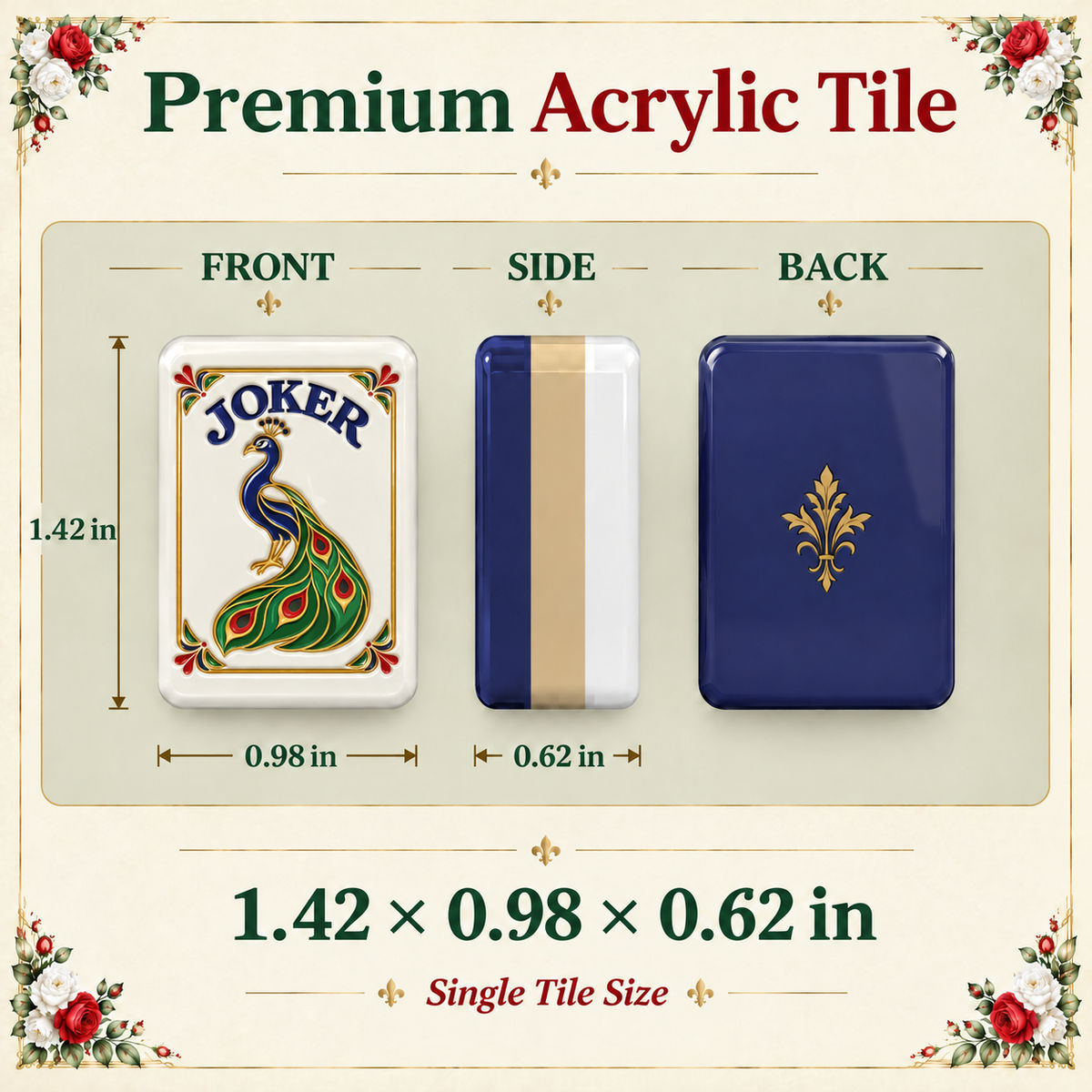
Riichi mahjong hands win by completing one of 13 base patterns (yaku) or mixing yaku for higher scores; the most common winning shapes are pairs of identical tiles (pungs), sequences of three consecutive numbers in one suit (chows), eyes (a matching pair), or honor tiles (winds and dragons). A standard winning hand holds 14 tiles: four groups of three and one pair, or special patterns like all honors or all one suit. Unlike American mahjong—which draws tiles only from the current year's National Mah Jongg League card and forbids exposed chows—riichi mahjong uses a fixed 136-tile set, allows chows to be called and exposed, and plays with a discard-based draw system where the first player to complete a legal hand after someone discards a tile (or after drawing from the wall) declares "ron" (win off a discard) or "tsumo" (self-draw) and scores. Winning requires both pattern mastery and reading opponent discards; scores depend on hand complexity, whether the hand was riichi-declared, and whether it was won by self-draw or another player's discard.
Riichi mahjong hands are built on yaku—specific tile combinations that prove you've won. The moment you grasp the five or six most frequent yaku, hand-spotting becomes automatic: you start seeing winners half-formed on your rack. We'll walk you through the core patterns, show you real tile examples, and explain how riichi strategy differs from the tile-passing and hand-locking system of American play. By the end, you'll know exactly what to hold for and when to declare riichi.
What are the 13 base yaku in riichi mahjong?
The 13 base yaku form the foundation of every hand. Pung (three identical tiles: 5 Bam, 5 Bam, 5 Bam) is the most concrete group you can hold; chow (three consecutive tiles in one suit: 3 Dot, 4 Dot, 5 Dot) builds linear sequences; pair (two identical tiles, the "eyes") closes every hand; honor tiles (winds like East, South, West, North and dragons: Red, Green, White) form groups just like number tiles. A standard winning hand has four groups plus one pair. The 13 base yaku include all pungs (no chows), all chows (no pungs), all terminals and honors (1 or 9 of each suit plus winds and dragons), all one suit (only Bams, or only Craks, or only Dots plus honors), honor pungs (at least one group of three identical winds or dragons), terminal chows (like 7 Bam, 8 Bam, 9 Bam), outside hand (pungs and chows using only terminals and honors), and pair honor (the pair is a wind or dragon). Each yaku is worth a fixed base score; layering yaku—for example, winning all Bams (all one suit) and all pungs (no chows)—multiplies your score. Memorizing the shapes, not the names, accelerates recognition at the table.

How do chows differ from pungs in riichi play?
A chow is three tiles in sequence within one suit—like 2 Crak, 3 Crak, 4 Crak—and it's fully exposed once called. A pung is three identical tiles—like 2 Crak, 2 Crak, 2 Crak—and also exposed. The critical difference from American mahjong is that in riichi, chows can be called and exposed during play; American mahjong has no chows at all and only exposes pungs, kongs, quints, and sextets. In riichi, when an opponent discards a 4 Crak and you hold 2 Crak and 3 Crak, you call "chow," add the 4, and display all three face-up on the table, immediately playing your turn. Pungs work the same way: if an opponent discards a 7 Dot and you hold two 7 Dots, you call "pung," add the discard, expose the three, and play. Chows and pungs both count toward a winning hand, but chows are "open" (the opponent sees your strategy), whereas holding a hidden chow in your hand before the win gives bonus points. This exposure mechanic means riichi is a live-read game: opponents watch your melds to infer what you're building, while you discard strategically to block their hands.
What does a complete winning hand look like in practice?
Let's build a hand step by step. You start your turn with 13 tiles and draw a 14th from the wall or from a discard. Your goal: four groups + one pair. Suppose your rack holds:
Group 1 (pung): 1 Bam, 1 Bam, 1 Bam
Group 2 (chow): 4 Dot, 5 Dot, 6 Dot
Group 3 (pung): East Wind, East Wind, East Wind
Group 4 (pung): Red Dragon, Red Dragon, Red Dragon
Pair: 9 Crak, 9 Crak
That's 14 tiles total: three groups exposed (if called), one hidden, and your pair. This hand qualifies as "honor pungs" (East and Red are honors) plus "all terminals" (1 Bam is a terminal—the start of its suit). You declare tsumo (self-draw win) or ron (if someone discarded the 9 Crak and you claimed it), and the score is tabulated based on yaku overlap, whether riichi was declared at the start of your hand, and whether it was a self-draw or a discard claim. In American mahjong, by contrast, the hand itself comes pre-designed from the current year's National Mah Jongg League card; in riichi, you build the hand dynamically during the round, and the card isn't used at all. This real-time assembly is why hand spotting—seeing a near-complete shape and chasing it—drives riichi play.
When should you declare riichi, and what does it mean?
Riichi is a declaration made when your hand is one tile away from a win (14 tiles, all groups complete, just waiting for the right discard or draw). You announce riichi by placing a 1,000-point marker on the table and locking your hand: you cannot change any tiles after this point. The upside is scoring multipliers—a winning hand after riichi is worth significantly more. The downside is commitment: if you declare riichi with 13 "closed" tiles (no melds exposed yet) and no one discards your winning tile before the wall empties, you lose the 1,000-point wager with no win. Riichi declarations appear only in riichi mahjong; American mahjong uses the Charleston, a tile-passing phase before play, and does not have a "locked hand" mechanic. Beginners often declare riichi too early or too late: too early, and the hand is exposed (other players avoid discarding anything remotely useful); too late, and you miss the multiplier. The skill is reading the discard flow—what tiles are still in play, how many rounds remain before the wall closes, and whether your wait (the single tile you need) is high-probability. Declaring riichi on a "pair wait" (needing one specific tile to complete a pair) is riskier than declaring on a "two-sided wait" (two different tiles either complete the hand), because your odds of drawing one of two tiles are double.

What are common hand-building mistakes, and how do you avoid them?
Mistake 1: Chasing single-tile waits too long. If you're waiting for only one specific tile (say, the 5 Bam) and three rounds pass with no 5 Bam discarded, the probability drops fast. Count the tiles: if you've seen two 5 Bams already in discards, only two 5 Bams remain in the wall—a 1-in-50 draw. Switch your hand strategy. Mistake 2: Ignoring opponent discards. When an opponent never discards Craks, assume they're building Crak melds; discarding into a known danger is how you hand someone the win. Read the discard river (the tiles each player has thrown) before committing to a chow or pung. Mistake 3: Over-committing to honor tiles. Winds and dragons can be called and pung-ed, making them attractive; but if two players are already building honor melds, the remaining honor tiles are scarce. Pivot to number tiles if the wind of the round (East, South, etc.) is heavily in play. Mistake 4: Declaring riichi when your hand has only one safe exit. If you have zero hidden melds and a single-tile wait, your riichi declaration broadcasts your exact need; observant opponents will lock down any tile remotely close to your wait. Declare riichi only when you have at least one alternate exit or a two-sided wait. Mistake 5: Forgetting the hand limit. You have 14 tiles to win. If you've called two pungs (6 tiles exposed) and hold 8 more tiles but only two are grouped, you still need a meld or a pair—don't draw a 9th ungrouped tile. These patterns repeat every round; noticing them early separates steady players from tile-drawers.
How does riichi scoring compare to American mahjong scoring?
In riichi, your score depends on yaku count (how many patterns overlap), honor multiplier (self-draw or discard win), and riichi bonus (if declared). A "2-yaku hand" (e.g., all one suit and all pungs) scores roughly double a "1-yaku hand" (e.g., all pungs only). Winning by self-draw (tsumo) pays more than winning off a discard (ron), because you didn't depend on an opponent's mistake. Winning after declaring riichi adds a 50% multiplier (or more if it's a high-scoring hand). American mahjong uses the National Mah Jongg League card, which lists exact point values for each hand; how to read the mahjong card explains how. Riichi scoring is algorithmically consistent (yaku + multiplier = points), whereas American hand values vary by design; this means riichi favors hand complexity, while American mahjong balances complexity and rarity equally. For beginners, riichi feels faster because you don't memorize 50+ hand patterns each year—you memorize 13 yaku and build from there. For American players switching to riichi, the shift is mental: you're no longer locking into a hand from a card; you're adapting to live discards and opponent melds.
Comparison | Riichi | American |
Tile set size | 136 tiles | 152 tiles (American game uses 152 playing + spare tiles in a 160-tile set) |
Chows allowed | Yes, can be called and exposed | No chows; only pungs, kongs, quints, sextets |
Hand source | Built dynamically during play | Fixed on current year's NMJL card |
Winning tie | One tile away (14 of 14 grouped + pair) | Exactly matches a card hand |
Riichi declaration | Yes, locks hand and adds score multiplier | No riichi; uses Charleston instead |
Speed to win | Faster once yaku patterns memorized | Slower until card hands internalized |
Read skill | Critical: opponent discard reading | Moderate: mostly hand memorization |
This table clarifies the structural gap between the two systems: riichi is a live, read-heavy game; American mahjong is a card-based, pattern-locked system. Neither is harder, just different in depth.
🀄 Shop best-selling mahjong sets →
What equipment do you need to play riichi mahjong at home?
Riichi mahjong requires a standard 136-tile set (never abbreviated in English as "144"), a mat (optional but helpful for tile grip and discard organization), pushers or racks to keep your hand stable during fast play, and dice. Our best-selling mahjong sets collection features durable acrylic tiles with clear engravings—essential when you're scanning your hand rapidly for chows and pungs. A mat with marked discard areas helps you and your opponents track which tiles have been played; we offer engraved mahjong mats designed to fit both riichi and American play. Racks or pushers let you align your tiles vertically so groups are instantly visible—critical in riichi where you call melds mid-turn. A travel bag or case protects tiles during transport to weekly games. None of this equipment is mandatory, but each piece accelerates recognition and reduces fumbling, which matters when play moves fast.
🎁 See our most-loved mahjong sets & accessories →
What should you check before buying a riichi set?
Tile clarity. Riichi play demands quick pattern spotting; tiles must be legible from across a table. Check that numbers and suit symbols (bamboo stalk for Bam, circle for Crak, dot for Dot) are deeply engraved or printed, not faint. Tile weight and feel. Lighter tiles (under 10 grams) shift during shuffles and melds; heavier acrylic tiles (like those in our collections) stay in place. Honor tile visibility. Winds and dragons must be unmistakable at a glance. Red, Green, and White dragons and the four winds should have contrasting colors or clear engravings. Set completeness. Confirm you're getting 136 playable tiles, not a partial set. Our 160-tile sets include extra jokers and blanks for practice or spare tiles—never added to actual play. Meld space. Test the rack or mat size against your hand. Riichi hands are built face-up in melds; a cramped rack forces slow play. Dice included. Riichi uses two dice (or three, in some variants) to determine who deals and where to break the wall; confirm they're included. Spending time on these details upfront prevents mid-game frustration and keeps play flowing.

FAQ
Can I play riichi mahjong with an American mahjong set?
No. American sets have 152 tiles (or 160 with spares) and include jokers; riichi sets have 136 tiles and no jokers. The tile inventories don't match, and jokers have no role in riichi. You need a dedicated riichi set.
What's the easiest yaku for a beginner to chase first?
"All pungs" (four groups of three identical tiles plus a pair) is the most intuitive: you're matching tiles, not building sequences. Once you're comfortable spotting pung patterns, move to chows and mixed hands.
Does the player position (East, South, West, North) affect which hands you can build?
Slightly. Being the East player (dealer) lets you draw an extra tile at game start, giving you more options. Winning as East pays a multiplier. But any player at any seat can build any yaku; position influences timing and scoring, not hand legality.
What happens if two players want to claim the same discard?
Priority goes to the player closest to a win: a "pung" or "chow" meld beats a regular draw; a win (ron) beats a meld. If both players declare a win simultaneously, the player seated closest to the discarding player (in clockwise order) wins. House rules may vary slightly.
How long does a typical riichi game round take?
A single hand (one player's turn to deal until someone wins or the wall empties) typically takes 10–15 minutes at beginner pace, 5–8 minutes at intermediate pace. A full game round (each of four players dealing once or twice) is usually 45 minutes to an hour.
Can I switch between American mahjong and riichi, or do I have to pick one?
You can play both, but keep them separate: different tiles, different rules, different cards (American) or yaku patterns (riichi). Many players enjoy one or the other exclusively. Others play American in winter leagues and riichi recreationally. The skills don't transfer directly, so allow 3–6 weeks of regular play to get comfortable switching.
What if no one wins and the wall runs out?
The hand is declared a draw (or "no win"). Points don't change, and play moves to the next deal. In some rulesets, the player seated closest to the wall position (called the "under the gun" position) becomes the next dealer; in others, the current dealer stays and deals again. ✨ Find your Mahstead set — free US shipping →


View More
View More
View More
