
Redeeming a Joker in Mahjong: Rules, Limits & Strategy
Last updated: Nov 23, 2026
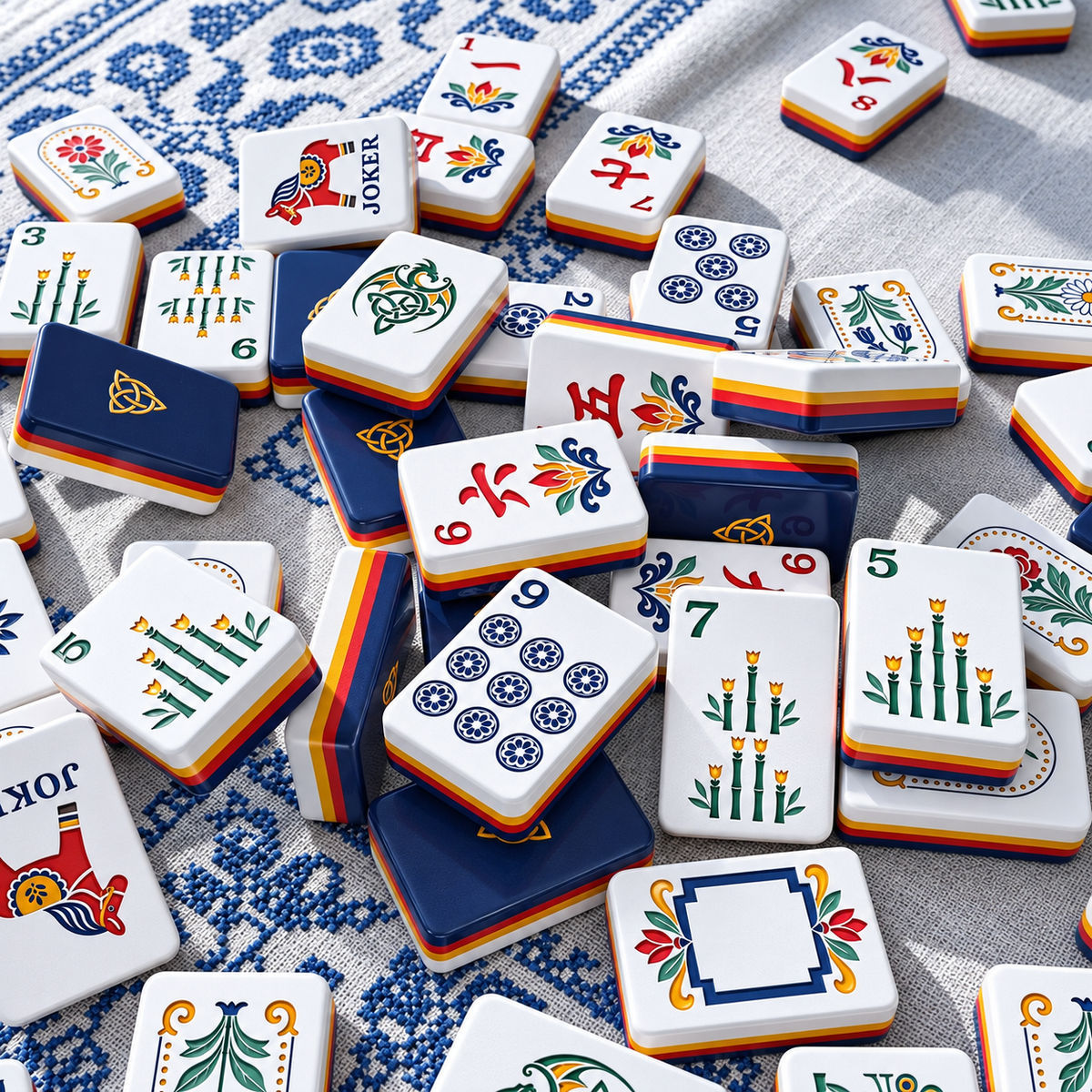
A joker in American mahjong is a wild tile that substitutes for exactly one tile in a pung, kong, quint, or sextet—but never in a pair or as a single tile. To "redeem" a joker means to replace it with the actual tile it represents during play. When you pick a tile that matches a joker already exposed on your rack, you may swap that joker with the matching tile; the joker returns to the wall for anyone to pick later. You can also replace a joker when you go out—if your winning hand contains a joker standing in for a tile, you must name that tile. The standard American mahjong game includes 8 jokers among 160 tiles total; having enough jokers matters less than understanding when redemption is mandatory versus optional, and tracking which tiles are actively "claimed" by jokers on the table. Many players mistake redemption for a choice; it isn't—if you draw the tile a joker represents, you must offer the swap to the holder of that joker before continuing your turn.
🀄 Shop best-selling mahjong sets →
When must you redeem a joker?
Redemption is mandatory the moment you draw or are dealt a tile that a joker represents on the table. Before your turn advances, you must announce the swap and hand the real tile to whoever holds that joker; they return the joker to you. This rule prevents players from hiding matching tiles and keeping the joker in play longer. If you fail to redeem, another player or the dealer may call you out before the next discard. In casual home games, redemption often goes unenforced—but in league or tournament play, missing a redemption can void your hand.

Can you decline to redeem if you want to keep the joker?
No. Redemption is never optional when you hold the matching tile. You cannot refuse a swap, hold back a tile to keep a joker, or negotiate timing. Some beginners think they can hide a tile until later; the rules don't allow it. The spirit of redemption is fairness: the player who exposed the joker first gets priority to use the real tile, and that player's meld becomes solid (no longer dependent on luck). If you discard without redeeming, you have broken the rule and may face a penalty—typically your hand is voided or you pay a penalty score.
How does redemption work when you're going out?
When you declare Mah Jongg (a winning hand), any joker in your hand must be named as a specific tile. You announce it aloud so all players know what tile it represents. Unlike mid-game redemption, you do not physically swap the joker with a tile—it stays in your hand. The tile you name must be one that fits your winning pattern on the card. For example, if you have three Bams with two jokers standing for two more Bams (making a quint), you name those jokers as "Bam" and specify which numbers. Naming the joker incorrectly (say, calling a joker in your pair when jokers cannot be in pairs) voids your win.
What happens to redeemed jokers—can they be picked again?
Yes. Once you redeem a joker by swapping it for the real tile, the joker returns to the joker zone and re-enters play. Any player on their turn can pick it and use it in a new meld. This is why late-game jokers are valuable: many tiles have already been discarded, so a joker is more likely to fill a gap. Redeemed jokers are not removed from the game; they cycle back into circulation. This also means you cannot rely on a joker staying in one place—always be aware of which jokers are in play and which tiles they represent.
What's the most common mistake players make with jokers?
The biggest error is treating redemption as optional or negotiable. A close second is forgetting that jokers cannot appear in pairs. If you need two of the same tile for a pair (say, two Red Dragons), you cannot use jokers; you must hold the real tiles. New players often try to "save" jokers by not redeeming, or they place a joker in a pair thinking no one will notice. Both mistakes void hands and stall the game. A third frequent slip: confusing which tiles a joker represents when going out. If a joker is standing in for a 7 Dot, you cannot name it as a 7 Bam; it stays a 7 Dot for the entire hand.

How many jokers should you have in your set?
The standard American set contains 8 jokers as part of the 160-tile count, and that is always sufficient for four-player American mahjong. You do not need more jokers; in fact, adding extra jokers changes the game balance—hands become easier to form, reducing strategy. When you buy a set from our best-selling collection, you get exactly what you need for fair, rule-compliant play.
Redemption Timing & Scenario Table
Scenario | What Happens | Must You Redeem? | Timing |
You draw a tile matching an exposed joker mid-game | You announce the match and swap immediately | Yes—mandatory | Before your turn advances |
A joker sits in your own meld (you placed it) | No swap needed; it stays until someone else draws its tile | No—only if another player holds it | Only if that player picks the matching tile |
You go out with a joker in your hand | You name the tile it represents aloud | Yes (must name it) | When declaring Mah Jongg |
A joker is redeemed and returned to play | It re-enters circulation as a blank tile | N/A | Next player can pick it |
You forget to redeem and another player notices | Your hand may be voided; score penalty applies | Yes (enforced retroactively) | Before play continues |
🎁 See our most-loved mahjong sets & accessories →
Step-by-Step Redemption Checklist
Draw a tile during your turn.
Check all exposed melds on the table (yours and others').
Identify if the tile matches any joker currently in play.
If yes, announce "Redemption" and state which joker and what tile.
Hand the real tile to the player holding that joker.
Receive the joker from that player.
The joker returns to the joker zone—it is now available for anyone.
Continue your turn (you still draw or discard as normal).
If you fail Step 3 and discard without redeeming, another player can call a penalty before the next discard.
Why redemption matters for strategy
Redemption is not just a rulekeeping detail—it shapes how you plan your hand. If you know a joker is in play and you need that tile, you have two paths: draw the real tile and redeem, or find another route. Holding multiple near-complete melds that rely on a single joker is risky—if someone redeems it, your meld collapses. Conversely, if you already have a solid pung and someone adds a joker to a similar meld elsewhere, you might accelerate your own win because the real tiles are now "freed up." Tournament players track which jokers are exposed and which tiles they represent; casual players often miss this layer of play.
Common Redemption Mistakes and Fixes
Mistake | Why It Breaks the Game | How to Avoid It |
Hiding a tile to keep a joker | Breaks the fairness rule; violates mandatory redemption | Announce redemptions immediately; other players watch |
Placing a joker in a pair | Jokers are only valid in groups of 3+ | Memorize: pairs are always real tiles only |
Naming the wrong tile when going out | Voids your win if the name doesn't fit your hand | Double-check the card; say the tile type and number aloud |
Forgetting a joker re-enters play after redemption | Leads to errors in later turns; confusion over available tiles | Mark redeemed jokers visually or verbally note them |
Refusing to redeem | Breaks the mandatory rule; draws a penalty | Accept redemption as automatic, not optional |
What to check before you buy a mahjong set
If you're new to American mahjong, you want a set that makes joker tracking easy. Look for these features:
Jokers that are visually distinct from numbered tiles—a solid color, a unique pattern, or a clear "joker" label.
A full 160-tile count so you always have the standard 8 jokers and never need to "add" tiles mid-game.
Clear tile markings (suit symbols, numbers) so you can name redemptions correctly and quickly.
A mat with a joker zone or dedicated space for discarded jokers and redeemed tiles—keeps the table organized and reduces confusion.
Racks with pushers to hold tiles securely so you don't accidentally expose a tile meant to be hidden.
If you host weekly games or play in a league, consistent equipment makes redemption smoother for everyone. Sets from our best-selling collection include clear jokers and are packaged with everything you need to manage the rule.
For detailed guidance on tile composition and game setup, see what's in an American mahjong set. For a fuller picture of how jokers function across all melds and scenarios, read how jokers work.
✨ Find your Mahstead set — free US shipping →

FAQ
Can a joker ever be used in a pair?
No. Jokers are only valid in pungs (3), kongs (4), quints (5), or sextets (6). Pairs must always be two identical real tiles—never a real tile and a joker, and never two jokers.
What tile can a joker represent when you go out?
A joker can represent any single tile that fits your winning hand pattern on the current year's card. You name it aloud. If the name doesn't make your hand valid according to the card, your win is voided.
If I draw the tile a joker represents, do I have to swap it immediately?
Yes. Before your turn advances or you discard, you must announce the redemption and swap with the player holding that joker. Failing to redeem is a rule violation.
Can multiple jokers be in the same meld?
Yes. A quint can have two jokers, a sextet up to three. However, each joker still represents one specific tile; you must be able to name all of them when going out.
What happens after someone redeems a joker from my meld?
The joker leaves your meld and returns to the table. Your meld now has only real tiles and is permanent (no longer at risk of losing the joker to redemption).
Do I need more than 8 jokers if I play with fewer than four players?
No. American mahjong is designed for four players with 8 jokers. If you play with two or three players using house rules, 8 jokers remains standard; do not add extras, as it unbalances the game.
Can someone else redeem a joker from another player's meld, or only the table?
Only the player whose turn it is can redeem. If Player A holds a joker and Player B draws the matching tile, Player B must offer the redemption to Player A immediately.
Is redemption optional in casual, home-game play?
The rule is always mandatory in standard American mahjong. However, in informal games, players sometimes play "house rules" that relax this—but at league or tournament events, redemption is enforced strictly.


View More
View More
View More
