
How to Store a Mahjong Bag: Best Practices for Your Set
Last updated: Nov 23, 2026

Store your mahjong bag in a cool, dry place away from direct sunlight, moisture, and heat sources—ideally a closet, shelf, or cabinet in your home. Keep the bag upright or on its side (never compressed flat for months), store tiles in their compartments to prevent shifting, and ensure racks, mats, and dice are secured or wrapped to avoid rattling or cracking. Inspect your bag quarterly for moisture, pest damage, or mildew, and wipe down acrylic tiles with a dry cloth if needed. Avoid basements prone to dampness or attics subject to temperature swings. Most players keep their travel bags in a home office, game room, or linen closet and bring them out only for game nights, which minimizes wear. Mahstead bags are designed with compartments and durable handles to make transport and storage straightforward.
Where should you actually store the bag between games?
Keep your mahjong bag in a climate-controlled room where you spend regular time—a bedroom closet, game room shelf, or hallway cabinet works best. Avoid areas where temperature and humidity shift dramatically. Basements trap moisture; attics bake in summer heat. If you play weekly, store the bag upright on a shelf so it's visible and doesn't get crushed beneath coats or linens. If you play monthly or less, a dedicated cupboard in your living space is ideal—somewhere cool, out of direct sun, and easy to reach. The goal is zero stress on the bag's seams and handles between uses.
🀄 Shop best-selling mahjong sets →

How do you organize tiles inside the bag to prevent damage?
Acrylic tiles should stay in their labeled compartments or original trays—never loose in the bag. Most mahjong bags and cases include fabric or plastic dividers for Bams, Craks, Dots, winds, dragons, flowers, and jokers. Before storing, confirm all tiles are dry and dust-free; wipe them with a soft, lint-free cloth if needed. Racks with pushers belong in their own slot or wrapped loosely in a cloth bag to prevent the pushers from scratching tiles or other pieces. Mats should be rolled gently (not folded) or laid flat if the bag has a wide base. Dice go in a small pouch to avoid rattling. Never overstuff the bag—if the zipper strains or the sides bulge, you risk seam failure or tiles spilling during transport.
What humidity and temperature range keeps acrylic tiles safe?
Acrylic tiles are stable between 50–75°F and 30–60% relative humidity. Extremes damage them: heat above 85°F can warp or dull tiles; cold below 40°F makes acrylic brittle and prone to cracking if jostled. Sustained moisture above 70% humidity encourages mildew on fabric compartments and rust on metal hinges or zippers. If you live in a very humid climate (coastal areas, deep South), store your bag with a small silica gel packet inside—refresh or replace the packet every 3–6 months. Check your bag monthly for any musty smell or visible moisture on the interior. If you notice dampness, leave the bag open in a dry room for 24 hours before resealing. In dry climates, your main risk is dust; keep the bag covered with a cloth or in a closet to minimize exposure.
Should you store the bag full or empty—and does it matter?
Store the bag full. An empty bag loses its shape and the compartments may sag or fold on themselves, making tiles harder to organize when you're ready to play. A full bag maintains its structure and makes setup faster. However, confirm all compartments are zipped closed before storage, and the main bag zipper is fully sealed. Never store a wet or damp bag—always let it air-dry completely after a game where someone spilled a drink or played in a humid environment. If tiles are still cool from air conditioning, let them warm to room temperature before sealing the bag, which prevents condensation inside. A full, sealed bag is also easier to inventory; you'll know at a glance before game night if any tiles are missing.
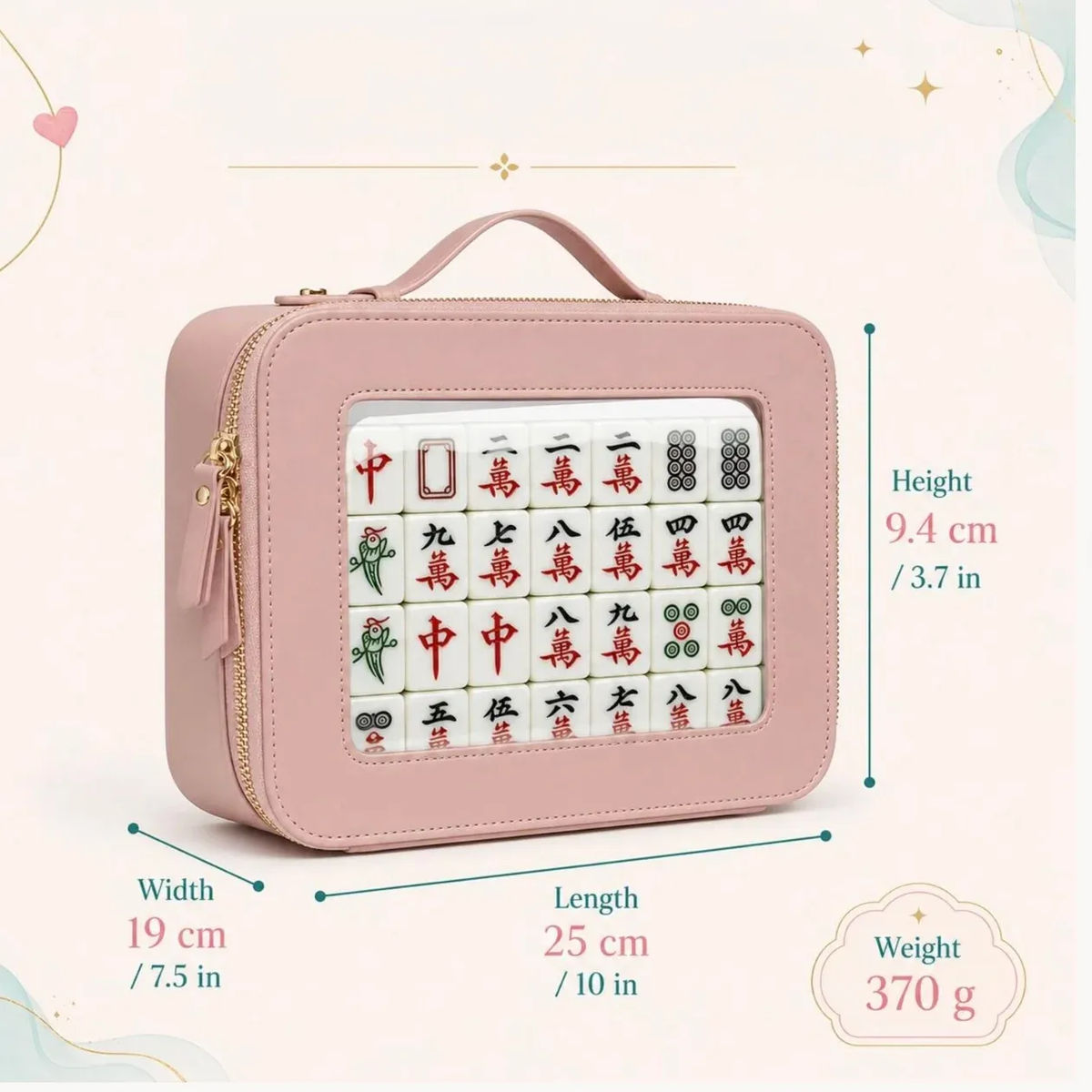
What's the fastest way to check your bag for wear and damage?
Run this quarterly inspection: (1) Unzip the main compartment and scan for tears, odors, or discoloration. (2) Check all fabric dividers and compartment zippers for sticking, misalignment, or fraying. (3) Inspect the bag's exterior seams, handles, and feet for splits or loose stitching. (4) Open each tile compartment and count Bam/Crak/Dot sets (should be four of each number 1–9, so 36 tiles per suit); verify winds (4 each), dragons (4 each), flowers (4), and jokers (8). (5) Test racks and pushers for cracks or loose joints by gently flexing them. (6) Look for any discoloration, mold, or pet hair. If seams are separating or zippers jam, dry-clean the bag lightly or contact the maker. Most damage comes from overstuffing, so resist the urge to pack snacks, scorecards, or cards in tile compartments. A well-maintained bag lasts years; a neglected one deteriorates in one season.
Storage Checklist: Before Putting Your Bag Away
Task | Frequency | Why |
Wipe tiles with dry cloth | After every game | Removes moisture, dust, hand oils |
Confirm all zippers close fully | Before storage | Prevents debris entry, maintains shape |
Check interior for moisture or odor | Monthly | Early warning of humidity or mildew risk |
Inspect seams, handles, feet | Quarterly | Catches wear before it becomes severe |
Count tiles and verify sets | Quarterly | Ensures nothing is lost or broken |
Replace silica gel (if humid climate) | Every 3–6 months | Maintains dry environment inside bag |
Move bag to different shelf | Yearly | Prevents one area from bearing constant weight |
How do travel and transport affect bag storage needs?
If you take your bag to a different player's home weekly, inspect it after each trip for new damage. Tiles can shift during car rides, and temperature swings from AC to outdoor heat stress compartments. Never leave a sealed bag in a hot car for hours; the interior pressure and heat can warp tiles. When traveling long distances, keep the bag in the passenger cabin rather than a trunk. After transport, let the bag sit indoors for 30 minutes before opening, so tiles return to room temperature. If you travel with your bag frequently, consider a reinforced travel bag with extra padding and a handle or shoulder strap—the better the design, the less stress during car trips. Regular transport is harder on a bag than static storage, so inspect zippers and seams more often. Players who host games at home can keep their bags in a cabinet; those who rotate venues should invest in a durable case.
🎁 See our most-loved mahjong sets & accessories →
What to check before you buy a bag for long-term storage
Before purchasing a bag, confirm it has:
Dedicated compartments for each tile suit and honors (not one loose space)
Quality zippers that glide smoothly and have sturdy pulls
Reinforced seams along the handle attachment points (high-stress areas)
Interior pockets for dice, scorecards, or spare jokers
Water-resistant or wipeable exterior fabric (not raw canvas that absorbs spills)
Enough height that fully loaded tiles don't compress or warp
Padding or rigid base to protect tiles from floor impact
If you're buying a set for the first time, choose from our best-selling collection where the bags are paired with proven tile designs and all components fit securely. Avoid bags without internal dividers or those marketed for other hobbies (craft bags, tool bags) that lack tile-specific compartments.
✨ Find your Mahstead set — free US shipping →
FAQ
Can I store my mahjong bag in a plastic bin or sealed container?
Yes, but only if the bin is kept in a dry, temperature-stable room. Sealed plastic can trap moisture if the bag is damp, so always air-dry the bag fully before sealing. A breathable closet or cabinet is safer than an airtight bin. If you use a bin, drill small air holes or leave a crack open to allow air circulation.
How often should I replace a worn-out bag?
If seams are splitting, zippers are broken, or the exterior is torn, replacement is overdue—a failing bag exposes tiles to spills, dust, and impact. If the interior dividers are intact but the exterior looks worn, you can use it for home storage only and buy a new one for travel. Most well-made bags last 3–5 years of regular weekly play; some last longer.
Should I remove the mat from the bag before storing?
Removing the mat is optional but reduces pressure on the bag's seams. If the bag has a wide, flat compartment for the mat, it's fine to leave it rolled inside. If the mat is squeezed into the space, unroll it, store it separately on a closet shelf or under a bed, and pack the bag lighter. This extends both the bag and mat lifespan.
Is it safe to store a mahjong bag in a garage?
Only if the garage is insulated and climate-controlled like a room. Uninsulated garages experience temperature and humidity extremes that damage acrylic tiles and warp compartments. Mice and insects are also common in garages. Keep your bag indoors in a closet or cabinet whenever possible.
What do I do if my bag gets wet or smells musty?
Open the bag completely and lay it flat in a dry room with a fan nearby for 24–48 hours. Wipe down all tile compartments with a dry cloth. If mold is visible on fabric dividers, use a diluted vinegar solution (1 part vinegar, 2 parts water) on a cloth and spot-clean, then air-dry again. Once dry, store in a location with lower humidity. If the smell persists, the bag may need professional cleaning or replacement.


View More
View More
View More
