
Racking a Tile in Mahjong: Examples & Technique
Last updated: Nov 23, 2026
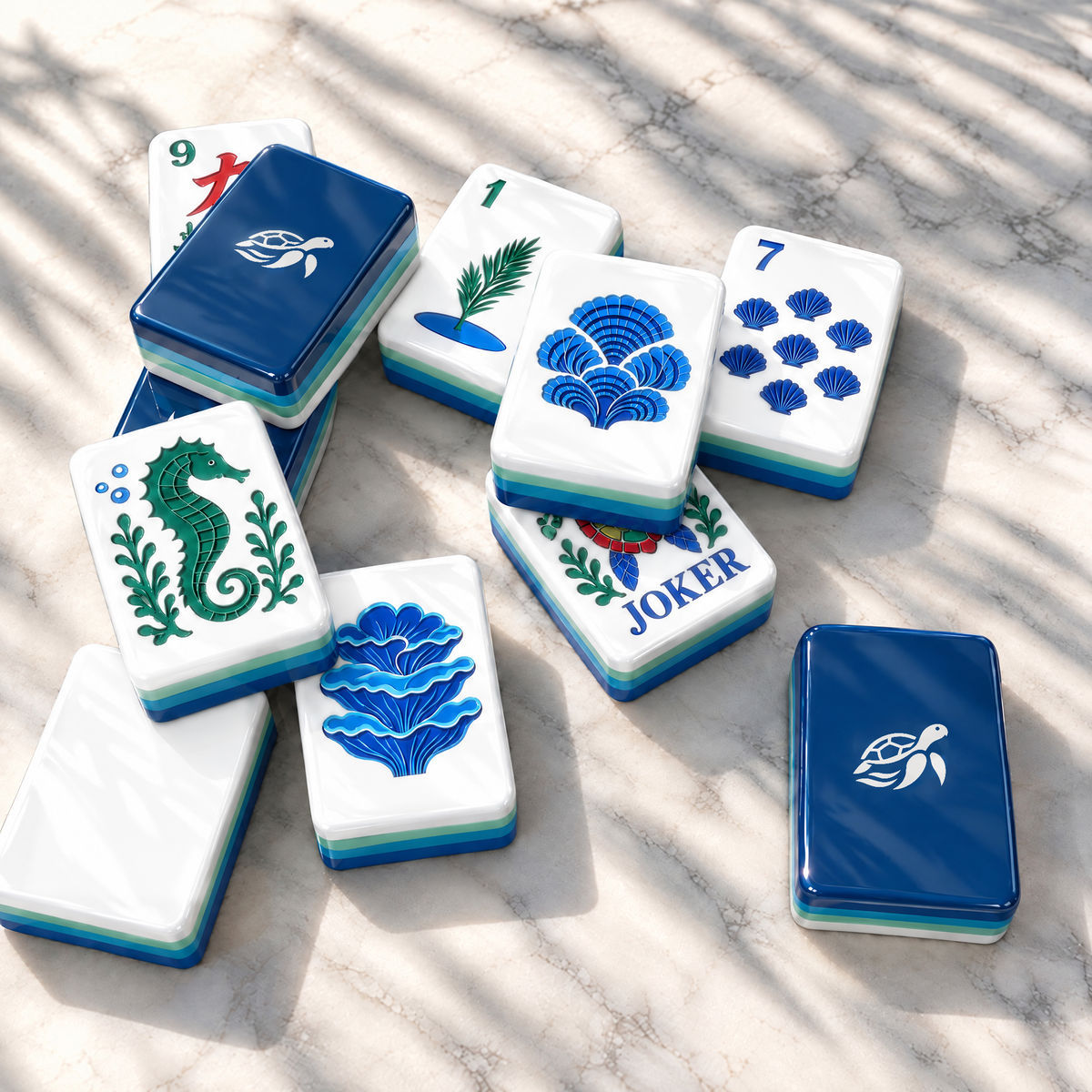
Racking a tile means placing it into your mahjong rack with pushers after you draw from the wall or the discard pile. In American mahjong, you arrange your 13 tiles (or 14 if you're the dealer or have just drawn) in descending order by suit and number—Bams, Craks, Dots, then honors (winds and dragons)—left to right. You use the pushers (small sticks that come with your rack) to slide tiles into place and keep them upright and hidden. Racking takes seconds once you know the order, prevents fumbling mid-game, and signals to other players that you're organized and ready. A good rack keeps the table calm and speeds up play. Mahstead's acrylic racks come with pushers designed to grip tiles smoothly without wobbling.
Racking a tile in mahjong means placing it into your standing rack after you draw, keeping your hand hidden and organized. In American mahjong, you arrange your 13 tiles (or 14 if you're the dealer or have just drawn) in descending order by suit and number—Bams, Craks, Dots, then honors (winds and dragons)—left to right. You use the pushers (small sticks that come with your rack) to slide tiles into place and keep them upright and hidden. Racking takes seconds once you know the order, prevents fumbling mid-game, and signals to other players that you're organized and ready. A good rack keeps the table calm and speeds up play.
Why does tile order matter in your rack?
Organizing by suit and number helps you spot pairs, pungs, and winning patterns instantly without broadcasting what you're hunting for. When your tiles are scrambled, you waste seconds searching, fumble when calling a hand, and often show tiles to other players by accident. The standard order—Bams 1–9, Craks 1–9, Dots 1–9, then all honors (winds and dragons mixed)—is universal in American mahjong clubs. Keeping that order is not a rule, but it's a table habit that separates calm players from panicked ones.

How do you rack tiles step-by-step?
Step 1: Pick up your rack and position it at a comfortable angle (roughly 45 degrees) so only you can see the face of your tiles.
Step 2: As you draw each tile, decide its suit: Bam (bamboo), Crak (character), or Dot (circle), or honor (wind or dragon).
Step 3: Insert the tile into the left-most open slot in your rack, then use your pusher to slide it rightward into its correct position among tiles of the same suit, with lower numbers on the left.
Step 4: For honors, group them to the right of your dots (or wherever your table convention places them), mixing winds and dragons in no strict order.
Step 5: After each draw, glance at your hand and slide tiles left or right to maintain the suit-and-number order.
With practice, this becomes muscle memory. Beginners often rack tiles during play, which slows the table; experienced players rack once after drawing and leave the hand alone until they call or discard.
What are common racking mistakes?
Mistake 1: Mixing suits. Placing a 5 Bam next to a 3 Crak makes your hand unreadable at a glance. You'll miss pairs or forced discards.
Mistake 2: Shoving tiles without sliding. Jamming a new tile into the middle of your rack without pushing the others aside can bend tiles or bend the rack itself, especially with acrylic sets.
Mistake 3: Racking while thinking. Fiddling with tiles when you should be discarding signals indecision and annoys other players. Rack during your draw phase, not your discard phase.
Mistake 4: Exposing your hand. Tilting your rack too far or holding it too low lets opponents glimpse your tiles, giving them an unfair advantage.
Mistake 5: Over-racking jokers. Jokers (wild tiles) can stand anywhere; don't spend time "perfecting" their position. Place them logically—next to the pair or pung they're filling—and move on.
Mistake 6: Not leaving room. If your rack is too full, you can't slide new tiles in cleanly. Always leave one empty slot open as you draw.
To avoid these, use a quality rack with smooth pushers. Mahstead's best-selling mahjong sets include racks with pushers engineered to grip and slide without catching, so you can rack and move tiles in one fluid motion.
How does racking differ in other mahjong variants?
Chinese Classical Mahjong: Typically uses walls of stacked tiles (face-down pairs) so no vertical racking; instead, players hold tiles in hand at chest level or lay them face-down in front of them.
Hong Kong Mahjong: Uses 13 tiles plus 1 drawn tile, racked similarly to American but without jokers; the hand is held, not in a standing rack.
Riichi Mahjong (Japanese): Tiles are held in hand and laid face-down on the table after discard; no rack at all. The tileset is 136 tiles (four suits of 1–9, four winds, three dragons, no flowers or jokers).
Taiwanese Mahjong: Uses standing racks like American mahjong but with 16 tiles per player instead of 13; the suit order and racking logic remain similar.
American mahjong is unique in requiring jokers and a rack. The rack serves a practical and social purpose: it keeps your hand private, speeds up play, and reduces table tension because no one can accuse you of hiding or revealing tiles. If you're hosting a mixed group or teaching newcomers, use a well-designed rack so everyone learns the right habit from the start.
🀄 Shop best-selling mahjong sets →

Real-world racking example: a winning hand
Imagine you're holding 9 Bam, 1 Bam, 4 Crak, 3 Crak, 2 Crak, 5 Dot, 2 Dot, 1 Dot, East Wind, White Dragon, Red Dragon, 5 Bam, White Dragon (13 tiles after the Charleston). Your rack should look like this, left to right:
Tile | Suit | Position |
1 Bam | Bam | 1 |
5 Bam | Bam | 2 |
9 Bam | Bam | 3 |
2 Crak | Crak | 4 |
3 Crak | Crak | 5 |
4 Crak | Crak | 6 |
1 Dot | Dot | 7 |
2 Dot | Dot | 8 |
5 Dot | Dot | 9 |
East | Wind | 10 |
White | Dragon | 11 |
White | Dragon | 12 |
Red | Dragon | 13 |
You've got a pair of White Dragons (positions 11–12), three Craks in a row (positions 4–6), and potential pungs forming. The pair is immediately visible, and when you draw the next tile, you know exactly where it goes. If you draw a 6 Bam, you slide it between the 5 and 9 Bam (or discard the least-useful tile). If you draw another White Dragon (making three), you'd have a pung and know you can't use a joker in that pung because jokers cannot fill a single tile or a pair—only exposed sets of 3+. A well-racked hand lets you make these decisions in seconds.
What to check before you buy a rack
Pusher grip: Can you slide a tile smoothly without it catching or falling out? Test the demo at a shop if possible, or read reviews mentioning ease of use.
Angle: Does the rack tilt enough to hide tiles from opponents while remaining stable on the table?
Tile spacing: Will your tiles fit without jamming? Acrylic tiles are slightly larger than bamboo, so check dimensions.
Material: Acrylic racks are durable, scratch-resistant, and modern-looking. Bamboo offers tradition and warmth but can warp over time.
Set bundle: If you're new to the game, buy a complete set with racks and pushers included rather than piecing together parts.
✨ Find your Mahstead set — free US shipping →
Practice racking at home before your first game
Set up your tiles at random (or draw a handful from a shuffled set). Sort them by suit and number without a rack, just to understand the order. Then place them in a rack. Do this five times in a row until you can rack a full hand in under 30 seconds. Watch yourself in a mirror to ensure your rack angle hides tiles completely. If you're hosting, ask your guests to arrive 15 minutes early and practice a mock draw and rack so no one feels rushed when the actual game begins. Smooth, confident racking sets a professional tone and eliminates one major source of new-player anxiety.
🎁 See our most-loved mahjong sets & accessories →

FAQ
Can I rack tiles out of order if I want?
Yes—there's no rule forcing a specific order. But doing so slows you down at call time, hides your hand from yourself (making it hard to spot winning combos), and confuses other players about your skill level. Table etiquette and competitive play both favor standard suit-and-number order.
Why do my tiles keep falling out of the rack?
Your pushers may not grip firmly, the rack angle may be too steep, or the tiles may be slightly warped. Check that the rack is clean (lint or dust weakens grip), that your pushers are straight, and that tiles are genuinely flat. If the problem persists, the rack or tiles may need replacement.
How fast should I rack a tile?
Less than two seconds per tile, once you're familiar with the order. That includes finding its position and sliding it home. Beginners take 5–10 seconds; experienced players are nearly instant because they're processing the tile's suit while reaching for its spot.
Do I have to use a rack, or can I hold tiles in my hand?
American mahjong requires a rack to keep tiles hidden and follow table standards. Holding tiles in hand is allowed only in casual play or when teaching total beginners, and even then it's frowned on because it slows the table and risks accidental reveals.
What's the difference between racking and calling a hand?
Racking is inserting a tile into your rack after drawing. Calling a hand (or "going mahjong") means you've completed one of the patterns on the current year's National Mah Jongg League card and declare it by placing your tiles face-up on the table. Calling happens after racking and is a separate action.
How do I know if my rack is the right size for my tiles?
American mahjong racks are standardized for standard-sized acrylic or bamboo tiles. Before buying, check that the rack's tile slots match your tile dimensions (typically 1–1.2 inches square for acrylic). Oversized tiles won't fit; undersized racks will wobble. Mahstead sets pair racks and tiles for compatibility.


View More
View More
View More
