
Pusher Mahjong Rule Explained: How to Use Them Correctly
Last updated: Nov 23, 2026
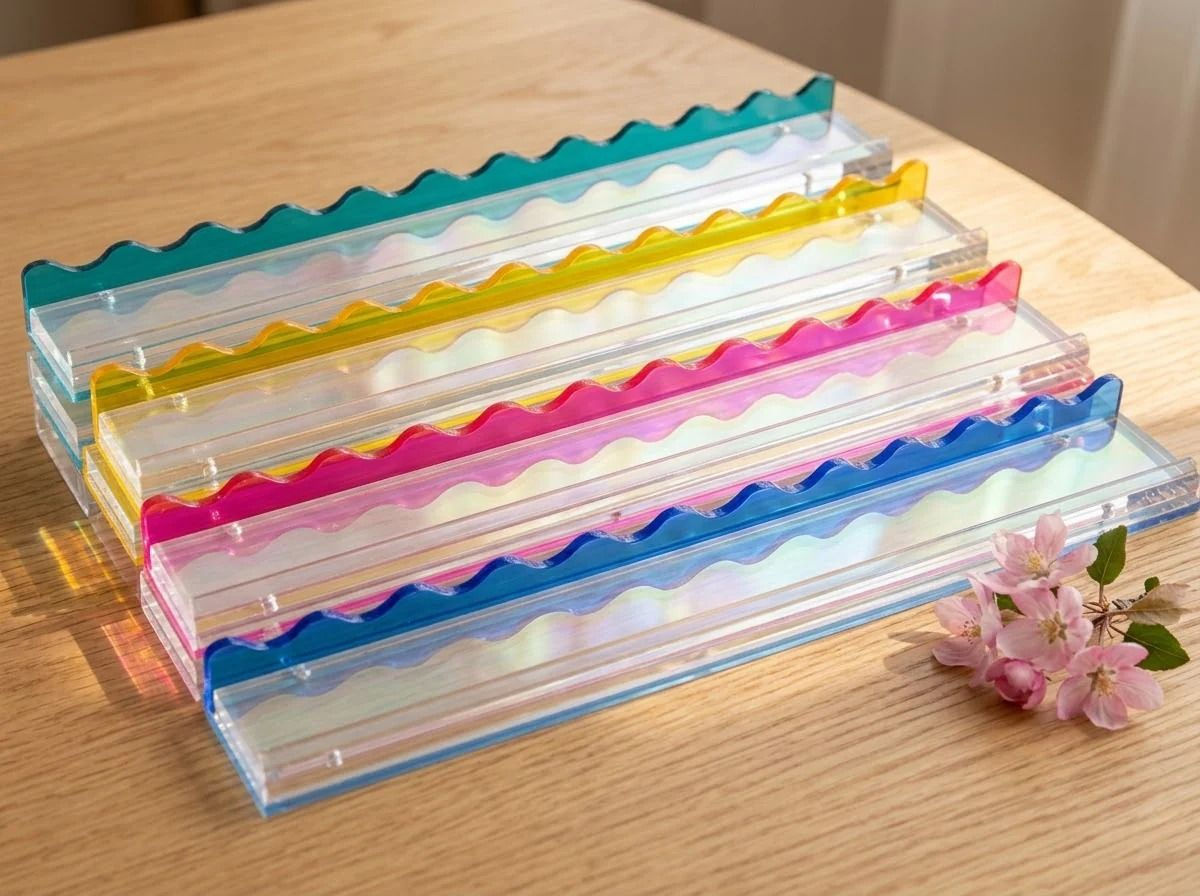
In American mahjong, pushers are flat sliding tools built into your rack that serve two purposes: they help you neatly arrange and conceal your tiles, and they move forward to publicly signal when you've formed an exposed pung, kong, or quint. When you expose a meld, you push the pusher-and-tiles forward so all players see it immediately; if you fail to push forward when required, other players may call foul. Pushers don't create melds themselves—they're purely organizational and communicative. Most American players keep pushers on racks with pushers for weekly home games or tournament play, though casual groups sometimes play without them. The rule prevents hesitation, confusion, and accusations of hiding tiles, keeping the table honest and games fast.
When you expose a meld in American mahjong—a pung, kong, quint, or sextet—you push the tiles and the pusher forward toward the table edge so every player sees your meld at once. This act is the pusher rule. It eliminates ambiguity: there's no question whether you meant to expose tiles or were still deciding. If you show tiles without pushing the pusher, experienced players may remind you to push; if you refuse or "forget" repeatedly, table mates can declare it a violation and demand you retract the meld. The rule exists to keep play transparent and prevent last-second tile hiding.
What exactly do pushers do?
A pusher is a thin, flat tool—usually plastic, wood, or acrylic—that sits horizontally inside your rack, behind your tiles. When you form an exposed meld, you slide the pusher and the meld forward together as one unit, creating a visible boundary between your hand and your exposed tiles. The forward position signals to the entire table: I have committed this meld publicly. Once a pusher is forward, you cannot take the tiles back or rearrange them; the meld is locked. This mechanical lock prevents accidental or deliberate misplay.

When must you push your pusher forward?
You must push forward immediately after you:
Draw or pick a tile that completes a pung, kong, or quint you wish to expose.
Claim a discard to form an exposed meld (e.g., "Pung!").
Receive a tile during the Charleston that forces an exposed hand structure, though the Charleston itself is a pre-game tile exchange—see the Charleston explained for that ritual.
You do not push during the Charleston. You do not expose sequences (chows); American mahjong never allows exposed chows. You do not push for pairs or concealed pungs—those stay hidden behind your rack. If you draw a tile that completes your winning hand on your turn, you may keep it concealed and call "Mahjong" without pushing; exposure is optional at winning.
What happens if you forget or refuse to push?
Most casual groups at home simply remind you: "Push your pusher." If you've exposed tiles but the pusher is not forward, any player can call you out before the next discard. You then push it forward. If the game is more formal (league play, tournament), failing to push on time may result in a penalty or, in some rulesets, forced retracement of the meld.
A common mistake is pushing only the tiles but leaving the pusher behind, or pushing the pusher but keeping tiles hidden. Both defeat the purpose. The rule works only when pusher and meld move forward together. Another error: pushing forward too early, before your meld is complete. Wait until the third (or fourth, fifth, sixth) identical tile is in your hand—then push.
Scenario | Action | Outcome |
You draw a tile that gives you three 5 Bams | Push pusher and pung forward as one | Meld is locked; all see it |
You claim a discard to complete a kong | Push pusher and four tiles forward immediately | Kong is exposed and scored per hand |
You keep tiles concealed in your rack | Do not push | Tiles remain hidden; scorer cannot verify |
Opponent claims your discard but doesn't push | Call them out before next discard | They must push or retract |
You push tiles forward but pusher stays back | Other player points it out | Push the pusher forward to complete rule |
🀄 Shop best-selling mahjong sets →
Why pushers matter for hosting weekly games
If you host a regular game, pushers keep the table honest and the pace brisk. Without them, players can hem and haw—"Am I exposing this or not?"—and tile positions become unclear. Pushers eliminate that friction. They also make scoring transparent: when the hand ends, everyone can instantly see which melds were exposed and count points. Players who invest in mahjong racks with pushers report fewer disputes and faster rounds. On an uncluttered mahjong mat, pushers create clear sightlines so no one can argue they didn't see a meld.
For beginners, pushers force discipline: they teach you to commit to a meld only when it's truly complete. You won't accidentally push a pair or a concealed pung. Over time, pushing becomes second nature—a rhythm that speeds play and sharpens focus.

Pushers in other mahjong variants
Chinese, Hong Kong, and Riichi mahjong also use racks and pushers, but the mechanics differ slightly. In Chinese mahjong, exposed melds are arranged in a fixed row in front of you, and pushers aren't typically required—the layout is clear enough. In Hong Kong mahjong, racks are often simpler and pushers less central to the rule system. In Riichi mahjong (Japanese), exposed melds must be declared loudly and rotated to show the meld direction; pushers are minimal. American mahjong is unique in binding the pusher to the meld rule so strictly. If you ever switch variants at the table, clarify the pusher expectation first.
🎁 See our most-loved mahjong sets & accessories →
Common mistakes and how to avoid them
Mistake 1: Pushing prematurely. You draw the second tile of what might become a pung. Don't push yet—you need three identical tiles. Wait until the third is in hand.
Mistake 2: Pushing without the pusher. You slide three tiles forward but the pusher stays in the rack. This creates confusion. Always push pusher and tiles as one motion.
Mistake 3: Hiding an exposed meld behind the rack. Some players try to keep an exposed meld semi-concealed to hide their strategy. The rule forbids this—exposure means the meld is fully visible and public.
Mistake 4: Failing to announce and push simultaneously. In many groups, you must say the meld name and push at the same moment—"Pung!" as you push. Silence or delay invites challenges.
Mistake 5: Pushing a pair or sequence. Remember: American mahjong never exposes sequences. Only pungs, kongs, quints, and sextets can be pushed forward. Pairs must always stay concealed.
To avoid these, practice at home before your first game. If you're new, ask your host to walk you through a mock push or two. Most hosts are happy to explain. Watch experienced players—you'll see the rhythm: draw, complete, push, announce, all in one smooth gesture.
What you'll need
If you're hosting regularly, mahjong racks with pushers are essential. A quality rack keeps tiles organized, pushers accessible, and your game looking professional. Pair your racks with a mahjong mat to define the play area and protect your table. For travel or storage, a mahjong bag or case keeps your set and racks safe. If you're upgrading your set or starting fresh, our best-selling mahjong sets come ready to play and include racks with integrated pushers.
For a deeper dive into how a full American hand works, see how to play American mahjong.
What to check before you buy racks with pushers
Pusher material: Look for pushers that slide smoothly without warping. Acrylic and quality plastic last longer than thin wood.
Rack height: Pushers should be easy to reach; too-tall racks can make pushing awkward.
Tile fit: Ensure the rack accommodates your tile size (standard American tiles are about 1 inch wide).
Number of sets: Hosting four players? You need four racks with pushers. Order all four at once to ensure matching design and function.
Storage: Check that your racks fit in your bag or case if you transport them.
✨ Find your Mahstead set — free US shipping →
FAQ
Do I have to use a pusher, or is it optional?
In casual home games, pushers are strongly encouraged but not always enforced; some groups play without racks entirely. In league or tournament play, pushers are mandatory. We recommend always using them—they prevent disputes, clarify melds, and keep the game flowing fairly.
What if my pusher gets stuck or breaks?
A stuck pusher usually means tile friction or dust. Gently wiggle it and clean the rack. If it's damaged, a spare pusher or a full replacement rack is the best fix. Quality racks rarely break under normal use.
Can I push my pusher forward before I draw a tile, to signal I'm about to expose?
No. Pushing signals a completed meld, not an intention. Push only after your meld is in hand and final. Pushing early can confuse other players or be ruled a foul in formal games.
If I expose a pung and then draw a fourth tile, do I push again for the kong?
Yes, or rather: you push the pung initially, then when the fourth tile arrives, you push the kong forward. Some groups let you keep the first three forward and add the fourth; check your table's convention before the game starts.
What's the difference between a pung and a kong, and when do I push each?
A pung is three identical tiles; a kong is four. Push both forward when they're complete. A kong is worth far more points, so exposing it is usually strategic. See how jokers work if your kong includes joker replacements.
Do I push a winning hand forward?
Not required. If you win on a concealed hand, you can call "Mahjong" without exposing. If your winning hand includes exposed melds, those would already be pushed from earlier in the round. At winning, you may lay your complete hand out for scoring verification, but this is different from the in-game pusher rule.


View More
View More
View More
