
Non-Slip Mahjong Mat: Choose by Game Type & Table Size
Last updated: Nov 23, 2026
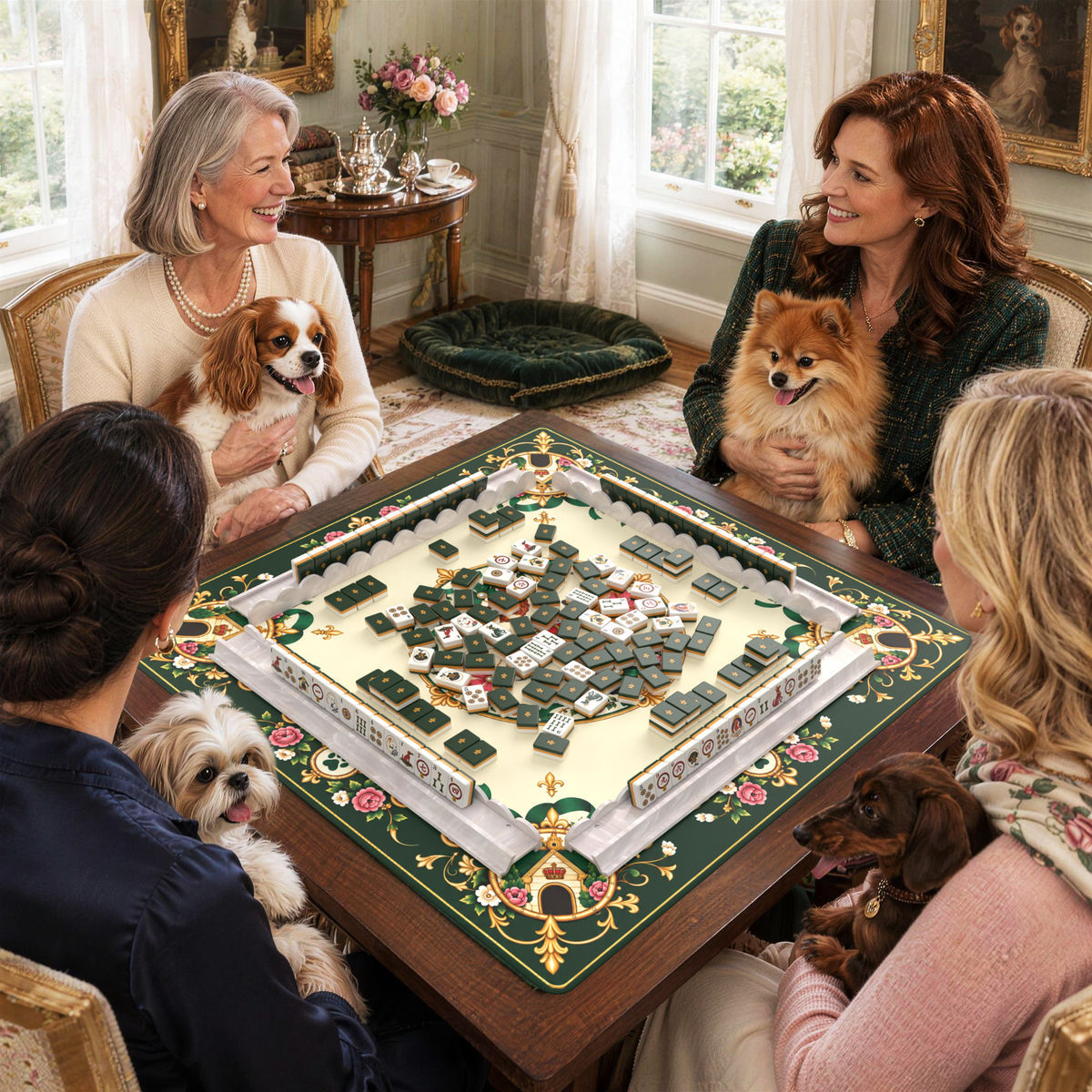
A non-slip mahjong mat is a flat fabric or rubber play surface that anchors tiles, racks, and dice so they don't migrate during shuffles, knocks, or quick passes. Mats come in standard sizes (around 27–35 inches square) to fit a dining table or dedicated mahjong table, with grip surfaces ranging from light (felt-like) to heavy-duty (rubberized). Most players choose one based on their table material—glass and laminate need more grip than felt-topped tables—and whether they host casual weekly games or tournaments. We stock non-slip mahjong mats in multiple sizes and designs, shipped free across the US. The mat protects both your tiles and your table surface, making setup and cleanup faster. Budget ranges from modest to mid-tier depending on size, thickness, and print quality.
A non-slip mahjong mat is the unsung anchor of a smooth game night. Without one, tiles creep when you shuffle, racks slide when the wall is built, and someone inevitably bumps a live hand mid-play. We've watched countless games derailed by a missing mat—the East player knocks the tile rack reaching for a Crak, and suddenly nobody's sure whose discard is whose. A good mat solves that.
What does "non-slip" actually mean for mahjong play?
Non-slip means the bottom surface grips your table (wood, glass, laminate, or felt) so the mat itself doesn't move, while the top surface has enough texture to keep tiles and racks from sliding across the mat during shuffles and wall-building. Modern mahjong mats use either a felt-like weave on top with a rubber or adhesive base underneath, or a heavier rubberized composite. The term "non-slip" refers to both directions: the mat stays put on your table, and tiles stay put on the mat. Light grip works fine for wooden tables; glass and high-gloss surfaces demand a stickier base to prevent the mat from creeping.
How do you pick the right mat size for your table?
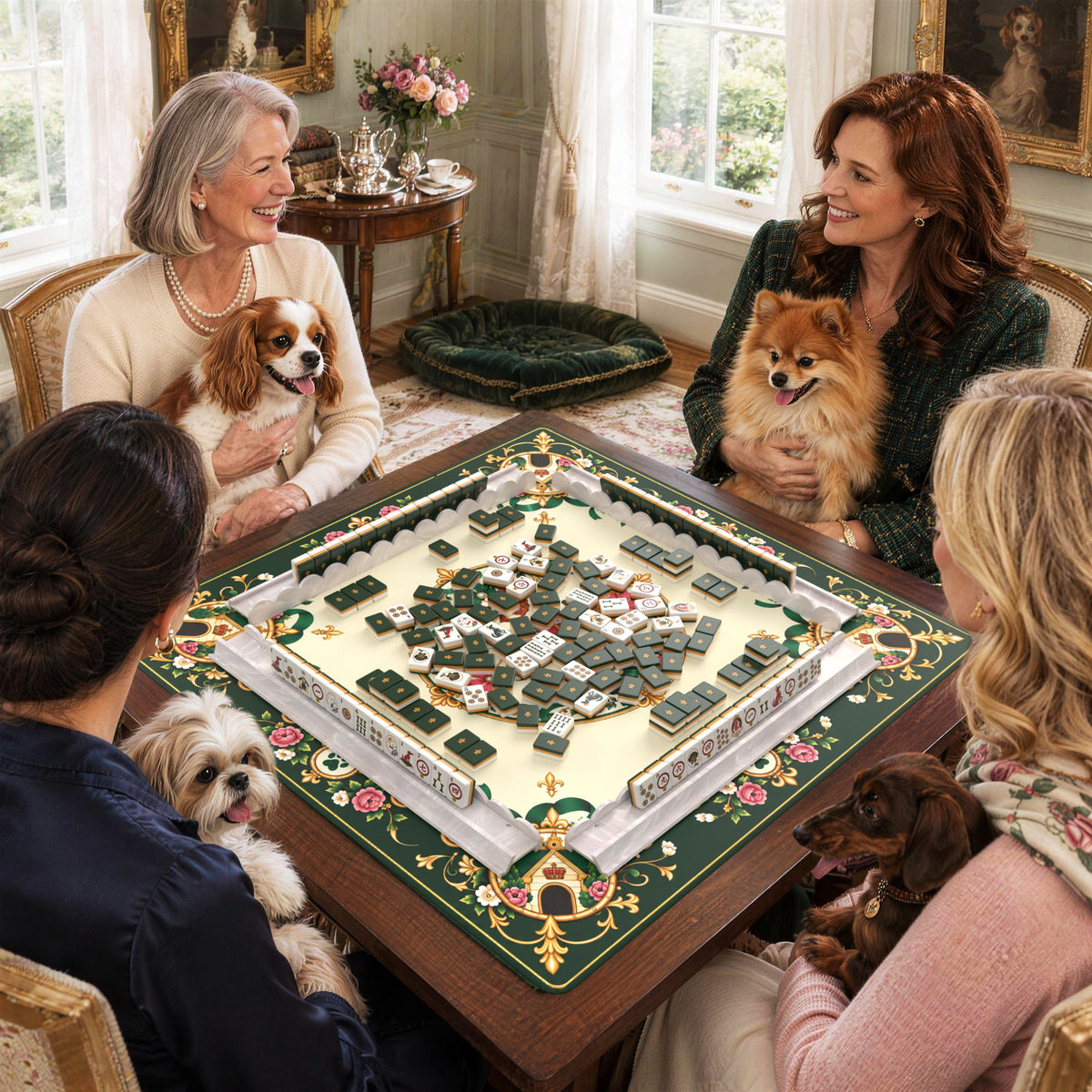
Measure your table's play surface—the area where the four players sit around the center wall. Most dining tables are 36–42 inches square; a mat should cover that zone without hanging off the edges or bunching up when you move chairs. Standard mats range from 27 inches square (cramped 2-player or small tables) to 35+ inches (full four-player setups on large tables or dedicated mahjong tables). If your table is 36 inches square, a 32–34-inch mat gives clearance for racks on all four sides. Measure twice: an undersized mat leaves tile-prone gaps at the edges, and an oversized mat wrinkles or folds when racks are positioned. The mahjong mats collection shows dimensions for each design; compare against your table before ordering.
🀄 Shop best-selling mahjong sets →
What's the difference between felt-topped and rubber mats?
Felt mats have a soft fabric playing surface (similar to card-table felt) with a rubber or latex grip base; they're quieter, gentler on tiles, and feel more like a traditional game space. Rubber or composite mats are thicker, more durable for heavy use (tournament play, weekly groups that host year-round), and shed less debris. Felt mats require more care—they can stain, pill, or fray at edges—but many players prefer their sound and tactile feel. Rubber mats hide wear better, wipe clean easily, and outlast felt by years if cared for. For a casual home game, felt offers comfort; for a permanent or high-traffic setup, rubber pays off. Both are non-slip when properly made; the choice depends on how often you play and how much maintenance you're willing to do.
How thick should a mat be, and does thickness matter?
Most mahjong mats are 1/8 to 1/4 inch thick. Thinner mats (1/8 inch) roll up easily and weigh less—ideal if you store or travel with your mat. Thicker mats (3/16 to 1/4 inch) dampen the sound of tile shuffles and knocks, provide more cushioning for tile edges, and feel sturdier underfoot. Thickness doesn't affect grip unless the base is poorly made. A 1/8-inch mat with a quality rubberized base will grip better than a poorly bonded 1/4-inch mat. For a permanent table setup, thicker is nicer; for travel or small-space players, thin and light matter more. All Mahstead mats are designed to remain stable at their stated thickness—no premium required for good grip.
Should you buy a generic vs. engraved or themed mat?
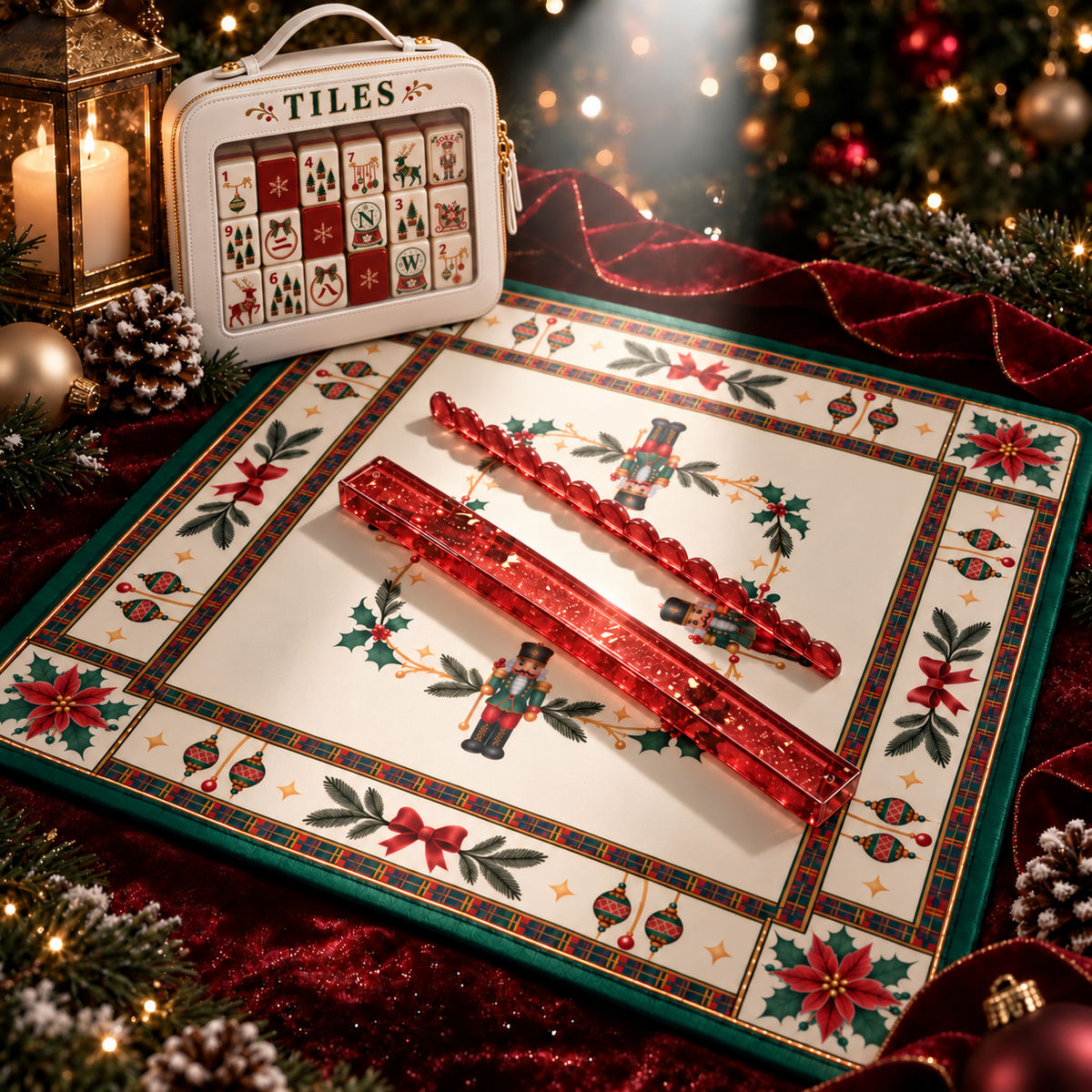
Generic solid-color mats (black, green, burgundy) suit any table décor and let your tiles and racks be the visual focus. Engraved or printed mats—featuring mahjong symbols, player names, local landmarks, or seasonal themes—add personality and make a great gift for the regular at your table. Engraved mats also help identify your mat if it travels (to tournaments, friends' homes, or storage). The trade-off: generic mats are easier to find as replacements, while custom designs age over time. If you're hosting a rotating game, a solid mat works; if you own a mat that's been with your group for years, a custom design captures that history. Browse themed and engraved options to see what resonates with your game.
Mat choice by game style
Game type | Grip level | Best mat type | Why it works |
Casual home (weekly, 4 players) | Medium | Felt or light rubber, 1/8″ | Comfortable, portable, easy to store |
Permanent home table | Medium–heavy | Rubber composite, 3/16″+ | Durability, sound dampening, year-round use |
Glass or high-gloss table | Heavy | Rubberized base, maximum adhesion | Prevents mat creep; felt alone slides |
Travel / potlucks | Light | Thin felt, compact roll | Fits bags, weighs little, sets up fast |
Tournament or club play | Heavy | Thick rubber, textured top | Withstands frequent shuffles, official feel |
🎁 See our most-loved mahjong sets & accessories →
What common mat mistakes should you avoid?
Buying too small. A mat that doesn't cover the full play zone creates dead zones at edges where tiles slide off or racks teeter. Measure your table first, then order one size up if you're unsure.
Ignoring your table material. Mats on glass tables must have a tacky rubberized base or they'll creep with every shuffle. Felt-based mats alone aren't enough grip for glass; pair them with a non-slip rug pad underneath if necessary.
Skipping the test shuffle. When your mat arrives, shuffle a few tiles on it before committing. If tiles or racks still slide, the mat's grip doesn't match your table's surface.
Storing it damp. Rubber mats can mildew if rolled up wet or stored in humid spaces. Wipe clean, dry fully, and store flat or loosely rolled in a cool, dry place.
Expecting a mat to fix a crooked table. A non-slip mat prevents movement, not wobbling. If your table rocks, level it first—a mat won't compensate for an uneven surface.
What should you check before you buy?
Measure your table's exact play zone (width and depth in inches; don't estimate).
Identify your table surface (wood, glass, laminate, felt) so you know how much grip you need.
Count how many players regularly sit (4-player mats are standard; if you host 2-player games, a smaller mat suffices).
Check whether your current mats slip or creep during active play (signs you need more grip).
Decide if portability matters—will this mat travel, or does it stay in one place?
Review the collection at Mahstead's mahjong mats to compare sizes, grip types, and designs that match your table's aesthetic.
Confirm dimensions in the product description before ordering (don't rely on thumbnail images).
Most players find their mat in the standard 30–34-inch range and stick with it for years. One purchase, one fewer variable to troubleshoot mid-game.
✨ Find your Mahstead set — free US shipping →
FAQ
Can you use a regular tablecloth or yoga mat instead of a mahjong mat?
No. Tablecloths bunch, slide, and wrinkle; yoga mats are too soft and compress unevenly. A mahjong mat is engineered for tile and rack stability. The grip and thickness are specific to the game's needs.
Do mahjong mats work on outdoor tables?
Yes, if the base is weather-resistant rubber. Felt mats absorb moisture and mildew outdoors. Check the product description to confirm UV and water resistance before placing a mat outside long-term.
How often should you replace a mahjong mat?
Rubber mats last 5–10 years with normal weekly play; felt mats may need replacing after 3–5 years if heavily used or stained. Inspect for peeling edges, loss of grip, or discoloration—those are signs of end-of-life.
Can you fold a mahjong mat for storage, or should it be rolled?
Rolling is gentler and preserves the base grip better. Folding can crease the mat permanently, especially thick rubber ones. Roll loosely around a tube or store flat if space allows.
What's the difference between a mahjong mat and a mahjong table cover?
A mat is standalone and sits on your existing table; a table cover drapes over a mahjong table frame and may have pockets for racks and tiles. Mats are portable; covers are semi-permanent. See mat vs. table cover for a detailed comparison.
Do you need a mat if you're using wooden racks with pushers?
Yes. Racks still slide on slippery surfaces; a mat keeps both the racks and the play zone stable. Racks on a non-slip mat create a solid foundation for the wall and discards.


View More
View More
View More
