
Bettor in Mahjong: Examples, Rules & When to Call
Last updated: Nov 23, 2026
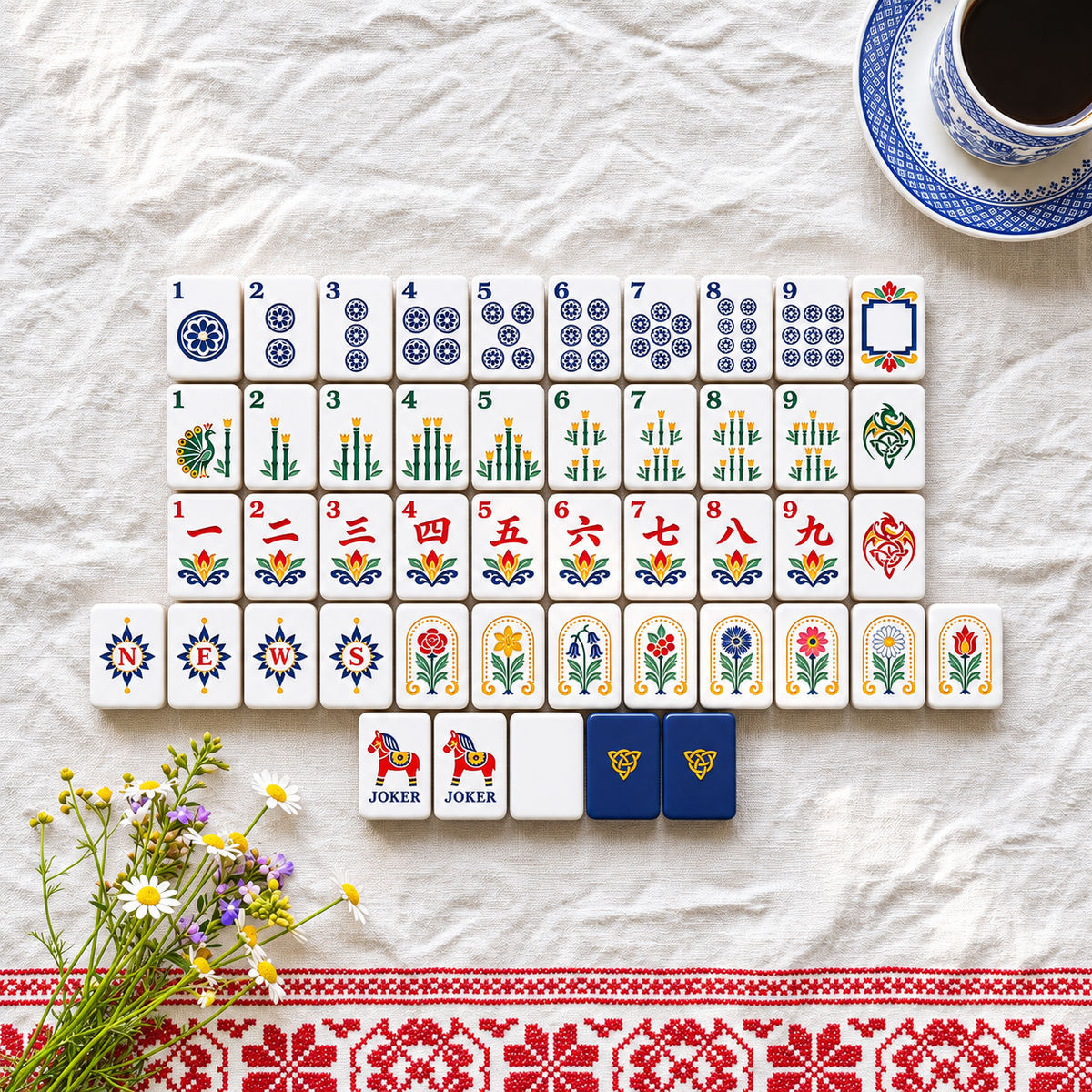
In American mahjong, the bettor is the player holding a completed legal hand according to the current year's card. You become the bettor the moment you draw or receive a tile that fills your last needed position—your hand is then "clean" (all tiles matching a single line on the card). You must declare your win by saying "Mahjong" aloud and placing your tiles face-up in the pattern you played. Bettors score points from the other three players; the amount depends on the hand's difficulty level on the card and whether it was a self-draw (zimo) or a discard you called. Beginners often rush the declaration or miscount their jokers, so verify your tiles match the card line exactly—including all-Bams, all-Craks, all-Dots, wind combinations, and dragon positions—before announcing. We recommend keeping a best-selling mahjong set within reach so your tiles are clear, consistent, and easy to verify under pressure.
You've drawn your last tile. Your hand is complete. But is it a legal win? And more importantly, are you the bettor?
In American mahjong, the bettor is simply the player whose hand matches one complete line on the National Mah Jongg League card for that year. That's it. But the stakes—and the rules—surrounding that moment are where most new players stumble.
What makes you the bettor?
You become the bettor the instant your 14-tile hand aligns perfectly with one of the card's published patterns. That final tile—whether you drew it from the wall or called a discard—is your trigger. Your hand must be "clean": every tile must belong to that single card line, with jokers filling only the positions the card allows. The moment you're certain, you announce "Mahjong" loudly enough for everyone to hear, then expose your tiles in the exact order shown on the card. You don't get points for being close. You don't get points for almost having a hand. Until you declare and match, you're still drawing.
🀄 Shop best-selling mahjong sets →

How does calling work when you're the bettor?
When you believe you're the bettor, you announce "Mahjong" and immediately lay down your tiles face-up in rows that mirror the card line you matched. Your opponents then verify your claim by checking each tile against the card. If your hand is legal, you win points from all three players based on the card's point value for that line. If you're wrong—a tile is missing, a joker is misplaced, or the pattern doesn't exist on today's card—you've declared false. In American mahjong, a false declaration means you pay a penalty (typically double or triple the hand's value) to each player. That's why we pause before calling. Verify the tile count (exactly 14). Check your joker placement (never in a single tile or pair). Match the suit order. Read the point total. Then call.
The bettor must also say whether they drew the winning tile themselves (self-draw) or called it from another player's discard. Self-draws usually score higher because they show more skill. Discards earn you the win but lower points—so don't volunteer that information until your hand is exposed and verified.
What are common mistakes bettors make?
Missing a joker limit: American mahjong allows jokers only in exposed melds (pungs, kongs, quints, sextets)—never in a single tile or pair. New bettors frequently miscalculate, thinking they can "hide" a joker somewhere. The card explicitly marks which positions accept jokers. If you don't match those positions exactly, your hand is false.
Misreading the card line: The National Mah Jongg League card arranges hands by section (year, month, and theme). Two hands can look nearly identical but belong to different rows. We recommend how to read the mahjong card before assuming you know which line you're playing. A single misread costs you the hand and triggers a penalty.
Counting wrong: You must have exactly 14 tiles to be the bettor. Count aloud with a teammate or opponent if you're uncertain. Miscounting—especially with jokers—is the most common false declaration we see at the table.
Calling too quickly: The rush to declare before someone else draws is real, but a five-second pause to verify is worth far more than a penalty. Seasoned players lay out their hand silently first, triple-check it, then call.
Confusing tile orientation: Some card lines show honors (winds and dragons) in specific orders. A Green Dragon doesn't replace a Red Dragon, even though both are dragons. The card is literal. Your hand must match exactly.
Mistake | What Happens | How to Avoid It |
Joker in a pair | False declaration; pay triple | Check card positions before calling |
Tile miscount | False declaration; pay triple | Count 14 tiles twice, say it aloud |
Wrong card line | False declaration; pay triple | Verify the line section and pattern match |
Self-draw vs. discard confusion | Wrong point calculation | Announce which before laying down |
Misread suit (Bam vs. Crak) | False declaration; pay triple | Look at the bamboo stick or the crab symbol |
🎁 See our most-loved mahjong sets & accessories →
How are points calculated once you're the bettor?
Once you've declared Mahjong and your hand is verified, each player pays you points based on the line's value on the card. The card shows a number (usually 20–80 points per line, though some special hands score higher). If you self-drew the winning tile, you collect that full amount from each player. If you called a discard from one player, you typically collect double from that player and the standard amount from the other two (rules can vary by group, so confirm your house rules before the first hand).
The bettor's score is tallied at the end of the hand. Over a 16-hand game session (four winds × four rounds), bettors accumulate points across all wins, and the player with the highest total at the final wind wins the overall game. Scoring is transparent: everyone sees the card line, everyone counts the points, no guessing.

When should you NOT call if you think you're the bettor?
If there's any doubt—if a single tile looks wrong, if you're not 100% certain you drew or called correctly, if the card line is ambiguous—don't call. Wait for the next hand. One avoided false declaration saves you far more points than the hand would have earned you.
Also: never call if you haven't completed the Charleston (the tile-passing ritual before play). If play hasn't begun, you're not the bettor yet—you're still arranging. If play has begun and you haven't drawn yet, calling is impossible. The bettor must hold exactly 14 tiles drawn or called during active play.
Bettors also can't call if they've violated a rule (say, if they exposed a tile illegally or played out of turn before reaching a complete hand). Stick to the rules throughout the hand, and you'll have no surprises when you're ready to call.
How does the bettor role differ from other variants?
In Chinese mahjong (Hong Kong, Cantonese, or Mandarin play), any player can declare a win by calling "Hu" with 14 tiles, and chows (sequences like 1-2-3) count as melds. You can also call a discard even if it's not your turn, and the hand ends immediately. American mahjong is stricter: only one card per year, only exposed melds (no sequences), no mid-turn calling, and bettors must match the exact card line.
In Riichi (Japanese mahjong), the bettor is called the "tsumo" (self-draw) or "ron" (discard win), and the scoring system is completely different—based on point multipliers and fan (hand complexity), not a published card. Riichi also uses 136 tiles and allows open and closed melds; American uses 152 tiles and restricts exposed melds strictly.
For American mahjong specifically, being the bettor means you're the only winner of that hand, and your win is final once verified. No ties, no splitting the pot. Learn the full American rules to master the bettor's role.
What to check before you call "Mahjong"
Tile count: Exactly 14?
Joker placement: Only in exposed melds, never in a pair or single?
Card line match: Does every tile match the card exactly—suit, number, honor, order?
Turn order: Is it your turn, and have you drawn or called a tile this turn?
House rules: Self-draw or discard points—do you know your group's scoring multiplier?
✨ Find your Mahstead set — free US shipping →

FAQ
Can I call "Mahjong" if I draw a tile but haven't played it yet?
No. You must actually draw the tile and add it to your hand first. Once you've drawn and verified that your 14-tile hand matches a card line, then you call. Calling before drawing, or before the tile is in your hand, is a false declaration.
What if my hand matches two different card lines?
Choose one line and call based on that pattern. Once you've declared Mahjong with a specific line, your hand is locked to that line. If your claim is verified, you're the bettor for that hand. If disputed, you pay the penalty. Matching two lines isn't an advantage—it's a risk, so pick the clearest match.
If I'm the bettor and self-drew, do I get paid more than a discard call?
Yes, typically. Most groups award self-draws at the full card value from all three players. Discard calls earn you double from the player who discarded and the standard amount from the other two (rules vary by group, so confirm house rules before playing).
Can I call "Mahjong" if I picked up a tile by mistake and now my hand is one over?
No. You must have exactly 14 tiles to be the bettor. If you've drawn or picked up an extra tile, you've broken the hand. Put it back, discard legally, and your chance to be the bettor this turn has passed.
What happens if two players think they're the bettor at the same time?
In American mahjong, only one player can be the bettor per hand. If you both believe you have a legal win, the first player to clearly announce "Mahjong" claims the hand, and their tiles are verified. If that declaration is false, they pay the penalty. The second player's claim is then ignored for that hand—the hand is over.
Do I have to announce "Mahjong" out loud, or can I show my tiles silently?
You must announce "Mahjong" aloud so all players hear you. Silence is not a valid declaration. Say it clearly and then lay your tiles face-up in the pattern matching the card. That's the official moment you become the bettor.


View More
View More
View More
