
Nine Gates Mahjong: Meaning, Points & Hand Rules
Last updated: Nov 23, 2026
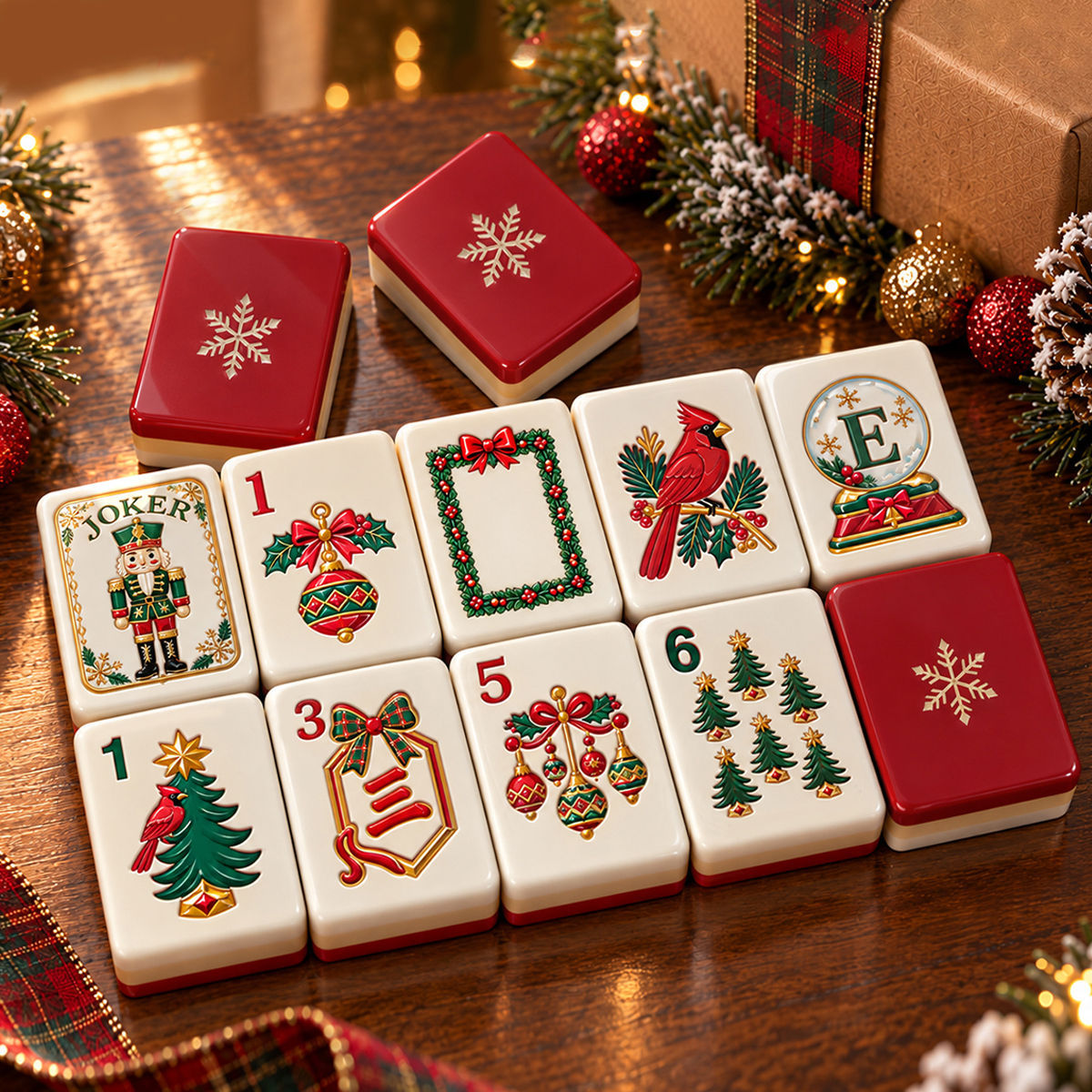
Nine Gates is an American mahjong hand composed of one suit's terminals (1 and 9) and all middle numbers (2–8), plus one extra tile from the same suit to form a pair. It appears on the current year's National Mah Jongg League card under single-suit patterns and scores between 40 and 50 points depending on whether it's melded or concealed. The hand requires exactly eight distinct tiles from one suit (Bams, Craks, or Dots) plus a pung, kong, quint or sextet of any one of those numbers, making it statistically one of the rarest completions in American mahjong. You'll need a 160-tile set and the current card to play; our best-selling mahjong sets come complete with tiles, card holder, and study guides to help you learn patterns like this one.
What does "nine gates" actually mean in mahjong?
Nine Gates refers to the nine numeric positions (1, 2, 3, 4, 5, 6, 7, 8, 9) in a single suit. The "gate" metaphor comes from classical Chinese mahjong, where gates represent passages through numbered sequences. In American mahjong, the Nine Gates hand specifically means you hold the terminals (1 and 9) plus all middle pips (2–8) in one suit, then complete that hand with a pung, kong, quint or sextet of any single number from that same suit. For example: one of each (1, 2, 3, 4, 5, 6, 7, 8, 9 Bams) plus a pung of 3 Bams = Nine Gates in Bams.
Why is nine gates so hard to complete?
You need exactly eight different tiles from one suit (1–9) and then a grouping of three, four, five or six copies of one specific number from that same suit. That's ten tiles total—nearly 7% of your hand—all from a single suit. Since each tile appears only four times in the deck and jokers must stay in reserve, the statistical likelihood of drawing the exact combination before another player melds the tiles is extremely low. Most players go seasons without completing this hand; it's considered a game highlight when someone does.

Where do you find nine gates on the card?
The National Mah Jongg League card organizes hands by category: single-suit runs, honor pairs, consecutive pungs, and so on. Nine Gates always appears in the single-suit section, listed as "1–9 + pung/kong/quint/sextet" or similar notation. The card is issued every spring and changes annually, so the exact position and available point values shift year to year. You must use the current card to play; hands from previous years don't count. If you're new to reading the card, our guide to how to read the mahjong card walks you through every section.
How many points is nine gates worth?
Nine Gates typically scores between 40 and 50 points on the current card, depending on whether you've melded (exposed) tiles or kept the hand concealed. Concealed hands—where you don't show any tiles until you go out—always score higher because they're harder to achieve. Melded versions (where you've exposed one or more groupings during the game) score less but are still premium. The exact point value appears on the card each year; check the single-suit section to see this season's scoring. Scoring in American mahjong follows strict rules; read American mahjong scoring for the full system.
🀄 Shop best-selling mahjong sets →
How does nine gates differ from other mahjong variants?
Variant | Nine Gates Rule | Point Range | Hand Type |
American | One suit: 1–9 + pung/kong/quint/sextet | 40–50 | Annual card |
Chinese | One suit: 1–9 (terminal/honor hand) | 80–160 | Closed hand; varies by region |
Hong Kong | One suit: 1–9 terminal tiles only | 88 points | Limit hand (maximum payout) |
Riichi | Kokushi (13 unique terminals/honors) | Mangan or higher | Separate hand entirely |
American mahjong's Nine Gates is strictly limited to a single suit with a required pung, kong, quint or sextet grouping—no sequences allowed, since American mahjong has no chows. Chinese mahjong's version, called a "Thirteen Terminal" or similar, often allows more flexible grouping and scores on an entirely different scale. Hong Kong mahjong treats it as a limit hand (maximum win payout). If you play multiple variants, keep the current American card visible during games to avoid confusion.

What's the strategic play when hunting nine gates?
Most players chase Nine Gates early only if they've already drawn several tiles from one suit during the Charleston (the tile-passing ritual before play). If you have, say, a 1 Bam, three middle Bams, and a 9 Bam after the Charleston, keep that line and discard liberally from other suits. Watch what opponents pass and discard—if 5 Craks or 6 Dots come around repeatedly, your opponents aren't building those suits, so you have a clearer draw path. Never sit on Nine Gates if you also have a backup pattern in hand; pivot to the stronger option if Nine Gates stalls after two or three rounds. Jokers are your accelerator: a single joker in your chosen suit can stand in for any missing number, turning four scattered tiles into a viable grouping.
Read the Charleston explained to master the tile-passing phase—a solid Charleston can set up Nine Gates from the start.
🎁 See our most-loved mahjong sets & accessories →
What tiles do you need for nine gates in each suit?
Suit | Terminals | Middles | Grouping | Example Hand |
Bams (Birds) | 1 Bam, 9 Bam | 2–8 Bams | Pung/Kong/Quint of any | 1, 2, 3, 4, 5, 6, 7, 8, 9 + ⊕ + ⊕ 5 (pung) |
Craks | 1 Crak, 9 Crak | 2–8 Craks | Pung/Kong/Quint of any | 1, 2, 3, 4, 5, 6, 7, 8, 9 + ⊕ + ⊕ 3 (pung) |
Dots | 1 Dot, 9 Dot | 2–8 Dots | Pung/Kong/Quint of any | 1, 2, 3, 4, 5, 6, 7, 8, 9 + ⊕ + ⊕ 7 (pung) |
The grouping (that repeated tile) can be a pung (three identical), kong (four identical), quint (five identical) or sextet (six identical). The remaining tile becomes a single, so your hand contains exactly ten tiles when complete—nine distinct numbers plus the grouping element.
What's the mistake that kills nine gates dreams?
The most common error is confusing "nine gates" with a nine-tile sequence (1–9 as a sequence of singles). American mahjong forbids sequences (chows)—you cannot call or expose a run like 1–2–3. Nine Gates must include a pung, kong, quint or sextet; it's never just nine singles. A second mistake is using a joker in the pair. American mahjong rule: jokers can never be used in a pair or a single tile. They can only substitute within a pung, kong, quint or sextet. Third mistake: forgetting to check the card. The current National Mah Jongg League card changes every spring. Nine Gates might not even be on this year's card, or its point value might differ from last season. Always verify before you commit to a hand.
✨ Find your Mahstead set — free US shipping →
What to check before you buy a set to practice nine gates
Set completeness: Verify you have the full 152 playing tiles (36 per suit + 16 winds + 12 dragons + 8 flowers + 8 jokers). A 160-tile set includes spare tiles; play uses exactly 152. Card included: The set should come with the current year's National Mah Jongg League card or a way to access it (card holder, digital reference). Tile readability: Engraved or printed markings must be clear under table lighting—if you can't distinguish 1 Bams from 1 Craks at arm's length, you'll struggle to spot Nine Gates opportunities. Storage: A bag or case protects tiles during transport to game night and keeps the set organized between sessions. Our travel bags and cases collection includes options from compact to full-sized. Mat: An optional but valuable tool—mahjong mats give each player a defined area and speed up gameplay, especially helpful when learning complex patterns like Nine Gates.

FAQ
Can you use jokers in a nine gates hand?
Jokers can substitute for any missing number within the pung, kong, quint or sextet grouping, but never in the pair or single tiles. You still need the actual 1 and 9 of your chosen suit; jokers can only fill middle positions (2–8).
Does nine gates count the same way in Chinese and Hong Kong mahjong?
No. Chinese and Hong Kong mahjong score it very differently and have their own rules for grouping. Nine Gates on the American card is unique to American mahjong and the current year's card. If you play multiple variants, keep each rulebook handy to avoid mixing scoring systems.
What's the difference between nine gates and a single-suit hand?
Nine Gates is a specific single-suit hand: all nine numbers (1–9) plus one grouping (pung/kong/quint/sextet). Other single-suit hands might be, for example, 1–2–3–4–5 plus two separate pungs of the same suit. Nine Gates is always 1–9 in one suit, completed with a repetition of one number.
How often do players actually complete nine gates?
Rarely. In a casual weekly game of four players, you might see one Nine Gates hand every one to two seasons. It requires both a favorable draw and no opponent blocking your suit by discarding tiles you need early. Most players complete it fewer than five times in a lifetime of play.
Should I always keep nine gates if I'm dealt tiles for it after the Charleston?
Not necessarily. If you also have a second pattern that's easier to complete and worth good points, pivot to that. Pursuing Nine Gates is only strategic if it's already building strongly and you have no better backup. Flexibility beats stubborn commitment.
Where can I learn to recognize nine gates on the card faster?
Practice with the current card every day for a week. Read the single-suit section aloud. Write out a few example Nine Gates hands from memory. Our mahjong for beginners guide includes card-reading fundamentals that speed up pattern recognition.


View More
View More
View More
