
Vietnamese Mahjong vs. Competition Rules: Key Differences
Last updated: Nov 23, 2026
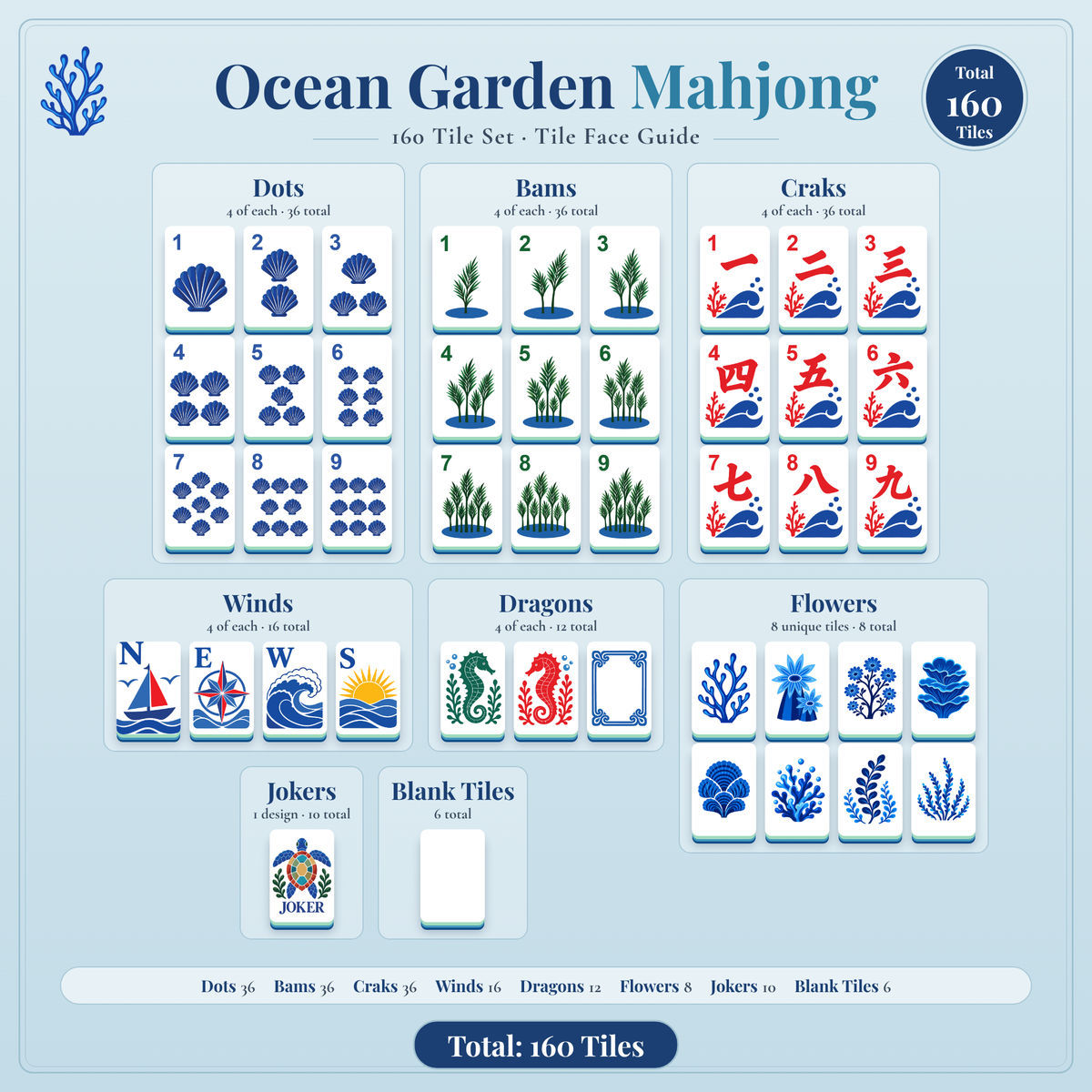
Vietnamese mahjong uses 144 tiles (36 per suit × 3 + winds, dragons, flowers) played with sequences (chows), pungs, kongs, and pairs—fundamentally different from American mahjong, which forbids sequences and uses 152 tiles from an annual card. Competition mahjong most commonly refers to American tournament play (via the National Mah Jongg League card), Hong Kong or Cantonese variants (hand-making driven by tile probability and feng shui patterns), or Riichi/Japanese rules (melds must be called publicly, honor tiles behave differently). Vietnamese play is closest to Chinese classical mahjong; American competition is structured, card-locked, and joker-dependent. If you're joining a group, ask which rule set they use—the game board and tile behavior change completely. A 160-tile American set from Mahstead won't work for Vietnamese play, which needs a different tile composition and no jokers.
What exactly is Vietnamese mahjong?
Vietnamese mahjong evolved from classical Chinese mahjong and is played in Vietnam, Cambodia, and among Vietnamese diaspora communities. It uses 144 tiles: three number suits (1–9, four copies each), winds, dragons, flowers, and no jokers. Hands win by forming sets (three-tile sequences, three-tile or four-tile groups of identical tiles) and a pair—the core mechanic forbidden in American mahjong. Play is rapid, social, and rarely card-bound; winning hands develop from tile availability and player instinct rather than a fixed annual list. Draw-and-discard cycles are tight; the wall rarely empties before someone wins. Scoring is simpler than American variants: hand type and tile value matter, but the point structure is flatter. Vietnamese mahjong is not a formal competition format in the West; it's a home and cultural game.

How does American competition mahjong differ?
American mahjong is tournament-standardized by the National Mah Jongg League. It uses 152 tiles (108 numbered + 16 winds + 12 dragons + 8 flowers + 8 jokers), prohibits sequences entirely, and restricts valid hands to those on the current year's card. All sets must contain exactly 152 tiles plus spare jokers. Players cannot invent hands; the card is law. Melds are only pungs (3), kongs (4), quints (5), or sextets (6)—all identical tiles, never mixed numbers. Jokers substitute for missing tiles and can never be a single tile or a pair. The Charleston—a three-pass tile exchange—begins each game. American play is rigid, hand-locked, and designed for competitive fairness: every player can verify whether a winning hand is legal by consulting the card. Hand-setting skill matters less than tile management and reading opponents. This structure makes tournaments possible and odds calculable.
🀄 Shop best-selling mahjong sets →
How do Hong Kong and Riichi competition formats differ from American?
Hong Kong (Cantonese) mahjong uses 144 tiles and allows sequences, making it closer to Vietnamese than American play. Hands are not card-locked; players recognize hundreds of winning patterns by memory and probability. Scoring is complex, driven by wait-type (which tile sets complete the hand) and honor tiles; a single winning hand can have many point values depending on draw order and bonus tiles. Speed and reading are prized over rule consultation. Riichi (Japanese) mahjong also uses 144 tiles with sequences and a complex hand-recognition system, but adds the "riichi" declaration (announcing a waiting hand and locking discards). Honors (winds and dragons) are treated differently, and scoring multipliers (fu and han) create a wider range of point awards. Both Hong Kong and Riichi are played competitively in Asia and have international tournaments; neither is card-locked like American mahjong, and both demand deeper pattern memory.

What's the tile composition difference?
Variant | Total Tiles | Numbered Suits | Winds | Dragons | Flowers | Jokers | Sequences Allowed? |
Vietnamese (Classical Chinese) | 144 | 3 × 9 (108) | 4 | 3 | 4 | 0 | Yes |
American | 152 | 3 × 9 (108) | 16 | 12 | 8 | 8 | No |
Hong Kong/Cantonese | 144 | 3 × 9 (108) | 4 | 3 | 4 | 0 | Yes |
Riichi/Japanese | 136 | 3 × 9 (108) | 4 | 3 | 0 | 0 | Yes |
The tile count and honor distribution shape the entire game. American mahjong's extra honors (16 winds, 12 dragons) and jokers allow hand variety and card-lock precision; the 8 jokers act as wild tiles to make hands matchable. Vietnamese and classical variants use fewer honors and no jokers, forcing players to hand-read and adapt. The 144-tile standard (Vietnamese, Hong Kong, Riichi) is the worldwide classical baseline; 152-tile American is an outlier designed for turn-taking and card enforcement.
How does hand-making differ?
Vietnamese/classical approach: Players build hands from tile draws and opponent discards in real-time. A valid win requires one pair and melds (sets of three identical tiles or sequences like 3–4–5 Bams). The moment a winning tile appears, any player can claim it (if standing). There is no annual hand card; recognized patterns are understood through play. Winning speed is fast—often by the second or third round—because sequences require fewer tiles and honor combinations are flexible.
American approach: Before each game, the current NMJL card defines exactly which hands win. A hand must be built from card-listed combinations: for instance, "3 Pung 1 Kong," "Quint with Jokers," or "Like Numbers." Jokers fill gaps created by missing tiles. Players study the card, memorize sections, and hunt for hands during active play. Hands take longer to form (often 8–12 turns or more) because card-lock restricts options; luck and strategic discard reading matter intensely. The game rewards card knowledge and pattern spotting.
Hong Kong/Riichi approach: Hybrid: sequences allowed, but hand-reading is by sight and memory, not a published card. Winners must declare their hand type (wait type: pair wait, single wait, etc.) and score is calculated by rule. Play is competitive and social but less standardized than American; house rules may vary. Hand speed falls between American (slower, structured) and pure classical (faster, more chaotic).
🎁 See our most-loved mahjong sets & accessories →
What's the practical takeaway for new players?
Before you sit down, ask: Which rules are we playing? If the answer is "American," bring a set with 152 tiles and the current year's card. Our best-selling American mahjong sets are designed for league play and come with standard tile counts and joker ratios.
If someone says "Vietnamese" or "classical," expect a 144-tile set (no jokers), sequences allowed, and looser hand-making. If "Hong Kong" or "Cantonese," same structure but faster scoring and honor-tile complexity. If "Riichi," hand recognition is strict, fu/han scoring is steep, and the riichi declaration changes play flow.
Don't mix tile sets. American 152-tile sets cannot be substituted for 144-tile variants; jokers break classical sequences, and tile distribution is wrong. Conversely, a classical 144-tile set cannot be used for American tournament play—jokers are mandatory for hand-building flexibility, and honor counts won't match the card.
Practice the Charleston if you're new to American. This tile-passing ritual (explained in our Charleston guide) is unique to American mahjong and feels foreign until you've done it three times. Vietnamese and Hong Kong games skip it entirely—tiles are drawn directly from the wall.
If you're hosting, choose one format for the season. Switching between variants mid-session confuses tile counts and hand validation. Pick American if you want card-locked structure and fairness. Pick Vietnamese or classical if your group values speed and social play. Once you lock in, stick with it; set up with the right tile count and documentation each week.
What to check before you buy
Tile count: Verify the set contains exactly 152 tiles if you're playing American mahjong. Classical variants (Vietnamese, Hong Kong, Riichi) need 144 tiles; 160-tile American sets include spares, not bonus play-tiles.
Joker ratio: American sets must include 8 jokers as part of the 152-tile core. Classical sets have zero jokers.
Card inclusion: American mahjong requires the current year's National Mah Jongg League card to validate hands. Vietnamese and classical play do not.
Tile design: Classical variants often use simplified symbols; American sets offer engraved mahjong titles and designs for clarity and personalization.
Playing surface: Any mahjong mat works across variants, but American players benefit from a surface wide enough for card placement and four hand racks with pushers.
✨ Find your Mahstead set — free US shipping →

FAQ
Can I play Vietnamese mahjong with an American mahjong set?
No. American sets have 8 jokers (not used in Vietnamese) and only 12 dragons (classical needs 3 copies × 4 = 12, but the honor distribution is wrong). Tile count is 152 vs. 144. Use a dedicated 144-tile classical set for Vietnamese play.
What's the fastest variant to learn?
Vietnamese/classical mahjong is fastest because sequences are allowed and hands form quicker (often 2–3 rounds). American mahjong has a steeper card-learning curve but is easier to enforce fairly in a group.
Do I need the NMJL card to play American mahjong at home?
Yes. Home games may use house rules, but competitive American mahjong requires that year's card to verify winning hands. It's the rulebook and hand dictionary combined.
Is Hong Kong mahjong played competitively in the West?
Increasingly, yes. Asian diaspora communities and online platforms host Hong Kong mahjong tournaments, but American mahjong remains more established in Western tournament circuits and clubs.
Can I use jokers in Vietnamese mahjong?
No. Classical Vietnamese mahjong uses no jokers or blanks. Tiles are tile; if a needed number isn't drawn, the hand cannot be completed that way. This constraint makes reading and discard strategy critical.


View More
View More
View More
