
Modern Mahjong Case: Which Bag Fits Your Game & Tiles
Last updated: Nov 23, 2026
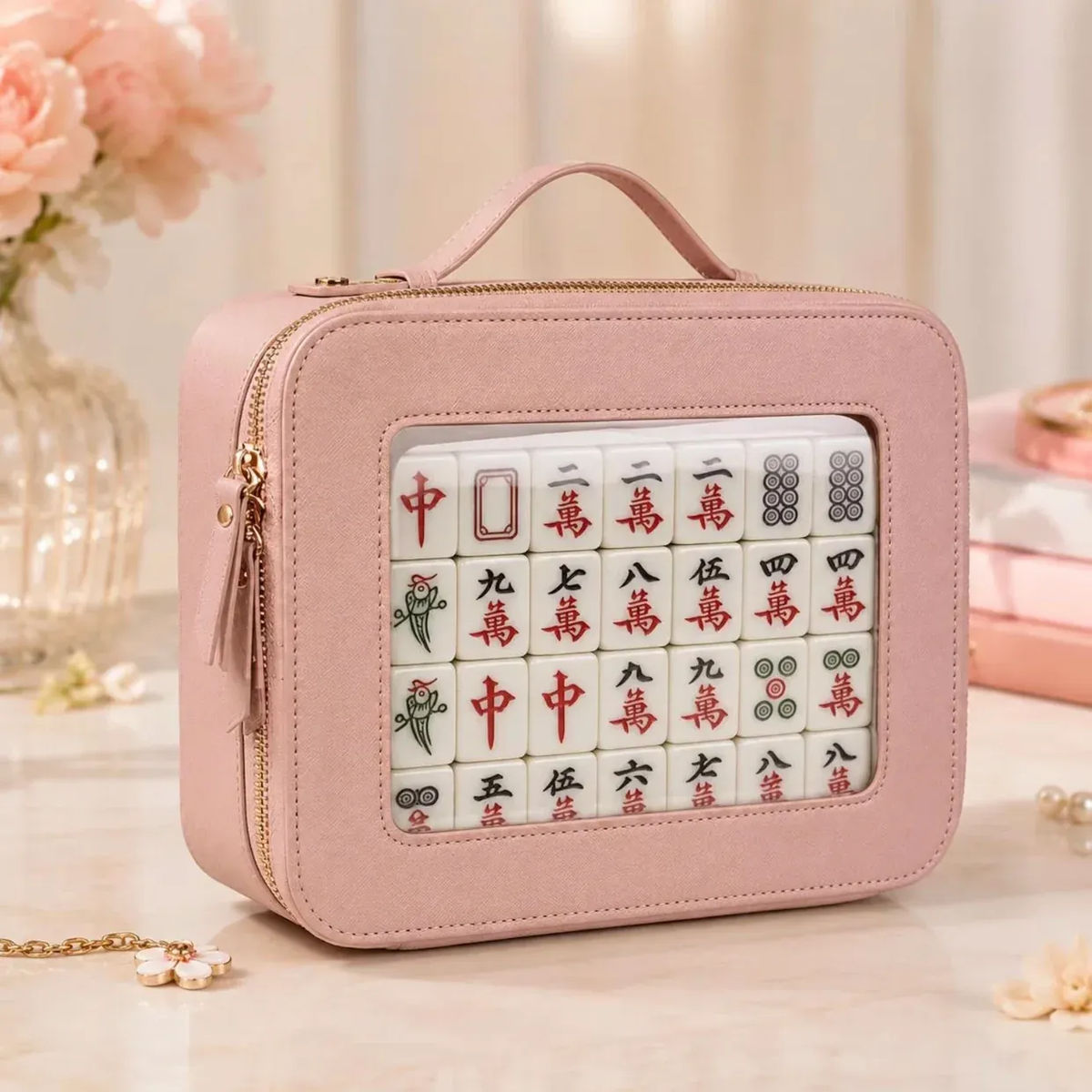
A modern mahjong case is a protective, organized carrying solution designed to hold a 160-tile American mahjong set plus accessories—racks, dice, mat, jokers—without crushing tiles or losing pieces during transport. Most cases range from hard-sided boxes to padded soft carriers; quality versions feature compartments, handles rated for tile weight (approximately 3–4 pounds for a full set), and moisture-resistant materials. Mahstead's bags and cases collection includes designs that fit standard 152-tile plus spares configurations, with internal layouts sized for acrylic tile thickness and rack widths. Cost varies by construction: soft cases start lower; hard cases protect better over years of weekly games. Avoid flimsy zippered totes—acrylic tiles crack under pressure shifts—and never store cases in direct heat or humidity swings, which warp tiles and fog acrylic clarity. Check interior dimensions before ordering; a case too snug forces tile damage. ✨ Browse bags & cases for your set →
What makes a modern case different from vintage mahjong storage?
Vintage wood or paper boxes often fit only older 144-tile sets and lack compartments for the full gear today's players carry: racks with pushers, mats, dice, the yearly card, and spare jokers. Modern cases assume American mahjong is a mobile hobby—you're hauling sets between homes, synagogues, community centers, and clubs. Contemporary designs use reinforced zippers, foam inserts molded for tile shapes, and waterproof fabrics that prevent humidity damage during car trunks or basement storage. The result: a case you'll trust for a decade, not three seasons.
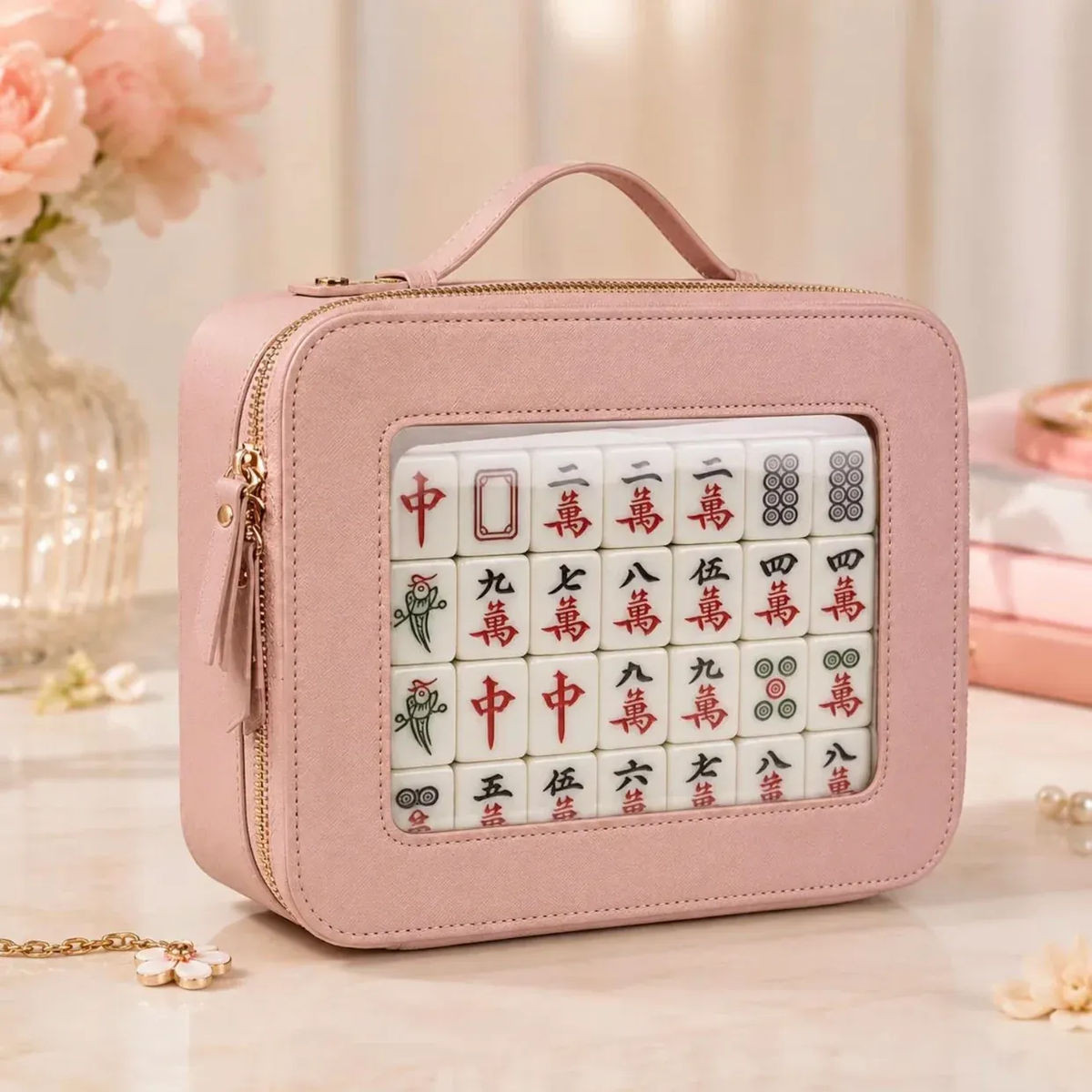
Which case style protects tiles best during travel?
Hard-sided cases (molded plastic or composite shells) absorb shock and resist crushing if loaded into a car, tossed on a porch, or stacked under other items—common realities for weekly players who host rotating games. Soft padded carriers work well for short trips (home to a friend's living room) but offer less protection in luggage holds or against pressure shifts. A well-made hard case with latches typically outlasts two or three acrylic tile sets, making it the single best investment for players who move their game across town regularly. Choose one with interior padding or fabric dividers so tiles don't shift inside; loose tiles knock against the shell and chip edges.
🀄 Shop best-selling mahjong sets →
How do you know if a case will fit your set and racks?
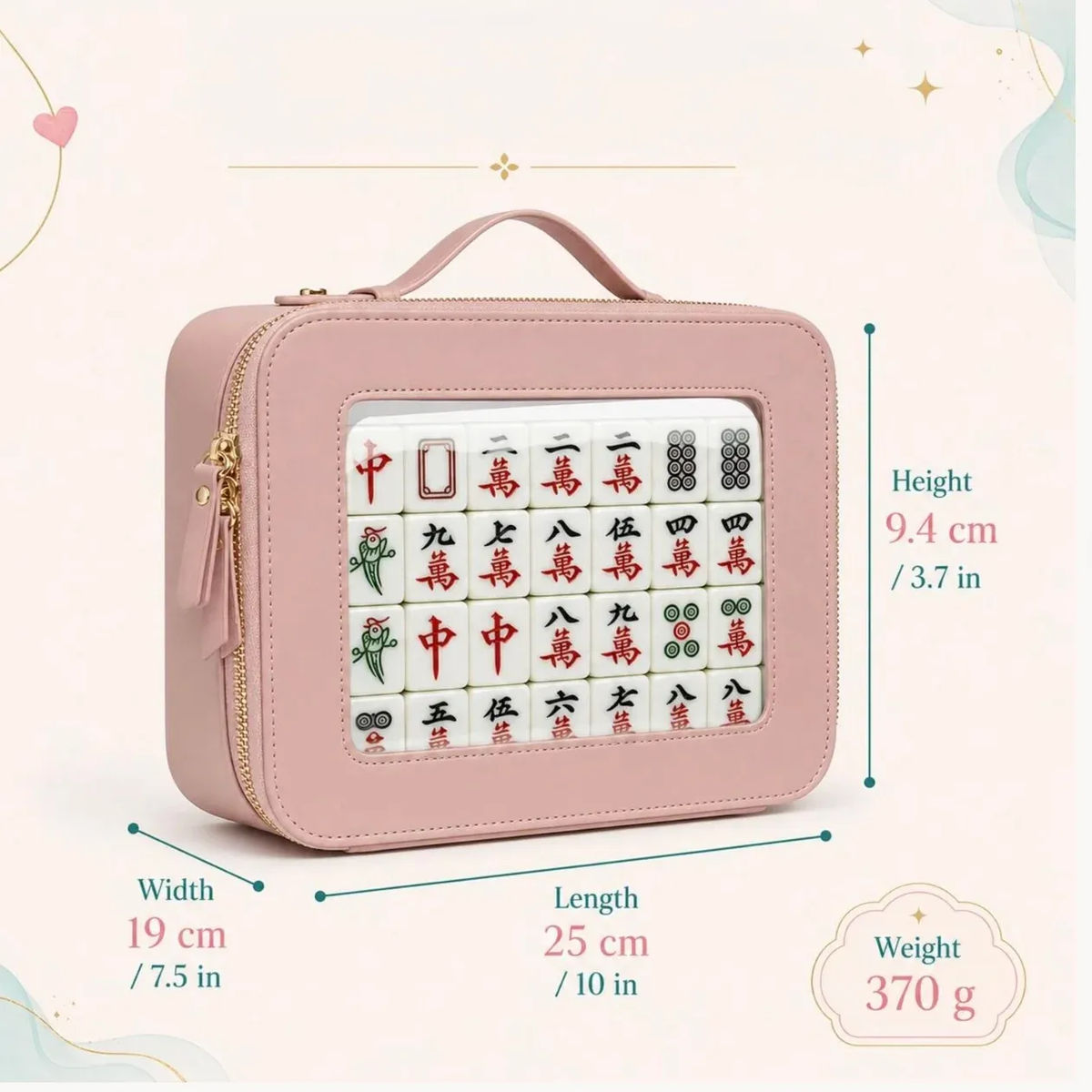
Measure your set's bounding box—the rectangular space a full Charleston layout would occupy with walls around it. Standard acrylic American mahjong sets from reputable makers span roughly 10–12 inches across when arranged; most modern cases accommodate that range. Check the case's interior length, width, and depth against your racks separately: wide pusher-racks (often 8–10 inches) need cases at least 11 inches deep to avoid forcing them at angles, which bends the wood or plastic. Measure your mat when rolled: a typical travel mat adds 2–3 inches to the footprint. Request interior dimensions from the maker before purchasing; cases sold as "for American mahjong" sometimes assume smaller tile widths or no mats. A mat mismatch is the top reason we see cases returned or tiles stored outside in plastic bags.
Soft vs. hard case: A practical comparison
Feature | Soft Padded Carrier | Hard-Sided Case | Best for |
Shock protection | Moderate—good for drops under 2 feet | Excellent—rated for vehicle cargo | Daily commute, stacking in trunks |
Weight | 1–2 lbs, easy to carry one-handed | 3–5 lbs, requires two hands or a handle | Players who host at one fixed table vs. rotation players |
Compartments | 2–3 soft pockets; tiles may shift | 5+ molded sections; tiles locked in place | Organized tile sorting during Charleston |
Moisture defense | Water-resistant fabric; gaps remain | Sealed shell; vents needed to prevent condensation | Basement or garage storage over winter |
Lifespan (years of weekly use) | 3–5 years before seams fray | 8–12 years before latches loosen | Long-term investment value |
Cost range (Mahstead) | Lower starting point | Higher initial cost, lower per-year cost | Budget vs. durability preference |
Hard cases pay for themselves in durability if you play weekly and travel. Soft cases suit casual players or those with a permanent table who rarely move their set.
🎁 See travel bags & protective cases →

What accessories should your case hold?
A modern mahjong case isn't just a set holder—it's a complete game kit. Plan for: the tile set itself (152 tiles + spares), racks with pushers (usually three or four per player, lightweight), a mat (rolled or folded, takes up to 3 inches of space), dice (two sets to avoid a slow-down mid-hand), the yearly National Mah Jongg League card, and a pen or score pad. Some players add a reference sheet for American mahjong scoring or how to read the card. High-end cases include elastic retention bands, zippered side pockets for cards and dice, and a key loop so you never leave a rack behind at someone's home. Test your case with a full setup before you commit—pack it as you'd arrive at a game, then unpack it three times to spot sharp edges, torn seams, or compartments that jam.
Storage at home: humidity, temperature, and tile clarity
Acrylic tiles yellow or cloud under UV light and high heat; cases stored in direct sunlight or hot cars degrade faster than the tiles themselves. Choose a cool, dry closet or climate-controlled cabinet. If you use a hard case, leave the latches slightly loose if storing for months, or drill two small drain holes near the bottom to prevent humidity buildup inside—condensation inside a sealed case fogs acrylic clarity permanently. Store your case horizontally or upright, never at an angle, so tiles don't settle unevenly and press on one edge. Avoid basements with seasonal moisture swings; a basement case opened in spring might show mold inside by July if humidity isn't controlled. We've seen cases placed on hot radiators or near kitchen steam discolor tiles faster than outdoor weather. A stable room temperature between 65–75°F is ideal.
What to check before you buy
Interior dimensions match your set + racks + mat rolled. Measure with calipers or a ruler; case makers sometimes list exterior size, not interior usable space. Interior should exceed your set's footprint by at least 1 inch on each side.
Material matches your play frequency. Soft cases work for casual or home-only players; hard cases earn their cost over 100+ games per year.
Compartments or padding prevent tile shift. Loose tiles sliding inside a case during transport chip edges; divided sections are worth the higher price.
Handles are reinforced and rated for weight. A full set plus mat and racks approaches 4–5 pounds; cheap handles tear or detach mid-carry.
Zippers or latches feel smooth and catch easily. A stuck zipper in someone's driveway before game night is maddening; test closure 5–10 times before leaving the store or unpacking at home.
Ventilation or drainage prevent internal condensation. Hard cases benefit from small vent holes or slightly loose latches if stored long-term in humid climates.
Color or design reflect your taste. Modern cases come in patterns, solids, and custom engraving options; a case you enjoy carrying encourages consistent care and organization.
✨ Find your Mahstead set — free US shipping →
FAQ
Can I use a regular luggage bag or camera case for mahjong tiles?
Regular luggage lacks compartments, so tiles slide and crack. Camera cases often have rigid plastic dividers sized for electronics, not flat square tiles. A mahjong-specific case's compartments and padding prevent shift damage.
How do I keep my case from smelling like mold if stored in a damp garage?
Store in a climate-controlled closet instead, or drill two small drainage holes near the case's base if it's hard-sided. Place a silica gel packet or charcoal inside soft cases, and replace it every 3 months in humid climates.
What's the difference between a case for travel and one for home storage?
Travel cases (hard-sided with strong handles) survive car trunks and porch drops. Storage cases (often soft or stackable) prioritize compactness and can stay stationary. Many modern cases serve both roles.
My racks don't fit upright in the case—what do I do?
Most racks fit horizontally if stacked or angled. If the case is too narrow, measure your racks' width and choose a deeper case next time. Never force racks; bent wood won't hold tiles during play.
Do I need a separate mat, or does the case hold one?
Most cases hold a rolled mat in a side pocket or main compartment, but check interior depth. If your mat doesn't fit, buy a case one size larger or store the mat in a separate flat envelope nearby.
How often should I replace a mahjong case?
A quality hard case lasts 8–12 years with weekly use. Soft cases fray after 3–5 years. Replace if latches break, zippers jam, or interior padding flattens and no longer cushions tiles.


View More
View More
View More
