
Custom Mahjong Racks: Which Style Fits Your Game?
Last updated: Nov 23, 2026
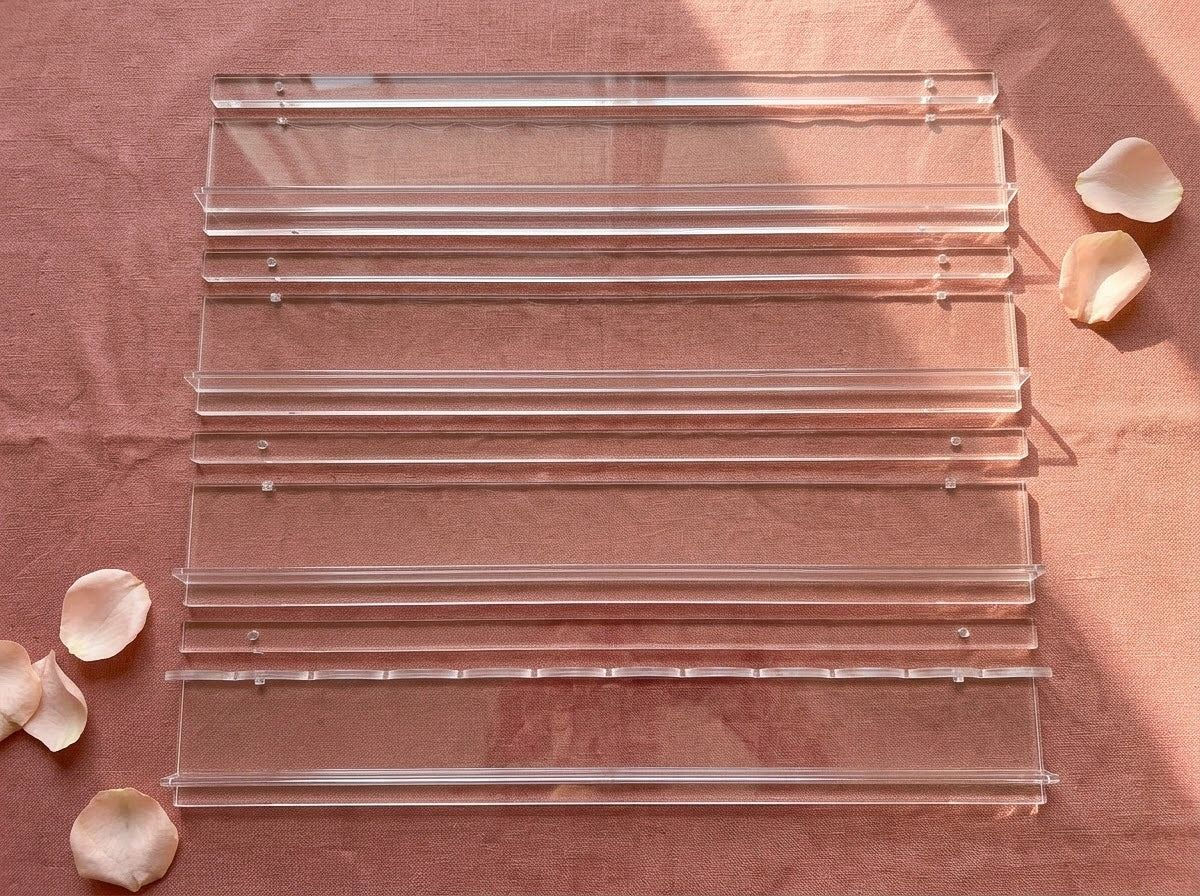
We recommend racks with pushers for American mahjong because they let you organize your hand quickly and expose tiles without fumbling. Mahstead offers mahjong racks with pushers in different styles: bamboo and acrylic are the most common. Bamboo racks are light and traditional; acrylic racks coordinate with modern tile sets and come with engraving options. All push-to-expose designs work the same way—slide tiles left, pusher pops them up for the display ledge. Cost varies by material and engraving. Before ordering, check the width (must fit your table edge), whether pushers are included, and if the rack's height lets you see your winning hand clearly without craning your neck.
Why do you need a rack at all?
Holding 14 tiles in your hand for 20 minutes at a time is tiring and forces you to telegraph what you're picking and discarding. A rack lets you rest your hands, organize by suit and number, and control the tempo of your discard. Without a rack, newer players often spread tiles too wide, giving away information to opponents. Racks also prevent the accidental tile drop—a costly interruption. Most serious players won't play without one.

What's the difference between bamboo and acrylic racks?
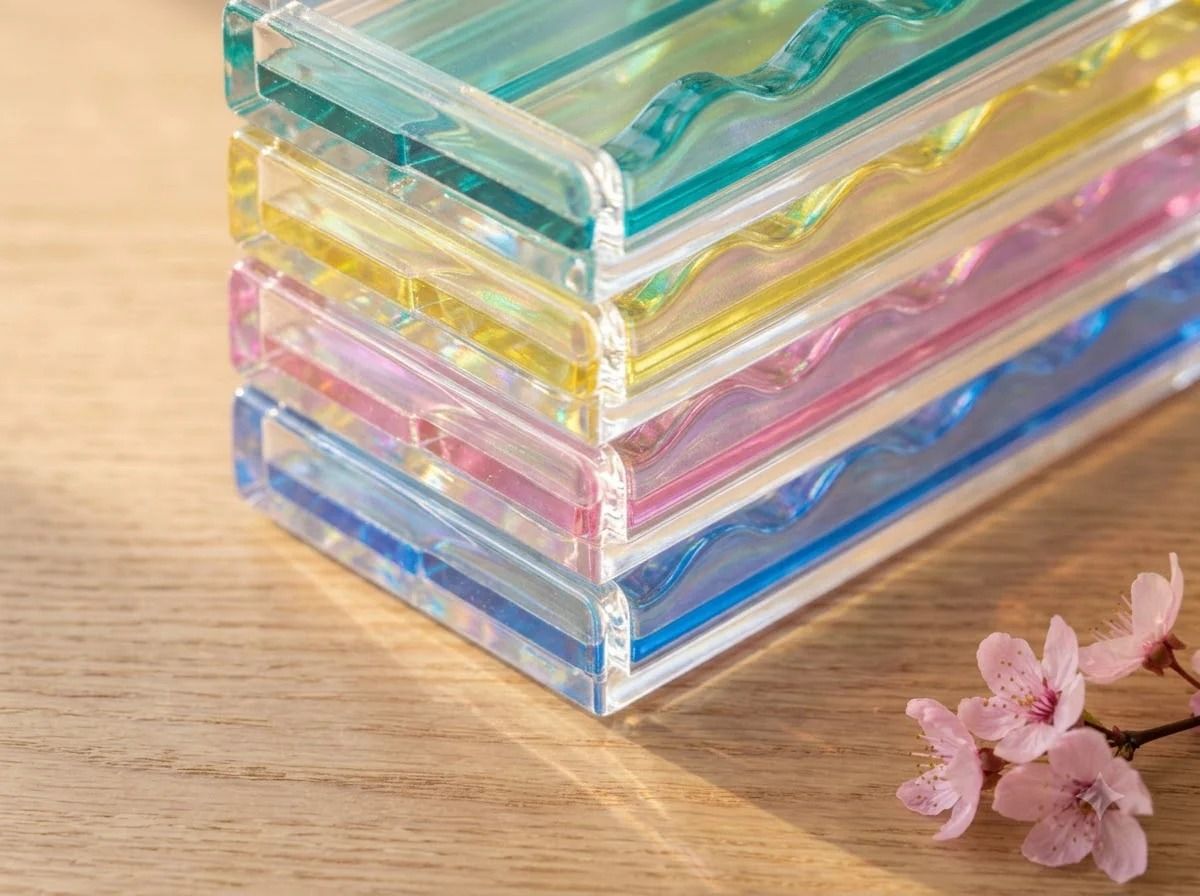
Bamboo racks are light, inexpensive, and feel traditional—they work with any tile set. Acrylic racks are heavier, last longer in humid climates, and can be engraved with your name, a joke, or a season. Bamboo does splinter over time and can swell if stored wet; acrylic doesn't absorb moisture. If you host weekly games and want a set that looks cohesive and custom, acrylic is our recommendation. Bamboo is best for casual players or those moving between venues.
What do pushers actually do?
A pusher is a small tool (usually plastic or wood) attached to the rack. You slide it left beneath your tiles; it lifts them upward onto a display ledge at the top of the rack, making your hand visible to you without showing opponents. This "expose" motion is faster and cleaner than lifting tiles by hand. When you draw a new tile, you slide the pusher back and reset. Pushers are standard on modern American mahjong racks and come included with quality sets—they're not optional.
How do you choose between standard, engraved, and custom designs?
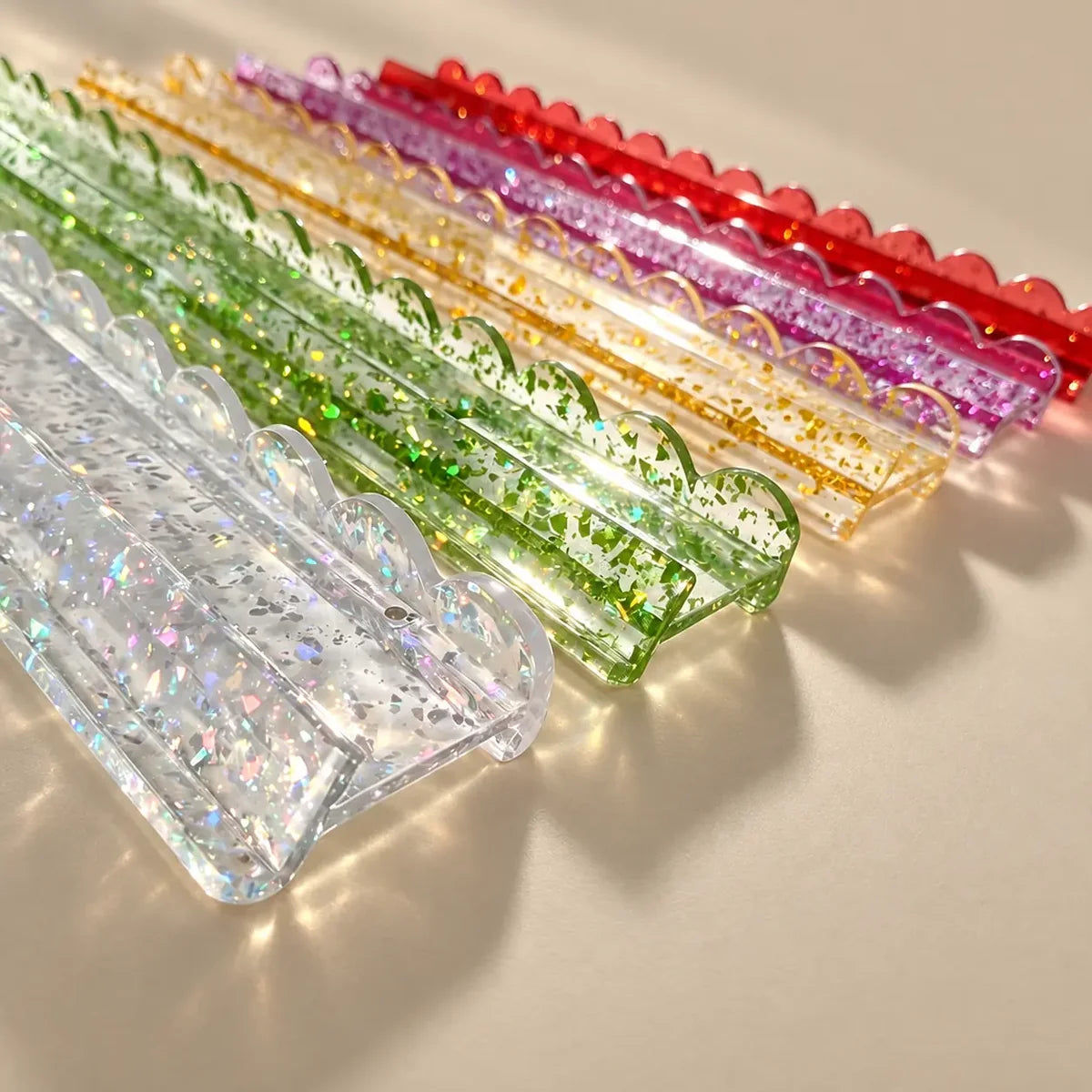
Standard racks (plain bamboo or clear acrylic) work for any player and are the most affordable starting point. Engraved racks add a name, initials, or saying—common jokes are "Sack" (lucky hand), the year, or a player's signature phrase—and turn a rack into a keepsake. Custom designs (color, pattern, or art) take longer to produce and are best for league gifts or milestone celebrations. Use this framework: casual weekly players → standard; long-term hosts → engraved acrylic; team events or tournaments → custom design. See our best-selling mahjong sets & accessories for examples of how racks pair with full game setups.
🀄 Shop best-selling mahjong sets →
What size and width should you buy?
Racks typically range from 8 to 14 inches wide, depending on whether they're designed for individual hand storage (shorter) or a full American set layout (longer). Measure your table edge first—the rack sits perpendicular to you, so it must not overhang. Most players prefer a rack that holds 14–16 tiles comfortably upright; longer racks can hold exposures and your hand side-by-side. Height matters too: the display ledge should be 3–4 inches above the rack base so you can see the tile face clearly during play. If you're under 5'6", a taller ledge can block your view of the table—test one before committing.
Rack Type | Who It's For | Width | Material | Best Feature |
Bamboo standard | Beginners, casual weekly games | 8–10" | Natural bamboo | Lightweight, affordable |
Acrylic standard | Intermediate players, home setups | 10–12" | Clear or frosted acrylic | Durable, tide-resistant |
Acrylic engraved | Regular hosts, keepsakes | 10–12" | Acrylic + custom text/date | Personalized, long-lasting |
Custom colored | Leagues, team events, gifts | Varies | Acrylic, wood, or hybrid | Unique design, high impact |
How do pushers wear out and how do you maintain them?
Pushers wear at the bottom edge where they slide and can crack if dropped or forced at an angle. Replace a worn pusher by sliding it out from underneath the rack (usually it's glued or pegged lightly). Store racks upright, never stacked face-down; pressure warps the pusher attachment. After each game, wipe tiles and rack with a dry cloth—moisture weakens bamboo joints and can fog acrylic. Store in a cool, dry place, ideally in a mahjong bag or case if you transport the set between venues. A rack that lasts 5+ years needs only occasional pusher maintenance.
🎁 See our most-loved mahjong sets & accessories →
What to check before you buy
Pusher included? Confirm the listing says "includes pushers" or "with pushers." Some racks sell separately from pushers—do not assume they're paired. Width fits your table. Measure your edge; the rack should sit 1–2 inches from the corner. Engraving legible? If customizing, request a proof or example photo showing the font size. Tiny text on a 10" rack is hard to read. Material matches your set. Acrylic racks work best with acrylic or modern tile sets; bamboo racks are neutral. Display ledge height. If you're taller, a shallow ledge may not display your tiles high enough. Shipping. Confirm your racks arrive in protective wrapping and test one pusher before your first game.
For a complete hand storage and display solution, pair your rack with a mahjong mat and see how engraved American mahjong sets can tie your whole setup together.
✨ Find your Mahstead set — free US shipping →
FAQ
Can I use a rack designed for Chinese mahjong with American tiles?
No. American tile sets are thicker and heavier; Chinese racks are too shallow and won't hold the display ledge angle. American racks are slightly taller and accommodate the tile weight. Always match the game variant to the rack.
Do all racks have pushers?
No. Some bamboo racks sell without pushers as a cost option. Always confirm in the product description before ordering. Pushers are worth buying separately if missing—they cut hand management time in half.
How do I clean an acrylic rack without scratching it?
Use a soft, lint-free cloth and mild soap with lukewarm water. Avoid abrasive sponges, bleach, or acetone. Dry immediately. For stubborn residue, rubbing alcohol on a cloth works; test a small area first.
Can I engrave a rack I already own?
Some engravers offer this service, but Mahstead does custom engraving during production for best durability. Adding engraving to a used rack risks cracking if the material is stressed. Order a new engraved rack for a lifetime keepsake.
What's the difference between a rack and a tile holder?
A rack is a U-shaped display stand with pushers; a tile holder is usually a small box or tray without a display ledge. Racks are for active players; holders are for storing a finished hand or spare tiles between games. Both serve different purposes.


View More
View More
View More
