
Chinese Official Mahjong Tile Set: How to Choose for Your Game
Last updated: Nov 23, 2026
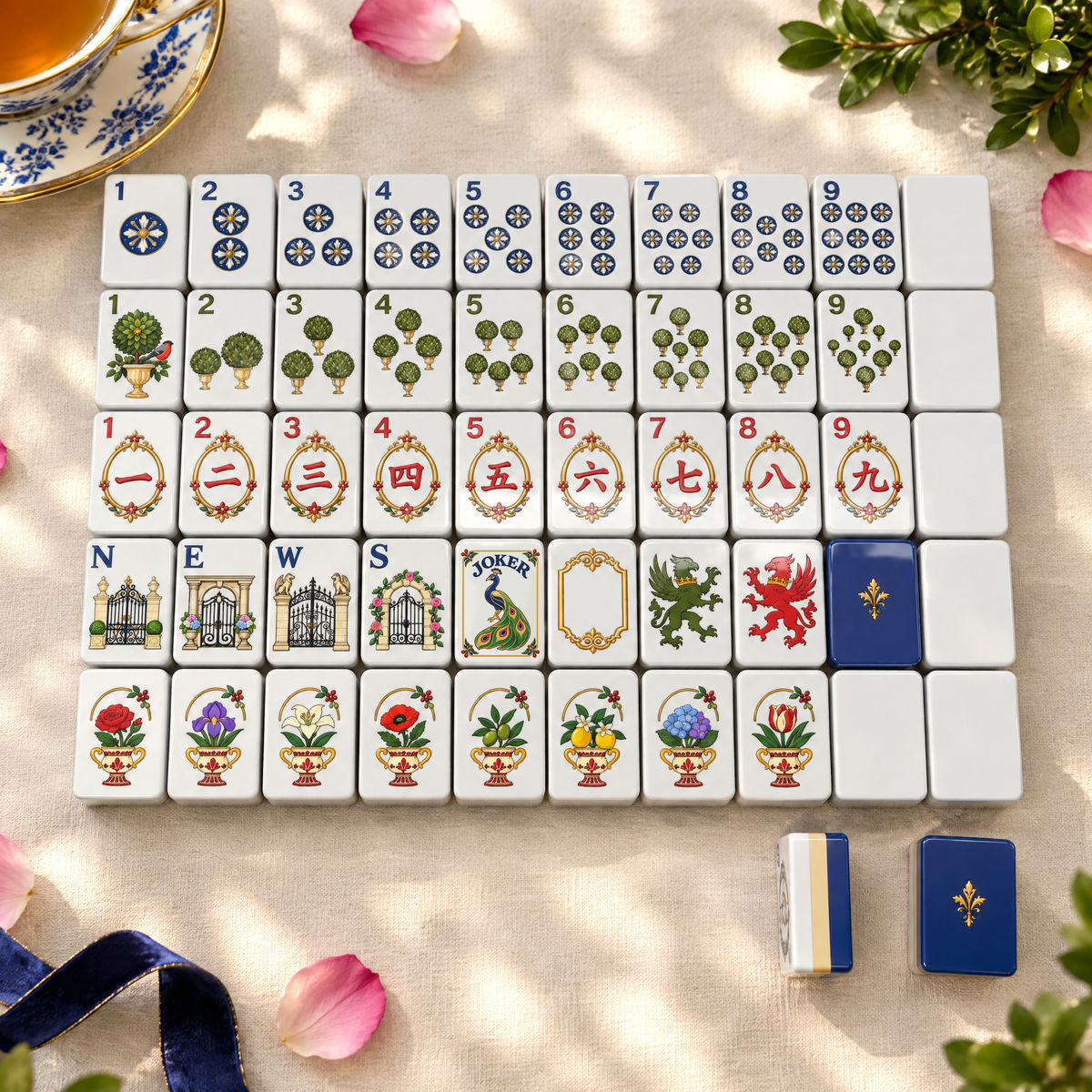
Chinese Official mahjong (also called Chinese Classical or Standard Chinese) uses 144 tiles—three suits (Bams, Craks, Dots) numbered 1–9 in four copies each (108 tiles), plus four winds and three dragons (each in four copies), plus eight flowers and eight jokers, totaling 144 tiles in active play. The hand structure is completely different from American mahjong: Chinese hands are built from chows (three consecutive numbers in one suit), pungs (three identical tiles), kongs (four identical tiles), and a pair. There are no printed card restrictions; players memorize or know winning combinations by tradition. Sets are sold in acrylic, bone-and-bamboo, or ceramic materials. Cost varies widely by craftsmanship and locale. Our focus at Mahstead is American mahjong sets (152 tiles with the National Mah Jongg League card), but understanding Chinese Official rules helps you compare and choose correctly for your group's preference. 🀄 Shop best-selling mahjong sets →
What is Chinese Official Mahjong vs. American?
American mahjong is a card-driven game: players match tiles to hands printed on the current year's National Mah Jongg League card each spring. Chinese Official mahjong is rule-driven and uses 144 tiles, no card. American has jokers in every hand and uses them actively; Chinese has jokers too but uses them as wild cards only in specific situations. American's exposed melds are pungs, kongs, quints, and sextets—never chows. Chinese allows chows to be called and exposed alongside pungs and kongs. This fundamental structural difference means the two games are not interchangeable, even though both use the same basic tile suits and counts.
✨ Find your Mahstead set — free US shipping →

What tile count and suits do you need?
Chinese Official mahjong requires exactly 144 tiles for play: 108 from the three number suits (Bam 1–9, Crak 1–9, Dot 1–9, four of each), 16 winds (North, East, South, West × 4), 12 dragons (three types × 4), 8 flowers, and 8 jokers. American mahjong uses 152 tiles—the same 144 plus 8 additional jokers and blanks. If you are buying a set labeled "160-tile," that includes the 144 or 152 playing tiles plus spare jokers and blanks, never added to the game. Always confirm the base tile count (144 or 152) and material—acrylic, bone-and-bamboo composite, or ceramic. Acrylic sets are durable, lightweight, and affordable; bone-and-bamboo and ceramic are heavier, more traditional, and costlier.
Material and durability: acrylic vs. bone-and-bamboo vs. ceramic?
Acrylic tiles are durable, resistant to moisture, and easy to clean—ideal for regular weekly games and travel. Bone-and-bamboo composite tiles are traditionally handcrafted; they're heavier and feel more premium but require more careful storage (avoid extreme humidity and heat). Ceramic tiles are the heaviest and most fragile; they feel authentic but chip easily if dropped. For home game groups, acrylic is practical: it plays smoothly, lasts years, and doesn't require special care. Bone-and-bamboo suits players who value tactile tradition and don't move their sets often. Ceramic appeals to collectors or players seeking museum-quality pieces. Our best-selling sets are acrylic-based for that reason—they balance durability, cost, and playability.
How many players, and do you need a mat or rack?
Standard mahjong is a four-player game; each player draws and discards in turn. If you host games for two or three players, Chinese Official has variants with modified hands and draw piles, though American mahjong also supports 2–3 player rules. For four players, a mahjong mat with marked sections keeps tiles organized and prevents them rolling off the table. A mat is optional but highly recommended; it protects the table and speeds up cleanup. Racks with pushers are personal tile organizers that help players see and manage their 13–14 tiles comfortably. They're not required but make games smoother, especially for players with limited hand dexterity. For traveling with a set, a padded bag or case is essential—it protects tiles and keeps everything organized.
🎁 See our most-loved mahjong sets & accessories →
Comparison: Chinese Official vs. American mahjong sets
Feature | Chinese Official (144-tile) | American (152-tile) | Best for |
Tile count | 144 exactly | 152 (8 extra jokers/blanks) | Chinese: traditional play; American: card-game variant |
Melds allowed | Chows (sequences), pungs, kongs | Pungs, kongs, quints, sextets (no chows) | Chinese: flexible combos; American: card-locked hands |
Hand source | Memorized/traditional combinations | National Mah Jongg League printed card | American: rule consistency yearly; Chinese: skill & memory |
Joker role | Wild card (limited use) | Mandatory in every hand; 8 per game | American: more joker-heavy gameplay |
Material options | Acrylic, bone-and-bamboo, ceramic | Acrylic (most common) | Acrylic: durability & cost; bone-and-bamboo: tradition |
Typical cost basis | Varies by craft (no US price standard) | See current price on product page | Check regional pricing & material |
Setup time | Quick; no card needed | Longer (Charleston tile pass, card review) | Chinese: faster start; American: ritualized setup |
Learning curve | Moderate (hand combinations) | Steeper (card reading + melds + Charleston) | Chinese: easier for new players; American: more structure |

Choosing between a Chinese set and an American set: decision framework
Ask yourself these questions before buying:
Who plays with you? If your group already plays American mahjong with the league card, stick with American (152-tile). If you're learning or joining a Chinese group, Chinese Official (144-tile) is standard.
Do you want a printed card or memorized hands? American requires reading the league card every hand—beneficial for consistency and learning. Chinese relies on memory and tradition—appealing to experienced players and purists.
How often will you transport the set? Acrylic is travel-friendly. Bone-and-bamboo requires careful packing. If you host at home, durability matters more than portability.
What's your budget? Acrylic sets are most affordable and practical. Bone-and-bamboo and ceramic are collector-grade and cost more. Get current pricing on the product page for your material choice.
Do you need accessories? A mat keeps the game tidy; racks help players manage tiles; a bag protects your investment. Plan for these if hosting regularly.
What to check before you buy
Tile count: Confirm the base game uses exactly 144 (Chinese Official) or 152 (American). Ignore spare jokers/blanks; they're extras, not part of play.
Material: Acrylic plays smooth and lasts; bone-and-bamboo feels premium but needs care; ceramic is fragile.
Completeness: Verify all four copies of each number tile, all winds, dragons, flowers, and jokers are included. Check the tile tally on the product page.
Storage: If buying a full set, ensure you have a bag or box to store tiles. Loose tiles get lost or damaged.
Rules clarity: If you're new to Chinese Official, confirm the set includes or links to rule sheets. American sets include the league card; Chinese sets do not.
Shipping and handling: Acrylic tiles are forgiving; bone and ceramic are fragile. Read the shipping description and packaging details. Mahstead ships free across the US and packs sets securely.
✨ Find your Mahstead set — free US shipping →
Which material is right for your game group?
Acrylic (most common for American mahjong): Lightweight, durable, water-resistant, easy to clean. Best for weekly games, beginners, and players who move their sets between locations. Tiles make a crisp clicking sound. No special care required.
Bone-and-bamboo composite (traditional Chinese): Heavier, warmer feel, more authentic appearance. Best for serious players, collectors, and home-based groups that don't travel. Tiles require dry storage (avoid humid basements). More expensive and prone to chipping if dropped.
Ceramic (collector / premium): Heaviest and most fragile. Best for display or occasional high-end games. Tiles are beautiful but break easily. Not recommended for regular play or transport.
For most players hosting a weekly game, acrylic offers the best mix of durability, cost, and playability. Our best-selling collection focuses on acrylic American sets for exactly this reason.
How to know which Chinese variant is right for you
Chinese mahjong has several rule systems: Chinese Official (Standard) is the most widely played and uses 144 tiles with chows, pungs, and kongs. Hong Kong mahjong adds extra tiles (flowers, jokers) and bonus scoring. Taiwanese mahjong has its own hand combinations and bonus rules. Riichi mahjong (Japanese) uses 136 tiles and requires a discard claim system. If you're new, Chinese Official is the safest choice—it's traditional, well-documented, and uses standard 144-tile sets sold globally. If your group plays a specific regional variant, verify the set tile count (144 vs. 136 vs. 144+extras) before ordering.
One final note: American vs. Chinese for the US player
Most mahjong groups in the US play American mahjong, which uses 152 tiles and the National Mah Jongg League card. If you are in the US and haven't played before, American is the most common entry point—easier to learn with the card as your guide and available through many local clubs and community centers. Chinese Official is a beautiful, historic game, but it requires either a teacher or deep study of hand combinations. If you're joining an existing group, ask what variant they play before buying a set. If you're starting fresh, American mahjong is the most accessible path in the US today. Browse our best-selling sets to see the full range of American mahjong options with free US shipping.
🀄 Shop best-selling mahjong sets →

FAQ
Is a 144-tile Chinese set compatible with American mahjong?
No. American requires 152 tiles and the printed league card; Chinese Official uses exactly 144 tiles and memorized hand combinations. The games are structurally incompatible. Never substitute one set for the other.
Do I need to buy a mat and rack with a Chinese Official set?
A mat is recommended to protect your table and organize tiles; a rack is optional but helpful for tile management. Neither is required to play, but both improve the experience. Bags are essential for protecting tiles during storage or travel.
What's the difference between Chinese Official and Hong Kong mahjong tile sets?
Chinese Official uses exactly 144 tiles with standard hand combinations. Hong Kong adds extra bonus tiles and scoring rules, sometimes using 152+ tiles. If your group plays Hong Kong, confirm the tile count before ordering; most retail sets are Chinese Official.
Can I learn Chinese Official mahjong without a teacher?
It's challenging but possible. Chinese Official relies on memorizing winning hand patterns (rather than a printed card like American mahjong). Online tutorials and rule books help, but a teacher or experienced player speeds learning significantly. American mahjong is easier to self-teach because the card does the work.
How much does a Chinese Official mahjong set cost?
Acrylic sets range widely depending on craft, material, and seller; see current prices on product pages or regional retailers. Mahstead specializes in American sets, but our best-selling collection shows pricing in the same range for comparison.
What if I want to play both Chinese and American mahjong?
You would need two sets—one 144-tile (Chinese Official) and one 152-tile (American). They're not interchangeable. Most players commit to one variant based on their local group. If you're in the US, start with American; if you're learning Chinese, begin with Chinese Official.


View More
View More
View More
