
Mangan in Riichi Mahjong Explained
Last updated: Nov 23, 2026
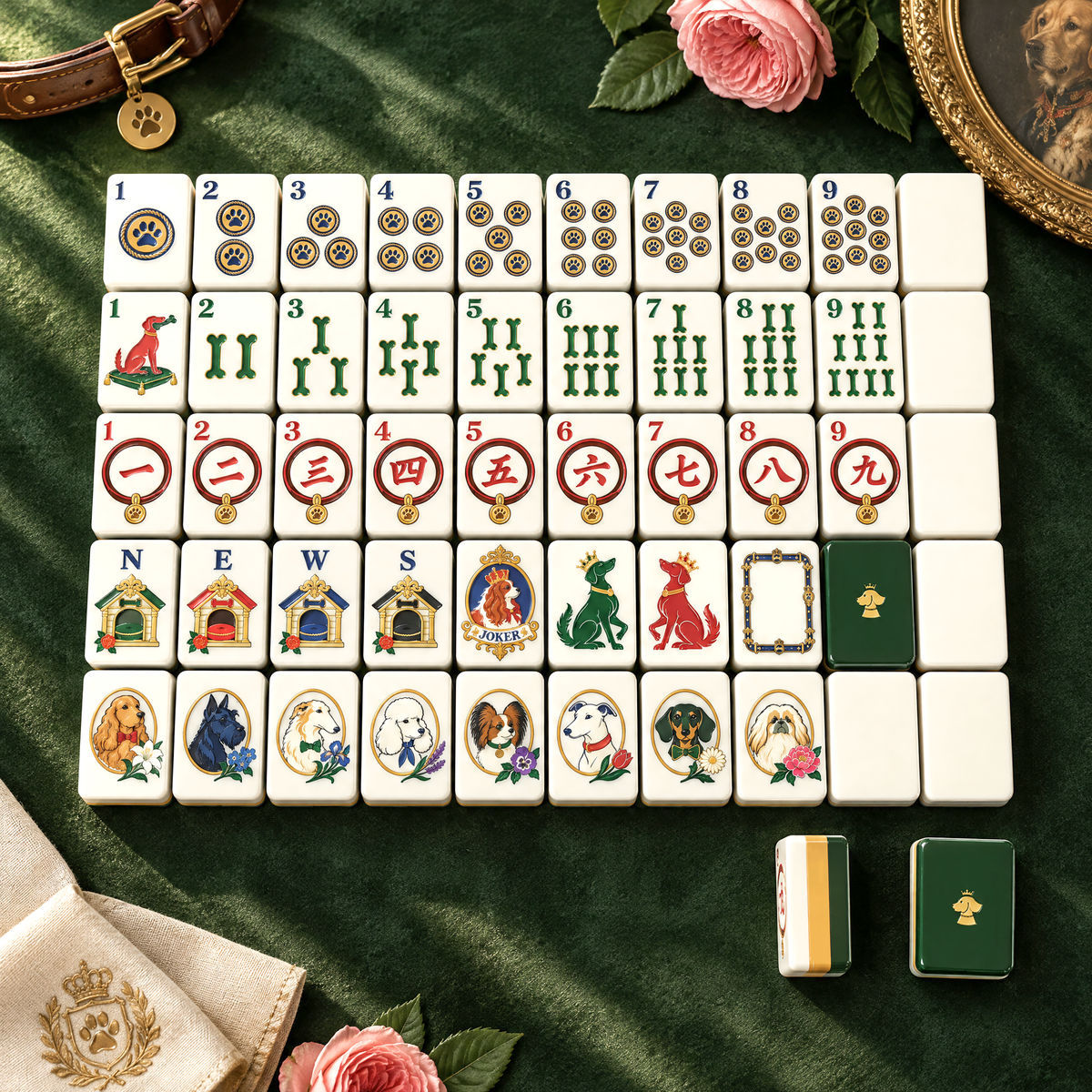
Mangan (満貫, "full limit") in riichi mahjong is a fixed-value hand worth 8,000 points to the winner when the discarder pays, or 4,000 / 2,000 / 2,000 points split among the three losers. It applies to any winning hand with five or more fu (tile groups) AND three or more han (winning layers), or to any winning hand with exactly two han AND 70+ fu—calculations that would otherwise exceed the base payment. Mangan eliminates fu-counting above that threshold and guarantees a minimum payout. It does not exist in American mahjong, which uses a one-card-per-year hand system instead. You'll encounter mangan in Japanese riichi, Hong Kong 13-tile, and Taiwanese variants that use the han–fu grid.
If you're learning riichi mahjong after American, mangan is your first real handhold: it's the moment when hand value stops being math and becomes a fixed prize. Let's walk through how it works, where it sits on the scoring ladder, and how to spot one at the table.
How is mangan different from other riichi scoring limits?
Riichi mahjong uses a ladder of fixed-value scoring "limits" (制限, seigen): mangan sits in the middle. Haneman (跳満) is worth 12,000 points and sits above mangan; baiman (倍満) is worth 16,000 and sits above that. Below mangan, hands worth 1,000–7,920 points pay based on their fu and han count. Above baiman sits sanbaiman (三倍満, 24,000 points) and yakuman (役満, 32,000 points or more). Mangan is the entry-level limit where the game stops asking "how many fu?" and says "you win this much, period."

What hands qualify for mangan?
A hand qualifies for mangan under two simple rules. First: any hand with three or more han AND five or more fu automatically pays mangan. Second: any hand with exactly two han AND 70 or more fu also pays mangan (these would be calculated as 70 × 4 × 2 = 5,600 base, but mangan caps it at 8,000 total). In practice, the first rule is much more common; most mangan hands have three, four, or five han and 30–40 fu. The second rule catches rare, extremely fu-heavy two-han hands (e.g., a fully concealed hand with seven melds).
Why do riichi and American mahjong score so differently?
American mahjong and riichi mahjong are fundamentally different games. American mahjong uses a printed card issued each year by the National Mah Jongg League; each hand on the card has a fixed point value (usually 25–40 points), and the card changes every spring. You cannot invent a hand—if it's not on the card, it doesn't pay. Learn how to play American mahjong for a full breakdown of that system.
Riichi mahjong, by contrast, uses a universal ruleset (the riichi compact standard) and a han–fu scoring system. Players calculate winning hands mathematically based on which yaku (patterns) they contain and how many fu (tile groupings and winning shapes) they've built. Mangan is a cap that prevents astronomical payouts; above mangan, yakuman hands can pay 32,000 or more points. Because these are completely different games, if you've played American for years, riichi will feel like learning a new sport.
How do you count fu to reach mangan?
Fu (符) are point-like counters that measure how many "valuable" groupings your winning hand contains. The base is always 20 fu. Then you add points for:
Winning shape: +2 fu if you win on an edge (waiting for 1-2 or 8-9), corner (1-3 or 7-9), or pair wait; +0 for middle (2-8) or tanki (single tile)
Each pung of honor tiles or terminals: +4 fu (or +8 if concealed)
Each pung of simple tiles: +2 fu (or +4 if concealed)
Each kong of terminals or honors: +16 fu (or +32 if concealed)
Each kong of simple tiles: +8 fu (or +16 if concealed)
Concealed hand bonus: +10 fu if you won without calling a single meld
Example: you have a concealed hand (base 20 fu + 10 concealed bonus = 30 fu) with one pung of 5 Dots (simple tile, concealed, +4 fu) and one pung of East Wind (honor, concealed, +8 fu). That's 30 + 4 + 8 = 42 fu. If you also have three han (say, riichi + all simples + terminal pung), then 3 han + 42 fu pays mangan because it exceeds the threshold.
What's the mangan payout structure?
When someone wins with mangan, payouts follow this pattern:
Discarder pays all: 8,000 points to the winner.
Self-draw (tsumo): losers pay 4,000 (the discarder) / 2,000 each (the other two).
Because mangan is a fixed limit, the payout never changes—whether you have exactly 40 fu or 100 fu, the winner always receives 8,000 total. This removes luck from hand-counting mistakes and keeps scoring fast.
Winning Scenario | Discarder Pays | Other Two Pay Each | Winner Receives Total |
Discard win (ron) | 8,000 | — | 8,000 |
Self-draw (tsumo) | 4,000 | 2,000 | 8,000 |

How do you spot a potential mangan hand at the table?
In riichi play, a mangan hand often signals strong hand discipline. Watch for:
Three or more visible yaku (patterns like riichi, tanyao, yakuhai, toitoi, etc.)—each is one han.
Concealed sets: hidden pungs and kongs add significant fu and often hide yakuhai patterns.
Winning shapes: an edge or single-tile wait on an honor or terminal adds fu quickly.
If you're holding three han after discarding twice and someone declares riichi, assume they're aiming for at least mangan. Defensive play (genbutsu, safe tiles) becomes much more important. Most casual riichi players don't aim for mangan; they take what comes. But experienced players recognize situations where three han + 30 fu is likely, and they adjust their discard strategy.
Why does mangan matter in riichi strategy?
Mangan is the threshold where risk and reward intersect. A two-han hand is worth 1,000–2,700 points depending on fu; a three-han hand jumps to 2,000–5,920 points unless it hits mangan (8,000 points). That 50% jump means experienced players chase the third han aggressively—they'll hold edge waits, concealed tiles, and honor-heavy melds to unlock that third yaku.
If you're new to riichi, learning to spot mangan hands teaches you to read hand value quickly. It's the entry-level limit where "this hand is worth serious money" clicks in your brain.
🀄 Shop best-selling mahjong sets →
What to check before you buy a riichi mahjong set
If you're switching from American to riichi mahjong, you'll need a different tile set. American sets use 152 tiles and follow the NMJL design; riichi sets use 136 tiles (four each of 1–9 in three suits, 16 winds, 12 dragons, 8 flowers), often with Japanese or Hong Kong tile art. Many players traveling between games keep both sets. We offer best-selling mahjong sets designed for American play; if you're specifically hunting riichi sets, check for Japanese-standard 136-tile counts and confirmed artwork (not American honors).
A riichi mat with a scoring guide printed on the side is invaluable while you're learning mangan and other limits. Pair it with a rack-and-pusher set to keep your hand organized while you're calculating fu—cleaner hands mean fewer misreads and faster play.
🎁 See our most-loved mahjong sets & accessories →
Comparing mangan to neighboring limits: when to be satisfied
Limit | Han (typical) | Fu (typical) | Winner Receives | Discarder Pays | Why it matters |
2 han 30 fu | 2 | 30 | 1,920 | 1,920 | "Lucky"—barely a hand. |
2 han 70 fu (mangan) | 2 | 70+ | 8,000 | 8,000 | Extreme fu—rare but capped. |
3 han 30 fu (mangan) | 3 | 30+ | 8,000 | 8,000 | "Standard" mangan; most common. |
Haneman | 5 or 4 han 40+ fu | — | 12,000 | 12,000 | Big leap; nearly yakuman. |
The jump from two-han 60 fu (5,760 points) to three-han 30 fu (mangan, 8,000 points) is where strategy pivots. A one-han upgrade is worth 2,240 extra points—enough to swing a short session.
✨ Find your Mahstead set — free US shipping →

FAQ
Does mangan exist in American mahjong?
No. American mahjong uses a printed National Mah Jongg League card with fixed hand values; each hand pays 25–40 points if it matches the card exactly. Riichi mahjong, which uses han–fu scoring, includes mangan.
Can a hand be both mangan and concealed (menzen)?
Yes. A fully concealed hand (no called melds) that wins qualifies for mangan if it has three or more han. The concealed bonus adds 10 fu, making threshold easier to reach.
What happens if my calculated fu exceeds mangan?
Once you qualify for mangan, higher fu don't change the payout. A three-han hand with 50 fu and a three-han hand with 100 fu both pay exactly 8,000 points. Fu-counting stops at mangan unless you're checking for the next limit (haneman, baiman).
How is mangan different from haneman?
Mangan pays 8,000 points; haneman pays 12,000. Haneman requires either five han or four han with 40+ fu. Most players treat haneman as a "near-yakuman" hand worthy of careful play.
If I'm learning riichi mahjong, should I memorize all the limits?
Start with yakuman (the big prize), haneman (big), and mangan (common). Learn the others as you play. Most casual games never hit sanbaiman, so mangan is where your scoring intuition should live.
Do all riichi variants use mangan?
Most do—Japanese riichi, Hong Kong 13-tile, and Taiwanese mahjong all use the han–fu grid and recognize mangan. Rule variations exist, so always confirm before you play with a new group.


View More
View More
View More
