
Mahjong Mat Materials Compared: Choose the Right Surface
Last updated: Nov 23, 2026

A mahjong mat is a padded, often printed surface that protects tiles, mutes sound, and provides consistent grip during play. Most mats are made from neoprene (rubber-backed), felt, or vinyl, each offering different durability and playability. Neoprene is the industry standard: thick, non-slip, and washable, favored by weekly players. Felt is softer and quieter but wears faster with heavy use. Vinyl is budget-friendly and wipes clean, but offers less grip and can shift during play. Prices vary by material, size, and customization. Our engraved mats range from simple designs to full-color personalization. Choose neoprene if you host regularly; felt if comfort matters most; vinyl if you're testing the hobby. Pair any mat with a quality mahjong set for a complete table. 🀄 Shop best-selling mahjong sets →
What makes neoprene the player's choice?
Neoprene mats have a rubber base bonded to a fabric top layer, creating a firm, grippy surface that holds tiles in place. The cushioning absorbs impact noise and protects table finishes. Neoprene resists wear from weekly shuffling and doesn't pill or fray like felt. You can hand-wash it with mild soap and lay it flat to dry—no special care needed. Tiles glide smoothly without slipping, and the surface remains consistent year after year. Most serious players choose neoprene because it outlasts felt by 3–5 years under regular use.

When should you choose felt instead?
Felt mats have a softer, woven surface that feels luxurious and muffles tile sounds more than neoprene. If your group values quieter play or you have a preference for a gentler texture, felt is worth considering. Felt is also lighter, easier to roll, and often less expensive than neoprene upfront. However, felt shows wear faster: high-traffic shuffling spots become thin, fibers pill, and the surface can lose grip in humid climates. Felt works best in casual, low-frequency settings or for occasional games in climate-controlled homes. If you play weekly or live in a humid area, neoprene is the smarter long-term choice.
🎁 See our most-loved mahjong sets & accessories →
Is vinyl a practical budget option?
Vinyl is the lightest and most affordable mat material. It wipes clean instantly, resists stains, and never requires washing. If you have pets, spill wine occasionally, or host mixed groups (casual + serious players), vinyl's easy maintenance appeals. Vinyl mats fold compactly and travel well—ideal for portable game nights. The downside: vinyl offers less grip than neoprene, can feel cheap to the touch, and may shift or curl at edges during humid months. Tiles can slide unexpectedly if you bump the mat, and vinyl doesn't dampen sound as well. Vinyl is best for beginners testing the hobby or households where convenience outweighs durability.
How do these materials compare in long-term value?
A neoprene mat costs more upfront but stays game-ready for 5–7 years with normal use. Felt lasts 2–4 years before visible degradation. Vinyl lasts 1–3 years before curling, staining, or losing its finish. When you divide the cost by years of service, neoprene offers the lowest cost-per-year for weekly players. Felt offers middle-ground value for casual groups. Vinyl makes sense only if you replace mats every 1–2 years or use it as a temporary surface. If you host mahjong nights regularly, one neoprene mat will outlast multiple felt or vinyl alternatives.
Material | Best For | Durability | Grip | Washable | Quiet |
Neoprene | Weekly play, serious groups | 5–7 years | Excellent | Yes (hand wash) | Good |
Felt | Casual, comfort-focused | 2–4 years | Good | Gentle spot-clean | Excellent |
Vinyl | Beginners, occasional use | 1–3 years | Fair | Yes (wipe) | Fair |
What size and thickness should you buy?
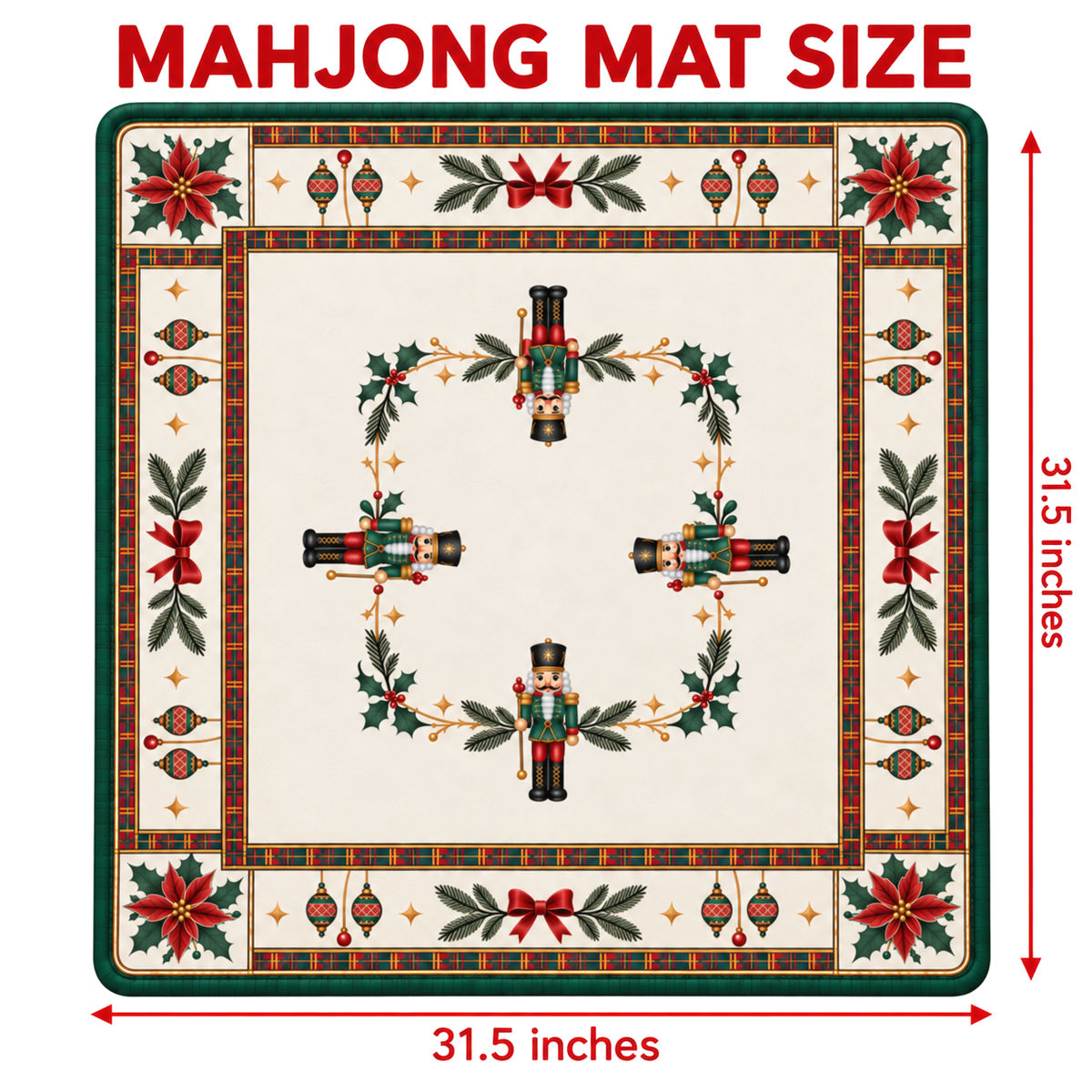
Standard mats measure approximately 28" × 28" (fits one player's side of a four-player table) or 60" × 36" (covers the entire table). Thickness ranges from ¼" to ½". Thicker mats (⅜"–½") absorb more sound and provide better cushioning but are heavier to transport. Thinner mats (¼") are lightweight and portable but offer less sound dampening. For a permanent home setup, choose ½" neoprene. For travel or shared tables, go ¼"–⅜". Measure your table before ordering—a mat that's too small leaves gaps where tiles slip; too large creates bunching at corners. Check your mat's dimensions on the product page and verify against your table size.
✨ Find your Mahstead set — free US shipping →
What about custom printing and personalization?
Custom-printed mats let you add player names, clan logos, or house rules directly onto the surface. Neoprene accepts heat-transfer and direct printing beautifully; printed details are durable and won't fade or crack. Felt can also be printed but requires careful handling during washing to preserve detail. Vinyl prints clearly and resist water, making them ideal if you're worried about spills. Custom printing adds minimal cost and turns your mat into a conversation piece—many groups love having their name or a funny saying printed in the center. When ordering, provide artwork at least 300 dpi and allow the mat to cure 24 hours before first use. Our collection of customizable mats ships free across the US.
What to check before you buy
Material type: Decide between neoprene (best durability), felt (quietest, comfort-focused), or vinyl (easiest clean-up).
Size: Measure your table. Standard is 28" × 28" (single-player side) or 60" × 36" (full table).
Thickness: ½" for home setups; ¼"–⅜" for travel.
Non-slip backing: Confirm the mat has a non-skid base to prevent sliding during play.
Edges and corners: Check that the mat is hemmed or sealed to prevent fraying (especially on felt).
Stain resistance: If spills are likely, vinyl or neoprene outperform felt.
Personalization: If you want custom printing, verify file requirements and turnaround time.
Quick mat pairing checklist
For serious weekly players: ½" neoprene mat + our best-selling American sets + pushable racks for a professional setup.
For casual or beginner groups: ¼" felt or vinyl mat + newcomer-friendly set to start affordably.
For portable or travel: ¼" neoprene or vinyl mat + compact set in a travel bag for games on the go.
FAQ
Can I use a regular tablecloth instead of a mahjong mat?
No. A tablecloth slides, offers no grip, and provides no cushioning. Tiles shift during shuffling and can fall. A mat's non-slip backing and padding are essential for smooth, safe play.
How often should I replace a neoprene mat?
With weekly use and hand-washing, a quality neoprene mat lasts 5–7 years. Heavier play or indoor humidity may shorten that to 3–4 years. Replace if you see worn spots, loss of grip, or curling edges.
Is it okay to machine-wash a felt mat?
No. Machine washing damages felt fibers and weakens the backing. Hand-wash gently with cool water and mild soap, then lay flat to dry. Felt is delicate compared to neoprene.
Can I roll a neoprene mat for storage?
Yes. Roll it loosely with the printed side outward and secure with a band or tie. Store in a cool, dry place. Avoid tight rolling or prolonged creasing, which can set permanent wrinkles.
Do custom-printed mats fade over time?
Neoprene and vinyl prints hold color very well. Felt prints may fade slightly if washed frequently. Heat-transfer prints on neoprene are most durable. Keep mats out of direct sunlight to preserve color longevity.
What's the difference between a mat and a table cover?
A mat is a rigid, padded surface designed for tile grip and sound dampening. A table cover is thin fabric that protects the table from dust but doesn't support play. Learn more in our mat vs. table cover guide.


View More
View More
View More
